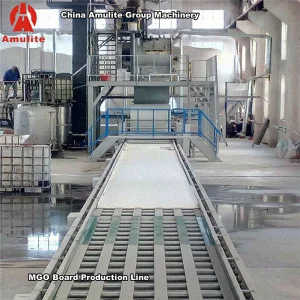
China Rock Wool / EPS Sandwich Panel Production Line Suppliers & Factories

Global Technical Industry Report & Next-Generation Automated Manufacturing Ecosystem Guidelines

High-Efficiency Equipment Systems

Featured Panel & Board Production Machinery

Engineered for maximum thermal insulation performance, precise continuous laminating, and ultra-low operational downtime.
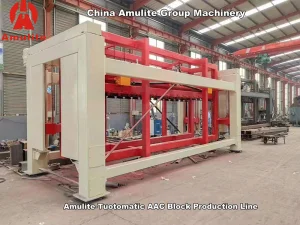
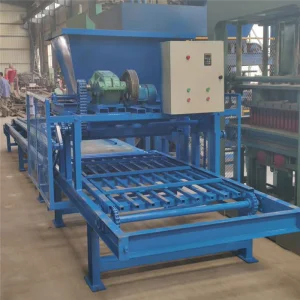
High-Quality Amulite Automatic AAC Block Production Line

High-Quality Amulite Automatic AAC Block Production Line Manufacturers, Companies

View Technical Specs →
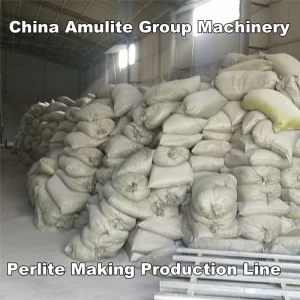
Buy Perlite Production Line

Buy Perlite Production Line Manufacturers, Company

View Technical Specs →
Famous Amulite AAC Blocks Customized Automatic Machines

Famous Amulite AAC Blocks Customized Automatic Machines- 4.2m Manufacturers, Company

View Technical Specs →
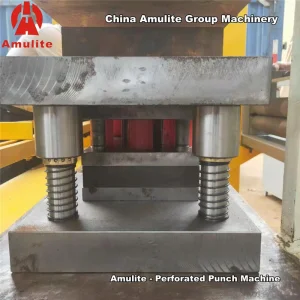
High-Quality Amulite Perforated Punch Machine System

High-Quality Amulite Perforated Punch Machine System Technical Data Manufacturer, Suppliers

View Technical Specs →
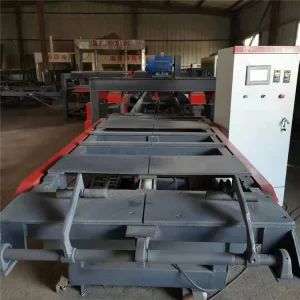
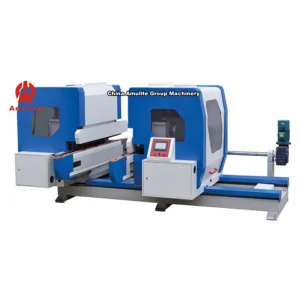
OEM 1300 II Type Automatic Four Side Edge Cutting Machine

OEM 1300 II Type Automatic Four Side Edge Cutting Machine Factory, Companies

View Technical Specs →
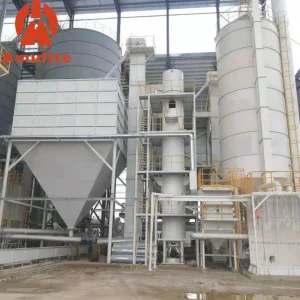
China Expanded perlite production line Supplier

China Expanded perlite production line Supplier, Products

View Technical Specs →
OEM EPS Sandwich Cement Wall Panels Production Line

OEM EPS Sandwich Cement Wall Panels Production Line Companies, Products

View Technical Specs →
Best XPS Insulation Tile Backer Production Line Supplier

Best XPS Insulation Tile Backer Production Line Supplier, Companies

View Technical Specs →
Industry Intelligence 2026

1. Global Commercial Landscape & Technical Evolution of Sandwich Panel Production Lines

Analyzing supply chain transformation, regulatory fire-safety shifts, and energy efficiency benchmarks across international industrial building sectors.

$11.8B
Global Market Value by 2030
6.8%
Expected Annual CAGR
A1 Class
Non-Combustible Standard
45%
Chinese Supply Market Share

The global industrial building envelope market is experiencing a structural paradigm shift driven by stringent decarbonization targets, accelerating cold-chain logistics expansion, and unified international building fire-safety regulations. Modern structural insulated panels (SIPs), primarily utilizing Rock Wool (Mineral Wool) and Expanded Polystyrene (EPS) core materials, have transitioned from optional architectural claddings to structural prerequisites for high-performance industrial construction.

Rock Wool core sandwich panels provide an imperative solution where zero-combustibility and maximum structural fire integrity are required. Adhering strictly to standards such as EN 13501-1 (Class A1/A2-s1, d0) and ASTM E84, Rock Wool continuous production lines enable factories to manufacture composite panels capable of enduring temperatures exceeding 1,000°C for up to 240 minutes. Conversely, EPS sandwich panel production systems target applications prioritizing supreme thermal performance-to-cost ratios, exceptional flexural rigidity, and ultra-lightweight structural loading—making them indispensable for cold storage facilities, modular cleanrooms, and cost-efficient commercial warehousing.

Regional Market Drivers & Procurement Shifts

  • European Union & North America: Driven by the Energy Performance of Buildings Directive (EPBD) and strict ASHRAE standards, industrial asset owners require automated continuous lamination lines that eliminate thermal bridging via high-density polyurethane (PU) edge-sealing integrated with mineral wool cores.
  • Middle East & Gulf Cooperation Council (GCC): Infrastructure megaprojects (such as Saudi Vision 2030 developments) mandate high thermal resistance ($\lambda \le 0.034 \text{ W/m}\cdot\text{K}$) paired with extreme resistance to ambient sandstorms and UV radiation.
  • Asia-Pacific & Emerging Markets: Rapid industrialization demands continuous high-speed double-belt laminators capable of producing over 6,000 m² of composite wall and roof panels per 8-hour shift to satisfy tight project commissioning schedules.
Engineering Specifications

2. Deep Technical Breakdown: Rock Wool vs. EPS Production Line Architecture

Comparing automation mechanics, adhesive dispensation systems, double-belt lamination, and inline processing controls.

Performance Metric / Sub-System Continuous Rock Wool Line Continuous / Semi-Auto EPS Line Hybrid PU/Side-Sealed Panel Line
Core Fire Rating Standard Class A1 / A2 Non-combustible (EN 13501) Class B1 / B2 Flame-retardant (DIN 4102) Class A2 - B1 Composite (ISO 1182)
Adhesive / Bonding Chemistry Dual-component Polyurethane & Epoxy Glue Specialized Polymer Cement / PU Binder High-pressure PU Foam Injected Matrix
Core Density Processing 80 kg/m³ to 140 kg/m³ (Lamella Turning) 15 kg/m³ to 30 kg/m³ (Pre-expanded EPS) 100 kg/m³ RW + 40 kg/m³ PU Edges
Lamination Conveyor Type 24-Meter Heavy-Duty Double Belt (Caterpillar) 14-18 Meter Roller / Belt Press System 28-Meter Temperature-Controlled Double Belt
Line Operating Speed 4.0 – 8.0 m/min (Thickness dependent) 6.0 – 12.0 m/min 4.0 – 7.5 m/min
Cutting & Trimming Mechanism Synchronized Flying Band Saw with Vacuum Dust Extraction High-Speed Disc Blade / Thermal Wire Cutter Servo-Driven Saw with Perimeter Edge Profiler

90° Fiber Lamella Turning System

Advanced Rock Wool lines incorporate automated block slitting and 90-degree fiber turning mechanisms. Orienting the mineral wool fibers perpendicular to the steel facings increases compressive strength by up to 300%, preventing delamination under heavy structural loads.

Precision Roll Forming Mill

Configured with 18 to 24 precision-machined chromated steel stations. Accommodates color-coated galvanized steel, stainless steel, or aluminum coils (0.4 mm – 0.8 mm thickness), forming tight overlapping joints, hidden-screw profiles, and deep trapezoidal ribs.

Siemens SCADA PLC Integration

Fully centralized closed-loop control with real-time temperature tracking for double-belt pre-heating zones, glue dispensation rate metering, line-speed synchronization, and remote telemetry for predictive maintenance routines.

Competitive Authority

3. China's Manufacturing Efficiency & Total Cost of Ownership (TCO) Supremacy

Why top-tier global EPC contractors and building material manufacturers source automated production lines from Chinese OEM hubs.

Procuring industrial sandwich panel equipment requires balancing capital expenditures (CAPEX) with long-term operational efficiency (OPEX). Chinese machinery manufacturers—specifically leading hubs located in Hebei, Jiangsu, and Shandong—have established an unassailable global competitive advantage through end-to-end industrial cluster integration, robust mechanical engineering standards, and unmatched supply chain flexibility.

1. Complete Upstream & Downstream Supply Chain Integration

Unlike Western equipment vendors who rely heavily on outsourced components from multi-tiered global sub-suppliers (which inflates equipment costs by 40% to 70%), top-tier Chinese manufacturers operate unified 100,000+ m² production facilities. From heavy steel frame heat treatment and precision CNC gantry milling to custom hydraulic cylinder assembly and electrical PLC cabinet wiring, key components are processed entirely under one roof. This minimizes lead times from the typical 9-12 months down to 90-120 days.

2. Global Brand Component Standardization

To guarantee international reliability and effortless spare-parts sourcing for global clients, leading Chinese lines integrate premium international standard hardware:

  • Automation & Drives: Siemens S7-1500 PLC systems, Schneider low-voltage electrics, Yaskawa / ABB servo drives.
  • Pneumatics & Hydraulics: Festo pneumatic valves, Rexroth hydraulic pumps, Parker hoses.
  • Metering & Dispensing: German-built High-Pressure KraussMaffei or Hennecke chemical foam injection systems (optional hybrid integrations).

3. Customized Modular Line Configurations

Chinese OEM suppliers do not enforce rigid, "one-size-fits-all" machinery templates. Whether a client requires an entry-level semi-automatic EPS panel line for regional housing projects or a 150-meter-long continuous high-speed mineral wool roof panel plant, engineering teams tailor machine footprints, roll-forming profiles, and automated robotic stackers to match specific factory floor space and local electrical grid requirements (e.g., 380V/50Hz to 480V/60Hz).

Deployment Scenarios

4. Global Application Scenarios & Real-World Case Engineering

Targeted industrial implementations of Rock Wool and EPS sandwich panels across extreme environments.

Cold Chain Logistics & Freezer Facilities

Utilizing high-density EPS or XPS sandwich panels equipped with tongue-and-groove joint profiles with double labyrinth seal geometry. Panels produced by these continuous lines prevent moisture ingress, eliminate thermal bridging, and maintain sub-zero temperatures (down to -35°C) in mega logistics hubs.

High-Hazard Industrial Manufacturing Plants

Chemical processing plants, battery gigafactories, and metallurgy workshops demand Rock Wool wall panels with 120kg/m³ density. Lines configured with inline PU side-sealing deliver both Class A non-combustibility and complete airtightness to protect critical capital assets.

Pharmaceutical & Semiconductor Cleanrooms

Requires flush panel joints with zero particle shedding. Continuous lines engineered with micro-ribbing roll modules produce ultra-flat steel facings bonded to lightweight fire-retardant EPS or Rock Wool cores, allowing seamless joint sealing with antibacterial silicones.

Quality Assurance

5. Global Enterprise Procurement Checklist & Factory Verification Standard

Key technical benchmarks every buyer must inspect prior to issuing equipment purchase orders.

When selecting a Chinese Rock Wool or EPS sandwich panel production line supplier, procurement directors and engineering consultants should apply a standardized technical auditing protocol to ensure line longevity and product compliance:

  1. Double-Belt Conveyor Flatness & Heating Uniformity: Inspect the structural rigidity of the lamination double-belt. The caterpillar plates must be machined to within $\pm 0.05 \text{ mm}$ tolerance, with multi-zone oil/electric heating controllers ensuring constant heat distribution across the 1.25m panel width.
  2. Glue Metering Pump Precision: Verify that the adhesive mixing head utilizes dynamic variable-frequency dosing pumps. Inaccurate glue ratios cause panel delamination within 6-12 months of field exposure under thermal cycling.
  3. Factory Acceptance Testing (FAT) Protocol: Demand full-load dry running and test panel production at the supplier’s assembly hall before container loading. Ensure the supplier checks roll-former alignment, flying saw cutting accuracy ($\pm 1.0 \text{ mm}$ per 12-meter panel), and panel stacking auto-program sync.
  4. Safety & Compliance Certification: Equipment electrical systems must carry full CE marking under the Machinery Directive 2006/42/EC and Low Voltage Directive 2014/35/EU, featuring emergency stop circuits, protective enclosure fencing, and dust extraction compliance.
Future Insights

6. Industry Horizons: AI Integration, Bio-Based Binders & Decarbonization

The next generation of sandwich panel manufacturing automation entering the 2026-2030 market cycle.

AI-Powered Inline Defect Inspection

Optical laser scanners installed at the outlet of the double-belt lamination zone analyze real-time surface planarity, detecting minor steel indentation, paint micro-cracks, or core void flaws instantly before automated packaging.

Low-Carbon & Bio-Polymer Adhesives

In response to global Scope 3 emissions reporting, machinery dosing units are being retrofitted to process bio-polyols and formaldehyde-free adhesive chemistries, reducing embodied carbon in finished panel assemblies by up to 25%.

Fully Autonomous Robotic Stacking & Wrapping

Eliminating manual handling entirely, 6-axis heavy payload articulated robots take finished cut panels, turn alternate panels for male/female interlocking nesting, and feed them into automated stretch-hood packaging stations.

Q&A Knowledge Center

7. Frequently Asked Questions (FAQ) for Investors & Buyers

Direct expert answers regarding capacity, delivery, raw materials, installation, and site setup.

What is the typical output capacity of a continuous China Rock Wool / EPS panel line?
Depending on line speed and automation degree, a standard continuous double-belt line operating at 6 m/min produces approximately 1,500,000 m² to 2,500,000 m² of high-grade sandwich panels per year (based on a 300-day, two-shift operating schedule). Semi-automatic lines produce around 400,000 m² to 800,000 m² annually.
Can a single production line produce both Rock Wool and EPS sandwich panels?
Yes. Modern dynamic lines can be engineered as dual-purpose (combination) panel production lines. These plants feature interchangeable feeder sections allowing seamless switching between mineral wool lamella block insertion and EPS sheet feeding modules, using a universal glue dispensation head and double-belt press.
What factory plant dimensions and utility foundations are required?
A continuous Rock Wool / EPS line typically requires a factory bay length of 100 to 160 meters, a minimum width of 12 to 18 meters, and hook clearance height under crane of at least 6 meters. Total installed power ranges between 150 kW and 350 kW, along with compressed air connection (0.8 MPa) and heat source (thermal oil or electric heating) for the double belt.
How do Chinese factories handle overseas installation, commissioning, and operator training?
Turnkey supply agreements include overseas engineering dispatch. Senior mechanical, electrical, and chemical process engineers are sent directly to the client's site for 30 to 45 days. They supervise civil foundation anchors, mechanical assembly, wiring integration, system dry runs, dynamic material trial runs, and hands-on maintenance training until commercial quality targets are fully signed off.
Complete Machinery Catalog

Comprehensive Building Material Production Line Portfolio

Explore our full line of specialized boards, crushing systems, and automated wall panel manufacturing equipment.
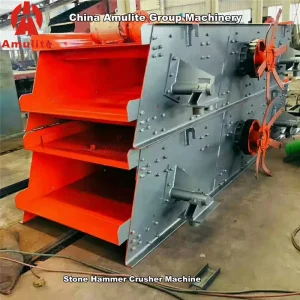
OEM Stone Hammer Crusher Machine Suppliers

OEM Stone Hammer Crusher Machine Suppliers, Factory

View Technical Specs →
China Fiber Cement Board / Calcium Silicate Board Production Line

China Fiber Cement Board /Calcium Silicate Board Production Line Factory, Companies

View Technical Specs →
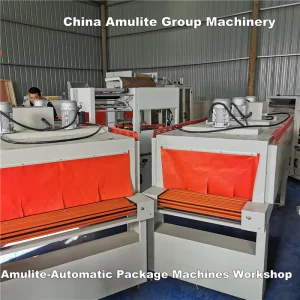
Famous Automatic Package Machines Workshop Factory

Famous Automatic Package Machines Workshop Factory, Company

View Technical Specs →
Best AM806BH-10 Technical Parameters Manufacturer

Best AM806BH-10 Technical Parameters Manufacturer, Products

View Technical Specs →
China Automatic Bricks Making Production Line

China Automatic Bricks Making Production Line Manufacturers, Products

View Technical Specs →
China Gypsum Board Production Line Supplier

China Gypsum Board Production Line Supplier, Factories

View Technical Specs →
Buy Stone Hammer Crusher 6CX Euro Series Jaw Crusher

Buy Stone Hammer Crusher 6CX Euro Series Jaw Crusher Company, Product

View Technical Specs →
OEM China Amulite Group MGO Board Production Line

OEM China Amulite Group MGO Board Production Line Factories, Product

View Technical Specs →