China Hollow Core Slab Making Machine Manufacturer & Engineering Global Leader

High-Precision Extrusion & Slipformer Technologies for Advanced Precast Concrete Infrastructure

Industry Whitepaper Analysis

Global Market Dynamics & Evolutionary Trends in Precast Concrete Slabs

An executive overview of how precast prestressed hollow core concrete slab machines are shaping green architecture, modular construction speed, and structural efficiency globally.

Decarbonization & Material Efficiency

Modern building directives demand drastic reductions in embodied carbon. Precast hollow core slabs feature longitudinal voids that eliminate 30% to 50% of concrete mass compared to solid slabs, reducing overall deadweight without sacrificing flexural strength or structural integrity.

Offsite Construction & Speed

With urbanization accelerating across the Middle East, Southeast Asia, and Latin America, precast extrusion technology enables long-span flooring elements (up to 18–20 meters) cast continuously on long casting beds. This cuts on-site formwork labor by over 70%.

Automation & Industry 4.0 Integration

Leading Chinese machinery manufacturers are transitioning from purely mechanical extruders to smart, sensor-driven extrusion systems integrated with PLC frequency control, automated concrete feeding, real-time compaction diagnostics, and wireless telemetry.

Technical Excellence

Extruder vs. Slipformer Machine Architectures

Selecting the optimal manufacturing methodology depends on aggregate sizing, product dimensions, and target shear force specifications. China Amulite Group manufactures both core paradigms to international standard ISO 9001 and CE frameworks.

High-Compaction Extruder Systems (Auger-Driven)

Auger-type extruders utilize rotating heavy-duty reamers made from high-wear alloy materials to push low-slump concrete (W/C ratio 0.28–0.32) dynamically into the forming chamber. The reaction force propels the machine forward along high-tensile prestressed steel strand lines.

  • Optimal Product Range: Standard floor and roof slabs (heights 100mm to 400mm).
  • Compaction Quality: Exceptional density, low moisture absorption, smooth bottom finish requiring minimal plastering.
  • Mix Requirement: Strict aggregate grading (typically ≤ 15mm-20mm crushed stone).
  • Production Speed: Up to 1.5 – 2.5 meters per minute casting rates.

Universal Slipformer Systems (Vibration-Driven)

Slipformers utilize multi-stage high-frequency vibrators paired with forming tubes and side molds to shape dry concrete around prestressed cables. This system allows multi-purpose product switching on the same casting line with simple mold inserts.

  • Versatility: Can produce hollow core slabs, T-beams, double-T panels, lintels, and solid boundary walls.
  • Height Capability: Deep slabs up to 500mm depth with large void geometries.
  • Aggregate Flexibility: Accommodates larger aggregate sizes up to 25mm without blocking.
  • Maintenance: Lower wear-and-tear replacement costs compared to rotating auger screws.
Parameter Amulite Heavy Extruder Series Amulite Universal Slipformer Series Competitive Standard Machine
Slab Thickness Range 80 mm – 400 mm 100 mm – 500 mm 120 mm – 300 mm
Standard Slab Width 1200 mm (Customizable to 900mm / 600mm) 1200 mm / 1500 mm 1200 mm fixed
Concrete Slump Requirement Zero-slump (W/C: 0.28–0.32) Dry consistency (W/C: 0.30–0.34) Semi-dry (W/C: 0.35–0.40)
Prestressing Wire Compatibility Ø 4.8mm to Ø 12.7mm (Strand/Wire) Ø 5.0mm to Ø 15.2mm (7-wire strand) Limited to Ø 7mm max
Reamer / Auger Wear Life 40,000 – 60,000 meters (Chrome-Carbide) N/A (Vibrator plates: 80,000m) 15,000 – 25,000 meters
Casting Speed 1.2 – 2.2 m/min 1.0 – 1.8 m/min 0.8 – 1.2 m/min
Procurement ROI & Value Proposition

Engineering Superiority Backed by Performance Metrics

Global buyers choose Chinese manufacturing powerhouses not only for competitive initial capital expenditures (CAPEX), but for long-term operational efficiency (OPEX) and reliable throughput.

60+
Global Export Markets Supported
45%
Reduction in Cement Consumption / m²
60,000m
Extended Auger Service Life Rating
1.8 Year
Average Client Turnkey Plant ROI
End-to-End Plant Engineering

Turnkey Macro Solutions for Precast Concrete Factories

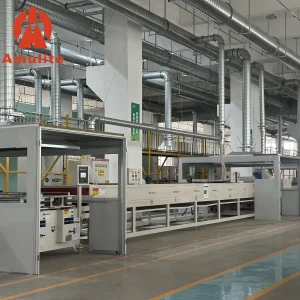
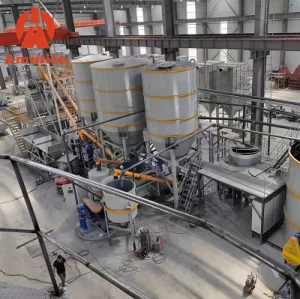
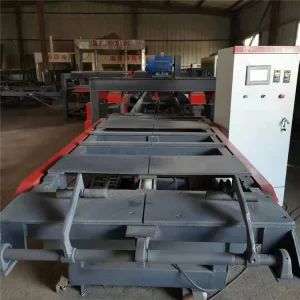
A high-output precast concrete slab factory requires seamless synchronization between aggregate batching, wire tensioning, extrusion, curing, automated cutting, and material handling.

1. Automated Batching & Concrete Transport

Precise moisture-sensing planetary mixers supply constant zero-slump concrete via overhead motorized dumper buckets or shuttle cars directly into the slab machine hopper, eliminating batch-to-batch density variations.

2. High-Tensile Wire Prestressing Yard

Hydraulic tensioning pumps and single-strand abutments apply calculated prestressing force (up to 1400-1800 MPa) to high-tensile steel strands (Ø4.8mm to Ø15.2mm), establishing compressive pre-stress in the concrete matrix.

3. Continuous Extrusion & Curing Acceleration

The hollow core slab machine moves autonomously along steel beds (typically 100 to 150 meters long). Heating pipes under the bed or thermal blankets accelerate concrete hydration, achieving 70% design strength within 16-24 hours.

4. Diamond Blade Concrete Saw Cutting

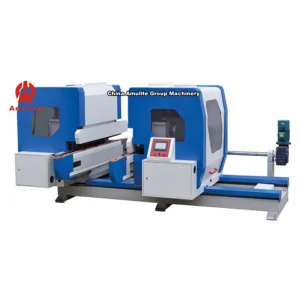
Heavy-duty automated concrete saws with laser positioning clamp onto the cured slab ribbon, precisely slicing individual slabs to custom jobsite dimensions (angles from 0° to 45° for bevel cuts).

5. Automated Lifting & Yard Stacking

Specialized hydraulic slab clamps and portal gantry cranes lift cut slabs without micro-cracking, moving them to curing stacks for final dispatch to commercial, residential, or infrastructure construction sites.

6. Integrated Quality Management

In-line ultra-sonic thickness testers, load cell monitoring, and density verification modules ensure every slab complies with local building codes such as Eurocode 2, ACI 318, or GB 50010 standards.

Global Compliance & Engineering Trust

Localization Support & Regulatory Compliance

China Amulite Group enforces rigorous international quality assurance protocols to guarantee seamless deployment anywhere in the world.

International Certification Standards

All mechanical fabrications, electrical cabinets, and pressure hydraulic lines adhere to global regulations:

  • CE Certification: Machinery Directive 2006/42/EC compliance with strict safety guarding and emergency stop circuits.
  • ISO 9001:2015: Documented quality management across precision machining, welding non-destructive testing (NDT), and dynamic assembly testing.
  • Electrical Standardization: Customized voltage options (380V, 415V, 440V, 480V at 50Hz or 60Hz) with Siemens PLCs and Schneider electrical contactors.

Local Material Adaptation & Technical Support

Aggregate mineralogy varies dramatically across continents. Amulite provides tailored technical engineering support before machine delivery:

  • Sand & Stone Sieve Analysis: Our material labs test local client aggregate samples to calibrate auger pitch and vibration frequency parameters.
  • Turnkey On-Site Field Support: Senior field engineers handle installation, track alignment, initial concrete mix formulation, and local staff training.
  • Wear Parts Supply & Hub Logistics: Regional spare parts centers ensure critical replacement screws, side plates, and vibrator bearings arrive within 48-72 hours.
Technology Roadmap

Next-Generation Precast Machinery Innovations (2025–2030)

Discover how China Amulite Group is pioneering next-stage precast automation, smart extrusion algorithms, and eco-material processing.

2025

AI-Assisted Compaction Control

Self-adjusting auger rotation speeds based on real-time torque dynamic feedback, maintaining exact void geometry under fluctuating concrete moisture levels.

2026

Geopolymer Concrete Processing

Adaptation of extruders to handle alkali-activated slag and low-carbon fly ash geopolymers, cutting Portland cement reliance by up to 80%.

2027

Laser-Guided Autonomous Saws

Fully automated trackless cutting saws equipped with 3D LiDAR for automated header cutting, notch creation, and embedded utility channel preparation.

2028-2030

Zero-Emission Precast Yards

Fully electric battery-powered extrusion units paired with solar-heated bed curing loops, achieving net-zero operational status for modern modular housing plants.

Knowledge Hub & QA

Frequently Asked Questions (FAQ)

In-depth engineering answers for investors, plant managers, structural engineers, and procurement directors.

Q1: What are the primary differences between China-made hollow core slab machines and European models?
Chinese precast machinery manufacturers, led by industry pioneers like China Amulite Group, have bridged the technology gap through advanced metallurgical alloys, Siemens/Schneider control integration, and ISO-certified manufacturing. While European equipment carries significantly higher capital cost (CAPEX), Chinese machines deliver equivalent tensile performance, 90-95% identical casting speeds, and substantially lower spare parts lifecycle costs. This results in a drastically faster return on investment (1.5 to 2 years vs. 5+ years).
Q2: How does concrete water-cement ratio (W/C) impact machine extrusion quality?
Extrusion technology requires a strict zero-slump, dry concrete mix with a water-cement ratio typically between 0.28 and 0.32. If the concrete mix is too wet (slump > 20mm), the extruded hollow voids will collapse after the machine moves past the forming section. If the mix is too dry, internal shear friction increases exponentially, causing excessive wear on the augers/reamers and thermal overload on electric motors. Amulite provides precise planetary mixing specifications and moisture probe integration to keep batch consistency within exact tolerances.
Q3: What aggregate sizes are suitable for hollow core slab extruders?
For auger-based extruder machines, aggregate sizing should ideally not exceed 15mm to 20mm (preferably well-graded crushed gravel or granite). Oversized aggregates can jam between the rotating reamer screw and the side mold liners, causing micro-fractures in the slab walls. For slipformer units, larger aggregates up to 25mm can be accommodated due to the linear high-frequency vibration moulding mechanism.
Q4: How long does a typical casting bed need to be, and what foundations are required?
Standard industrial production beds range from 100 meters to 150 meters in length per line, with plants typically deploying 4 to 8 parallel beds. The bed structure consists of a perfectly leveled, ground steel plate (8mm-10mm thick) mounted on heavy concrete abutment beams capable of absorbing pre-tensioning forces ranging from 1,000 to 2,500 kiloNewtons (kN) depending on strand configuration.
Q5: What is the estimated wear lifecycle for augers (screws) and mold forming parts?
Amulite augers are cast from proprietary high-chromium alloy steel and faced with tungsten-carbide plasma welding. Under standard operating conditions with non-abrasive limestone aggregate, a set of augers yields between 40,000 and 60,000 linear meters of slab production. Re-welding and re-surfacing kits are supplied so plant technicians can refurbish worn auger flights on-site up to 3 times before requiring full replacement.
Q6: Can a single hollow core machine produce different slab thicknesses?
On traditional extruder machines, the height is fixed by the internal gearboxes and forming core geometry. To produce a different slab thickness (e.g., changing from 200mm to 300mm), the manufacturer switches the modular machine power head or core assembly. On universal slipformer machines, changing thickness requires changing the quick-release forming module, which takes roughly 1 to 2 hours of plant downtime.
Q7: What after-sales installation and commissioning support does Amulite provide overseas?
China Amulite Group dispatches a dedicated team of mechanical engineers, electrical engineers, and concrete technology specialists to the client's international site. The commissioning package includes casting bed calibration, hydraulic tensioner setup, trial mix extrusion, slab shear load testing, and thorough operational/safety training for local personnel until guaranteed daily output metrics are met.