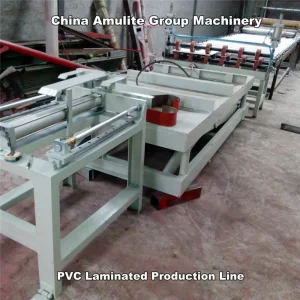
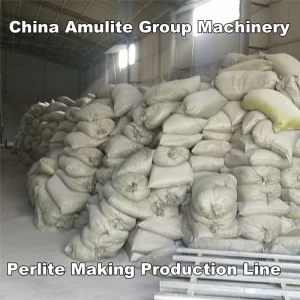
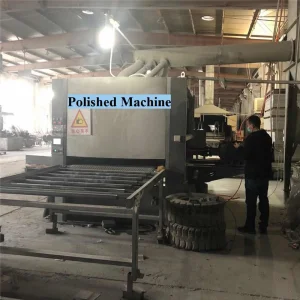
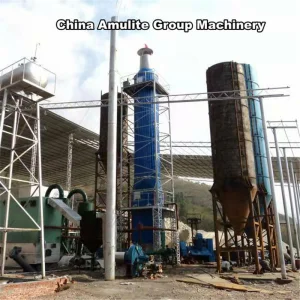
Explore our flagship automated manufacturing solutions engineered for high-density, energy-efficient building materials.
Analyzing the global transition toward decarbonized prefabrication and advanced hollow-core extrusion engineering.
The global construction ecosystem is undergoing a fundamental structural transformation driven by urbanization, labor shortages, stringent ESG (Environmental, Social, and Governance) mandates, and the urgent requirement for decarbonized building materials. Modern high-rise architecture and industrial facilities demand interior and exterior wall solutions that minimize structural dead load without sacrificing mechanical integrity, fire protection, or acoustic separation. Within this macro paradigm, hollow core cement panel machine technologies engineered in China have emerged as the primary catalyst for rapid, low-carbon prefabrication worldwide.
Hollow core cement panels—characterized by their continuous longitudinal tubular cavities, lightweight aggregate cementitious matrix, and high dimensional precision—reduce wall weight by up to 60% compared to traditional solid masonry or cast-in-place concrete walls. This reduction directly translates to downsized structural foundations, smaller seismic load assumptions, faster crane positioning, and dramatic transport optimization. Chinese machinery manufacturers have led this technical evolution by industrializing high-frequency compaction, hydraulic slipforming, and heavy-duty screw extrusion processes into fully automated, PLC-controlled turnkey production lines.
By engineering internal hollow geometry (tubular voids ranging from 30% to 50% of cross-sectional area), total structural mass is significantly reduced, enabling taller building designs with reduced steel reinforcement requirements in foundational pilings.
Advanced Chinese machinery utilizes high-torque dual-shaft extruders and vibratory compaction heads, producing non-stop precast wall slabs at speeds exceeding 1.8 to 2.5 meters per minute on casting beds up to 120 meters long.
Formulations processed by Chinese panel machinery seamlessly incorporate up to 45% industrial solid waste—including fly ash, blast furnace slag, silica fume, and expanded perlite—significantly lowering raw material costs and embedded carbon footprints.
Evaluating regional deployment patterns, economic benchmarks, and competitive performance metrics.
The global market for hollow core cement wall panel equipment has shifted from regionalized equipment fabrication to large-scale, automated engineering procurement and construction (EPC) projects. Rapid adoption spans diverse geographical sectors:
Selecting the optimal manufacturing methodology depends on target volume, capital investment, panel geometry, and raw material availability. Below is an engineering benchmark evaluation across common precast panel production technologies.
| Performance Metric | High-Speed Extrusion (China Standard) | Vertical Battery Mold Systems | Traditional Slipforming |
|---|---|---|---|
| Daily Output (8h Shift) | 1,200 – 2,500 m² | 400 – 800 m² | 800 – 1,200 m² |
| Cross-Section Type | Hollow Tubular Voids (30-50% Void Ratio) | Solid or EPS Core Sandwich | Hollow / Solid (Higher Slump Mix) |
| Water-Cement Ratio (W/C) | Ultra-dry / Zero slump (0.26 - 0.32) | Wet mix / High slump (0.42 - 0.50) | Semi-dry (0.35 - 0.40) |
| Labor Requirement | 3 - 5 Operators / Line | 8 - 12 Operators / Line | 6 - 8 Operators / Line |
| Energy Consumption / m² | 0.8 – 1.4 kWh (Low Thermal Curing) | 3.5 – 6.0 kWh (Steam Curing Required) | 2.0 – 3.2 kWh |
| Compressive Strength Range | 7.5 – 25.0 MPa | 5.0 – 15.0 MPa | 7.5 – 20.0 MPa |
Inside the automated machinery workflow: From raw material batching to automatic cutting and curing.
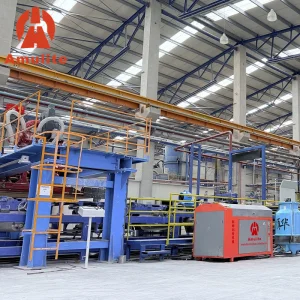
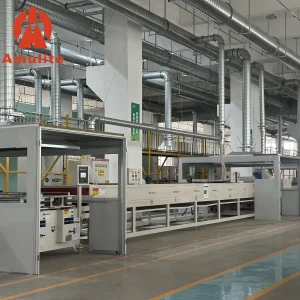
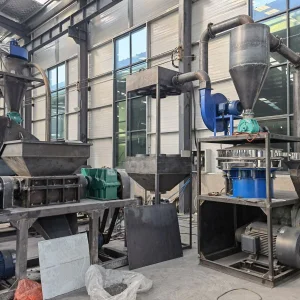
The system begins with high-precision micro-dosing load cells feeding an intensive planetary mixer. Cementitious materials, pulverized fly ash, sand, chemical accelerators, and lightweight aggregates (such as ceramsite, perlite, or EPS granules) are homogenized under controlled moisture monitoring. Real-time microwave moisture sensors automatically adjust added water to maintain a strict zero-slump target.
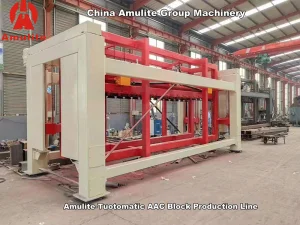
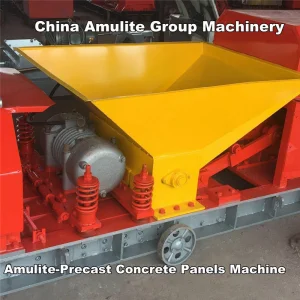
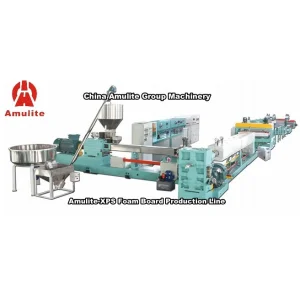
The core machine unit features high-wear-resistant alloy steel screws, treated with specialized surface nitriding and tungsten carbide cladding. As the dry mix enters the hopper, dual counter-rotating screws force the material past internal core mandrels while high-frequency vibrators (3,000–6,000 RPM) consolidate the matrix around tensioned steel wires or glass-fiber rovings.
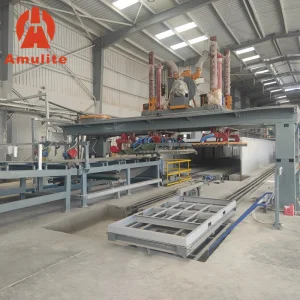
To deliver structural flexural strength, high-tensile steel prestressing wires (2.0 mm - 5.0 mm diameter) are anchored across the casting bed and tensioned via hydraulic jacks. The extruding machine travels over these tensioned wires, embedding them continuously into the dense lower and upper concrete ribbons surrounding the hollow cavities.
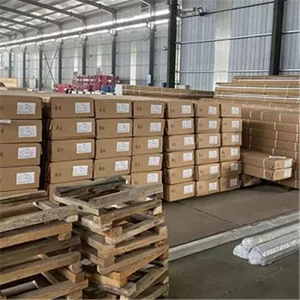
Once the extruded continuous panel slab achieves initial green strength (typically 12 to 18 hours ambient or 4 to 6 hours accelerated), a mobile diamond-blade cutting unit reads length coordinates via laser encoders. Slabs are automatically cut to precise specified wall lengths (e.g., 2.8m, 3.0m, or custom architectural heights) and transferred via automatic vacuum stackers onto transport pallets.
Deployment in high-density urban residential, commercial, industrial, and specialized infrastructure projects.
Installed between structural concrete columns and shear walls, hollow core panels provide fast enclosure. Tongue-and-groove side profiles bonded with polymer-modified adhesive mortar prevent joint cracking and eliminate traditional wire mesh wet plastering requirements entirely.
Long-span hollow core slabs function as exterior perimeter curtain walls and fire-isolation barrier walls. Their inherent hollow structure acts as electrical conduit channels, allowing electrician crews to route cables directly through the core voids without chasing or grooving finished surfaces.
When combined with sound-absorbing surface textures or internal mineral wool infills, hollow core panels attenuate traffic and industrial machinery noise by over 45 dB. They serve as durable, weather-proof sound walls along highway corridors and railway networks.
Ensuring compliance with international building codes, quality assurance protocols, and field lifecycle support.
Deploying a precast hollow core cement panel production line requires full compliance with regional structural, fire safety, and environmental standards. Leading Chinese machinery manufacturers deliver end-to-end industrial service models spanning raw material analysis, plant layout engineering, ISO/CE equipment certification, and localized mix optimization.
Equipment and panels are engineered to meet global standards including ASTM C1693 (Standard Specification for Autoclaved Aerated Concrete), EN 12720, ISO 9001:2015 quality management systems, and CE Directives (2006/42/EC Machine Safety). Panels consistently pass 2-to-4 hour fire resistance tests under DIN 4102 / BS 476 standards.
From initial site foundation design to commissioning, dedicated process engineering teams provide on-site installation oversight. Local technician training covers automated PLC calibration, extruder screw maintenance, daily washdown protocols, and concrete curing curve adjustments tailored to local humidity and ambient temperatures.
Next-generation advancements in AI automation, carbon capture integration, and ultra-lightweight material science.
Next-generation extruders feature IoT ultrasonic sensors and AI-driven feedback loops that continuously sample concrete density and core void symmetry during extrusion. Hydraulic pressure on the shaping screws automatically adjusts in milliseconds to prevent internal micro-fractures.
Integrating carbon capture utilization (CCU) directly into the curing tunnel allows green panels to absorb industrial flue gas CO2. CO2 gas injected into the curing environment reacts with calcium hydroxide to form permanent calcium carbonate micro-crystals, increasing 24-hour panel strength while sequestering carbon.
Moving beyond standard Portland cement, progressive lines are adopting OPC-free alkali-activated geopolymers enriched with carbon nanotubes or basalt fibers. This delivers ultra-lightweight panels (under 400 kg/m³) with superior flexural strength and zero chemical degradation in aggressive marine or acidic industrial environments.
Addressing essential technical, operational, and commercial questions for project investors and factory operators.
Explore additional high-performance machinery, surface treatment lines, and processing systems from China Amulite Group.