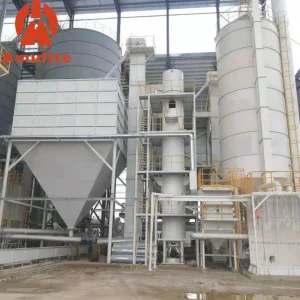
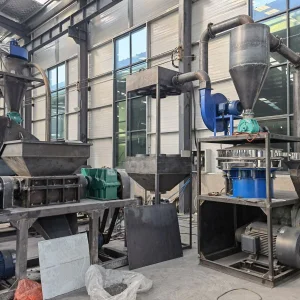
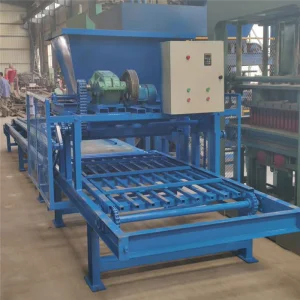
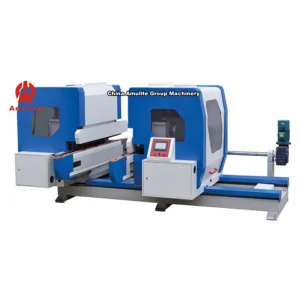
Explore our top-tier manufacturing lines engineered for high output, precise thickness control, and long-term operating efficiency.
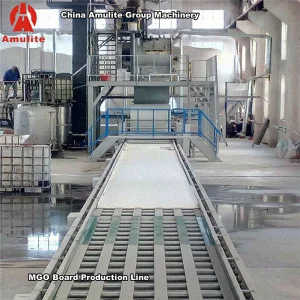
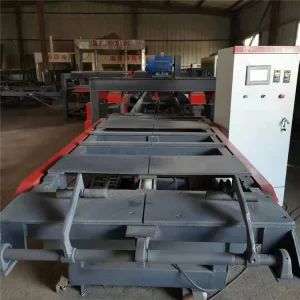
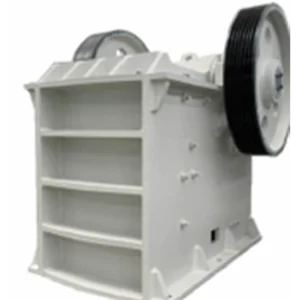
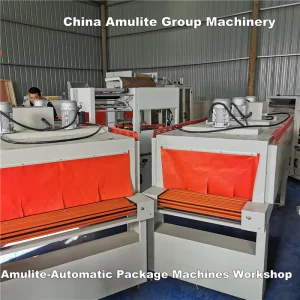
An in-depth analysis of processing technologies, digital continuous dosing, green manufacturing paradigms, and how Chinese machinery makers are defining the future of non-asbestos fiber cement board production.
The global fiber cement sheet manufacturing industry is undergoing a structural paradigm shift. Driven by worldwide bans on chrysotile asbestos, stringent environmental regulations, dynamic thermal insulation requirements, and rapid urban modular construction adoption, modern building material producers require unprecedented levels of accuracy, operational uptime, and chemical slurry versatility. At the core of this transition stands the Hatschek Wet-Forming Process, complemented by automated flow-on technologies and high-pressure autoclave hydro-thermal synthesis.
Historically, the production of fiber cement boards required heavy manual intervention, creating variance in density distribution, layer delamination, and excessive raw material loss during trimming. Modern China Fibre Cement Sheets Machine Factories have systematically eliminated these inefficiencies by fusing German electro-hydraulic controls with proprietary automated slurry dispersion systems. The result is a generation of turnkey fiber cement board lines capable of producing high-density, fireproof (A1 rating), weather-resistant exterior cladding panels as well as thin, flexible ceiling boards with thickness tolerances accurate to ±0.1mm.
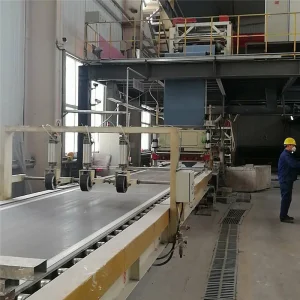
Advanced 3 to 5 vat cylinder forming configurations featuring automated slurry concentration sensors, dynamic wire felt tensioning, and high-efficiency vacuum dewatering boxes for uniform film accumulation.
Integrated high-pressure steam autoclave systems operating at 1.0–1.2 MPa and 180°C–190°C. Promotes rapid formation of tobermorite crystal structures, ensuring absolute dimensional stability and zero moisture expansion.
Fully integrated Siemens S7-1500 PLC control architectures featuring centralized closed-loop monitoring. Tracks real-time raw material dosing, sheet thickness, moisture content, and energy consumption.
Analyzing total cost of ownership (TCO), raw material adaptability, and project lifecycle risk mitigation for enterprise buyers across 60+ countries.
When multi-national construction conglomerates, industrial investors, and government building material authorities search for a China Fibre Cement Sheets Machine Manufacturer, their search intent extends far beyond standard pricing tables. Industrial decision-makers demand concrete engineering guarantees regarding operational reliability, local raw material formulation matching, spare part accessibility, and compliance with stringent international building standards such as ASTM C1186, EN 12467, and ISO 8336.
Global procurers balance initial CAPEX against long-term OPEX. Leading Chinese manufacturers now integrate heat recovery exchangers on steam autoclaves, continuous closed-loop water recirculation systems (achieving zero industrial wastewater discharge), and energy-optimized vacuum pumps—slashing overall electrical and thermal utility consumption per sheet by up to 22%.
A machine is only as good as its input flexibility. Elite machinery suppliers engineer versatile wet-pulping and slurry dosing stations capable of handling varied Portland cement grades, local silica sand with quartz purities down to 80%, fly ash from thermal power plants, and diverse cellulose pulp types (bleached kraft pulp, unbleached pulp, or recycled newsprint fiber).
How localized industrial clusters, high-precision heavy machining, and end-to-end quality assurance provide Chinese machinery companies an unassailable competitive advantage.
China's heavy machinery manufacturing sector has evolved from low-cost assembly into a global hub of high-precision industrial engineering. Specialized machinery clusters in provinces like Hebei provide an integrated supply ecosystem within a 50-kilometer radius. Raw steel forging, CNC heavy gantry milling, heat treatment, pressure vessel fabrication, and precision PLC electrical cabinet wiring are execute seamlessly under strict ISO 9001 and CE quality frameworks.
This industrial density provides international plant investors with three distinct execution advantages:
Forming cylinder rolls, press rolls, and stacker suction plates are machined using 12-meter heavy CNC lathes, guaranteeing dynamic runout tolerances within 0.02mm for perfectly flat sheet formation.
While European machinery lead times often stretch between 14 to 18 months, Chinese heavy equipment factories deliver full, pre-assembled 10-million square meter turnkey production lines within 90 to 150 days.
Every mechanical subsystem—from pulp refiners to wet corrugated sheet cutting machines—undergoes full mechanical dry-run testing and electrical simulation prior to containerization.
Regional breakdown of fiber cement board consumption, application preferences, and growth drivers across major international markets.
The global fiber cement market size is projected to reach past USD 22 Billion in the coming years, driven by urbanization in emerging economies and retrofitting demand in developed nations. Modern fiber cement machine factories must engineer plant layouts tailored to specific regional application requirements:
| Target Region | Primary Board Type Required | Typical Density & Thickness | Key Machinery Customization Needed |
|---|---|---|---|
| Southeast Asia & India | Corrugated Roofing Sheets & Partition Boards | 1.2 – 1.4 g/cm³ | 4mm – 8mm | High-speed sheet corrugators, automated suction stackers, wet-cure tunnels. |
| Middle East & GCC | Heavy Exterior Cladding & Fire Barriers | 1.5 – 1.7 g/cm³ | 10mm – 25mm | High-tonnage hydraulic post-press machines (up to 4000T), autoclave steam curing. |
| Latin America | Siding Planks & Subfloor Underlayment | 1.3 – 1.5 g/cm³ | 6mm – 18mm | Embossing rollers for wood-grain texturing, 4-side online edge trimming cutters. |
| Eastern Europe & CIS | Acoustic Ceilings & Cold-Resistant Boards | 1.4 – 1.6 g/cm³ | 6mm – 12mm | Precision calibrated sanding machines, automated dust-extraction, UV coating lines. |
From high-rise ventilated facades to high-moisture interior partitions, understand how our continuous machine layouts manufacture versatile architectural boards.
Fiber cement sheets produced on our high-pressure autoclaved lines exhibit ultra-low water absorption (<20%) and exceptional frost resistance. Installed with rear ventilation channels, these boards offer thermal insulation, wind-load resistance up to 5.0 kPa, and A1 non-combustible fire safety for commercial skyscrapers.
Utilizing high-density calcium silicate formulation profiles, fiber cement boards serve as perfect moisture-proof substrates in commercial kitchens, hospitals, and cleanrooms. The smooth calibrated surface accepts direct ceramic tile adhesion or high-gloss UV antibacterial coating.
Quartz sand wet grinding, cellulose pulp hydrapulping & refining, slurry batching.
Hatschek vat cylinder filtration, felt dewatering, vacuum box extraction, accumulator roll winding.
Automatic cutting, hydraulic stacking press, pre-curing tunnel, 12-hour high-pressure steam autoclaving.
Detailed insights compiled by our chief process engineers to guide potential buyers through plant design, raw materials, energy requirements, and site commissioning.
Explore our full eco-system of board trimming, recycling, block manufacturing, and specialized board processing lines.