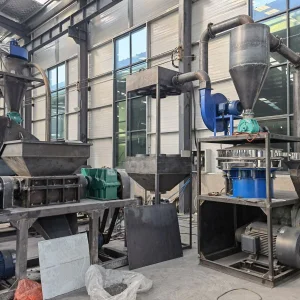
Explore state-of-the-art turn-key production systems engineered by leading Chinese manufacturing facilities for global infrastructure and commercial construction demands.
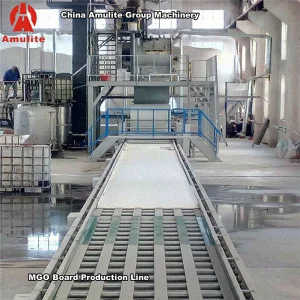
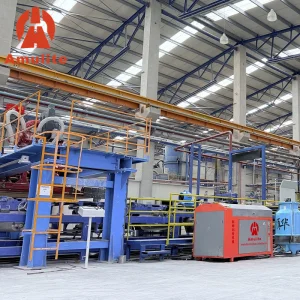
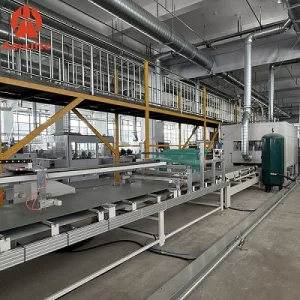
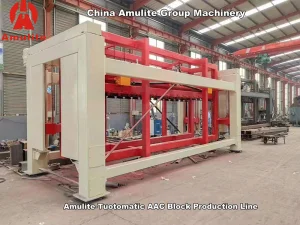
The international building materials market is experiencing a profound structural transition away from traditional corrugated metal and asbestos-based roof sheeting towards environmental-grade, highly durable non-asbestos fiber cement roofing tiles and architectural cladding. Engineered via refined cellulose pulping, high-grade Portland cement, and hydrothermal autoclaving, modern fiber cement corrugated sheets offer unmatched mechanical flexural strength, thermal insulation, non-combustibility (Class A1), and zero corrosion in aggressive maritime or agricultural environments.
As a premier global manufacturing epicenter, China's fiber cement machinery ecosystem—led by enterprise pioneers such as China Amulite Group—has re-engineered traditional Hatschek wet-process systems. By integrating precision multi-vat slurry distribution, automated digital corrugation molds, variable-frequency continuous dewatering, and high-pressure steam autoclaves, Chinese OEM factories empower building material producers across Latin America, Southeast Asia, the Middle East, Africa, and Eastern Europe to achieve high-volume industrialization with minimal operating expenses.
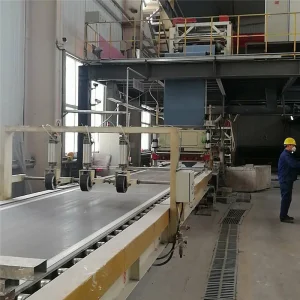
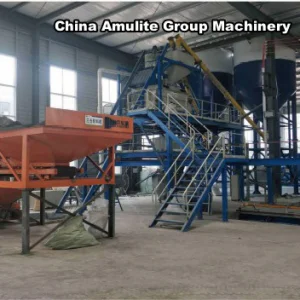
Understanding the core mechanical workflow of turnkey fiber cement tile production lines: From raw slurry batching to vacuum dewatering, sheet forming, and steam autoclaving.
Imported wood pulp or recycled paper is refined into uniform fibers ($2.0-2.8\text{ mm}$) using high-consistency hydrapulpers and disc refiners. Fibers are combined with Portland cement, quartz silica sand ($SiO_2 > 90\%$, 325 mesh), and recycled slurry in computerized batching tanks.
The homogeneous slurry flows into 3 to 5 vat cylinder mold units. Stainless steel wire cylinders transfer thin slurry films onto a continuous endless felt. Multi-stage high-vacuum suction boxes extract excess water, raising slurry solids ratio from $8\%$ to over $28\%$ prior to accumulation rolls.
Green sheets are automatically cut, picked by vacuum suction arms, pressed onto corrugated steel template plates, and moved into pre-curing tunnels ($50^\circ\text{C}$). They undergo hydrothermal reaction in high-pressure steam autoclaves ($175^\circ\text{C}$, $1.0\text{ MPa}$ steam pressure) forming high-strength Tobermorite crystals.
| Performance / Spec Metric | Autoclaved Fiber Cement Tiles | Air-Cured Cement Sheets | Traditional Clay Roof Tiles | Corrugated Metal Roofing |
|---|---|---|---|---|
| Bending / Flexural Strength | ≥ 18 - 24 MPa | ≥ 12 - 14 MPa | ≥ 8 - 10 MPa | High Tensile (Prone to Denting) |
| Fire Resistance Rating | Class A1 Non-Combustible | Class A1 Non-Combustible | Class A1 Non-Combustible | Combustible Coatings / Conductive |
| Density Range | 1.25 – 1.45 g/cm³ | 1.10 – 1.25 g/cm³ | 2.0 – 2.4 g/cm³ (Heavy) | 7.8 g/cm³ (Thin Sheet) |
| Corrosion & Chemical Resistance | Impervious to Acid Rain/Ammonia | Moderate Resistance | High Resistance | Prone to Rust & Salt Oxidation |
| Thermal & Sound Insulation | Superior (Low Conductivity) | Good Insulation | Moderate Insulation | Poor (High Noise under Rain) |
| Expected Service Lifespan | 50+ Years Maintenance-Free | 25 - 30 Years | 30 - 40 Years | 10 - 15 Years |
Fiber cement tile and sheet production systems engineered by China Amulite Group are built to cater to vastly diverse geographical and climatic demands:
Livestock confinement systems (poultry, dairy, swine farming) generate elevated concentrations of internal ammonia and moisture. Unlike metal sheets that rust within 36 months, fiber cement corrugated tiles are completely immune to chemical oxidation and regulate internal barn temperature, drastically boosting livestock survival rates.
Engineered with high flexural density ($1.3-1.5\text{ g/cm}^3$) and micro-fiber interlocking matrices, fiber cement tiles withstand severe salt spray corrosion in coastal zones, extreme thermal shock, and high-velocity wind loads exceeding $200\text{ km/h}$.
With integrated automated pressing and decorative coating modules, modern fiber cement tile machines produce high-end textured roofing slates, Spanish-style Roman roof tiles, and wood-grain shake panels that deliver luxury residential aesthetics at half the structural weight of traditional ceramic tiles.
Investing in a fiber cement tile production line requires absolute confidence in machinery precision, civil engineering alignment, and raw material formulation optimization.
Our turnkey machinery designs comply fully with international manufacturing and material metrics, including ASTM C1225 (Standard Specification for Fiber-Cement Roofing Shingles, Shakes, and Slates), EN 494 (Corrugated Fiber-Cement Sheets and Fittings), ISO 9981, and CE Directives for electrical safety (Siemens PLC / Schneider Automation).
Every region possesses unique raw material characteristics. Our senior process engineering team visits customer sites to conduct local lab testing of local Ordinary Portland Cement (OPC 42.5/52.5), local silica sand quartz purity, fly ash reactivity, and regional cellulose pulp sources—reconfiguring slurry recipes to minimize raw material cost while maximizing MPa strength.
From 3D plant layout engineering, civil foundation blueprinting, heavy equipment installation supervision, electrical wiring, operator training, to dry-run and full-load trial commissioning, our resident teams ensure guaranteed output metrics before formal contract sign-off.
Leading Chinese fiber cement machinery manufacturers are pioneering sustainable, digitalized, and hyper-efficient manufacturing paradigms for the upcoming decade.
Integration of real-time microwave density sensors and ultrasonic slurry viscosity analyzers connected to automated valve feedback, maintaining sheet thickness tolerance within $\pm 0.1\text{ mm}$.
Implementation of multi-stage thermal flash recovery systems and solar-thermal hybrid steam generation, reducing overall natural gas/coal consumption by up to $35\%$ per ton of cured tile.
Advanced multi-stage clarifier sedimentation and vacuum belt filtration for $100\%$ internal wash-water recycling, eliminating toxic industrial liquid discharge completely.
Replacing traditional synthetic micro-fibers with high-tenacity basalt mineral fibers and nano-silica additives to manufacture ultra-thin ($3\text{ mm}$), ultra-lightweight roof tiles with superior impact toughness.
Detailed solutions compiled by senior process engineering experts at China Amulite Group.
Annual plant capacity can be customized anywhere from 2 million m² up to 30 million m² per line. Output levels are governed by the number of Hatschek forming cylinders (typically 3 to 5 vats), sheet machine width (1,300 mm to 1,600 mm), machine running speed (up to 80 meters/minute), autoclave volume, and the degree of end-of-line stacking automation.
Autoclaved lines utilize high-pressure saturated steam ($175^\circ\text{C}$ at $1.0\text{ MPa}$) to induce hydrothermal synthesis between silica sand flour ($SiO_2$) and Portland cement, forming crystalline Tobermorite ($C_5S_6H_5$) within 10 to 12 hours. This eliminates moisture expansion and shrink, offering superior dimensional stability. Air-cured lines rely on standard cement hydration over 28 days and are suited for budget non-autoclaved roofing sheets.
Yes! China Amulite Group’s flexible plant design features interchangeable continuous sheet handling sections. By engaging or bypassing the automated vacuum corrugation suction arm and wave template stacking machine, the plant can seamlessly switch production between flat calcium silicate wallboards and corrugated roofing tiles within the same operational shift.
The core raw materials comprise: 1) Ordinary Portland Cement ($35-45\%$), 2) Silica Sand / Quartz Powder ($35-45\%$), 3) Refined Cellulose Fiber / Pulp ($8-11\%$), 4) Wollastonite or Synthetic Fibers ($2-4\%$), and 5) Process Water. Localized industrial fly ash or slag can also be integrated into formulation ratios to reduce material costs.
A standard turnkey project timeline spans approximately 6 to 9 months: Manufacturing & factory pre-assembly dry testing takes 90–120 days, ocean transport takes 20–40 days, mechanical/electrical installation on customer site takes 45–60 days, followed by 20–30 days of trial batching, formulation optimization, and hands-on staff training.
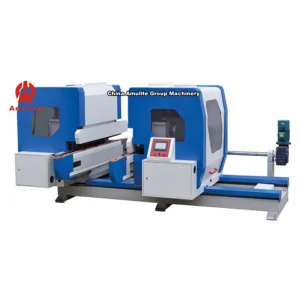
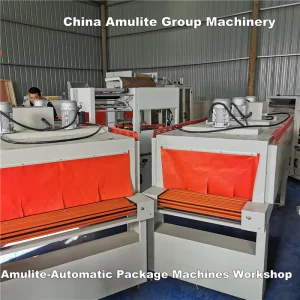
Discover specialized secondary processing equipment, precise cutting units, recycling plants, and integrated packaging solutions designed to complete your modern manufacturing plant.
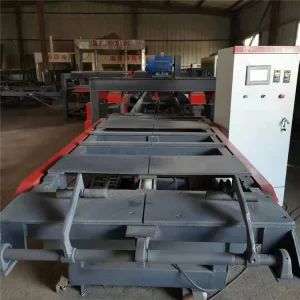
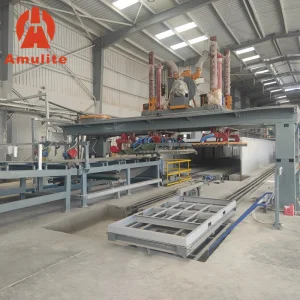
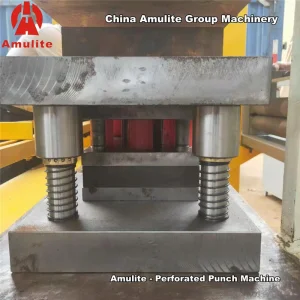
Whether you are planning a greenfield fiber cement tile factory or upgrading existing production lines, our process engineering directorate provides comprehensive site evaluations, custom machinery engineering, and contract-backed performance guarantees.