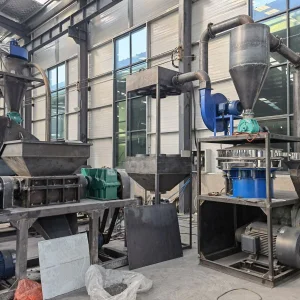
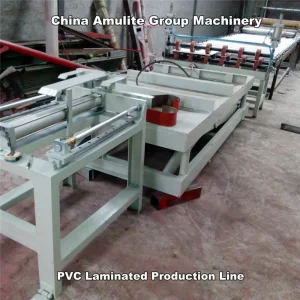
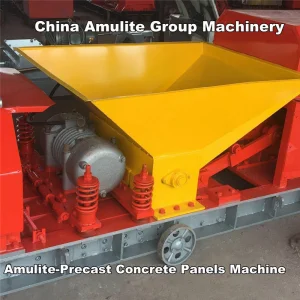
Explore high-capacity production equipment and specialized heavy machinery designed for modern building material plants.
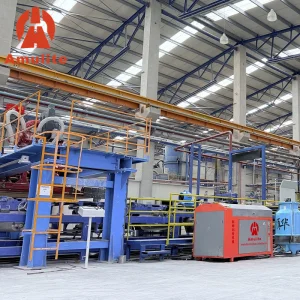
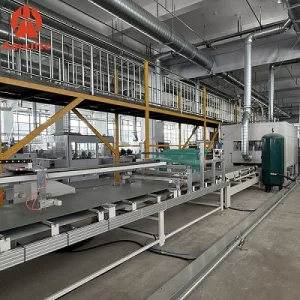
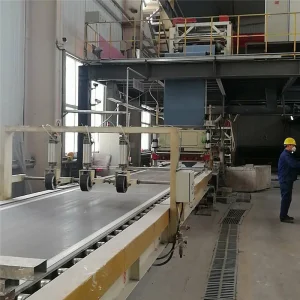
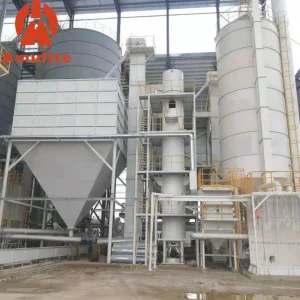
China Fiber Cement Board /Calcium Silicate Board Production Line Factory, Companies
Fiber Cement Plant Setup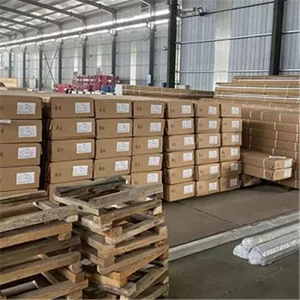
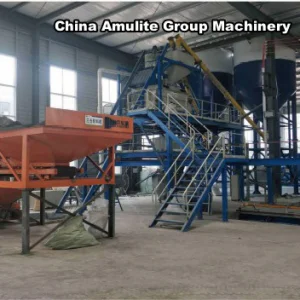
High-Quality Embossed Metal Composite Exterior Panels Production Line Manufacturers, Company
Metal Composite Line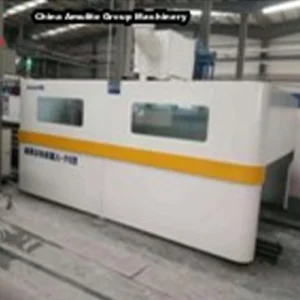
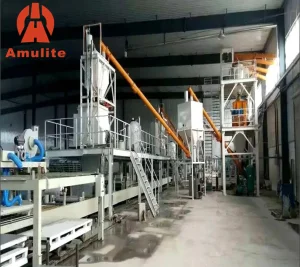
Famous Amulite AAC Blocks Customized Automatic Machines- 4.2m Manufacturers, Company
AAC Block MachineryAnalyzing shifting global construction standards, urbanization pressures, and the technological evolution of Chinese cement sheet machinery.
The global demand for high-density, non-combustible, and weather-resistant building substrates has experienced exponential growth over the past decade. driven by stringent municipal fire-safety codes, modern prefabricated construction methodologies, and the urgent global mandate to replace traditional asbestos-containing corrugated sheets with environmentally sustainable, asbestos-free fiber cement and calcium silicate formulations.
In this macroeconomic landscape, China's cement sheet machinery and equipment industry has evolved from basic mechanical fabrication into a world-class hub for automated, high-precision, process-engineered production systems. Today's global procurement officers, plant operations executives, and EPC contractors do not merely seek standalone equipment; they require fully integrated, turnkey industrial solutions capable of utilizing local raw materials—such as Ordinary Portland Cement (OPC), quartz sand, fly ash, micro-silica, recycled waste paper, and imported kraft wood pulp—to deliver EN 12467 and ASTM C1186 compliant boards at maximum operational efficiency.
"Modern manufacturing excellence in fiber cement machinery requires an absolute convergence of raw material wet-process physics, precision mechanical dewatering, dynamic thickness control, and energy-optimized hydrothermal synthesis curing cycles."
Understanding the process engineering choices that dictate sheet strength, layer lamination, output capacity, and CAPEX requirements.
The Hatschek manufacturing method remains the globally preferred standard for high-density fiber cement boards. Slurry containing 8% to 12% solids is continuously agitated in multi-vat cylinder vats. Synthetic felts pick up microscopic films (0.2–0.3 mm) of cement-cellulose matrix, dewatering them via high-vacuum suction boxes before winding them onto a forming roll (making cylinder) until the exact target thickness is reached.
In the Flow-on process, a concentrated slurry is distributed directly onto a moving porous wire belt equipped with bottom vacuum chambers. This process bypasses vat cylinders, allowing for higher solids concentration during initial distribution, which significantly reduces the energy required for dewatering recycled materials or thicker low-density board formulations.
| Performance Metrics | Autoclaved Fiber Cement (CSB) | Air-Cured Fiber Cement (NT) | EPS Sandwich Cement Panel Line |
|---|---|---|---|
| Primary Raw Materials | Quartz Sand (SiO2 > 90%), OPC Cement, Cellulose Pulp | OPC Cement, Fly Ash, Wollastonite, Cellulose / PVA Fiber | Face Sheet (Fiber Cement) + EPS Beads, Cement, Foaming Agent |
| Curing Technology | High-Pressure Steam Autoclave (12 hrs @ 1.2 MPa, 190°C) | Moisture Curing Room (7-14 Days @ 45°C - 60°C) | Natural / Warm Room Curing (24-48 Hours) |
| Crystalline Structure | Tobermorite Crystalline Matrix (Zero Hydration Expansion) | Amorphous C-S-H Gel Matrix | Composite Air-Entrained Lightweight Core |
| Board Density Range | 1.20 - 1.65 g/cm³ | 1.30 - 1.75 g/cm³ | 0.55 - 0.80 g/cm³ |
| Linear Thermal Expansion | < 0.12% (Ultra-stable dimensionally) | < 0.25% | < 0.15% |
| Primary Global Markets | USA, Middle East, SE Asia, Latin America | Europe, East Asia, Oceania | Africa, SE Asia, Middle East Prefab Housing |
From primary fiber disintegration to automated stack handling, pressing, autoclaving, and high-speed CNC trimming.
Heavy-duty vertical hydrapulpers break down wood pulp sheets into micro-fibrillated fibers. Automated PLC dosing systems precisely meter cement, ground quartz silica, alumina, and additives by weight using digital load cells to guarantee zero batch-to-batch variance.
For high-density facade boards (up to 1.7 g/cm³), automatic hydraulic press systems apply up to 7,000 to 10,000 tons of uniform pressure across stacked green sheets. This removes residual free water, eliminates internal micro-voids, and boosts freeze-thaw resistance.
ASME/CE certified pressure autoclaves heat sheets up to 190°C under 1.2 MPa saturated steam pressure. This triggers the hydrothermal chemical reaction between reactive silica and calcium hydroxide, yielding an ultra-stable Tobermorite crystal matrix.
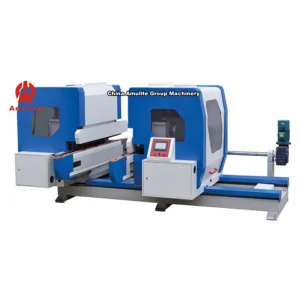
High-speed longitudinal and transverse CNC trimming machines equipped with diamond-tipped saw blades square edges precisely within ±0.5 mm tolerances, while optional routing heads apply ship-lap or tongue-and-groove joint profiles.
Specialized hydraulic multi-punching press stations create precision hole patterns (round, square, micro-perforations) on calcium silicate boards, converting rigid building panels into high-end acoustic sound-absorbing ceiling and wall tiles.
Heavy-duty multi-head wide-belt sanding machines equalize board thickness tolerances to within ±0.1 mm, followed by fully automated UV-curing or water-based acrylic paint coating lines for decorative wood-grain and exterior facade panels.
A systematic framework for project developers, investors, and industrial engineering teams establishing new board manufacturing facilities.
Investing in a modern fiber cement board or calcium silicate board factory demands a comprehensive understanding of initial capital expenditures (CAPEX), operational expenses (OPEX), and utility infrastructure requirements. Chinese cement sheet machinery manufacturers offer significant cost advantages, reducing total machinery CAPEX by 40% to 60% compared to Western European equipment vendors, without compromising on component quality, PLC automation, or structural durability.
Establishment of primary industrial site footprints (typically requiring 15,000 m² to 45,000 m² of covered shop floor area). Key requirements include:
Before equipment delivery, our chemical and process engineers conduct comprehensive laboratory analysis of locally sourced raw materials:
Ensuring seamlessly compliant product output and hands-on operational commissioning across global markets.
Our machinery is designed to produce board products that meet or exceed international regulatory benchmarks, including ASTM C1185, ASTM C1186, EN 12467, and ISO 8336. Electrical panels feature CE, UL, and CSA compliant Siemens PLC controllers and Schneider low-voltage components.
Experienced mechanical installation teams and automation electrical engineers are deployed directly to your factory site. They manage equipment positioning, precision alignment of forming cylinders and autoclaves, cable tray wiring, and piping connections.
We provide full-scope operational training for your local workforce, covering slurry density management, pulper refining control, autoclave steam cycling, blade maintenance, and real-time SCADA system operation until stable mass production is achieved.
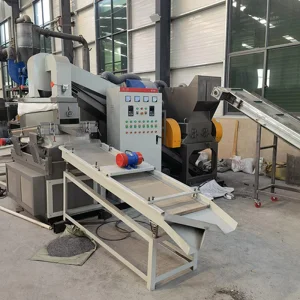
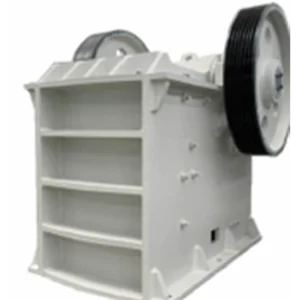
Complete your plant configuration with primary crushers, recycling systems, precast equipment, and specialized panel lines.
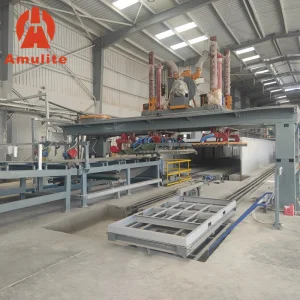
China Non-Asbestos/Asbestos Cement Corrugated Roof Sheets Production Line Company, Product
Corrugated Sheet Line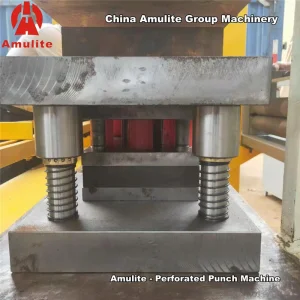
High-Quality Amulite Perforated Punch Machine System Technical Data Manufacturer, Suppliers
Perforating Punch SystemsAddressing core technical, financial, and operational queries raised by industrial buyers and engineering teams.
Production lines are modularly engineered for capacities ranging from 2 million m² per year for boutique or specialized high-density lines up to 30 million m² per year for large-scale commodity board plants. Capacity depends on the number of vats (typically 3 to 6 vats), forming sheet machine width (1,350 mm to 1,650 mm), stacker speed, and autoclave volume capacity.
Autoclaved calcium silicate boards (CSB) utilize ground silica quartz sand reactively bound under 1.2 MPa high-pressure steam at 190°C to form a stable Tobermorite crystalline structure, offering absolute dimensional stability and zero wet-expansion. Non-autoclaved (air-cured) fiber cement relies on hydration curing of OPC cement, making it ideal for tough, impact-resistant external cladding where long-term curing strength continues to increase over time.
Yes, comprehensive raw material feasibility testing is a fundamental component of our E-E-A-T engineering protocol. Clients ship 20 kg samples of local cement, silica sand, fly ash, and wood pulp to our centralized process laboratory. We perform sieve analyses, chemical XRF spectrum analysis, pulping tests, and press sample trials to guarantee finished board physical properties before machinery design is finalized.
Equipment manufacturing generally requires 90 to 120 days depending on custom component requirements and vessel autoclave certifications. Ocean freight shipping ranges between 20 to 45 days depending on the destination port. On-site mechanical installation, electrical wiring, wet-testing, and initial trial production commissioning typically take 60 to 90 days with our resident field engineers.
Every plant comes standard with an extended 2-year wear-and-tear spare parts package (including felt belts, wire meshes, cutter blades, vacuum seals, and hydraulic seals). Remote PLC network diagnostic modules are built into every SCADA electrical cabinet, allowing our software engineers in China to assist your plant technicians 24/7 via encrypted industrial internet channels.
Yes. Non-asbestos fiber cement and calcium silicate panels manufactured using modern Hatschek processes achieve Euroclass A1 non-combustible ratings under EN 13501-1 and ASTM E136 standards. They produce zero smoke, zero toxic gas emission, and maintain structural integrity during intense thermal exposures up to 1,000°C for up to 4 hours.