Industry White Paper & Global Procurement Guide

China Cement Board Factory & Products

Engineered Fiber Cement & Calcium Silicate Board Manufacturing Solutions: Microstructural Integrity, Supply Chain Resilience, and Global Industrial Applications.

Featured Production Machinery & System Solutions (Part I)

Explore state-of-the-art building material machinery, automated packaging workshops, and crushing equipment designed for high-capacity industrial production lines.

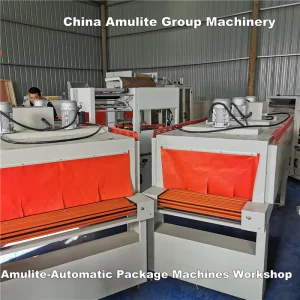
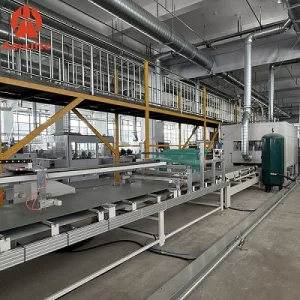
Famous Automatic Package Machines Workshop Factory, Company
View Technical Spec →
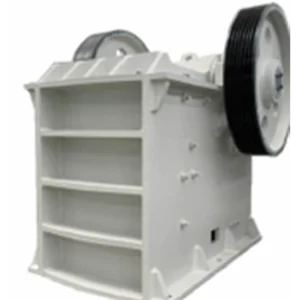
Buy Stone Hammer Crusher 6CX Euro Series Jaw Crusher Company, Product
View Technical Spec →
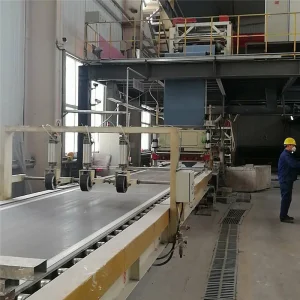
China Gypsum Board Production Line Supplier, Factories
View Technical Spec →
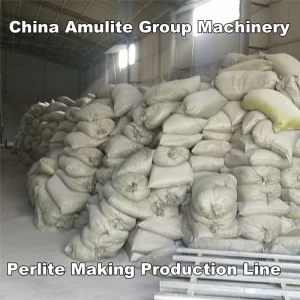
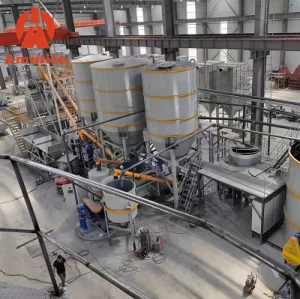
Buy Perlite Production Line Manufacturers, Company
View Technical Spec →
Best Flexible Clay Ceramic Tile Production Line Manufacturer, Companies
View Technical Spec →
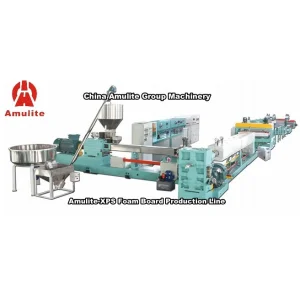
OEM Amulite CO2 XPS Foam Board Production Line Factory, Factories
View Technical Spec →
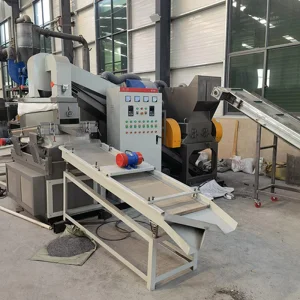
Buy Copper Wire Recycling Machine Companies, Products
View Technical Spec →
OEM EPS Sandwich Cement Wall Panels Production Line Companies, Products
View Technical Spec →
Global Trends & Semantic Evolution of Cement Board Technology

The global construction ecosystem is undergoing a radical paradigm shift from traditional wet-construction methods to high-efficiency, industrialized off-site prefab systems. Within this transformation, Fiber Cement Board (FCB) and Calcium Silicate Board (CSB) have emerged as critical structural, fireproofing, and cladding components. Market analysis indicates a Compound Annual Growth Rate (CAGR) exceeding 5.8% globally, driven by stringent fire safety standards (EN 13501-1 Class A1 non-combustibility), thermal performance demands, and the urgent mandate to eliminate asbestos-containing building products across developing economies.

Information Gain Insight: Modern fiber cement manufacturing is no longer a simple mechanical mixture of Ordinary Portland Cement (OPC) and sand. Today's advanced China Industry 4.0 plants utilize controlled hydro-thermal chemical reactions inside high-pressure autoclaves to engineer crystalline Tobermorite ($C_5S_6H_5$) matrix structures, yielding flexural strength-to-weight ratios that exceed traditional concrete by over 400%.
A1
Non-Combustibility Rating
100%
Asbestos-Free Fiber Matrix
50+ Yrs
Expected Facade Durability
>1.4g/cm³
High-Density Class Options

Commercial architects and EPC (Engineering, Procurement, and Construction) contractors in North America, Europe, the Middle East, and Southeast Asia are increasingly standardizing on fiber cement systems due to their multi-hazard resilience. These boards exhibit superior resistance to seismic movement, moisture expansion, rot, termite degradation, and extreme thermal cycling—outperforming conventional drywall, exterior gypsum, and plywood substrates in demanding commercial environments.

Material Science & Production Line Engineering

Understanding the structural integrity of cementitious boards requires an inspection of the slurry forming process. Premier Chinese manufacturers operate two main processing topologies: the Hatschek Process (derived from paper-making technology) and the Flow-on (Slurry-Flow) Process.

Hatschek Layering Process

Utilizes multi-vat rotating mesh cylinders immersed in dilute raw material slurry (solid content 7–10%). Micro-thin film layers (0.2–0.3mm) are continuously extracted, dewatered via vacuum suction boxes, and wrapped around a accumulation drum under mechanical pressure until the targeted board thickness is achieved.

  • Superior multi-directional flexural strength
  • High density (1.2 - 1.7 g/cm³)
  • Ideal for exterior siding & high-impact cladding
Flow-on (Slurry Flow) Method

High-concentration slurry (solid content 25–35%) is directly deposited onto a continuous synthetic belt, followed by multiple stage high-vacuum dewatering and roll-pressing. This method allows higher output volumes for medium-density boards.

  • Streamlined production velocity
  • Medium density optimized (0.9 - 1.2 g/cm³)
  • Excellent cost performance for interior partitions
Autoclave Hydro-Thermal Curing

Green boards undergo 10–12 hours of high-pressure steam curing inside autoclaves at temperatures of 170°C to 190°C and pressures of 1.0 to 1.3 MPa. This forces reactive silica ($SiO_2$) and lime ($CaO$) to synthesize crystalline Tobermorite.

  • Zero moisture movement post-curing
  • Complete elimination of efflorescence risks
  • Extremely low linear expansion coefficient
China Factory 4.0: Supply Chain Resilience & Manufacturing Superiority

Global buyers frequently ask: Why source fiber cement board equipment and products directly from Chinese automated facilities? The answer lies in China's fully integrated upstream and downstream industrial clusters. From high-purity quartz sand mining and refined cellulose fiber pulping to automated PLC-controlled machinery manufacturing, Chinese producers offer unmatched supply chain resilience, scaling efficiency, and raw material optimization.

Modern Chinese factories leverage Industry 4.0 Smart Automated Systems. Fully integrated PLC control cabinets (utilizing Siemens, Schneider, or ABB hardware) monitor real-time slurry viscosity, fiber dispersion uniformity, vacuum pressure levels, hydraulic pressing tonnage, and steam consumption curves. This granular process monitoring guarantees batch-to-batch consistency that complies with international standard EN 12467:2012.

Technical Benchmark Matrix: Board Physical & Mechanical Properties
Performance Parameter Autoclaved Fiber Cement Board Calcium Silicate Board (Low Density) Standard Gypsum Board Testing Standard Reference
Density Range (g/cm³) 1.20 – 1.70 0.80 – 1.10 0.65 – 0.85 ASTM C1185 / EN 12467
Flexural Strength (MOR) 12 – 24 MPa (Class 1-5) 8 – 14 MPa 4 – 7 MPa ASTM C1186 / BS EN 12467
Reaction to Fire Class A1 Non-combustible Class A1 Non-combustible Class A2 / B (Paper-Faced) EN 13501-1 / ASTM E136
Water Absorption % < 28% < 35% High (Degrades Matrix) ASTM C1185
Thermal Conductivity ($\lambda$) 0.18 – 0.25 W/m·K 0.10 – 0.14 W/m·K 0.16 – 0.19 W/m·K ASTM C177
Moisture Movement (Linear) ≤ 0.08% ≤ 0.10% > 0.25% (Delaminates) ISO 8336
Global Procurement Scenarios & Architectural Applications

Commercial procurement agents, structural engineers, and importers require specialized formulations tailored to specific installation environments. Chinese fiber cement manufacturing hubs engineer specific variants across a wide spectrum of applications:

Ventilated Rainscreen Facades

High-density autoclaved boards (1.4–1.7 g/cm³) with UV-resistant coatings or through-body color pigments. Used in exterior curtain walls, siding planks, and decorative facade louvers subject to high wind pressures and freeze-thaw cycles.

Wet Area & Tile Backer Board

Specifically treated medium-to-high density boards impregnated with hydrophobic silane agents. Designed for high-humidity interiors such as commercial kitchens, hospital operating rooms, bathrooms, and sauna sub-floors.

Fire-Rated Wall & Duct Enclosures

Low-density calcium silicate boards enriched with active wollastonite and aluminum hydroxide additives. Engineered to provide 2-hour to 4-hour fire ratings for structural steel protection, elevator shafts, and smoke extraction ducts.

ESG Compliance & Rigorous Quality Assurance Matrix

As global carbon compliance (such as the EU Carbon Border Adjustment Mechanism - CBAM) tightens, Chinese manufacturers have updated production workflows to meet environmental targets. Production plants utilize waste heat recovery steam loops, closed-loop water recirculation systems (achieving 98% water recycling), and incorporate industrial solid wastes (fly ash, blast furnace slag, silica fume) to replace virgin raw materials.

For overseas procurement, E-E-A-T (Experience, Expertise, Authoritativeness, and Trustworthiness) is verified through mandatory factory quality assurance steps prior to export:

1. Raw Material XRF/XRD Analysis X-Ray Fluorescence and Diffraction verification to guarantee zero heavy metal contamination and consistent $SiO_2$ purity (>90%) in quartz sand slurry.
2. Ultrasonic Thickness & Density Testing Inline automated continuous thickness gauge scanning across the entire board sheet width to ensure tolerances remain strictly within ±0.2mm.
3. Accelerated Weathering & Freeze-Thaw Tests Simulating 100 severe freeze-thaw cycles (-20°C to +60°C) according to EN 12467 to confirm zero layer separation or flexural degradation.
Frequently Asked Questions & Technical Clarifications

Below are technical answers to common queries raised by international buyers, plant managers, and structural engineers regarding China cement board factories and product lines.

Q: What is the primary technical difference between Fiber Cement Board and Calcium Silicate Board?
While both materials utilize cementitious binders and cellulose fibers, the crucial difference lies in their raw material ratios and density profile. Fiber Cement Board uses a higher ratio of Portland cement and unbleached kraft pulp, yielding higher density (1.2–1.7 g/cm³), superior flexural strength (MOR > 16 MPa), and lower water absorption—making it ideal for exterior cladding. Calcium Silicate Board incorporates higher silica sand ($SiO_2$) and quicklime ($CaO$) proportions to synthesize low-density Tobermorite crystals under autoclaving. This yields lower density (0.8–1.1 g/cm³), excellent thermal insulation, and exceptional 4-hour fire protection for interior partitions and ceilings.
Q: Are products manufactured in modern Chinese factories 100% Asbestos-Free?
Yes, completely asbestos-free. Leading export-oriented factories in China utilize 100% virgin unbleached softwood kraft pulp imported from Canada, Russia, or South America, reinforced with synthetic fibers (such as PVA—Polyvinyl Alcohol fibers or Wollastonite mineral fibers). Every batch destined for export is certified under ISO 9001 and verified by independent SGS/TÜV testing reports confirming zero chrysotile, amosite, or crocidolite asbestos content.
Q: What annual production output capacity can a turnkey fiber cement production line achieve?
Turnkey production lines engineered by top Chinese suppliers are modularly designed to deliver annual capacities ranging from 2 million square meters up to 10 million square meters per individual line (calculated based on standard 6mm board thickness). Higher capacities are achieved by installing multi-cylinder Hatschek forming units (3 to 5 vats in series), dual continuous vacuum stackers, and automated multi-deck autoclave curing tunnels.
Q: How do China factories ensure export packaging prevents breakage during maritime transport?
Boards are bundled onto solid fumigated wooden pallets or heavy-duty steel frame skids. The bundle top and edges are protected by high-density corner guards, encased in heavy-duty polyethylene waterproof shrink film, and strapped with high-tensile PET steel-plastic belts. Bottom clearance is engineered precisely for 3-ton to 5-ton forklift handling inside 20ft heavy-duty sea containers or breakbulk vessels.
Q: What custom surface finishing processes are available directly from the factory floor?
Modern factories offer comprehensive secondary processing line equipment: automatic four-side edge chamfering/sanding machines, multi-color UV roller coating lines (producing high-gloss or matte architectural finishes), digital inkjet printing (reproducing realistic wood grain, natural marble, or exposed concrete textures), and inline hydrophobic surface silane sealers.
Featured Production Machinery & System Solutions (Part II)

Complete your plant inventory with specialized auxiliary systems, four-side edge cutting machines, recycling equipment, and turnkey insulation manufacturing lines.
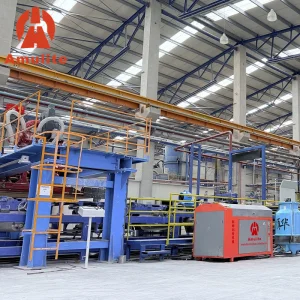
Best XPS Insulation Tile Backer Production Line Supplier, Companies
View Technical Spec →
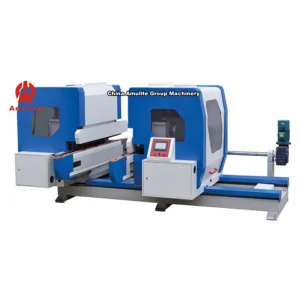
OEM 1300 II Type Automatic Four Side Edge Cutting Machine Factory, Companies
View Technical Spec →
Best AM806BH-10 Technical Parameters Manufacturer, Products
View Technical Spec →
China Expanded perlite production line Supplier, Products
View Technical Spec →
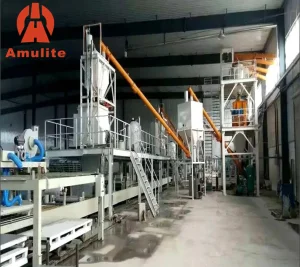
China Fiber Cement Board /Calcium Silicate Board Production Line Factory, Companies
View Technical Spec →
OEM UV Coating/Painting Production Line Manufacturer, Factories
View Technical Spec →
OEM China Amulite Group MGO Board Production Line Factories, Product
View Technical Spec →
OEM Lithium Battery Recycling Equipment Factory, Company
View Technical Spec →