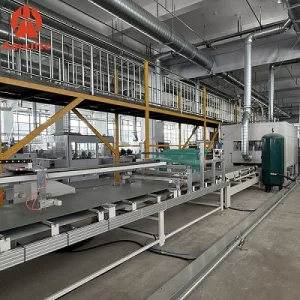
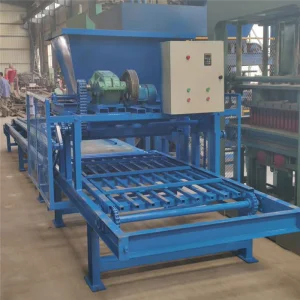
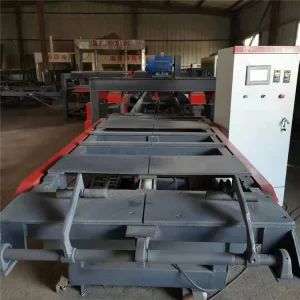
Explore high-yield production lines, precision cutting units, and automated building material equipment engineered by China's leading OEMs.
Transitioning toward lightweight, non-combustible, asbestos-free structural panel systems for modern sustainable architecture.
Information Gain Insight: The shift from traditional gypsum wallboards and hazardous asbestos-cement slates to hydrothermal hydro-silicate Matrix board technologies (Calcium Silicate & Fibre Cement) is accelerating at a CAGR of 6.8% globally. China now manufactures over 72% of the world's automated hydrothermal reaction board lines, offering unprecedented capital efficiency and process repeatability.
Modern building codes across Southeast Asia, the Middle East, Europe, and the Americas increasingly mandate Class A1 fire rating (non-combustible), zero toxic emission, high moisture resistance, and superior bending strength for commercial interior partition walls, soffits, and exterior rainscreen facades. Calcium silicate boards—chemically composed of Tobermorite and Xonotlite crystalline matrices synthesised via autoclave hydrothermal synthesis—represent the apex of high-performance architectural panels.
Autoclaved calcium silicate boards withstand temperatures exceeding 1000°C without releasing toxic fumes or losing structural integrity, replacing drywall in fire-rated shaftwalls and ceilings.
Unlike gypsum board which disintegrates upon prolonged moisture exposure, calcium silicate boards experience minimal hygroscopic swelling (<0.12%), ideal for high-humidity tropical zones.
Reinforced with non-asbestos organic pulp or inorganic fibres, the interlocking crystalline lattice structure provides flexural strength up to 16-24 MPa for heavy-duty industrial applications.
A comparative analysis of slurry forming techniques engineered by Chinese machinery suppliers for precise thickness and density control.
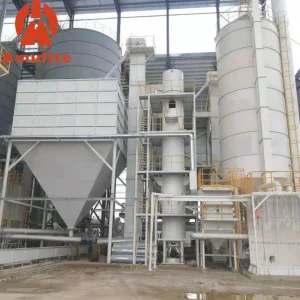
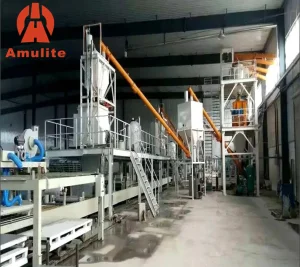
The manufacturing process of calcium silicate boards requires ultra-precise raw material metering, slurry homogenization, continuous wet-sheet accumulation, high-pressure hydraulic dewatering, and hydrothermal autoclave synthesis. Leading Chinese suppliers like Amulite Group provide custom machinery based on two primary slurry forming routes:
| Process Criteria | Hatschek Wet Forming Method | Flow-On (Extrusion / Slurry) Method |
|---|---|---|
| Raw Material Slurry Consistency | Low solids concentration (6% – 10% solid content) | High solids concentration (20% – 35% solid content) |
| Layer Accumulation Mechanism | Multi-cylinder vat mesh picking thin film layers (0.2–0.3mm per revolution) | Direct continuous nozzle distribution onto dewatering wire belt |
| Thickness Precision & Range | 4 mm – 30 mm (Superior ultra-thin board capability) | 6 mm – 50 mm (Ideal for heavy structural thick panels) |
| Fibre Orientation & Alignment | Oriented along rotation direction; high tensile strength | Isotropic fibre distribution; uniform multi-directional strength |
| Energy & Water Consumption | Requires closed-circuit water clarification & recovery circuit | Lower water circulation volume, higher pump motor torque |
Automated dosing of lime (CaO), quartz sand (SiO₂), cement, and cellulose pulp. Micro-pulverization ensures quartz powder fineness reaches >350 mesh.
Slurry enters 3 to 6 forming vats. Rotating wire cylinders pick up micro-films, transferred via felt to building roll for laminated thickness build-up.
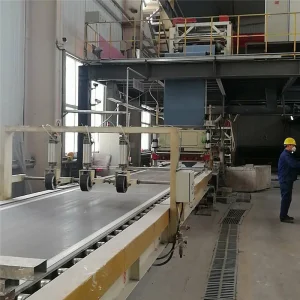
Green boards pass through a high-tonnage multi-daylight hydraulic press (up to 7000 Tons) to increase density, followed by auto waterjet edge trimming.
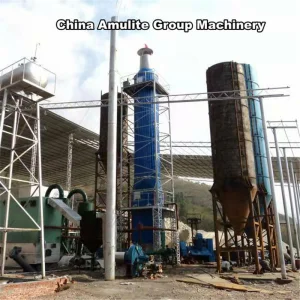
Curing in steam autoclaves at 1.2 MPa and 180°C–195°C for 10–12 hours to trigger the chemical reaction converting SiO₂ and CaO into stable Tobermorite crystals.
Multi-pass energy recovery tunnel dryers reduce moisture below 10%. Calibrating double-side sanding machines produce exact thickness tolerances ±0.2mm.
Why leading global building material conglomerates partner with China-based machine fabricators for plant construction.
From heavy steel plate machining to precision PLC control cabinet wiring, China's Hebei and Jiangsu industrial clusters minimize component procurement lead times by up to 60% compared to European OEMs.
Delivering 100% equivalent structural integrity and automation levels at 35% – 50% lower capital expenditure, enabling investors to shorten payback cycles to under 2.5 years.
Complete lines are pre-assembled, mechanically wired, and dry-tested under simulated load conditions in China prior to containerization, ensuring zero on-site mechanical alignment errors.
Adapting raw material recipes and board density profiles to match regional building standards and climatic challenges.
Low-density, ultra-light boards engineered for acoustic damping, easy screw holding, and sag-free ceiling grid systems in tropical humid regions.
Medium-density boards providing high impact resistance, 4-hour fire endurance walls, and STC 55+ sound insulation rating for hospital and hotel rooms.
High-density, hydro-pressed weather-resistant cladding boards that pass 100 freeze-thaw cycles (-40°C to +80°C) per ASTM C1186 standards.
Specialized thick calcium silicate panels formulated with expanding vermiculite for tunnel linings, steel structural column wraps, and marine bulkheads.
Integrating AI visual thickness feedback, automated SCADA telemetry, and zero-discharge slurry loops.
Real-time inline laser spectroscopy monitors raw slurry solid-to-liquid ratio, automatically adjusting flocculant dosing pumps to maintain optimal layer thickness down to 5 microns.
Thermocompressor heat recovery loops capture blow-down steam pressure, re-injecting thermal energy into pre-curing tunnels to cut natural gas/coal boiler fuel consumption by up to 28%.
Full Servo-driven vacuum manipulators automatically stack trimmed green boards onto autoclave cars at speeds of 18 boards/minute, eliminating manual handling and board corner chipping.
From foundation civil engineering consultation to local workforce empowerment and lifetime spare parts dispatch.
Investing in a calcium silicate board making machine involves complex mechanical, electrical, thermal, and chemical engineering integration. Chinese manufacturers like Amulite provide a complete end-to-end service package compliant with global regulatory bodies (CE, ISO, ASME pressure vessel standards):
Clients ship 50kg samples of local cement, silica sand, and lime to the manufacturer's R&D laboratory. Trial pressings determine exact binder ratios to guarantee board strength prior to machine fabrication.
Detailed 3D Plant Layouts, cable trench schematics, and steam pipe routing plans are delivered within 15 days of contract signing. Equipment is built under ISO 9001 quality audits.
Senior mechanical, electrical, and chemical engineers supervise field installation, dry runs, trial pressing, and operator training until stable continuous 24/7 output is achieved.
Direct answers from chief process engineers to help buyers evaluate technical specs and plant investments.
Explore auxiliary processing lines, surface finishing plants, lightweight block systems, and heavy crushing equipment.