Industry Whitepaper & Technical Solution Blueprint

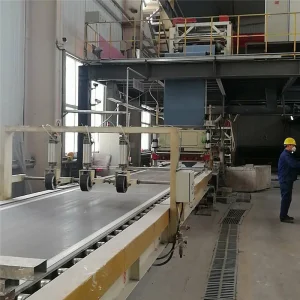
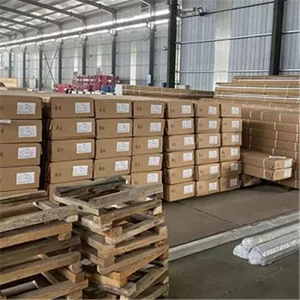
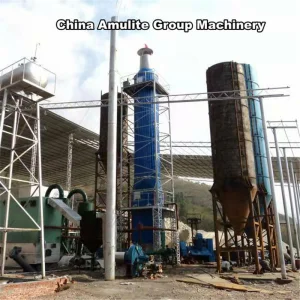
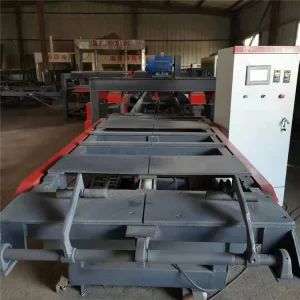
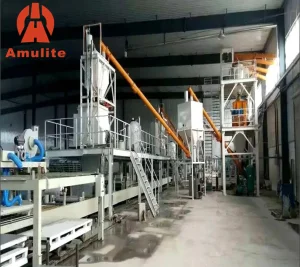
China Amulite Fiber Cement Board Production Line Factory & Products

Engineering Next-Generation Automated Fiber Cement & Calcium Silicate Board Manufacturing Systems with Industry 4.0 Precision, Sustainable Hydration Chemistry, and Global Turnkey Delivery.

Core Machinery Portfolio (Part I)

High-Performance Board & Material Manufacturing Machinery

Engineered for high density, flexural strength, and continuous operational efficiency. Explore our flagships below.
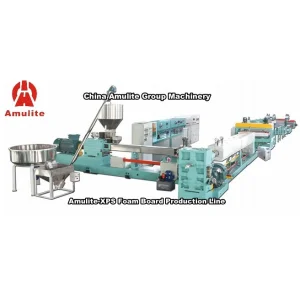
OEM Amulite CO2 XPS Foam Board Production Line Factory

OEM Amulite CO2 XPS Foam Board Production Line Factory, Factories

Explore Line Details
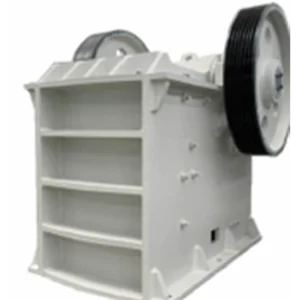
Buy Stone Hammer Crusher 6CX Euro Series Jaw Crusher

Buy Stone Hammer Crusher 6CX Euro Series Jaw Crusher Company, Product

Explore Line Details
China Gypsum Board Production Line Supplier

China Gypsum Board Production Line Supplier, Factories

Explore Line Details
High-Quality Embossed Metal Composite Exterior Panels Production Line

High-Quality Embossed Metal Composite Exterior Panels Production Line Manufacturers, Company

Explore Line Details
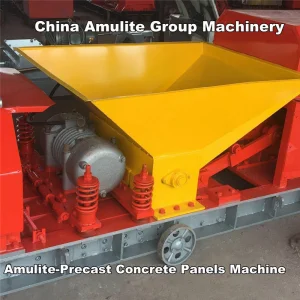
Best Precast Concrete Products Machinery Manufacturers

Best Precast Concrete Products Machinery Manufacturers, Products

Explore Line Details
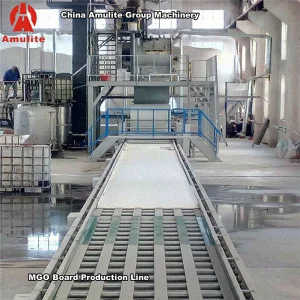
OEM China Amulite Group MGO Board Production Line

OEM China Amulite Group MGO Board Production Line Factories, Product

Explore Line Details
Buy Gypsum Powder Production Line Supplier

Buy Gypsum Powder Production Line Supplier, Product

Explore Line Details
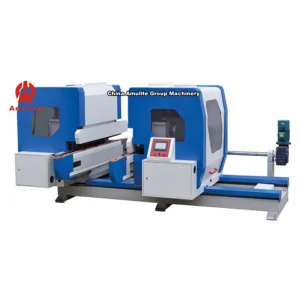
OEM 1300 II Type Automatic Four Side Edge Cutting Machine

OEM 1300 II Type Automatic Four Side Edge Cutting Machine Factory, Companies

Explore Line Details
Executive Industry Insights

The Paradigm Shift in Non-Asbestos Fiber Cement Board Manufacturing

Analysis of global architectural demands, thermal performance metrics, and why modern EPC contractors specify Amulite turnkey lines.

In the contemporary landscape of global construction, the demand for non-combustible, moisture-resistant, and structural-grade building panels has accelerated exponentially. As global building codes tighten around fire safety (Class A1/A non-combustible ratings) and environmental sustainability, traditional gypsum and timber-based panels are increasingly substituted with high-density fiber cement boards (FCB) and calcium silicate boards (CSB).

At the center of this industrial transformation is China Amulite Group. Operating from a state-of-the-art 100,000 m² manufacturing hub in Hebei, China, Amulite has established itself as an authoritative global pioneer in full-line process engineering, machinery fabrication, and material science optimization for non-metallic mineral board production lines.

Technical Distinction: Unlike standard equipment assemblers, Amulite integrates continuous Hatschek sheet-forming technologies with high-pressure autoclave hydro-thermal synthesis, producing board structures with flexural strengths exceeding 16–28 MPa and linear moisture movement under 0.12%.

Hatschek vs. Flow-On Process

Our engineered lines feature 3 to 8 multi-vat Hatschek systems paired with pneumatic felt auto-tracking, enabling ultra-thin layer accumulation (0.2–0.3mm per layer) for superior interlaminar shear resistance.

Energy-Optimized Autoclaving

Utilizing saturated steam at 12–14 bar (180–195°C), Amulite autoclave systems facilitate rapid hydro-thermal reaction between quartz slurry and calcium hydroxide, yielding stable Tobermorite crystal structures.

Zero-Asbestos Formula Matrix

Completely eliminates hazardous fibers, substituting them with high-purity unbleached Kraft wood pulp, alkali-resistant glass fibers, and synthetic PVA fibers tailored to regional raw material availability.

Manufacturing Supremacy

China Industry 4.0: Heavy Infrastructure & Precision Engineering

Inside China Amulite Group’s heavy-fabrication centers: Why integrated supply chains guarantee zero-defect machinery and lower TCO.

100,000+
Square Meters Plant Footprint
27
Specialized Engineering Teams
200+
Turnkey Lines Commissioned
60+
Global Export Markets Served

The manufacturing backbone of China Amulite Group relies on localized heavy industrial clusters in Hebei. By eliminating sub-contractor friction, Amulite retains 100% control over component machining tolerances, metallurgy quality, and PLC electrical assembly. Key supply chain advantages include:

  • In-House Machining Accuracy Forming cylinders, vacuum breast boxes, and press rollers machined on heavy CNC vertical lathes ensuring < 0.02mm dynamic balance precision.
  • Integrated PLC Control Architecture Centralized SCADA integration using Siemens S7-1500 PLC & Schneider electronics for real-time slurry density adjustment and inline board weighing.
  • Pre-Shipment Dry Testing Complete electrical, hydraulic, and vacuum line pre-assemblies tested under simulated operational load prior to export packaging.
Turnkey Execution Blueprint

5-Stage Manufacturing Workflow: Raw Materials to Finished Board

Systematic engineering methodology ensuring optimal slurry hydration, pressing, and dimensional tolerances.

STAGE 01

Raw Material Preparation & Pulping

Silicon quartz, Portland cement, fly ash, and unbleached wood pulp are precisely proportioned in high-shear turbo pulpers and storage agitators to form an optimal solid content slurry (20-25%).

STAGE 02

Hatschek Sheet Accumulation

Slurry flows into multi-vat forming machines. Rotating wire mesh cylinders transfer film layers onto continuous synthetic felts, dewatered via high-vacuum suction boxes before winding onto the format roller.

STAGE 03

High-Pressure Hydraulic Pressing

Green boards undergo high-tonnage hydraulic pressing (up to 7,000 tons total pressure) to squeeze out residual water, collapse micro-voids, and elevate density from 1.1 g/cm³ to 1.6+ g/cm³.

STAGE 04

Hydrothermal Autoclave Curing

Boards enter pressure vessels for 10–12 hours of high-pressure steam curing. Silica and lime chemically react to yield insoluble calcium silicate hydrate crystals, guaranteeing permanent stability.

STAGE 05

Sanding, Trimming & Coating

Automatic 4-side edge trimming machines, high-speed calibration sanders, and optional UV/fluorocarbon paint lines complete the panel finishing for direct architectural deployment.

QA / QC

Automated Quality Verification

Inline ultrasound thickness check, auto-weighing scales, and flexural test samplers instantly report metrics to the master SCADA terminal, preventing out-of-spec batches.

Investment Matrix

Standard Engineering Configurations & Capacities

From modular entry-level lines to high-speed commercial mega-plants. Custom engineering tailored to regional energy and material costs.

Line Specification Amulite FCB-3M (Standard) Amulite FCB-5M (Commercial) Amulite FCB-10M (High Output) Amulite FCB-20M+ (Industrial)
Annual Capacity (m²/year) 3,000,000 m² 5,000,000 m² 10,000,000 m² 20,000,000–30,000,000 m²
Forming Vats Count 3 Vats 4 Vats 5 Vats 6–8 Vats (Dual-line)
Board Thickness Range 4 mm – 20 mm 4 mm – 25 mm 4 mm – 30 mm 4 mm – 30 mm
Board Density Range 1.1 – 1.3 g/cm³ 1.2 – 1.4 g/cm³ 1.3 – 1.65 g/cm³ 1.3 – 1.75 g/cm³
Steam Consumption 2.5 t/h 4.0 t/h 7.5 t/h 14.0 t/h
Installed Electrical Power ~450 kW ~680 kW ~1,200 kW ~2,300 kW
Plant Footprint (L×W) 180m × 18m 220m × 24m 280m × 30m 350m × 45m
Architectural & Modular Applications

End-Use Market Solutions Powered by Amulite Equipment

Fiber cement and calcium silicate panels manufactured on Amulite lines serve diverse global construction sectors.

Exterior Rainscreen Cladding

High-density, autoclaved boards (1.4–1.7 g/cm³) designed to withstand severe freeze-thaw cycles, wind loads, and UV exposure. Ideal for ventilated facades and high-rise commercial exteriors.

Interior Fireproof Partitions

Medium-density calcium silicate boards engineered for 1-hour to 4-hour fire rated wall assemblies, cleanroom partitions, server room linings, and ceiling tile substrates.

Wet-Area Tile Backer Boards

Zero-swell water-resistant boards engineered for bathrooms, kitchens, and industrial wet rooms. Superior tile adhesion strength and mold resistance according to ASTM C1325.

Modular & Prefabricated Housing

Lightweight structural backing panels for Light Gauge Steel (LGS) framing, container houses, and off-site prefabricated volumetric modules.

Decorative Grain & Textured Boards

Embossed wood-grain, slate, and geometric textured siding sheets produced directly via specialized press plates or embossing rollers during sheet formation.

Floor Underlayment & Mezzanines

Heavy-duty 15–30mm structural floor panels providing high impact strength, acoustic damping, and heavy point-load support for commercial floors.

Compliance & Customization

Localization Support & Global Regulatory Alignment

Ensuring your plant's finished products pass rigorous international standards out-of-the-box.

A primary failure point for overseas equipment investments is the mismatch between machinery calibration and locally available raw material chemistry. Amulite mitigates this risk through a comprehensive pre-project material audit and custom chemical formulation tailoring.

ASTM C1185 & C1186

Full alignment with North American standard specifications for non-asbestos fiber-cement flat sheets, covering flexural strength, water absorption, and moisture movement tests.

EN 12467 (European Standard)

Categorization support for Category A, B, C, D boards and Classes 1 through 5 strength levels for CE marking across European Union markets.

AS/NZS 2908.2 Standard

Compliance with Australian/New Zealand building codes for cellulose-cement flat sheets subjected to extreme radiant heat and moisture environments.

R&D Roadmap 2025–2030

Technical Roadmap & Future Innovations in Board Manufacturing

Innovating next-generation technologies to minimize carbon footprint and maximize automation.

Low-Carbon Geopolymer Binders

R&D focused on replacing traditional OPC with alkali-activated slag and pozzolanic calcined clays, cutting embodied carbon emissions per square meter of board by up to 45%.

Closed-Loop AI Vision Quality Control

Integrating high-speed camera sensors and AI edge computing along the conveyor to detect surface micro-cracks, edge delamination, and thickness deviations at 60 meters/minute.

Ultra-Lightweight Aeration Technology

Micro-cellular foam injection technology allowing production of structural fiber cement boards with density under 0.95 g/cm³ without sacrificing screw-holding capability.

Core Machinery Portfolio (Part II)

Extensive Building Material Production Line Solutions

Complementary manufacturing plants, finishing machines, and material processing equipment.
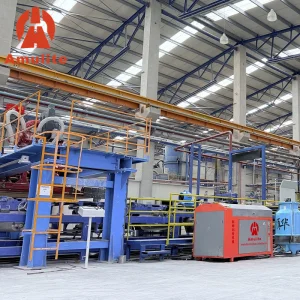
China Fiber Cement Board /Calcium Silicate Board Production Line

China Fiber Cement Board /Calcium Silicate Board Production Line Factory, Companies

Explore Line Details
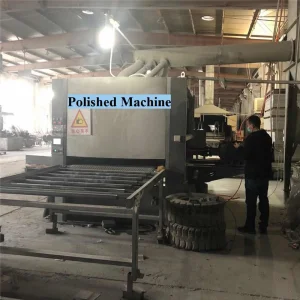
China Single Face Polished Machine Manufacturers

China Single Face Polished Machine Manufacturers, Suppliers

Explore Line Details
Best XPS Insulation Tile Backer Production Line

Best XPS Insulation Tile Backer Production Line Supplier, Companies

Explore Line Details
Famous Amulite AAC Blocks Customized Automatic Machines

Famous Amulite AAC Blocks Customized Automatic Machines- 4.2m Manufacturers, Company

Explore Line Details
Best AM806BH-10 Technical Parameters Manufacturer

Best AM806BH-10 Technical Parameters Manufacturer, Products

Explore Line Details
China Automatic Bricks Making Production Line

China Automatic Bricks Making Production Line Manufacturers, Products

Explore Line Details
Buy Hollow Core Wall Panels Production Line Factory

Buy Hollow Core Wall Panels Production Line Factory, Factories

Explore Line Details
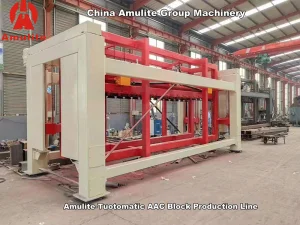
High-Quality Amulite Automatic AAC Block Production Line

High-Quality Amulite Automatic AAC Block Production Line Manufacturers, Companies

Explore Line Details
Technical & Commercial FAQ

Frequently Asked Questions by Global Investors & Engineers

Authoritative answers regarding raw material requirements, ROI timelines, energy consumption, and installation logistics.

What are the key raw material requirements for an Amulite fiber cement board production line?
An autoclaved fiber cement board line requires Ordinary Portland Cement (OPC Grade 42.5 or higher), fine quartz silica sand (SiO₂ content > 85%, ground to 200–300 mesh), and cellulose Kraft pulp (unbleached softwood pulp). Fiber additives such as Wollastonite or synthetic PVA fibers may be incorporated depending on target flexural strength and density parameters.
How does the Hatschek process compare to the Flow-On method in board formation?
The Hatschek process utilizes multiple rotating mesh cylinders immersed in slurry vats to transfer thin films (0.2mm) onto a running felt. This multi-layer accumulation creates film-to-film mechanical interlocking, yielding significantly higher flexural strength (16–28 MPa) and impact resistance compared to Flow-On extrusions, making Hatschek the preferred choice for structural exterior panels.
What is the typical ROI period for a 5 million m²/year fiber cement board plant?
Based on average global market prices for fiber cement boards ($3.50 – $6.00 / m²) and localized Chinese equipment CAPEX, an Amulite 5M m²/year turnkey line typically reaches full payback within 18 to 28 months of commercial operation, assuming an average 65% capacity utilization in Year 1.
What degree of local installation and commissioning support does Amulite provide?
Amulite provides complete turnkey deployment. We dispatch a resident team comprising mechanical supervisors, electrical automation engineers, and process chemical engineers to your site. They handle foundation verification, mechanical erection, PLC commissioning, material trial runs, and local crew training until contract capacity and board strength targets are verified.
Can Amulite lines produce both Fiber Cement Boards and Calcium Silicate Boards on the same equipment?
Yes. Amulite dual-capability lines are dual-engineered. By modifying the raw material ratio (increasing lime/silica ratio for Calcium Silicate or increasing cement content for Fiber Cement) and adjusting autoclave temperature/pressure profiles, operators can seamlessly switch between medium-density interior fireproof CSB and high-density exterior structural FCB.
How does steam curing in autoclaves impact dimensional stability?
Under 12–14 bar pressure steam curing at 190°C, free calcium hydroxide reacts with silica sand to synthesize stable Tobermorite (C₅S₆H₅) micro-crystals. This hydro-thermal reaction permanently locks the crystalline matrix, reducing moisture expansion to < 0.12% and preventing post-installation warping or shrinking.