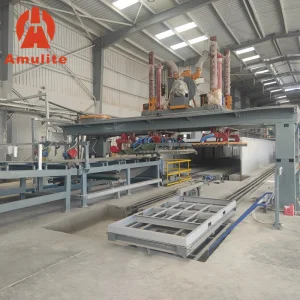
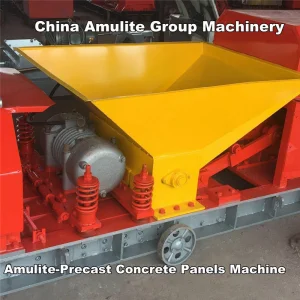
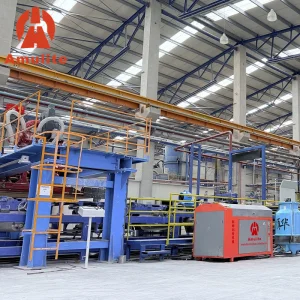
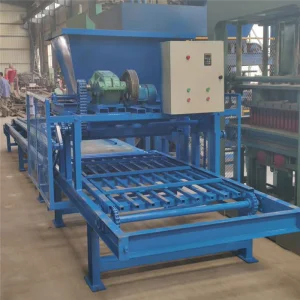
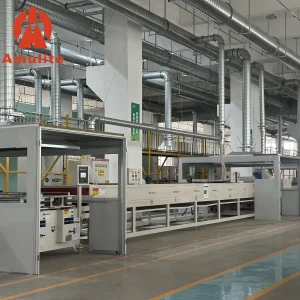
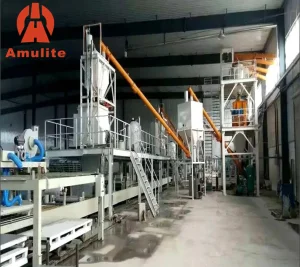
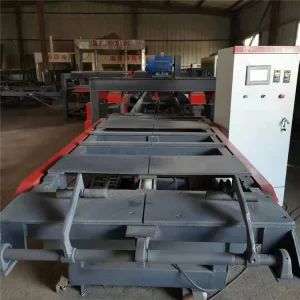
Engineered for ultra-high density, fireproof building panels, structural cladding, and heavy-duty industrial applications.
Modern building codes, extreme climate adaptation, and rapid urbanization are driving structural shifts in global cladding and drywall manufacturing.
The global market for fiber cement boards and high-density pressed cement panels is experiencing an unprecedented compound annual growth rate (CAGR) exceeding 5.8%. Driven by global regulations penalizing combustible exterior cladding, project developers are replacing traditional timber and gypsum products with Class A1 fire-rated pressed cement boards. Sourcing high-tonnage hydraulic press cement board machines has become a priority for plant investors across Asia, the Middle East, Europe, and the Americas.
High-density fiber cement boards (densities ranging from 1.4 g/cm³ to 1.7 g/cm³) require specialized heavy-duty hydraulic pressing stages post-forming. The inclusion of a 7,000 to 10,000-ton press unit drastically lowers porosity, enhances flexural strength (Bending Strength > 16 MPa), and dramatically reduces water absorption under severe weather conditions.
While traditional Hatschek wet-process systems produce continuous thin layers of fiber-cement matrix, un-pressed green sheets often suffer from micro-voids and uneven internal moisture distribution. Integrating an inline, multi-daylight automatic press system solves fundamental structural limitations.
The process achieves superior mechanical calibration, enabling manufacturers to export high-margin exterior facade panels, sub-floor backer boards, and heavy-duty sound barrier walls that meet rigid international standards such as ASTM C1186, EN 12467, and ISO 8336.
A comprehensive breakdown of raw material preparation, sheet forming, heavy pressing, and autoclaving mechanics.
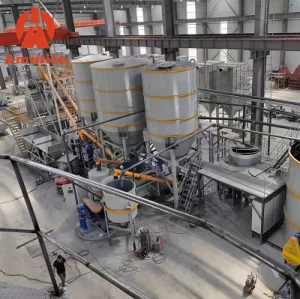
The production process begins with automated dosing of Portland cement, micro-silica sand, cellulose pulp fibers, and specialized additives. High-shear turbomixers ensure homogenous dispersion without fiber clustering, establishing uniform structural strength across the green sheet matrix.
Rotating mesh cylinders collect thin film layers (0.2–0.3mm thick) from slurry vats, transferring them onto a continuous felt belt. High-vacuum dewatering boxes evacuate excess water content before the accumulated layers are wound onto the main forming drum to reach exact thickness specifications (4mm to 30mm).
Stacking robots interleave green sheets with steel plates before feeding them into a multi-daylight heavy hydraulic press. Under pressure up to 70 MPa (700 kg/cm²), excess water is expelled, internal density rises to >1.5 g/cm³, and mechanical bonding between fiber and matrix reaches peak performance.
Kraft pulp fiber refining (30–35°SR freeness) combined with wet ball-milling of silica sand to achieve Blaine fineness exceeding 3800 cm²/g.
Continuous multi-cylinder film pickup on high-density felt, followed by high-speed flying shears cutting green sheets to precise master dimensions (e.g., 1220x2440mm or 1220x3050mm).
Automated loader delivers 50–100 board stacks into the master hydraulic press. Pressure cycles are software-controlled via proportional valves to prevent edge-cracking during rapid water discharge.
Sheets undergo 10 to 12 hours of high-pressure saturated steam curing at 170°C–180°C (0.8–1.0 MPa pressure). Hydrothermal reactions convert free silica and lime into stable Tobermorite crystal structures, ensuring ultimate dimensional stability and freeze-thaw durability.
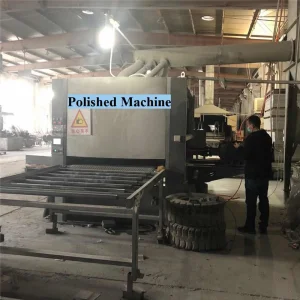
Autoclaved boards are deburred, moisture-conditioned, calibrated via heavy-duty double-sided drum sanders, and sealed with hydrophobic UV or acrylic primer coats prior to automatic packaging.
Analyzing supply chain clusters, engineering agilities, total cost of ownership (TCO), and automated quality control.
China’s heavy machinery manufacturing hubs—particularly in Hebei and regional industrial zones—offer unmatched cluster integration. From forged steel hydraulic cylinders and heavy CNC gantry milling to custom PLC control cabinets, every component is sourced within tightly integrated industrial ecosystems.
This geographic concentration reduces raw equipment procurement costs by 30% to 45% compared to Western European alternatives, without compromising structural steel grades (utilizing heavy Q350B/Q345R pressure-vessel steels) or component reliability (standardizing on Siemens PLCs, Schneider electronics, and Parker hydraulics).
Leading Chinese manufacturers operate dedicated engineering labs to analyze buyer raw material samples—such as local OPC cement grades, volcanic ash, fly ash, silica sand, and recycled fiber sources—before equipment design begins.
Rather than delivering generic off-the-shelf machinery, lines are customized to local raw material chemistries. Turnkey deliverables include full civil foundation engineering drawings, utility load budgeting (steam, compressed air, electricity), process formulation books, and on-site commissioning by resident field engineers.
| Technical Parameter | Standard Un-Pressed Line | Advanced Press Cement Board Line | Strategic Benefit |
|---|---|---|---|
| Final Density Range | 1.1 – 1.3 g/cm³ | 1.4 – 1.75 g/cm³ | Higher density delivers structural integrity for exterior high-rise cladding. |
| Flexural Strength (Bending) | 9 – 12 MPa | 16 – 24 MPa | Exceeds international heavy-duty structural load-bearing standards (ASTM Grade IV). |
| Water Absorption Rate | 28% – 35% | < 15% - 18% | Prevents warping, delamination, and frost expansion in extreme climates. |
| Surface Smoothness | Moderate / Rough back | Calibrated / Smooth both faces | Reduces downstream primer/paint consumption during final architectural installation. |
| Thickness Tolerances | ± 0.8 mm | ± 0.15 mm | Precision thickness matching for modular construction and prefab wall assembly. |
Essential criteria for enterprise purchasing managers, plant developers, and technical director audits.
Examine the press frame fabrication specs. A high-tonnage multi-daylight press must utilize stress-relieved solid steel columns or welded box-girder frames treated via thermal annealing to prevent deflection over millions of press cycles.
Inquire about the hydraulic servo valves. Superior machines implement closed-loop pressure and displacement control, allowing multi-stage pressure ramp-up, holding time, and degas cycles tailored to specific board thicknesses.
Ensure autoclaves carry legitimate pressure vessel regulatory stamps (ASME Section VIII, CE-PED, or SELO certifications). Quick-actuating safety door interlocks and dual pressure relief systems are mandatory for operator protection.
How high-density pressed cement boards serve diverse regional construction markets and architectural demands.
In locations across Southeast Asia, Latin America, and coastal Africa, traditional plywood and plasterboards succumb quickly to termite infestation, mold growth, and moisture expansion. Pressed fiber cement boards provide an immune, non-organic alternative ideal for exterior eaves, soffits, and moisture-prone interior partitions.
In Middle Eastern territories, structural insulation demands ventilated facade systems. Dense pressed fiber cement panels act as robust exterior protective shells over mineral wool insulation, resisting continuous solar UV radiation, thermal expansion cycles, and sandstorm abrasion.
Across earthquake-prone zones in South America and Asia-Pacific, lightweight dry construction is replacing heavy brickwork. Pressed fiber cement structural floor sheets (18mm–25mm thick) provide high shear load resistance on steel frame modular buildings while offering superior impact resistance.
High-density boards produced via press systems achieve Class A1 non-combustibility and exceptional acoustic insulation indices (STC ratings > 50 dB in double-wall assemblies). They are widely specified for tunnel lining, elevator shafts, industrial plant firewalls, and server room enclosures.
Smart sensors, eco-formulations, and zero-carbon curing technologies redefining the future of building materials.
Modern lines integrate online laser thickness scanners and ultrasonic density sensors post-pressing. Real-time feedback loops automatically adjust hydraulic press cylinder pressure profiles to compensate for slight variations in slurry water-cement ratios.
To combat rising softwood kraft pulp prices, advanced lines are optimized to handle hybrid fiber blends—incorporating bamboo pulp, recycled cardboard fibers, and treated agricultural residues without sacrificing ultimate tensile strength.
Next-gen plant designs implement multi-stage steam blow-down energy recovery systems. Spent steam from one curing autoclave preheats incoming water and assists initial temperature ramp-up in adjacent vessels, cutting thermal energy costs by up to 25%.
Direct answers from senior process engineers regarding plant feasibility, operational costs, and machine selection.
Explore related machinery for brick making, crushing, insulation backing, and decorative UV coating.