Explore our engineered production solutions designed for high-throughput, low-carbon building material manufacturing plants worldwide.
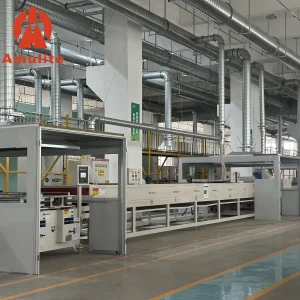
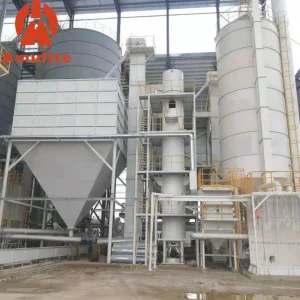
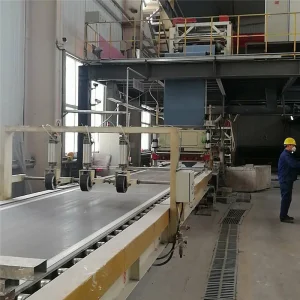
The global modern construction sector is undergoing a structural paradigm shift. Driven by tight deadlines, soaring labor costs, stringent building energy codes, and carbon-neutral mandates, international contractors are rapidly transitioning from traditional brick-and-mortar masonry to prefabricated, modular wall panel systems. At the forefront of this industrial evolution is the Lightweight EPS Cement Sandwich Composite Panel Production Line.
EPS (Expanded Polystyrene) composite sandwich panels combine high-density calcium silicate or fiber cement facing boards with a lightweight aggregate core of expanded polystyrene beads, Portland cement, fly ash, and proprietary chemical additives. The result is a composite wall component that weighs only 1/6th of standard brick masonry, delivers exceptional fire resistance (up to 4 hours at 1000°C), provides high acoustic insulation (STC 45–52 dB), and dramatically accelerates on-site installation by up to 400%.
To successfully market and deploy an EPS sandwich panel production line, prospective plant owners and EPC contractors must evaluate machinery suppliers based on process reliability, raw material adaptability, and core slurry automation. Investing in a high-efficiency production line requires detailed technical insight into the mechanical, chemical, and electrical systems that govern slurry batching, core injection, demolding, and thermal curing.
An end-to-end breakdown of industrial automation, material dosing, and precision casting systems engineered for zero-defect panel production.
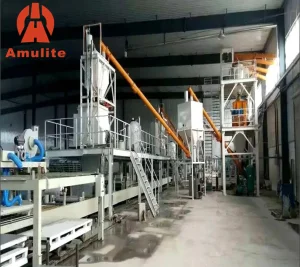
Precision is essential for structural integrity. The automated batching section utilizes load-cell-equipped silos for Portland cement, fly ash, silica sand, and foam agent. A high-shear vertical slurry mixer ensures homogeneous dispersion of lightweight EPS beads without crushing their cellular structure, preventing core segregation and density variance.
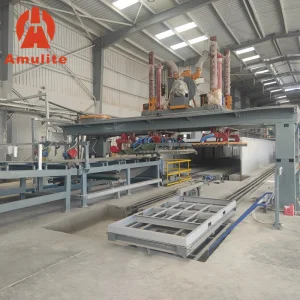
Modern plant configurations utilize high-density vertical mold cars (typically holding 40 to 80 panels per car). The vertical arrangement guarantees strict dimensional tolerance (±1mm thickness), smooth surface finishes, and simultaneous double-sided facing board positioning. Mold walls are constructed from reinforced alloy steel to withstand internal hydraulic expansion pressure during slurry setting.
Controlling EPS bead bulk density (from 8 kg/m³ to 15 kg/m³) is critical to panel cost control and strength. The continuous steam pre-expander features a pressurized chamber with electronic proportional steam valves, followed by a fluidized bed dryer that stabilizes internal bead pressure prior to core slurry integration.
Once initial hydration curing is reached (4–6 hours depending on ambient temperature and accelerator dosage), automatic hydraulic mold openers retract the side plates. A 90-degree vacuum turnover stacker gently lifts cured panels, turns them horizontally, and places them onto automated transfer carts bound for secondary curing yards or wrapping stations.
Industrial Industry 4.0 integration allows real-time telemetry across the entire plant. Siemens S7-1500 PLCs paired with multi-touch HMI interfaces manage material weighing, water-cement ratios, steam valve opening degrees, mold transport indexing, and fault diagnostics, reducing manual operational labor by up to 70%.
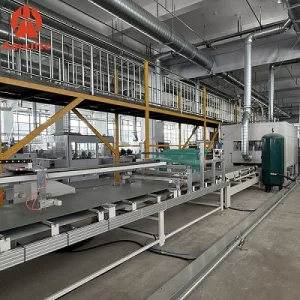
Integrates calcium silicate board (4.5mm–6mm) feeding via pneumatic suction frames. Optional inline edge tongue-and-groove profiling machinery cuts precision male/female joints on panel long sides, ensuring tight interlock during wall erection and eliminating thermal bridging.
Global project developers and building material investors increasingly select Chinese machinery original equipment manufacturers (OEMs) when purchasing turnkey lightweight panel production lines. This trend is driven by clear structural engineering and economic factors:
The versatility of EPS lightweight cement composite panels allows them to address diverse structural, thermal, and architectural demands across multiple global construction sectors:
In high-rise residential towers and office buildings, reducing dead weight directly lowers foundation design costs and steel reinforcement quantities. EPS sandwich panels (90mm or 120mm thickness) replace heavy hollow concrete blocks. The tongue-and-groove joint system ensures rapid installation, while dry construction methods allow immediate wall painting and plastering.
Government social housing projects in Southeast Asia, Africa, and Latin America demand rapid deployment and affordable unit costs. Complete steel-frame houses combined with EPS composite wall panels enable a structural shell to be erected in days. The panels offer high flexural strength and impact resistance, ensuring structural durability against seismic events.
Industrial parks require fireproof, insulated exterior walls. EPS composite panels equipped with 5mm fiber cement facing boards provide class A fire protection while maintaining thermal conductivities as low as 0.038 W/m·K. In cold chain facilities or tropical climates, these wall systems dramatically trim HVAC energy consumption.
When international procurement teams evaluate the decision to Buy a Lightweight EPS Composite Panel Production Line, analyzing the Total Cost of Ownership (TCO) is paramount. Beyond the initial capital expenditure (CAPEX), long-term operational expenditure (OPEX) determines factory profitability.
The global lightweight building material manufacturing landscape is rapidly evolving toward zero-carbon and smart manufacturing paradigms. Future-proof panel production lines integrate several key technological advances:
Modern slurry formulations maximize industrial by-products such as fly ash, blast furnace slag, and recycled ceramic powders, replacing up to 50% of standard Ordinary Portland Cement (OPC). This lowers raw material costs while earning green building carbon credits.
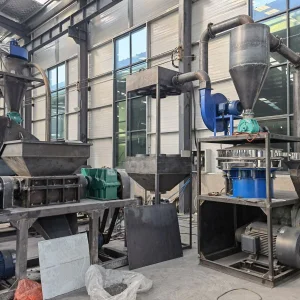
Leading manufacturers are upgrading pre-expander systems to process 100% post-consumer recycled EPS scrap without compromising panel compressive strength, directly aligning with circular economy standards.
Inline laser scanner systems detect surface defects, micro-cracks, and dimensional variance on facing boards before panels are wrapped and palletized, guaranteeing 100% compliance with international ISO and ASTM standards.
Annual capacity typically ranges from 200,000 square meters to over 1,000,000 square meters per year per production line. Output is governed by the number of vertical mold cars operating in parallel, the level of slurry batching automation, and whether steam curing or natural ambient curing is utilized.
The main raw materials include Ordinary Portland Cement (OPC 42.5 grade), Expanded Polystyrene (EPS) beads, fly ash or silica sand, foaming agents, chemical accelerators/plasticizers, water, and pre-cut calcium silicate or fiber cement facing boards (usually 4.5mm or 5mm thickness).
During slurry mixing, each expanded EPS bead is fully encapsulated within a dense matrix of hydrated Portland cement, fly ash, and fire-retardant additives. Coupled with non-combustible A1-grade calcium silicate facing boards on both sides, the composite panel prevents oxygen contact with the EPS core, achieving up to 4 hours of fire resistance under ISO 834 / UL 263 fire testing standards.
A standard 500,000 m²/year automated EPS panel plant requires a covered workshop area of approximately 3,000 to 5,000 square meters, with a minimum clear height of 6.0 meters for silo and mixer placement. Additional outdoor yard space of 4,000 square meters is recommended for finished panel curing and pallet storage.
Yes. Reputable China manufacturers provide laboratory testing services. International buyers send samples of local cement, sand, fly ash, and EPS beads to the OEM’s process laboratory. Engineers conduct mix formulation trials, test flexural and compressive strength, and fine-tune machine parameters before final factory assembly.
Turnkey contracts include sending senior mechanical and electrical engineers to the client’s site for 30–45 days. Services cover foundation positioning checks, mechanical assembly, electrical wiring, PLC software commissioning, trial production runs, and hands-on operator training until target board quality and output are verified.
While the material cost per square meter of EPS panels may be comparable to high-grade blockwork, the total installed wall system cost is 25% to 40% lower. Savings stem from lightweight foundation reductions, elimination of wet plastering, faster construction velocity, and lower structural labor requirements.
High-quality machinery lines comply with European CE directives (Low Voltage Directive and Machinery Directive), ISO9001 quality management systems, and ISO14001 environmental management. Pressure vessels such as steam accumulators adhere to ASME or CE-PED standards.
Discover our comprehensive range of specialized board production lines, crushing equipment, and processing plants.