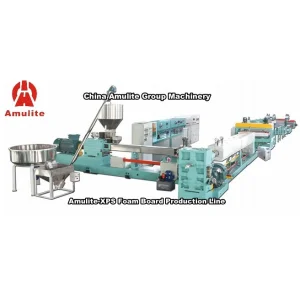
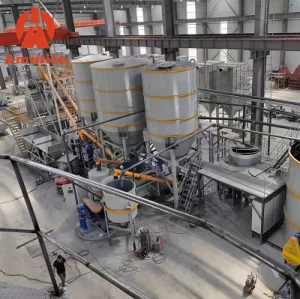
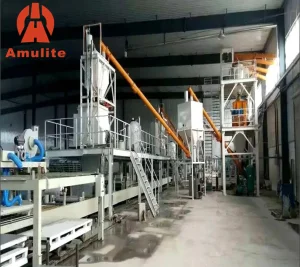
Explore our core technological plant configurations, precision forming systems, and raw material processing machinery designed for enterprise-grade throughput.
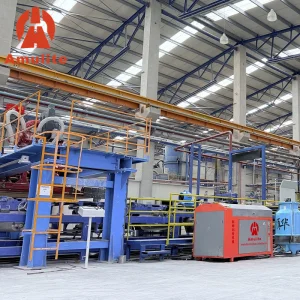
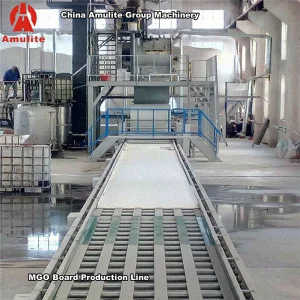
China Fiber Cement Board /Calcium Silicate Board Production Line Factory, Companies
View Technical Specs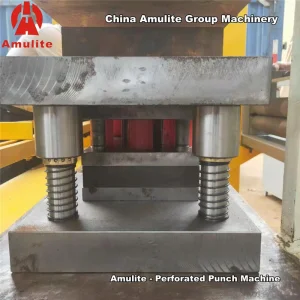
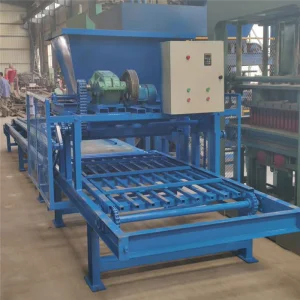
High-Quality Amulite Perforated Punch Machine System Technical Data Manufacturer, Suppliers
View Technical SpecsThe global modern construction sector is undergoing a structural paradigm shift driven by stringent carbon neutral mandates, elevated structural fire resistance standards (EN 13501-1 Class A1 non-combustible ratings), and the rapid expansion of prefabricated modular architecture. Central to this transition is Fiber Cement (FC) and Autoclaved Calcium Silicate board technology—a resilient, non-asbestos composite material offering unmatched dimensional stability, flexural strength, and moisture durability.
Industrial procurement teams seeking to buy FC board making machine suppliers & company solutions must analyze macro factors influencing plant ROI. Modern production plants no longer rely on simple mechanical pressing. Today's commercial deployment mandates sophisticated process automation, precise raw material slurry stoichiometry, closed-loop thermal recovery, and zero-discharge water recycling infrastructure.
Global architectural trends favor off-site dry-wall construction. Fiber cement boards provide lightweight structural cladding, fire separation, and acoustic dampening, creating exponential demand for high-capacity production lines capable of 24/7 continuous operation.
Advanced FC board machine suppliers engineer systems tailored to low-carbon binders. Incorporating industrial by-products such as fly ash, slag, and micro-silica significantly diminishes embodied carbon while maintaining structural integrity and hydration performance.
Plant machinery must output boards meeting international testing standards including ASTM C1186 (Standard Specification for Flat Fiber-Cement Sheets) and ISO 8336, necessitating millimetric precision during sheet forming, vacuum dewatering, and edge trimming phases.
A high-performance FC board manufacturing line involves complex chemical engineering, mechanical dynamics, and automated material handling. The two predominant technological routes are the Hatschek Process (Layer-by-Layer Wet Accumulation) and the Flow-on Process (Slurry Extrusion/Casting).
Unbleached kraft wood pulp undergoes high-consistency pulping and refining to achieve optimal Canadian Standard Freeness (CSF). Silica sand, Ordinary Portland Cement (OPC), and chemical additives are dynamically metered via loss-in-weight feeders.
The slurry enters multi-vat rotating mesh cylinders. Micro-thin layers (0.2–0.3mm) are transferred onto a continuous felt belt, dewatered under multi-stage high-vacuum suction boxes, and wound onto a precision-machined forming drum until the exact targeted sheet thickness (4mm–30mm) is attained.
Green boards pass through a high-tonnage hydraulic press (up to 7,000–10,000 tons). This compaction process eliminates internal air voids, dramatically increases density (up to 1.4–1.7 g/cm³), and enhances post-cure flexural bending strength (MPa).
For high-stability calcium silicate FC boards, green sheets are cured in high-pressure autoclaves (10–12 bar saturated steam, 180°C–190°C for 10–12 hours). Quartz powder reacts with calcium hydroxide to form Tobermorite crystalline structures, rendering the board permanently water-resistant and dimensionally stable.
Evaluating machinery suppliers requires rigorous assessment of target product specifications, utility consumption, and line efficiency. Below is an engineering benchmark matrix contrasting standard density boards against high-density autoclaved fiber cement boards engineered by top-tier suppliers.
| Performance / Machine Parameter | Medium Density Air-Cured Line | High Density Autoclaved (CSH) Line | Amulite Integrated Smart Line Standard |
|---|---|---|---|
| Target Board Density Range | 1.0 – 1.25 g/cm³ | 1.3 – 1.65 g/cm³ | 0.95 – 1.75 g/cm³ (Fully Configurable) |
| Flexural Bending Strength (EMC) | ≥ 9.0 MPa | ≥ 16.0 MPa | Up to 24.0 MPa (Press Compacted) |
| Hydrothermal Curing Cycle | Ambient Pre-Cure (28 Days) | High Pressure Steam (12 Hours) | Optimized Dual-Phase Smart Steam (8-10 Hrs) |
| Slurry Moisture Dewatering Efficiency | Vacuum Delta P: -0.04 MPa | Vacuum Delta P: -0.06 MPa | Multi-Stage Servo Vacuum (-0.08 MPa) |
| Automated Edge Cutting Precision | ± 1.5 mm | ± 1.0 mm | ± 0.3 mm (CNC Servo Trim Integration) |
| Energy Consumption per m² (8mm Board) | 2.8 kWh / 1.2 kg Steam | 3.5 kWh / 3.8 kg Steam | 2.2 kWh / 2.6 kg Steam (Thermal Recovered) |
Investing in heavy building material machinery from an international supplier requires rigorous risk mitigation surrounding local raw material compatibility, civil engineering integration, electrical compliance, and ongoing operational maintenance.
Equipment must strictly adhere to regional statutory electrical codes (CE Mark, UL/CSA standards, Siemens PLC/Schneider electrical control panels). Autoclave pressure vessels must carry ASME Section VIII Div 1 or PED (2014/68/EU) certifications with independent third-party non-destructive testing (NDT) reports.
Silica sand purity (SiO₂ %), Portland cement hydration speed, and localized cellulose fiber pulp quality vary globally. Enterprise suppliers conduct preliminary pilot laboratory testing using client-provided local raw materials to calibrate exact slurry formulations before machine assembly.
Factory Acceptance Testing (FAT) takes place at the manufacturer’s assembly facility with dry-run mechanical testing. Site Acceptance Testing (SAT) involves on-site mechanical erection, electrical wiring, slurry trial runs, operator safety training, and output verification under production contracts.
Modern FC board plants engineer versatile product matrices tailored for residential, commercial, industrial, and infrastructure civil applications. The versatile thickness control of advanced forming machinery enables the manufacturing of diverse building board SKUs:
High-density, autoclaved boards (10mm–20mm) featuring extreme resistance to freeze-thaw cycles, UV degradation, and wind-load pressures. Surface embossing attachments integrated into the machine line produce natural wood-grain or architectural stone textures.
Medium-density boards (4mm–10mm) optimized for rapid dry-wall interior installation. Provides 1-hour to 4-hour passive fire containment ratings for hospital corridors, high-rise commercial office buildings, and residential housing developments.
Water-resistant calcium silicate boards crafted with low water absorption coefficients (< 28%). Ideal substrate for tile adhesives in commercial kitchens, bathrooms, swimming pool complexes, and high-humidity industrial manufacturing bays.
Extra-thick pressed fiber cement slabs (20mm–30mm) reinforced with high-tenacity synthetic fibers. Replaces traditional wet-poured concrete decks in steel-structure mezzanine floors, modular shipping container homes, and prefabricated warehousing.
The next decade of FC board machinery development focuses on intelligent digital-twin monitoring, automated raw material dosing feedback, dynamic slurry viscosity adjustments, and automated robotic packing systems.
Integration of inline ultrasonic viscosity sensors and automated chemical dosing units. Real-time feedback automatically adjusts water-to-cement ratios to neutralize batch-to-batch raw material variations.
High-speed pneumatic suction stacking units synchronized via vision systems. Reduces green board edge-breakage during stacking/unstacking cycles to under 0.05% across line speeds exceeding 60 meters/minute.
Autoclaves integrated with multi-stage steam accumulator loops. Waste heat from depressurization cycles is redirected to pre-heat boiler feedwater and pre-curing tunnels, reducing plant gas consumption by up to 35%.
Formulation technology adapted for nano-cellulose and regional agricultural residues (bamboo fiber, bagasse, basalt fiber), enabling complete independence from imported softwood cellulose pulps.
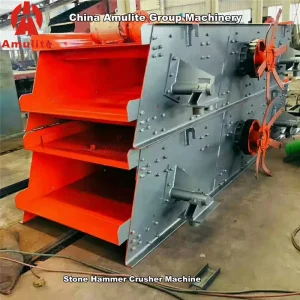
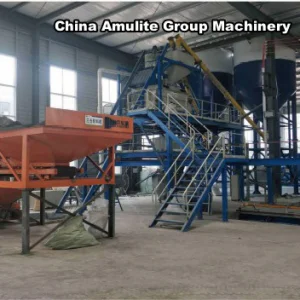
Complementary downstream machinery, specialized board manufacturing units, auxiliary crushing, and recycling systems for full plant integration.
Famous Amulite AAC Blocks Customized Automatic Machines- 4.2m Manufacturers, Company
View Technical Specs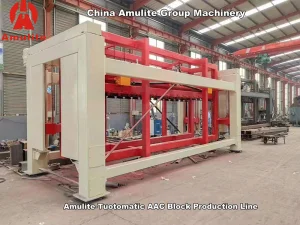
High-Quality Amulite Automatic AAC Block Production Line Manufacturers, Companies
View Technical Specs
High-Quality Embossed Metal Composite Exterior Panels Production Line Manufacturers, Company
View Technical SpecsDetailed technical, financial, and operational answers addressing critical buyer queries when procuring fiber cement and calcium silicate board production lines.
Depending on local market demand, raw material procurement costs (cement, silica, pulp), and local board selling prices, a medium-to-large capacity FC board manufacturing line (e.g., 5 million m²/year output) typically achieves full capital expenditure payback within 24 to 36 months of reaching stable 85%+ plant utilization.
The primary technical difference lies in raw material formulation ratios and chemical curing dynamics. Fiber cement boards rely heavily on Portland cement hydration for binding strength (often air-cured or steam-accelerated). Calcium silicate boards utilize a precise stoichiometric mix of silica powder (SiO₂) and quicklime (CaO), which reacts inside high-pressure autoclaves to synthesize Tobermorite crystals (5CaO·6SiO₂·5H₂O), yielding superior fireproof and zero-moisture-expansion properties.
The Hatschek machine utilizes revolving screen cylinders operating inside agitated slurry vats. A film of slurry (approx. 0.2mm thick) is constantly deposited onto a continuous felt. High-vacuum dewatering boxes strip free water before the film wraps around a precision-ground forming cylinder. Digital encoder sensors continuously monitor cylinder diameter growth and trigger automated pneumatic wire-cutting knives when the exact target thickness is reached.
Yes. Leading engineering companies require prospective buyers to send 50–100 kg samples of local sand, cement, fly ash, and pulp. In-house pilot laboratories run slurry freeness tests, chemical XRF analysis, and miniature press curing to verify flexural strength (MPa) and water absorption compliance before final equipment sizing and contract sign-off.
A typical 5-million square meter per year autoclaved FC board line requires a factory floor footprint of approximately 150 meters in length by 24 meters in width (3,600 m² covered workshop), plus raw material storage silos. Connected electrical capacity ranges between 800 kW and 1,200 kW, along with a 6-ton/hour industrial steam boiler system.