Explore our flagship production lines engineered for lightweight cement panels, autoclaved concrete blocks, and high-capacity wallboard manufacturing.
The global construction industry is undergoing a paradigm shift toward modularization, accelerated build schedules, and aggressive carbon-reduction mandates. Central to this transition is the adoption of Expanded Polystyrene (EPS) Sandwich Cement Wall Panels—a high-performance composite building material featuring calcium silicate or fiber cement board facings surrounding a lightweight core of EPS beads, Portland cement, fly ash, and specialized chemical additives. As commercial developers and residential modular builders demand structural components with superior strength-to-weight ratios, procurement decisions surrounding the selection of an EPS sandwich panel board making machine manufacturer have become critical drivers of long-term operational profitability.
Investing in an automated EPS sandwich panel production line requires a deep understanding of process chemistry, mechanical design, dynamic curing control, and material handling logistics. Modern panel production machinery must deliver exceptional dimensional tolerance, consistent density distribution (typically ranging from 550 kg/m³ to 800 kg/m³), and rapid demoulding turnaround times to maximize throughput while minimizing energy overhead.
EPS cement sandwich panels replace traditional brickwork and hollow concrete blocks in high-rise interior wall construction. Delivering sound isolation up to STC 48 dB and A-class fire resistance for up to 4 hours, these lightweight panels reduce dead loads by over 60%, drastically cutting structural steel and foundation costs.
Engineered for rapid field assembly, EPS wall panels feature precision tongue-and-groove joint profiles. When produced on high-accuracy automatic moulding lines, panels slot seamlessly into place on-site, shortening construction timelines by 40% to 60% compared to wet plaster and masonry trades.
Featuring low thermal conductivity (λ ≤ 0.045 W/m·K), EPS core panels mitigate thermal bridging in temperature-sensitive facilities, cold storage warehouses, and extreme-climate building envelopes, driving significant ongoing HVAC energy savings.
Beyond interior space division, heavy-duty weather-resistant EPS cement composite boards provide structural integrity, impact resistance, and wind load capacity required for boundary walls, acoustic highway barriers, and industrial park enclosures.
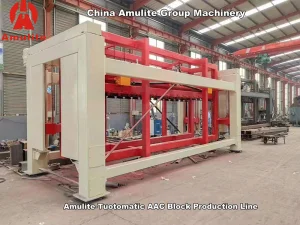
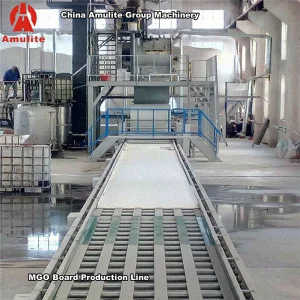
A premium EPS sandwich panel board making machine is not merely a piece of equipment; it is an integrated chemical and mechanical system. The manufacturing plant standard consists of five interconnected subsystems designed for seamless material flow and real-time process monitoring:
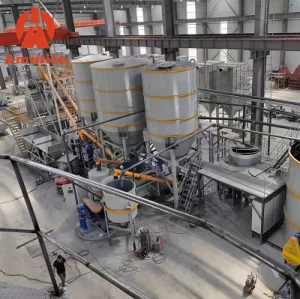
Automated pneumatic conveyers transfer OPC cement, fly ash, silica sand, and expanded EPS beads into high-shear planetary mixers. Precision load cell weighing systems ensure batch-to-batch consistency with a metering tolerance of less than ±0.5%. Polymer admixtures are dosed via dynamic liquid meters to optimize viscosity and prevent EPS bead segregation during injection.
Engineered from stress-relieved Q355B structural steel, high-capacity vertical mould cars hold 20 to 40 panel chambers simultaneously. Automated side-opening hydraulics, mechanical locking mechanisms, and alignment tracks eliminate dimensional distortion, maintaining board thickness tolerances within ±0.5 mm across standard length profiles (2440mm - 3000mm).
Positive displacement screw pumps inject the homogenized cement-EPS slurry into closed mould cavities pre-lined with fiber cement facings. Integrated ultrasonic vibration channels eliminate air pockets and guarantee 100% mechanical interlocking between the porous core matrix and the facing boards.
| Performance Parameter | Standard Line Configuration | Heavy-Duty Industrial Line | Smart Factory 4.0 Fully Automated Line |
|---|---|---|---|
| Annual Output Capacity | 300,000 m² - 500,000 m² | 800,000 m² - 1,500,000 m² | 2,000,000 m² - 3,500,000+ m² |
| Panel Thickness Range | 60 mm / 75 mm / 90 mm / 100 mm | 60 mm - 150 mm (Adjustable) | 50 mm - 200 mm (Automatic Servo Adjust) |
| Core Density Control | 650 ± 50 kg/m³ | 600 ± 30 kg/m³ | 550 - 800 kg/m³ (Dynamic AI Tuning) |
| Installed Electrical Power | 75 kW - 110 kW | 160 kW - 240 kW | 320 kW (Energy Recovering Drives) |
| Demoulding Cycle Time | 4 - 6 Hours (Ambient) | 2.5 - 4 Hours (Accelerated Thermal) | 1.5 - 2 Hours (Rapid Steam / Chemical) |
| Labor Requirement per Shift | 8 - 12 Operators | 5 - 7 Operators | 2 - 3 Supervisory Technicians |
As environmental regulations tighten globally, leading OEMs like Amulite Group are pioneering eco-conscious machinery design. The roadmap for EPS sandwich panel manufacturing focuses on three key technical frontiers:
Integrating inline microwave moisture sensors and rotational viscometers allows the PLC to automatically adjust water-to-cement ratios and surfactant dosing in real-time, accounting for ambient humidity variations and raw material moisture fluctuations.
Next-gen trimming stations incorporate high-efficiency granulators that grind board edges and scrap panels into fine EPS and cement fines. These materials are reintroduced into the primary mixing phase without sacrificing panel flexural strength.
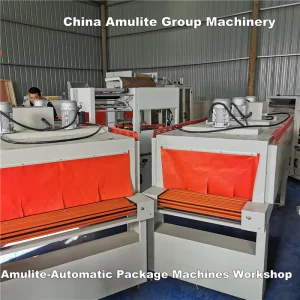
Eliminating manual handling hazards, modern lines implement heavy-payload vacuum hoists and 6-axis robotic arms that automatically demould, flip, inspect, stack, and shrink-wrap finished panels ready for export shipment.
Procuring building material machinery directly from established Chinese equipment manufacturers provides unprecedented capital efficiency, advanced technical customization, and supply chain security. As a leading manufacturer operating out of Hebei, China, China Amulite Group exemplifies the structural advantages of modern Chinese industrial engineering:
Amulite Group controls every phase of production—from heavy steel plate laser cutting, CNC machining of mould plates, and structural welding, to control cabinet assembly and dry-run factory testing. By eliminating sub-contracting dependencies, project timelines are guaranteed and mechanical tolerances are strictly enforced under ISO 9001 quality management systems.
Global aggregates vary substantially. Chinese process engineering excels at adjusting mix formulations based on locally sourced raw materials. Whether your site utilizes river sand, industrial slag, pulverized fuel ash (PFA), or specialized pozzolans, our process engineers optimize slurry rheology to achieve required compressive and shear strength targets.
For enterprise buyers, commercial real estate developers, and building material distributors, purchasing an EPS sandwich panel production line represents a significant CapEx commitment. Evaluating the Total Cost of Ownership (TCO) requires analyzing raw material utilization efficiency, utility consumption, labor intensity, and equipment depreciation schedules.
Raw materials account for roughly 68% - 74% of unit panel cost. Automated dosing systems minimize chemical waste, maintaining board-to-board cost predictability across large-scale manufacturing runs.
By utilizing low-energy curing cycles and high-efficiency electric or steam heat exchangers, modern lines achieve energy metrics under 1.2 kWh per square meter of produced panel.
Based on global average selling prices ($12 - $22 per m²) and baseline operational costs, a well-managed Amulite EPS panel plant typically achieves full CapEx payback within 14 to 22 months of full-capacity operation.
| Cost Component | Percentage of Total Opex | Optimization Mechanism via Amulite Machinery |
|---|---|---|
| Portland Cement & Fillers | 45% - 50% | High-shear precision mixing reduces cement over-dosing while preserving 5.0 MPa compressive strength. |
| Facing Boards (Calcium Silicate) | 20% - 25% | Direct sourcing integration with inline automatic positioning reduces sheet breakage to under 0.1%. |
| EPS Beads & Additives | 12% - 15% | Variable-density pre-expanders ensure precise bead expansion control without thermal collapse. |
| Electrical & Utility Power | 5% - 8% | Siemens inverter-driven motors dynamically match power consumption to line speed load. |
| Operational Labor | 4% - 7% | PLC SCADA central control stations reduce required manual labor per shift to a minimal supervisory crew. |
Deploying industrial production equipment across international boundaries mandates absolute compliance with regional safety codes, structural engineering frameworks, and electrical standards. Every production line engineered by Amulite Group is built in accordance with rigorous global standards:
Browse our extended line of specialized building material processing machinery, cutting systems, and tile manufacturing lines.
In-depth answers to critical technical and logistical questions faced by global investors purchasing EPS sandwich panel board making equipment.