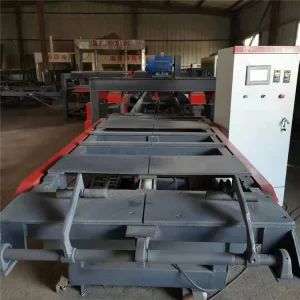
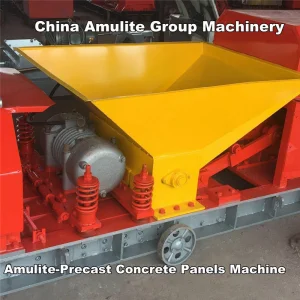
Explore our engineered production machinery designed for low-energy consumption, high-density compaction, and reliable continuous operation.
Examining the macro-economic drivers, environmental mandates, and material science evolution reshaping the non-metallic wallboard manufacturing sector worldwide.
Surging demand for A1 fire-rated, zero-asbestos building boards in modern commercial construction.
Environmentally safe cellulose-reinforced slurry formulation replacing hazardous minerals globally.
Optimal saturated steam pressure required to synthesize pure Tobermorite C-S-H crystalline structures.
Exceeding ASTM C1186 Type A Grade IV structural requirements for extreme weather exposure.
The global construction material manufacturing sector is undergoing a rapid paradigm shift. Traditional gypsum drywall and hazardous asbestos-cement sheets are increasingly being phased out due to humidity degradation, thermal limits, and stringent health regulations. In their place, autoclaved calcium silicate sheets (CSB) and high-density fiber cement boards (FCB) have emerged as the premier choice for architects, industrial structural engineers, and EPC main contractors worldwide.
Investing in a modern calcium silicate board production plant requires an in-depth understanding of material chemistry, energy thermodynamics, and precision mechanical engineering. When searching to Buy Calcium Silicate Sheet Machines Company & Products, industrial buyers must evaluate not merely basic machinery assembly, but complete turnkey engineering integration. A high-yield plant integrates raw material refining (silica flour grinding, quicklime slaking, cellulose pulping), continuous wet-sheet Hatschek forming, multi-stage hydraulic pre-pressing, hydro-thermal steam autoclaving, and automated high-speed finishing lines.
Our hydrothermal autoclaving process forces a precise chemical reaction between SiO₂ (silica sand) and CaO (lime) at 175°C–190°C, forming stable tobermorite matrix structures that guarantee zero moisture expansion and permanent dimensional stability.
Utilizing 3 to 8 high-precision cylinder vats equipped with synthetic felt dewatering and vacuum suction boxes (25–35 kPa), achieving continuous green sheet accumulation at production line speeds up to 80 m/min.
End products manufactured on our equipment achieve strict Class A1 non-combustibility ratings according to EN 13501-1 and ASTM E136, retaining flexural strength even under prolonged thermal exposure up to 1000°C.
A rigorous step-by-step breakdown of how raw silica, lime, cement, and cellulose fibers are transformed into high-density, ultra-durable calcium silicate sheets.
Silica sand is wet-milled in a ball mill to a fineness of >4500 cm²/g. Quicklime is hydrated under temp-controlled agitation. Imported unbleached kraft pulp is defibrated to 22–26° SR freeness.
Homogeneous slurry (solid ratio 7–10%) flows into slurry vats. Rotating wire mesh cylinders pick up micro-layers (0.2–0.3mm), transfer them to running felt, vacuum dewater, and roll onto a forming drum.
Automatic green sheet cutters trim sheets to precise dimensions. Vacuum stackers alternate sheets with steel templates. A 3000-to-7000 ton hydraulic press compacts sheets to desired density (1.2–1.6 g/cm³).
Stacked boards are loaded into heavy industrial autoclaves. Curing operates at 1.0–1.2 MPa saturated steam (180°C–190°C) for 10 to 12 hours to synthesize crystalline Tobermorite or Xonotlite matrix.
Detailed technical comparison of plant configurations tailored to annual production output, automation level, and specialized board density classes.
| Plant Configuration | Annual Capacity (m²/yr) | Sheet Machine Width | Forming Vat System | Autoclave Specs | Board Density Class | Energy Consumption |
|---|---|---|---|---|---|---|
| CSB-3M Standard Line | 3,000,000 m² | 1220 mm / 1300 mm | 3 Vat Hatschek System | Ø2.85m × 31m (2 Sets) | 1.0 – 1.25 g/cm³ (Low-Mid) | ~0.42 kg Steam/m², 0.35 kWh/m² |
| CSB-5M High-Speed Line | 5,000,000 m² | 1220 mm / 1300 mm | 4 Vat High-Speed System | Ø2.85m × 36m (3 Sets) | 1.2 – 1.45 g/cm³ (Medium) | ~0.38 kg Steam/m², 0.31 kWh/m² |
| CSB-8M Heavy-Duty Line | 8,000,000 m² | 1220 mm / 1600 mm | 5 Vat Modular Hatschek | Ø3.0m × 38m (4 Sets) | 1.3 – 1.65 g/cm³ (High Density) | ~0.35 kg Steam/m², 0.28 kWh/m² |
| CSB-12M Fully Automated EPC | 12,000,000 m² | 1220 mm / 1600 mm Dual Line | 6 Vat Dual Felt Machinery | Ø3.2m × 42m (5 Sets) | 0.9 – 1.70 g/cm³ (Full Range) | ~0.31 kg Steam/m², 0.25 kWh/m² |
Calcium silicate sheets engineered on our machinery meet demanding regional build codes, climate challenges, and industrial sector requirements across Europe, the Americas, Middle East, and Asia-Pacific.
In high-humidity, cleanroom, and sterile laboratory environments, low-density to medium-density boards provide anti-bacterial surfaces, zero mold propagation, and exceptional sag resistance under 95%+ relative humidity.
High-density boards (1.4–1.7 g/cm³) subjected to high hydraulic pre-pressing pass freeze-thaw durability tests (25 to 100 cycles under EN 12467 Category A), serving as long-life exterior cladding boards for high-rise facades.
Ultra-lightweight Xonotlite-phase thermal insulation calcium silicate sheets resist direct flame impingement up to 1000°C for 4 hours, compliant with IMO FTP Code for marine vessel bulkheads and industrial duct fireproofing.
How our engineering design integrates AI slurry optimization, digital-twin PLC controls, and low-carbon industrial waste utilization into modern sheet factories.
The modern calcium silicate manufacturing plant is no longer a simple mechanical assembly line; it is an intelligent, data-driven chemical processing facility. Our latest generation machine design incorporates advanced sensors, PLC-SCADA network control, and closed-loop feedback systems:
Real-time ultrasonic sensors monitor slurry concentration, temperature, and pulping freeness inside each vat. Automated dosage pumps adjust flocculant injection dynamically to maintain uniform layer thickness on the felt.
Industrial steam management systems capture high-pressure exhaust steam from clydesdale autoclaves during depressurization, re-routing thermal energy to pre-heat boiler feedwater and green-sheet pre-curing tunnels.
Our formulation engineering enables plants to substitute up to 35% of virgin silica powder with local industrial fly ash, silica fume, or ground blast-furnace slag (GGBS), significantly lowering raw material costs and carbon footprint.
Comprehensive answers from our senior project directors and chemical engineers regarding plant commissioning, raw materials, energy efficiency, and operational ROI.
While both boards use cellulose fibers for tensile reinforcement, Calcium Silicate Board (CSB) relies primarily on a chemical reaction between Silica (SiO₂) and Quicklime (CaO) autoclaved under steam pressure (1.0–1.2 MPa) to form Tobermorite crystals (C₅S₆H₅). Fiber Cement Board (FCB) relies mainly on Portland cement hydration. Calcium silicate boards offer superior fireproofing, lower thermal conductivity, lower bulk density, and zero dimensional movement under wet conditions.
The standard raw material mix comprises Quartz Silica Powder (45–55%, SiO₂ > 90%), Quicklime/Slaked Lime (25–35%, CaO > 85%), Ordinary Portland Cement (10–15%, Grade 42.5/52.5), and Fiber Reinforcement (7–10% cellulose pulp or alkali-resistant glass fiber). Minor additives such as wollastonite or aluminum hydroxide can be added to customize high-temperature resistance.
A standard 5 Million m²/year calcium silicate sheet line requires a site area of approximately 25,000 to 35,000 m², with a covered main workshop footprint of ~120m × 24m. Total installed electrical power capacity is approximately 1,200 kW to 1,500 kW, along with a 6-ton/hour steam boiler system (gas, coal, or biomass fired).
From contract signing and layout approval, equipment manufacturing requires 90–120 days. On-site foundation check, mechanical installation, electrical wiring, and piping assembly take 60–75 days. Commissioning, raw material formula tuning, and trial production run take an additional 20–30 days under the on-site guidance of our resident chemical and mechanical engineers.
Yes. By adjusting the number of continuous rotations on the forming drum, the hydraulic pre-press tonnage, and raw material formulation, the line can seamlessly produce boards ranging from 4mm ceiling tiles up to 30mm heavy-duty floor siding boards, with densities selectable from 0.9 g/cm³ to 1.7 g/cm³.
All machinery units comply with European CE electrical and mechanical standards (ISO 12100 / EN 60204-1). Autoclave pressure vessels carry ASME or CE-PED certifications. The output board products engineered on our lines conform to international standards including ASTM C1186, EN 12467, BS 476 Part 4/6/7, and ISO 8336.
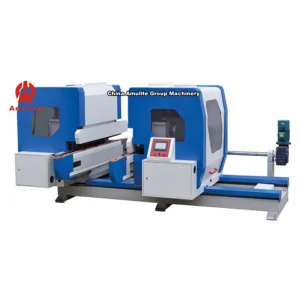
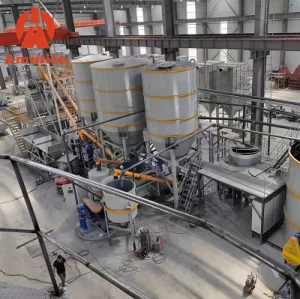
Review our specialized raw material preparation, board finishing, and industrial resource recycling equipment integrated into global building material plants.