Explore our top-tier manufacturing systems engineered for global building contractors and panel manufacturers.
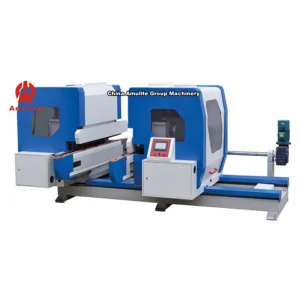
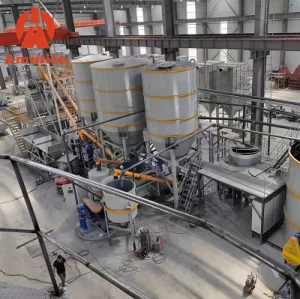
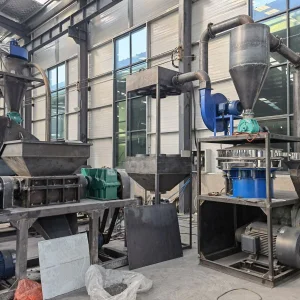
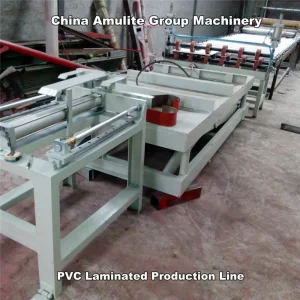
Understanding how precision male-female Z-Lock tongue-and-groove geometry eliminates thermal bridging and moisture infiltration in industrial building envelopes.
Traditional overlap panel joints create continuous conductive paths where metallic skins contact, causing severe condensation and energy dissipation. The engineered Z-Lock system embeds structural PVC or high-density rigid polyurethane thermal breaks directly inside the joint tongue, insulating internal steel faces from external thermal swings.
Featuring a double-stage labyrinth seal and an expanded capillary release groove, Z-Lock joints prevent wind-driven rain and moisture capillary action from entering cleanrooms or cold storage rooms. Integrated butyl sealing gaskets provide long-term airtight performance compliant with stringent building envelope air tightness standards.
Architectural wall facades utilize Z-Lock panels with hidden screw fixings. Fasteners pass through an inner structural flange that is fully covered by the overlapping male joint of the adjacent panel. This eliminates external screw penetrations, preventing rust formation and delivering a seamless modern building aesthetic.
In high-demanding environments like pharmaceutical cleanrooms, sub-zero cold logistics hubs, and modular data centers, micro-gaps in building skins cause fan power surge, air loss, and mold propagation. The Z-Lock tongue-and-groove joint maintains dimensional stability across extreme ambient temperatures (−40°C to +80°C), reducing structural deflection by over 35% under high wind loads compared to conventional flat overlap panels.
A comprehensive matrix of insulation cores paired with high-durability external skins to meet rigorous global fire, thermal, and acoustic engineering requirements.
| Core Insulation Material | Density Range (kg/m³) | Thermal Conductivity (λ) | Fire Classification | Best Technical Application |
|---|---|---|---|---|
| Polyisocyanurate (PIR / PIR-FORM) | 40 – 45 kg/m³ | 0.019 – 0.022 W/m·K | B-s1, d0 (EN 13501-1) / FM Approved | Ultra-low temperature cold storage, high-efficiency logistics hubs |
| Structural Mineral / Rockwool | 100 – 140 kg/m³ | 0.038 – 0.044 W/m·K | Class A1 Non-Combustible | Firewall partitions, high-risk industrial facilities, acoustic barriers |
| Expanded Polystyrene (EPS / Graphite EPS) | 15 – 25 kg/m³ | 0.033 – 0.038 W/m·K | B1 Flame Retardant | Cost-optimized modular housing, commercial warehouse cladding |
| Fiber Cement / Calcium Silicate Core | 800 – 1200 kg/m³ | 0.15 – 0.25 W/m·K | Class A1 Non-Combustible | High-impact exterior facade cladding, prefabricated wet-area partition walls |
The durability of a Z-Lock sandwich panel envelope relies heavily on protective skin chemistry. Leading Chinese manufacturing partners like China Amulite Group utilize continuous multi-stage roll coating lines to apply specialized surface polymers to metallic and non-metallic skins:
Vertical raw material integration, advanced continuous double-belt laminating technology, and turnkey factory export capabilities.
China's building material hubs combine domestic high-grade steel mills (BAOSTEEL, HBIS), chemical polymer producers, and fiber cement board facilities. This proximity lowers raw material procurement costs by 15-25% while maintaining strict material grade control.
State-of-the-art Chinese manufacturing facilities utilize continuous caterpillar double-belt laminating presses up to 150 meters in length. Controlled high-pressure curing guarantees precise thickness tolerance (±0.5mm) and uniform polyurethane foaming density.
From full panel manufacturing plant engineering to customized panel dimensions (length up to 18 meters for seamless vertical installation), Chinese factory partners supply complete turnkey solutions—including plant layout, installation supervision, and chemical formulation optimization.
Navigating structural, fire, and thermal validation requirements across North America, Europe, the Middle East, and Asia-Pacific markets.
Exporting Z-Lock sandwich panels globally requires strict alignment with localized building standards. Leading suppliers provide certified testing data sheets, structural load calculation software support, and third-party lab inspection certificates to streamline project approval workflows:
Compliance with EN 14509 (Self-supporting double skin metal faced insulating panels) is mandatory for EU construction. Covers tensile strength, shear resistance, creep behavior, water permeability, and reaction to fire (EN 13501-1 classification).
For US and Canadian B2B buyers, panels undergo ASTM E84 tunnel testing for flame spread index (≤25) and smoke development index (≤450). FM Approval (Factory Mutual) validates panel behavior under severe internal fire exposure and exterior hurricane wind uplift pressures.
Middle Eastern projects demand high Solar Reflectivity Index (SRI > 78) exterior coatings to resist thermal degradation in extreme desert conditions, along with local Civil Defense fire approval for PIR and Rockwool core Z-Lock wall systems.
Tailored panel specifications designed for demanding thermal, hygienic, and structural operating environments.
Utilizing 150mm – 200mm thick PIR Z-Lock panels with cam-lock or double tongue-and-groove joint gaskets. Maintains constant internal temperatures down to −35°C without frost heave or joint vapor passage, cutting compressor refrigeration power consumption by up to 30%.
Flush-fit Z-Lock panels engineered with stainless steel or anti-static powder-coated skins. Smooth seamless joints prevent particulate trapping and facilitate frequent chemical washdowns with vaporized hydrogen peroxide (VHP).
High-span Rockwool or Fiber Cement Z-Lock wall panels providing high structural wind-resistance and acoustic isolation for power plants, heavy machinery workshops, and remote modular accommodation complexes.
How automation, green chemistry, and building-integrated photovoltaics are shaping next-generation panel manufacturing.
As global decarbonization mandates intensify, the thermal envelope sector is undergoing rapid technological evolution. B2B buyers and structural engineers should account for these three macro trends when selecting panel suppliers:
Leading Chinese chemical production lines are replacing traditional HFCs with hydrofluoroolefins (HFOs) such as Solstice N40 and Cyclopentane. These blowing agents drop the Global Warming Potential (GWP) of polyurethane foam insulation to near zero (<1) while boosting thermal insulation performance by 5-7%.
Modern continuous panel machinery integrates high-speed visual camera arrays and automated laser profilers along the 100m+ conveyor line. AI algorithms inspect tongue-and-groove joint tolerances, detecting microscopic surface deformities or foam density voids in real-time before panels are cut and stacked.
Integration of roof sandwich panels with standardized solar module mounting clips. Specially designed outer steel profiles allow solar panel brackets to clamp directly onto the Z-Lock standing seam without drilling roof sheet penetrations, preventing long-term water leakage risk.
Addressing key engineering, procurement, and technical queries from international B2B buyers and structural designers.
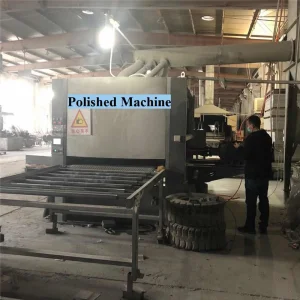
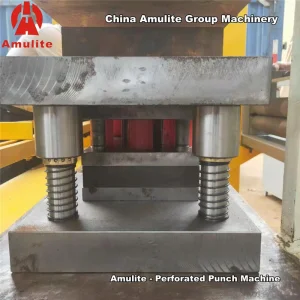
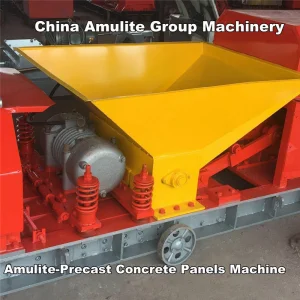
Explore our complete product range of turnkey manufacturing lines, processing machines, and recycling equipment.
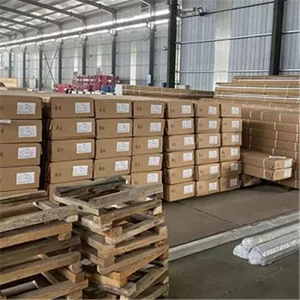
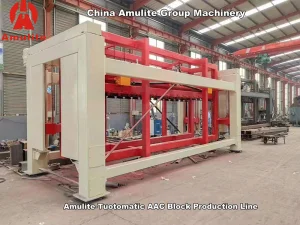
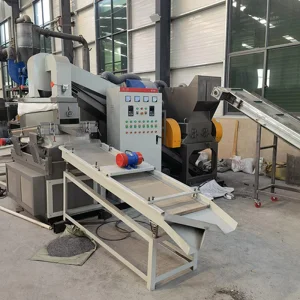
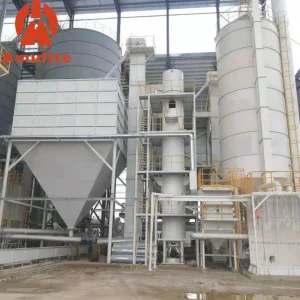
Contact China Amulite Group's senior process engineering team for full technical specifications, plant layout designs, raw material calculations, and factory-direct pricing quotes.