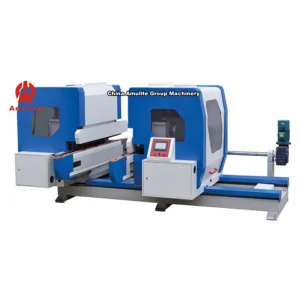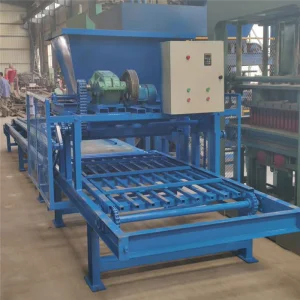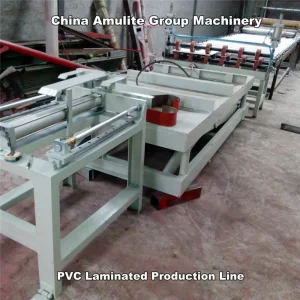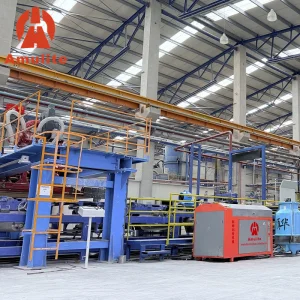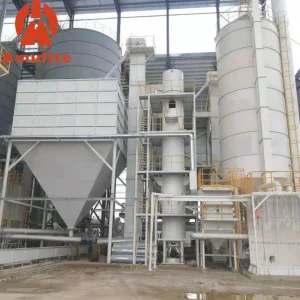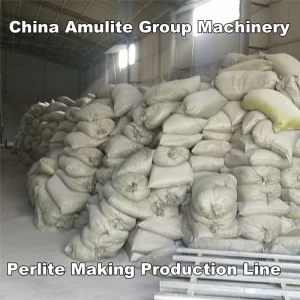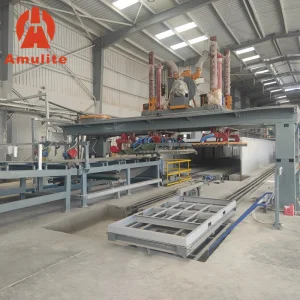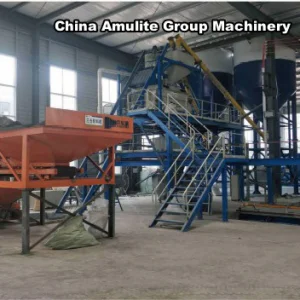
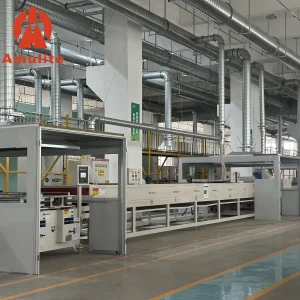
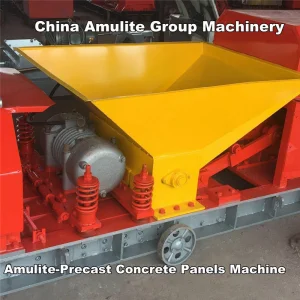
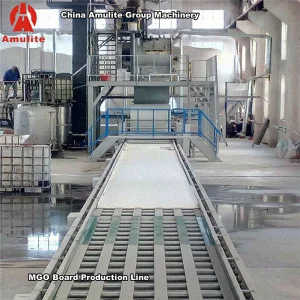
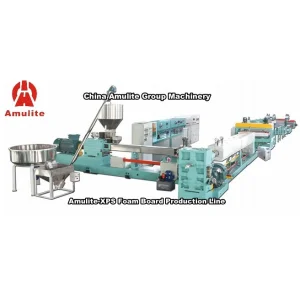
The global construction industry is undergoing a structural paradigm shift toward off-site prefabrication, driven by severe site labor shortages, stringent environmental regulations, and the rising demand for accelerated project execution. At the core of this transformation is the precast wall panel making machine—a complex industrial manufacturing system engineered to produce high-performance lightweight wall panels, structural EPS concrete sandwich boards, hollow core concrete elements, and autoclaved aerated concrete (AAC) wall systems with extreme dimensional accuracy and material integrity.
As a global leader in designing, engineering, and commissioning turnkey building material plants, our enterprise combines decades of mechanical expertise with advanced automated control architectures. This industrial whitepaper delivers an exhaustive technical breakdown of precast wall panel machinery, evaluating global industrial trends, China’s engineering cost advantages, localized regional applications, smart production automation, and procurement decision frameworks for global EPC contractors, building material factory operators, and project developers.
Information Gain Insight: Modern precast wall panel plants operate at the intersection of material science and mechanical automation. Transitioning from manual battery molds to fully automated continuous extrusion and hydraulic vertical mold lines decreases labor overhead by up to 65% while increasing daily volumetric yield per square meter of factory footprint by over 140%.
Heavy-duty structural steel mold cars engineered with dynamic hydraulic opening/closing mechanisms. Ensures tight panel tolerances (length/width ±1mm, thickness ±0.5mm) and zero slurry leakage during vibration dosing.
Integrated thermal fluid piping or low-pressure steam injection channels inside mold dividers. Accelerates initial cement hydration enthalpy, reducing mold turnover times to 3–4 hours per batch.
Closed-loop PLC-monitored planetary concrete mixers equipped with pneumatic micro-foaming injectors. Assures exact bulk density control (from 450 kg/m³ to 900 kg/m³) with homogeneous void distribution.
Siemens S7-1500 PLC paired with industrial cloud telemetry. Monitors raw material batching, dynamic weighing, mold transfer telemetry, and real-time maintenance diagnostics across the entire plant line.
The global market for precast wall panel machinery is undergoing unprecedented expansion across North America, Western Europe, the Middle East, Southeast Asia, and Latin America. Rapid urban development, combined with government-mandated carbon reduction initiatives in building construction, has created urgent demand for industrialized prefabricated wall systems.
In mature markets such as the European Union, the implementation of energy performance directives (e.g., EPBD standards) mandates ultra-low thermal transmittance (U-values) in building envelopes. Consequently, precast equipment must be capable of producing multi-layer composite panels incorporating high-density EPS core insulation, ceramic-faced calcium silicate sheets, or aerated concrete cores. In emerging economies throughout the Middle East (GCC) and Africa, the focus centers on rapid housing delivery—demanding robust vertical battery mold production lines capable of manufacturing hundreds of thousands of square meters of lightweight partition walls annually under harsh ambient climatic conditions.
| Machine Category | Primary Material Formulation | Target Bulk Density | Daily Production Capacity | Key Structural Advantage |
|---|---|---|---|---|
| EPS Cement Sandwich Line | OPC 42.5 + EPS Beads + Fly Ash + Fiber Board Facings | 550 – 750 kg/m³ | 1,200 – 3,500 m²/day | High sound insulation (STC 45-52dB), ultra-lightweight, rapid tongue-and-groove jointing. |
| Vertical Battery Mold Line | Ordinary Concrete / Expanded Clay Aggregate + Steel Rebar | 1,200 – 2,200 kg/m³ | 800 – 2,000 m²/day | High structural load capacity, smooth dual-sided surface finish requiring no plastering. |
| Hollow Core Extruder Line | Zero-Slump Heavy Concrete + Prestressed Steel Wires | 1,400 – 1,800 kg/m³ | 600 – 1,500 m²/day | Exceptional flexural strength, void channels allow internal electrical conduit routing. |
| AAC Panel Production Line | Silica Sand/Fly Ash + Lime + Cement + Aluminum Powder | 420 – 625 kg/m³ | 500 – 2,500 m³/day | A1-grade fireproofing (4+ hours), low thermal conductivity (0.11 W/m·K), zero VOC emissions. |
China has emerged as the premier manufacturing center for high-capacity, cost-efficient, and structurally resilient building material production equipment. Buyers searching for the best precast wall panel making machine manufacturer & supplier turn to established Chinese OEMs to secure strategic capital expenditure (CapEx) savings without compromising on component quality or operational reliability.
Chinese heavy equipment hubs maintain comprehensive control over raw metal procurement, large-scale CNC gantry milling, heat treatment, and precision gear grinding. This localized industrial infrastructure allows us to build heavy-duty mold cars with ultra-flat contact faces, high-yield hydraulic clamping power, and robust vibration compaction tables at a fraction of European equipment costs.
Our turnkey machinery integrates internationally recognized core components—including Siemens PLCs and touchscreen human-machine interfaces (HMI), Schneider electrical switchgear, Yuken or Rexroth hydraulic valves, and SEW-Eurodrive gear motors. This global component standardization guarantees that plant operators worldwide can easily source replacement spare parts locally while benefiting from China's advanced structural engineering.
Investing in a complete turnkey precast concrete wall panel line manufactured in China typically reduces initial capital expenditure by 35% to 55% compared to equivalent European offerings. This structural CapEx advantage enables building material companies to achieve full investment payback (ROI) within 14 to 22 months of commercial operations, even under competitive localized board pricing environments.
Lightweight EPS cement wall panels (75mm - 100mm) produced by our machines provide fire ratings up to 4 hours and STC acoustic ratings of 48dB. Their minimal self-weight significantly reduces overall structural steel loading and foundation requirements for multi-story towers.
Designed for rapid disaster relief housing, military barracks, and social housing projects in remote territories. Precast tongue-and-groove panels allow two operators to install up to 40m² of walling per hour without heavy crane equipment.
Thick, high-density composite wall panels featuring internal polyurethane (PU) or expanded polystyrene cores engineered for temperature-controlled logistics centers, food storage facilities, and heavy industrial plant boundary walls.
Heavy-duty precast concrete sound absorption panels designed with micro-porous surface textures. Engineered to withstand high wind load pressures, freeze-thaw cycles, and continuous acoustic stress along transport corridors.
Integration of real-time viscosity and hydration enthalpy sensors directly inside batching mixers. Algorithms dynamically adjust water-to-cement ratios and accelerator dosage based on ambient humidity and raw material moisture content.
Machinery optimized to process low-carbon binder matrices incorporating ground granulated blast-furnace slag (GGBS), calcined clay, recycled concrete aggregate fines, and high-percentage pozzolanic industrial fly ash.
Fully autonomous articulated robotic arms equipped with vacuum suction or pneumatic clamping grippers. Eliminates manual mold extraction, decreasing board surface edge chipping to under 0.02% while accelerating line speed.
Edge-computing modules connected to hydraulic pumps, planetary gear reducers, and vibrator motors stream telemetry to cloud servers to predict component fatigue and schedule preventative maintenance before downtime occurs.
Acquiring a precast wall panel production line is a capital-intensive decision that impacts an enterprise's operational capacity, product quality, and market competitiveness for 15 to 20 years. International buyers must evaluate manufacturers using a comprehensive Total Cost of Ownership (TCO) evaluation framework rather than focusing strictly on upfront machinery acquisition costs.
Key Purchasing Criteria Checklist: When evaluating a precast wall panel machinery manufacturer, verify four vital pillars: (1) Hydraulic structural design, (2) Mold machining tolerance limits, (3) Turnkey installation SLA commitments, and (4) Capability to formulate raw material recipes based on locally sourced cement, sand, and additives.
Ensure that the steel frame thickness of vertical battery mold cars or horizontal casting tables utilizes certified Q355B or higher structural steel. Lightweight structural frames flex under the intense hydrostatic pressure of fluid concrete and foam slurry, causing panel thickness distortion and out-of-square panel alignment that leads to rejections on construction sites.
Machinery configurations should be matched to regional economic realities. For high-labor-cost environments (North America, Europe, Australia), a fully automated line with robotic de-moulding, automated core pullers, and PLC transfer cars is recommended. For markets with accessible labor forces, a semi-automated vertical mold line with centralized hydraulic opening offers optimal capital utilization and rapid payback.
Hardware quality is only half of the equation. Ensure your machine manufacturer provides experienced field service engineers for civil foundation approval, mechanical assembly, electrical wiring, PLC loading, trial batch formulation, and comprehensive maintenance staff training until stable industrial yield is achieved.