Explore our core precast concrete, fiber cement, and autoclaved wall panel manufacturing technologies engineered for global compliance and heavy-duty productivity.
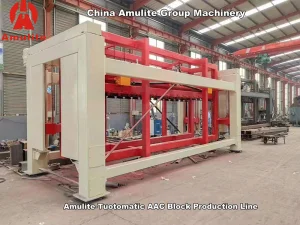
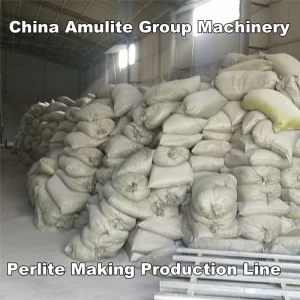
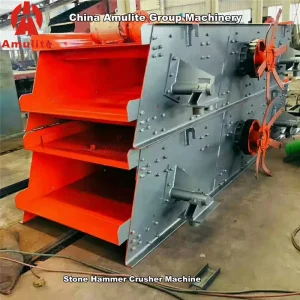
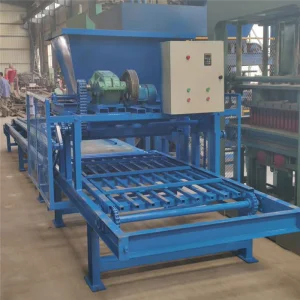
Analyzing macro-economic construction trends, thermal efficiency mandates, and why structural precast EPS sandwich panels are replacing traditional clay brick and CMU block lines worldwide.
Modern architectural engineering requires wall materials that drastically reduce building dead-load while achieving stringent U-value (thermal transmittance) thresholds. Polystyrene Composite Wall Machines deliver integrated sandwich panels combining high-density EPS (Expanded Polystyrene) foam beads, Portland cement, fly ash, and calcium silicate facings. This composite architecture yields flexural strength superior to traditional hollow blocks at a fraction of the mass.
With stringent global green building certifications (LEED, BREEAM, and EDGE) enforcing lower embodied carbon, leading real estate developers and infrastructure EPC contracts are outlawing energy-intensive kiln-fired bricks. Polystyrene composite wall production processes rely on cold slurry mixing, chemical foaming, and low-pressure steam curing, reducing operational carbon emissions by up to 55% during plant operation.
Information Gain Insight: Selecting the best Polystyrene Composite Wall Machine factory is not simply an exercise in buying steel mold cars; it requires evaluating raw-material slurry rheology, hydraulic demolding automation, and automated bead pre-expansion precision to maintain uniform bulk density between 550 kg/m³ and 800 kg/m³.
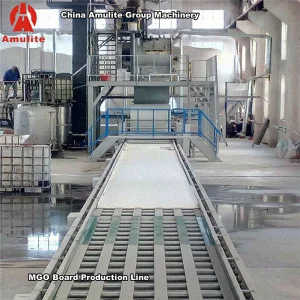
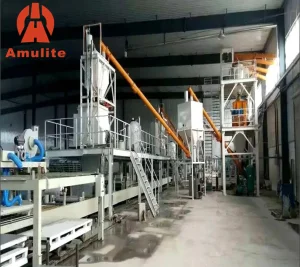
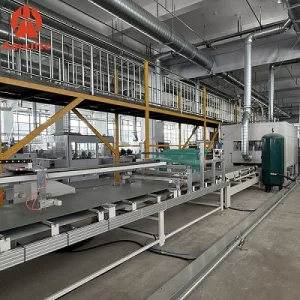
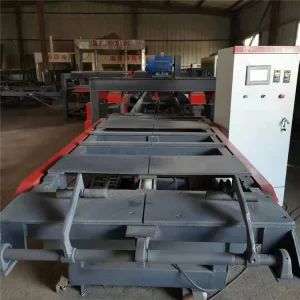
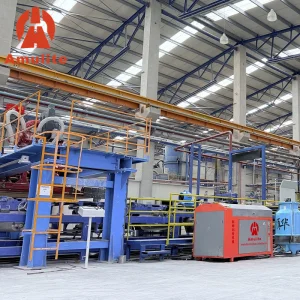
From raw material silos to fully automated packaging, explore how advanced EPS wall panel manufacturing lines operate at industrial scale.
| Production Module | Core Machinery Specs | Operational Function | Automation Level & IoT Integration |
|---|---|---|---|
| 1. Raw Material Batching & Mixing | Dual-shaft intensive planetary mixer, gravimetric powder feeders, liquid additive dispensers. | Precise homogenizing of cement, fly ash, water, foam agent, and micro-fillers into stable suspension. | PLC SCADA closed-loop weight feedback (±0.5% accuracy). |
| 2. EPS Pre-Expansion Unit | Fluidized bed dryer, primary/secondary steam pre-expander, density weighing system. | Expands raw polystyrene beads from 600 g/L down to 10–18 g/L controllable density. | Automatic steam pressure and temperature PID regulation. |
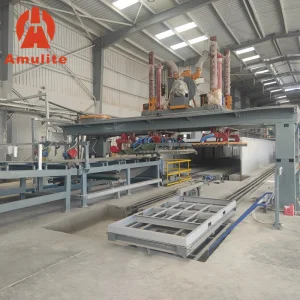
| 3. Core Injection & Mold Car System | Vertical multi-cavity gang mold cars, hydraulic opening/closing, side sealing plates. | Injects homogenous EPS lightweight cement slurry into mold cavities lined with calcium silicate face boards. | Self-propelled electric rail transfer car with laser positioning. |
| 4. Curing & Initial Setting | Thermostatically controlled steam curing tunnel, ultrasonic temperature matrix. | Accelerates hydration reactions to ensure panel structural handling strength within 3–4 hours. | Multi-zone heat and humidity monitoring system. |
| 5. Demolding, Trimming & Stacking | 90-degree hydraulic tilting table, 4-side automatic edge trimming unit, vacuum lifter stacker. | Demolds solid or hollow sandwich panels, trims tongue-and-groove profiles, stacks onto shipping pallets. | Fully robotic arm or pneumatic automatic stacker system. |
Unlike outdated horizontal flat casting beds that occupy massive factory floor space and suffer from non-uniform bead floating, top-tier factories supply Vertical Gang Mold Cars. These vertical battery molds allow simultaneous pouring of 10 to 40 panels per car. Gravity assists slurry compaction, while vertical alignment guarantees zero segregation of lightweight EPS beads, delivering uniform density across the entire panel thickness.
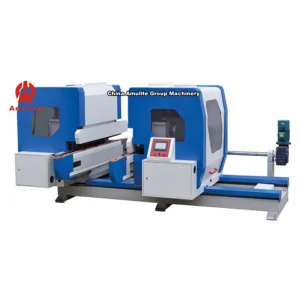
Interlocking male-female grooves are molded directly during the pouring cycle or precisely milled using integrated edge profiling machines. This feature enhances male-female joint shear resistance, eliminates cold bridges, prevents acoustic leakages, and simplifies field assembly for construction crews.
The true key to profitability lies in mastering the chemical interaction between cement hydration, expanded bead surface tension, and air entrainment agents.
A benchmark formulation for producing 90mm light-weight solid EPS sandwich wall panels (Density ~650 kg/m³):
Unmodified EPS beads are naturally hydrophobic, often causing delamination under shear stress. Leading EPS composite wall machine suppliers integrate specialized surface-wetting chemical dosing units into the slurry mixer. By pretreating beads with hydrophilic surfactants and silica fume, the interfacial transition zone (ITZ) between the cement matrix and the polystyrene bead is chemically bonded, dramatically improving panel impact strength to >1.5 kJ/m².
Avoid costly downtime and equipment mismatch by auditing machinery manufacturers against these critical operational criteria.
Verify that the factory utilizes CNC gantry milling machines for mold frame fabrication. Structural steel mold cars must undergo stress-relieving heat treatment to prevent warping over thousands of thermal cycles under hot slurry pressure.
Ensure core PLC automation incorporates globally available brands (such as Siemens S7-1500, Schneider Electric, or Mitsubishi) and pneumatic valves from Festo/SMC to guarantee immediate local spare part availability.
Choose suppliers with in-house material testing labs that analyze your regional cement grade, pozzolanic activity of local fly ash, and sand moisture content prior to finalizing equipment screw conveyor pitches and mixer torque settings.
Confirm the manufacturer supplies on-site civil foundation design drawings, electrical layout schematics, resident engineer installation teams, and comprehensive operator training programs until target daily m² yields are met.
Calculated ROI Insight: A 100,000 m²/year fully automated vertical EPS composite wall panel line typically achieves capital expenditure (CAPEX) payback within 14 to 18 months, driven by raw material savings (incorporating local fly ash) and high regional sales margins for prefab building materials.
Supplying fully certified building material machinery across Middle East, Southeast Asia, South America, Africa, and CIS territories.
Panels produced by our turnkey Polystyrene Composite Wall Panel lines meet rigorous international building codes, including ASTM C90, BS EN 12467, ISO9001 quality management, and CE EN 15283 directives. Fire resistance tests confirm 2 to 4 hours of fire endurance at 1000°C without structural failure or toxic gas emission.
From initial plant layout customization and civil engineering load-bearing calculations to on-site commissioning, recipe calibration, and 24/7 remote IoT troubleshooting, our engineering network supports your manufacturing line throughout its operational lifecycle.
Direct answers from our senior mechanical and material science engineering department.
Annual plant capacities are fully modular and customizable, ranging from semi-automatic lines producing 50,000 m² per year to high-capacity fully automatic lines exceeding 500,000 m² to 3,000,000 m² per year. Capacity depends on mold car quantity, mixer volume, and automated demolding cycles.
Yes. Our process engineers formulate custom mix designs using your locally sourced raw materials. We conduct bench testing with your local Ordinary Portland Cement (OPC), fly ash, bottom ash, or crushed quartz sand to ensure flexural strength (>3.5 MPa) and density requirements are met without buying costly imported additives.
Equipment manufacturing generally takes 45 to 60 days depending on plant customization. Shipments are packed in standard heavy-duty containers. On-site installation, wiring, mechanical alignment, and commissioning by our resident field engineers usually take 30 to 45 days.
EPS composite wall panels are lightweight, large-format panels (typically 2440mm x 610mm) that integrate facing boards and an insulated core. They install up to 10 times faster than concrete masonry units (CMU), reduce structural steel foundation requirements by up to 20%, and deliver superior thermal and sound insulation.
The machines accommodate calcium silicate boards, fiber cement boards, magnesium oxide (MGO) boards, and cement-bonded particle boards. Alternatively, the machinery can produce non-faced solid or hollow lightweight core panels depending on local construction market preferences.
Explore our extended machinery portfolio for specialized insulation boards, fiber cement cladding, recycling systems, and surface treatment lines.