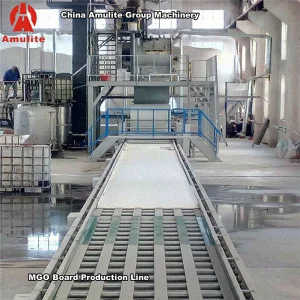
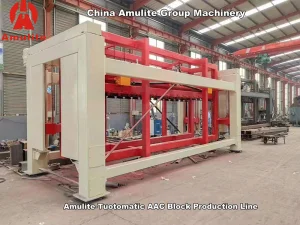
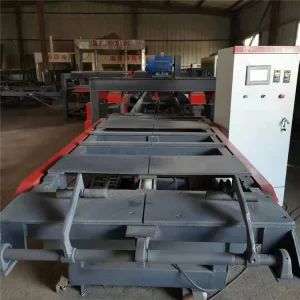
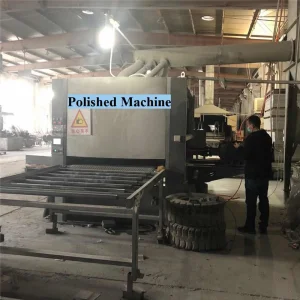
Explore our industrial-grade machinery engineered for heavy-duty board fabrication, green material recycling, and automated architectural component manufacturing.
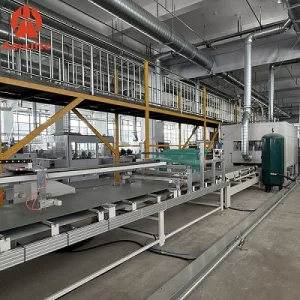
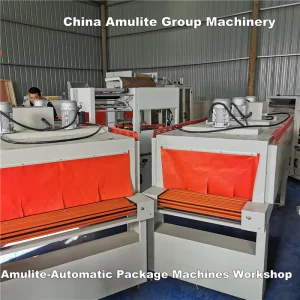
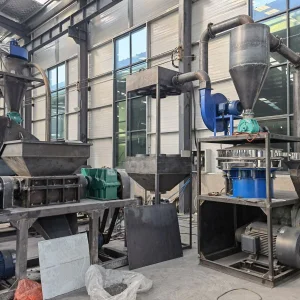
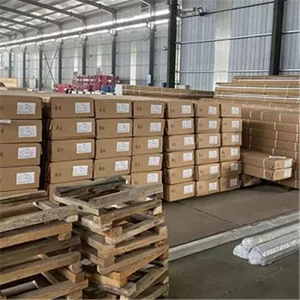
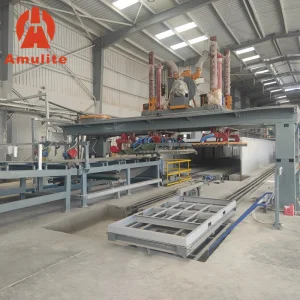
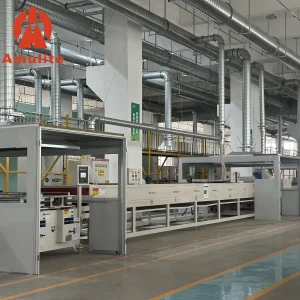
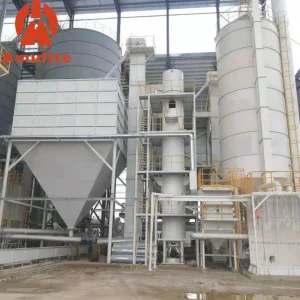
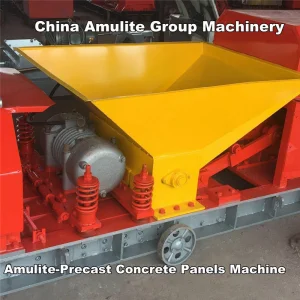
A comprehensive technical report on the hydrothermal crystallization, mechanical dewatering dynamics, and industrial scaling of non-asbestos building board machinery.
The manufacturing of high-density, high-performance calcium silicate board relies heavily on the continuous Hatschek forming process—a technology originally derived from paper-making mechanics and evolved over a century to process inorganic mineral slurries. Modern infrastructure demands non-combustible, moisture-stable, and high-impact structural boards for commercial facades, interior partitions, ceiling assemblies, and industrial lining systems. To achieve these rigorous material parameters (conforming to ASTM C1186, EN 12467, and BS 476 Standards), global plant owners are transitioning toward high-speed, automated Hatschek calcium silicate board equipment engineered with integrated hydrothermal autoclaving capabilities.
The core process difference between low-tier cement boards and premium calcium silicate boards lies in hydrothermal reaction chemistry within high-pressure autoclaves. Raw materials—specifically finely ground quartz sand ($SiO_2 > 92\%$, fineness passing 200 mesh at 95%), quicklime ($CaO > 85\%$), cellulose reinforcing fibers (kraft pulp refined to $30-45^\circ SR$), and functional lightweight mineral fillers—are slurried at a controlled water-to-solid ratio of 4:1 to 6:1. Under 1.2 to 1.4 MPa of saturated steam pressure at 185°C to 195°C inside an autoclave, the silica and lime undergo a solid-state hydrothermal transformation:
| Parameter / Metric | Standard Fiber Cement Board Line | Hatschek Autoclaved Calcium Silicate Board Equipment |
|---|---|---|
| Primary Curing Mechanism | Air Hydration / Low-Temp Moist Heat | Hydrothermal Reaction (Tobermorite Phase Synthesis) |
| Autoclave Operating Pressure | Ambient to 0.2 MPa (Optional) | 1.2 - 1.4 MPa Saturated Steam (190°C) |
| Board Density Range | 1.1 - 1.3 g/cm³ | 0.8 - 1.6 g/cm³ (Adjustable Density Classes) |
| Linear Thermal Moisture Movement | ≤ 0.25% | ≤ 0.08% (Ultra-High Dimensional Stability) |
| Combustibility Rating | Class A2 / B1 | Class A1 Non-Combustible (BS 476 Part 4/6/7) |
| Forming Speed (Felt Line) | 30 - 50 m/min | 60 - 90 m/min (High-Velocity Multi-Vat) |
The global transition toward green building materials, zero-landfill manufacturing, and hyper-automated production lines is reshaping equipment specifications worldwide.
Global environmental regulations (EU REACH, OSHA, ISO 14001) strictly prohibit chrysotile asbestos fibers. Modern Hatschek equipment is specifically engineered to handle micro-refined kraft cellulose, synthetic PVA fibers, and Wollastonite needle-like structures without compromising tensile strength or dewatering speed.
Autoclaving represents up to 45% of total plant energy consumption. Advanced China Industry 4.0 factories integrate multi-stage steam blow-down heat recovery systems, flash evaporation capture, and insulated steam recycling heat exchangers, reducing net boiler fuel demand by 28%.
Process water from cylinder vats and vacuum dewatering boxes contains dissolved alkalinity and fine solids. Modern Hatschek lines integrate multi-stage cone thickeners and flocculant dosing clarification systems to recirculate 99.5% of process water continuously back into slurry preparation.
Quantifiable operational benchmarks verified across 200+ global installations over the last decade.
Automated silica wet-milling in ball mills, cellulose pulp refining in hydrapulpers to precise SR freeness, and gravimetric lime dosing.
Multi-cylinder (3-6 vats) rotary sieve deposition onto endless felt, vacuum box moisture reduction from 80% down to 28%.
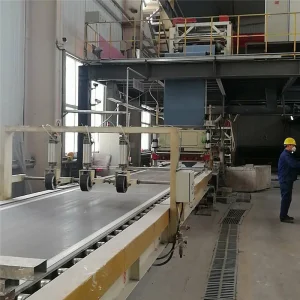
Winding green film onto accumulator roll to desired thickness (4-30mm), followed by flying cutter sheet separation and auto-stacking.
High-tonnage hydraulic pre-pressing (up to 7000 tons) for high density, followed by 10-14 hours hydrothermal curing in steam autoclaves.
Automated destacking, multi-head thickness sanding, edge chamfering/profiling, UV seal coating, and automated robotic palletizing.
What global building material conglomerates require when selecting a Hatschek calcium silicate board equipment manufacturer.
International enterprise buyers, procurement directors, and EPC contractors evaluating calcium silicate production lines operate under strict ROI timelines, safety compliance, and operational reliability standards. Sourcing equipment requires a thorough balance between Capital Expenditure (CAPEX) and long-term Operational Expenditure (OPEX).
Procurement teams require CE certification, ISO 9001:2015 quality management systems, ASME pressure vessel codes for autoclaves, and European-standard electrical cabinets integrated with Siemens S7-1500 PLC hardware and Schneider low-voltage protection components.
Minimizing overseas installation timelines is paramount. Leading manufacturers pre-assemble, wire-test, and dry-run core modules (forming vats, cutter assemblies, stacking robots) in the factory prior to container packing, cutting field commissioning time down to 45-60 days.
Global plants operate with localized raw materials—such as volcanic fly ash in Indonesia, desert sand in the Middle East, or varying cellulose grades in South America. Procurement demands turn-key formulation recipes customized to local mineralogy to guarantee board strength.
How China's advanced heavy industrial machinery ecosystems empower global board producers with unparalleled price-to-performance efficiency.
China has established itself as the world’s foremost center for heavy building material machinery design, component fabrication, and process innovation. Facilities operating within top industrial clusters (such as Amulite Group’s 100,000 m² heavy assembly base in Hebei) bring distinct operational advantages to global buyers:
Architectural and industrial sectors where Hatschek-formed high-density silicate boards outperform legacy gypsum and traditional plywood.
High-density boards (1.3 - 1.6 g/cm³) with low moisture absorption withstand severe freeze-thaw cycles, UV exposure, and hurricane wind loads, serving as ventilated building facades.
Low to medium-density boards (0.8 - 1.0 g/cm³) offer superior acoustic dampening and zero sag in extreme relative humidity conditions like indoor swimming pools, kitchens, and tropical resorts.
Engineered 12mm to 15mm silicate boards provide certified 2-hour to 4-hour structural fire integrity in commercial high-rises, data centers, and hospital smoke corridors.
Non-outgassing, anti-static, chemically inert surfaces make autoclaved calcium silicate panels ideal for pharmaceutical cleanrooms and subsea road tunnel fireproofing shields.
Direct technical answers provided by senior project engineering directors.
Complete our machinery matrix with specialised post-processing equipment, block cutting lines, crushing systems, and gypsum board lines.