Explore high-capacity production machinery engineered for fiber cement sheets, silicate boards, and heavy construction material processing.
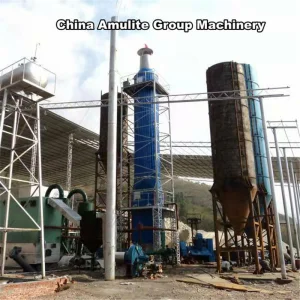
Buy Gypsum Powder Production Line Supplier, Product
View Equipment Specs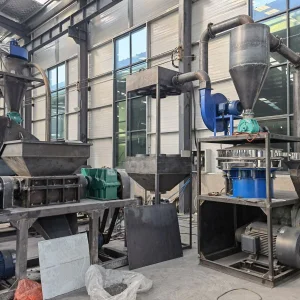
OEM Lithium Battery Recycling Equipment Factory, Company
View Equipment Specs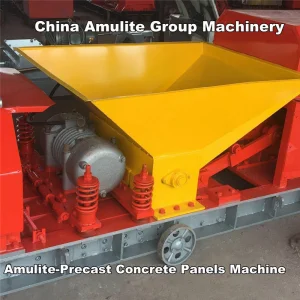
Best Precast Concrete Products Machinery Manufacturers, Products
View Equipment Specs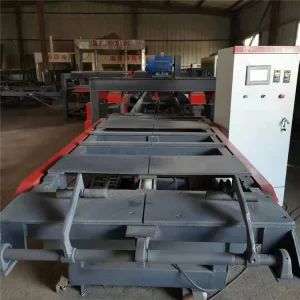
OEM 1300 II Type Automatic Four Side Edge Cutting Machine Factory, Companies
View Equipment Specs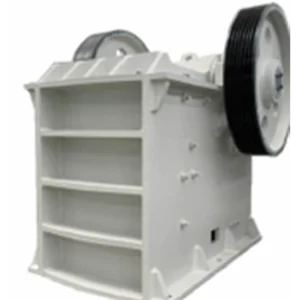
Buy Stone Hammer Crusher 6CX Euro Series Jaw Crusher Company, Product
View Equipment Specs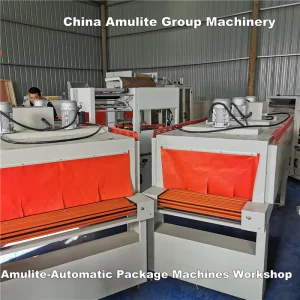
Famous Automatic Package Machines Workshop Factory, Company
View Equipment Specs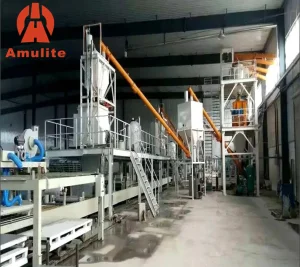
Best XPS Insulation Tile Backer Production Line Supplier, Companies
View Equipment Specs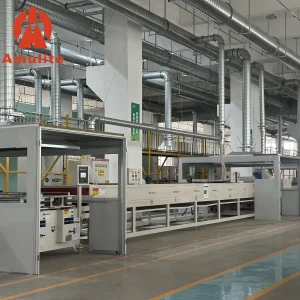
OEM UV Coating/Painting Production Line Manufacturer, Factories
View Equipment SpecsA comprehensive deep dive into the chemical matrix, wet-process slurry dynamics, and high-pressure steam autoclaving behind world-class building sheets.
Modern top-tier manufacturers utilize multi-vat Hatschek wet-forming machines. Ultra-thin layers (approx. 0.2mm to 0.3mm) of homogenous slurry—composed of Portland cement, micro-silica, unbleached kraft cellulose fibers, and synthetic PVA reinforcement—are continuously filtered onto a running felt belt, rolled under high tension, and built up into solid green sheets with isotropic flexural integrity.
Under saturated steam conditions inside high-pressure autoclaves (170°C to 190°C at 0.8 to 1.2 MPa for 10-14 hours), amorphous calcium silicate hydrates (C-S-H) react chemically with micro-crystalline quartz sand. This hydrothermal synthesis yields a highly stable 11Å Tobermorite ($C_5S_6H_5$) crystalline lattice, virtually eliminating hygral expansion and irreversible moisture shrinkage.
Post-stacking green sheets pass through heavy-duty continuous or single-opening hydraulic presses exerting 7,000 to 14,000 tons of force. This process reduces internal voids, compresses capillary pores, and elevates raw board density from standard air-cured ranges (1.1–1.3 g/cm³) to ultra-dense exterior structural cladding grades (1.5–1.75 g/cm³).
Why Tier-1 Chinese fiber cement board manufacturers lead global markets in cost efficiency, technological innovation, and massive supply stability.
Sourcing high-performance non-asbestos fiber cement sheets requires an integrated manufacturing infrastructure. Leading manufacturers based in China's prime industrial clusters leverage an unmatched combination of raw material availability, engineering specialization, and automated production throughput.
China's strategic proximity to world-class silica sand deposits, high-purity limestone quarries, and synthetic fiber manufacturing hubs eliminates supply chain bottlenecks. Direct access to high-grade Ordinary Portland Cement (OPC 52.5N) and specialized micro-cellulose fibers guarantees stable batch-to-batch chemical ratios at optimal unit costs.
Top-tier Chinese facilities feature fully automated continuous lines capable of outputting between 5 million and 30 million square meters annually per plant. Automated slurry dosing, laser-guided thickness scanning, high-speed edge trimming, and robotic palletizing significantly reduce operational overhead and lead times for mega-infrastructure projects.
Modern factories operate under strict ISO 9001 quality management and ISO 14001 environmental management frameworks. Online ultrasonic flaw detection, X-ray diffraction (XRD) mineral analysis, and 100% water tightness pressure testing are integrated directly into the production line before export packing.
From pre-cut wall panel dimensions to specialized hydrophobic surface priming, 3D wood-grain texture embossing, and inorganic fluorocarbon weather-resistant spraying, Chinese manufacturers offer flexible OEM manufacturing to meet precise architectural architectural specifications worldwide.
Comparative technical analysis across board density categories according to international testing standards.
| Performance Metric | Standard Test Method | Medium Density (Air-Cured) | High Density (Autoclaved) | Ultra-High Density (Pressed Exterior) |
|---|---|---|---|---|
| Nominal Density Range | ASTM C1185 / EN 12467 | 1.10 – 1.30 g/cm³ | 1.30 – 1.50 g/cm³ | 1.50 – 1.75 g/cm³ |
| Modulus of Rupture (Flexural Strength) | ASTM C1185 (Wet state) | ≥ 9.0 MPa (Class 2) | ≥ 14.0 MPa (Class 3) | ≥ 18.0 – 24.0 MPa (Class 4/5) |
| Water Absorption Rate | ASTM C1185 | ≤ 28 % | ≤ 20 % | ≤ 12 – 15 % |
| Moisture Movement (Hygral Expansion) | EN 12467 (30% to 90% RH) | ≤ 0.25 % | ≤ 0.15 % | ≤ 0.08 % |
| Thermal Conductivity (k-value) | ASTM C177 | 0.18 – 0.22 W/m·K | 0.22 – 0.26 W/m·K | 0.28 – 0.32 W/m·K |
| Reaction to Fire / Combustibility | EN 13501-1 / ASTM E84 | Class A1 Non-Combustible | Class A1 Non-Combustible | Class A1 / Flame Spread Index 0 |
| Freeze-Thaw Resistance | EN 12467 (100 Cycles) | Passes (R_L ≥ 0.75) | Passes (R_L ≥ 0.85) | Passes 100+ Cycles (R_L ≥ 0.95) |
| Impact Resistance (Charpy) | ISO 179 | ≥ 1.8 kJ/m² | ≥ 2.5 kJ/m² | ≥ 4.0 – 5.5 kJ/m² |
Key compliance benchmarks global architects and procurement officers require for project submittals.
Establishes standard specification for non-asbestos fiber-cement flat sheets. Evaluates physical requirements across Type F (exterior application) and Type M (interior application), verifying flexural strength, water absorption, frost resistance, and linear moisture movement.
Classifies flat fiber cement sheets into Categories A, B, C, and D based on weather resistance, and Classes 1 through 5 based on flexural strength. Essential for CE marking and environmental product declarations (EPD) in European commercial construction.
The international baseline governing mechanical, thermal, and dimensional performance. Ensures global interoperability and compliance for multinational EPC contractors operating across APAC, the Middle East, and Latin America.
From high-rise rain-screen facades to heavy industrial sub-floors, explore how fiber cement sheets excel across varied climates and architectural demands.
Installed on aluminum or galvanized steel sub-framing, high-density autoclaved fiber cement cladding panels (8mm–12mm) provide an engineered weather envelope. Resists intense solar UV degradation, salt spray corrosion in coastal zones, and extreme wind-load pressures up to 5.0 kPa.
Medium to high-density boards (6mm–12mm) serve as dimensional substrates beneath heavy porcelain or stone tiles in commercial kitchens, industrial washrooms, and swimming pool complexes. Zero moisture swelling prevents tile delamination and grout joint cracking.
Utilized as core fire-barrier linings (12mm–25mm) for elevator shafts, emergency stairwells, and electrical cable ducts. Under thermal stress, autoclaved silicate boards do not emit toxic fumes, melt, or spall, providing up to 240 minutes of structural fire integrity (BS 476 / EN 1364).
High-density, fiber-reinforced sheets (18mm–25mm) act as load-bearing floor panels in steel-structure warehouses and modular prefabricated housing. High impact resistance supports forklifts and concentrated point loads while reducing acoustic impact sound transmission.
The global transition toward carbon-neutral construction materials is driving technological evolution across fiber cement sheet manufacturing processes.
Manufacturers are replacing traditional high-carbon Clinker Portland Cement with industrial upcycled pozzolans, such as ground granulated blast-furnace slag (GGBS), ultrafine fly ash, and calcined clays. Geopolymer matrix technology reduces embodied carbon by up to 40% while enhancing acid and sulfate resistance.
Integrating nano-SiO₂ particles and functionalized graphene oxide flakes into slurry formulations optimizes interfacial transition zones (ITZ) between cellulose fibers and cement matrices. This nano-level reinforcement improves impact energy absorption by over 35% without adding weight.
Advanced factories deploy inline high-resolution digital ink-jet printing and UV-cured polyurethane or fluorocarbon topcoats. Fiber cement sheets can accurately reproduce real granite, marble, oxidized metal, and raw concrete aesthetics with 20-year color-fastness guarantees.
Complete product offerings supporting wall panel fabrication, surface processing, and industrial material preparation.
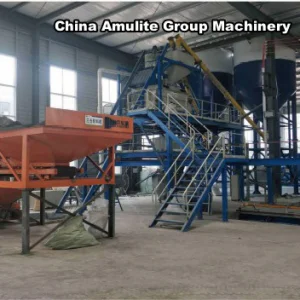
Buy Hollow Core Wall Panels Production Line Factory, Factories
View Equipment Specs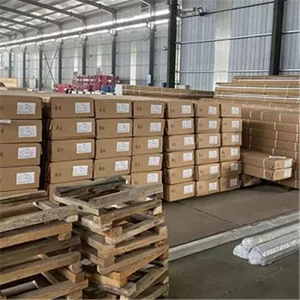
High-Quality Embossed Metal Composite Exterior Panels Production Line Manufacturers, Company
View Equipment Specs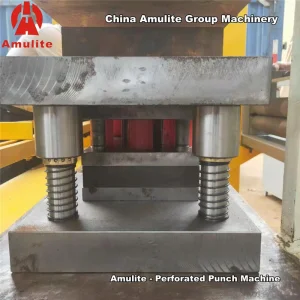
High-Quality Amulite Perforated Punch Machine System Technical Data Manufacturer, Suppliers
View Equipment Specs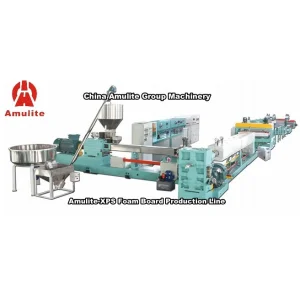
OEM Amulite CO2 XPS Foam Board Production Line Factory, Factories
View Equipment Specs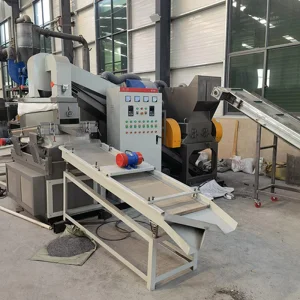
Buy Copper Wire Recycling Machine Companies, Products
View Equipment Specs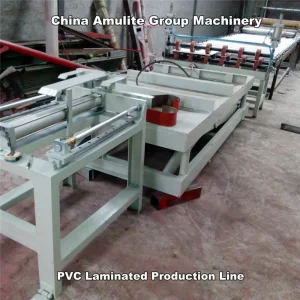
China PVC Laminated Production Line Factories, Products
View Equipment Specs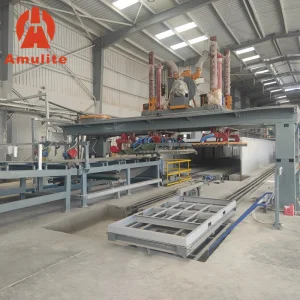
China Non-Asbestos/Asbestos Cement Corrugated Roof Sheets Production Line Company, Product
View Equipment Specs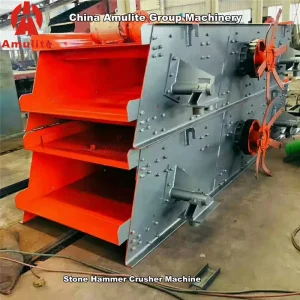
OEM Stone Hammer Crusher Machine Suppliers, Factory
View Equipment SpecsIn-depth technical answers addressing procurement, material selection, installation guidelines, and quality assurance.
Autoclaved sheets undergo high-pressure hydrothermal curing (170°C–190°C steam), creating an 11Å Tobermorite crystalline matrix that offers minimal moisture movement, higher dimensional stability, and lower water absorption. Air-cured sheets rely on standard hydration over 28 days, rendering them slightly more flexible but more prone to hygral expansion when exposed to severe weather.
Yes. Reputable tier-1 manufacturers strictly produce 100% non-asbestos boards certified under ISO 8336, ASTM C1185, and EN 12467. Hazardous chrysotile or amphibole fibers are completely replaced by high-tenacity unbleached cellulose pulp fibers and synthetic PVA (Polyvinyl Alcohol) reinforcing micro-fibers.
Buyers should evaluate four key pillars: (1) Verified factory production capacity and Hatschek line automation, (2) Third-party laboratory test reports (SGS, TUV, Intertek) confirming compliance with ASTM C1186 or EN 12467, (3) Quality of raw materials used (e.g., pure quartz powder vs. raw river sand), and (4) In-house surface sealing/hydrophobic coating capabilities to prevent efflorescence during transit.
Exterior rainscreen facades require a high-performance inorganic UV-resistant coating, such as water-borne acrylics, polyurethane (PU), or fluorocarbon (PVDF) topcoats. Pre-priming all six sides (including rear faces and cut edges) with a hydrophobic silane-siloxane sealer prevents moisture absorption and efflorescence salting.
Standard manufacturing lead time ranges from 14 to 21 days for standard dimensions (e.g., 1220x2440mm, 1200x3000mm). Sheets are stacked on heavy-duty fumigated wooden pallets, wrapped in water-resistant PE film, reinforced with steel/plastic corner protectors, and bound with high-tensile PET strapping for secure 20ft/40ft container loading.