High-capacity automated manufacturing systems, autoclave systems, and auxiliary machinery engineered for modern industrial building materials plants.
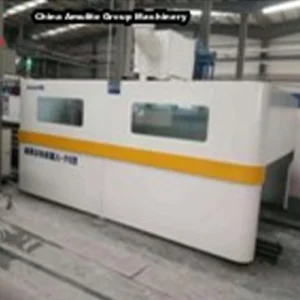
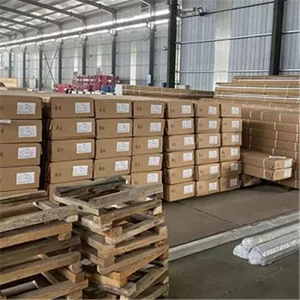
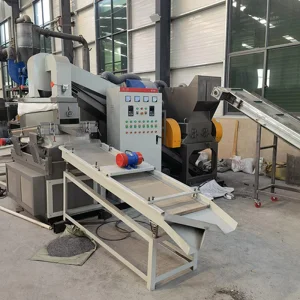
In the contemporary building materials sector, Fiber Cement (FC) Board Making Equipment represents the cornerstone of modern, non-combustible, structural, and decorative panel manufacturing. Engineered to combine inorganic hydraulic binders with reinforcing fibers and mineral aggregates, high-performance FC board manufacturing machinery transforms raw quartz sand, Portland cement, cellulose fiber, and specialized additives into dense, ultra-durable cladding and substrate sheets.
As the construction industry shifts rapidly toward off-site prefabrication, modular building, and strict Class A1 fire compliance, identifying the Best FC Board Making Equipment Supplier & Factories requires a granular evaluation of process thermodynamics, mechanical precision, slurry rheology engineering, and automated continuous production lines. Modern FC board production lines utilize advanced forming methods—primarily the Hatschek process and wet-flow/extrusion technology—to produce boards ranging in thickness from 4mm up to 30mm with densities tailored from 1.0 g/cm³ to over 1.7 g/cm³.
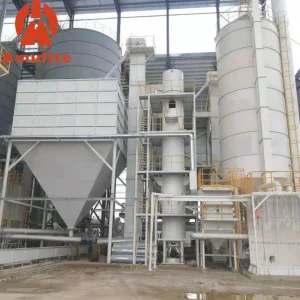
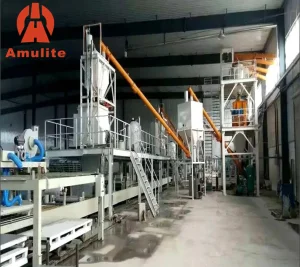
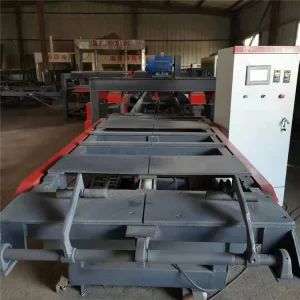
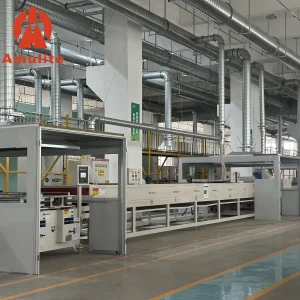
A full-scale turnkey fiber cement board factory integrates multiple heavy industrial sub-systems working in continuous synchronized operation. Leading machinery manufacturers design these modules to operate under Siemens PLC and SCADA control environments for precise material dosing, thickness control, and energy recovery.
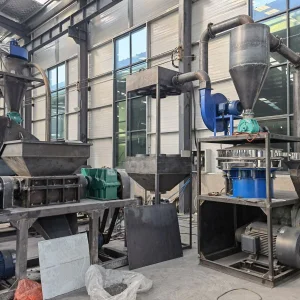
High-shear hydrapulpers, disc refiners, and automated quartz sand ball mills prepare uniform slurry. Freeness testing systems ensure pulp fibers achieve optimal micro-interlocking properties.
Featuring 3 to 8 rotating wire-mesh cylinder vats that continuously filter slurry films onto an endless running felt, building up laminate board layers under controlled vacuum dewatering.
Heavy-duty hydraulic presses (up to 10,000 metric tons) consolidate stacked wet green boards, eliminating interstitial voids to boost board density up to 1.65–1.75 g/cm³.
Pressure-vessel autoclaves with quick-actuating safety doors subject sheets to high-pressure hydrothermal reaction, completing matrix curing within 10 to 14 hours.
Precision 4-side diamond edge cutting machines and multi-head calibrate sanding lines ensure thickness tolerance within ±0.2mm for architectural finish grades.
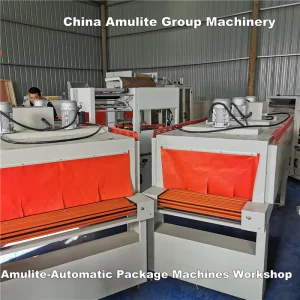
Robotic vacuum lifters and automated packaging stations handle final board stacking, strapping, and protective stretch wrapping for international freight transport.
Investors must evaluate whether an autoclaved (Calcium Silicate base) or air-cured (Fiber Cement Portland base) line aligns with local market demands. The table below details technical variances across core equipment configurations:
| Equipment / Technical Parameter | Autoclaved FC Board Production Line | Air-Cured FC Board Production Line |
|---|---|---|
| Primary Raw Materials | Quartz Sand (SiO₂ > 90%), OPC Cement, Cellulose Pulp, Lime | OPC Cement, Fly Ash, Cellulose Fiber, Synthetic Micro-Fibers |
| Curing Infrastructure | High-Pressure Steam Autoclaves (1.2 MPa, 190°C) | Pre-curing chambers + Ambient humidity curing rooms (28 days) |
| Final Board Density Spectrum | 1.20 g/cm³ to 1.70 g/cm³ | 1.00 g/cm³ to 1.40 g/cm³ |
| Linear Moisture Movement | Extremely Low (< 0.12%) due to Tobermorite matrix | Moderate (< 0.25%) |
| Flexural Strength (MOR) | 16 MPa to 28 MPa (Class 4 / Class 5) | 9 MPa to 16 MPa (Class 1 / Class 3) |
| Primary Target Applications | Exterior Architectural Cladding, Prefab Floors, Cleanroom Walls | Ceiling tiles, basic interior drywall partitions, soffits |
The worldwide consumption of Fiber Cement Boards is experiencing compound growth driven by modern method of construction (MMC) protocols, urban infrastructure renewal, and stringent environmental regulations banning asbestos and formaldehyde-emitting particleboards. Global builders prefer FC boards due to their structural rigidity, termite immunity, and zero smoke emission properties.
According to industrial sector reports, the global fiber cement market valuation is expanding rapidly across five primary geographical theaters:
Equipment supplied by tier-1 manufacturers produces multi-functional sheets customized for specific industrial and commercial applications. Modern FC board production plants adjust thickness, density, and surface treatment to target distinct high-margin market sectors:
High-density (≥1.5 g/cm³) autoclaved boards treated with hydrophobic sealants or UV polyurethane topcoats. Engineered to withstand wind loads, freeze-thaw cycles, and intense solar radiation.
Thick boards (18mm to 25mm) reinforced with multi-layer fiber orientation. Used as load-bearing structural floor decks in steel-structure mezzanine buildings and modular shipping container conversions.
Non-combustible 10mm–12mm FC boards rated for 2-hour to 4-hour passive fire protection in elevator shafts, commercial stairwells, and industrial cleanrooms.
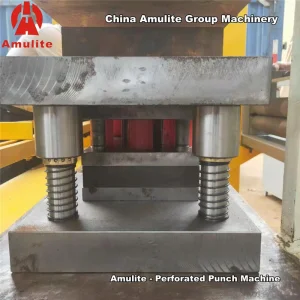
Engineered boards processed through automatic CNC perforated punch machine systems, lined with acoustic fleece for sound absorption in auditoriums and transit hubs.
6mm to 9mm water-resistant boards designed for bathroom, kitchen, and swimming pool wall backing, serving as an ideal dimensional substrate for ceramic tile bonding.
Specially formulated fiber cement sheets equipped to absorb heavy atmospheric pressure swings, automotive exhaust fumes, and de-icing chemicals along major highway barriers.
Selecting a Chinese manufacturing partner for FC board production lines offers structural economic and technical advantages. China's industrial ecosystem for heavy machinery fabrication combines integrated supply chains with rapid engineering iteration cycles.
The fiber cement machinery sector is undergoing a rapid technological evolution driven by industrial digitalization, energy optimization, and decarbonization mandates. Buyers investing in equipment today must select machinery architectures capable of supporting future upgrades:
Deploying heavy industrial board machinery internationally requires strict adherence to regional electrical, mechanical pressure vessel, and environmental regulations. Top-tier suppliers provide comprehensive engineering compliance packages to ensure smooth local permitting:
Production capacities are modularly engineered from 1 million m² up to 30 million m² per year per line. Annual yield is determined by sheet forming machine width (typically 1,300mm to 1,600mm), the number of cylinder vats, autoclave pressure vessel capacity, and the degree of stacking/cutting automation implemented.
The primary formulation includes Ordinary Portland Cement (OPC 42.5/52.5), finely ground silica sand (quartz powder with SiO₂ > 90%), unbleached kraft cellulose wood pulp, slaked lime, and functional performance micro-additives. In non-autoclaved formulations, fly ash or slag replaces portion of quartz sand.
Yes. Turnkey project delivery includes complete civil architecture layout drawings, load-bearing floor plans, electrical and steam piping schematics, raw material laboratory testing, custom slurry recipe development, on-site commissioning, and full operator training until commercial output standards are met.
Manufacturing heavy machinery components takes approximately 90 to 150 days depending on plant scale. Overseas mechanical and electrical installation takes 45 to 60 days, followed by 20 to 30 days of trial production runs, slurry tuning, and final operational acceptance.
Thickness precision is achieved through a multi-stage process: accurate slurry film accumulation on the Hatschek forming drum, continuous pneumatic felt tensioning, high-pressure hydraulic pre-pressing, and final pass calibration sanding using heavy multi-head orbital diamond sanders.
Complementary machinery systems, coating lines, insulation board equipment, and material recycling plants engineered to industrial standards.