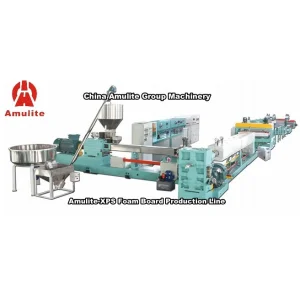
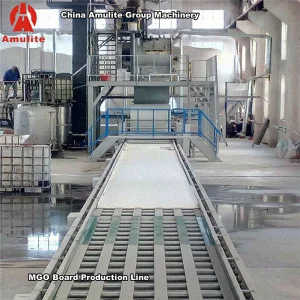
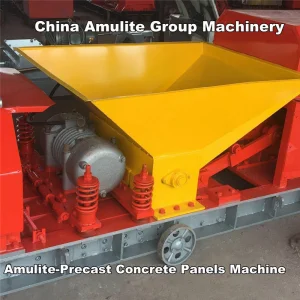
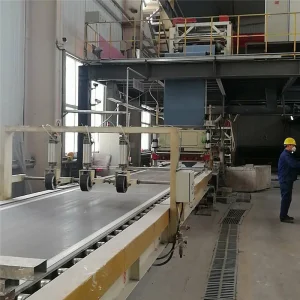
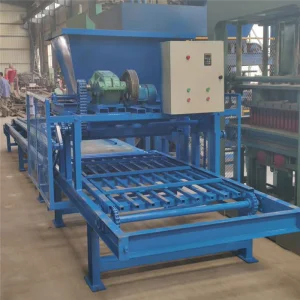
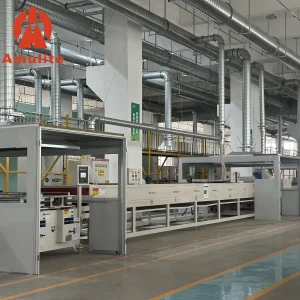
Explore our certified automated manufacturing lines designed for high-density, fireproof, and thermally insulated exterior wall panels.
The global construction industrialization sector is undergoing a structural paradigm shift towards off-site manufacturing and prefabricated architectural envelopes. Central to this transition is the Exterior Concrete Wall Panel Machine. Industry data indicates that the market for precast concrete wall panel machinery is projected to expand at a Compound Annual Growth Rate (CAGR) of 6.8% over the next decade, driven by escalating labor costs, stringent building thermal efficiency mandates, and the urgent imperative to compress project schedules.
Modern exterior wall systems demand multifaceted performance characteristics: structural integrity, thermal resistance ($R$-value optimization), Class-A fire protection, and rapid assembly capability. Industrial manufacturers have evolved beyond basic block-making apparatus to integrated, multi-stage production lines capable of manufacturing Lightweight EPS (Expanded Polystyrene) Cement Sandwich Panels, Autoclaved Aerated Concrete (AAC) exterior sheets, Fiber Cement Cladding Panels, and Precast Concrete Insulated Sandwich Walls (Twill-Wall & Triple-Layer Systems).
Regional adoption dynamics highlight key investment hotspots: North American developers prioritize high-R-value insulated concrete sandwich panels to meet strict ASHRAE 90.1 energy codes; Western European markets favor low-carbon geopolymer matrix board lines with integrated recycled aggregates; while APAC and MEA regions demonstrate explosive demand for high-capacity continuous vertical-mold casting plants to satisfy rapid urban housing expansion and mega-infrastructure projects.
Navigating the selection of exterior concrete wall panel equipment requires a deep understanding of core manufacturing methodologies. Suppliers currently deploy three primary industrial technical routes, each engineered for specific structural density, throughput, and panel geometries:
| Technology Route | Primary Panel Types Produced | Core Machinery Components | Density Range (kg/m³) | Annual Capacity / Module |
|---|---|---|---|---|
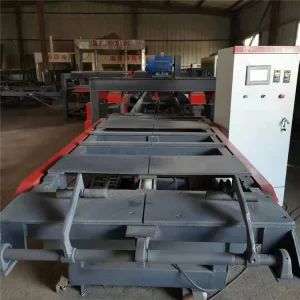
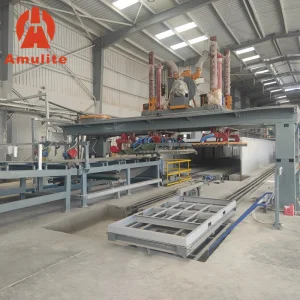
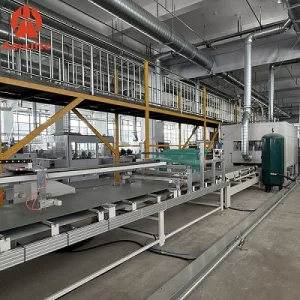
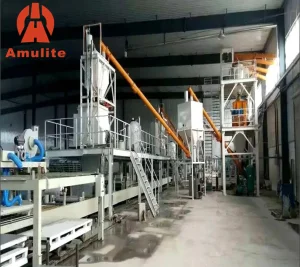
| Automatic Vertical Hydraulic Gang-Mold System | EPS Cement Sandwich Wall Panels, Hollow Core Lightweight Concrete Wall Panels | Automatic Slurry Batching Tower, Core Pulling System, Hydraulic Mold Cars, Automated Panel Dumper | 450 – 800 kg/m³ | 500,000 to 2,000,000 m² |
| Horizontal Continuous Slipform & Extrusion Line | Prestressed Hollow-Core Concrete Panels, Solid Exterior Load-Bearing Walls | Heavy-Duty Concrete Extruder, High-Frequency Vibrating Shaper, Automated Wire Tensioning Stand | 1,400 – 2,400 kg/m³ | 300,000 to 800,000 m² |
| Hatschek Process & De-watering Pressing Line | High-Density Fiber Cement Exterior Cladding, Calcium Silicate Facade Boards | Slurry Vat Mixers, Cylinder Mold Drums, Vacuum Dewatering Felts, 14,000-Ton Hydraulic Stack Press, Autoclaves | 1,200 – 1,700 kg/m³ | 2,000,000 to 10,000,000 m² |
Key technical innovations engineered into elite machinery lines include PLC-driven multi-stage pneumatic slurry dosing, dynamic weight sensor calibration ($\pm 0.5\%$ error margin), high-frequency ultrasonic air-void elimination, and automated core-pipe extracting mechanisms. These sub-systems eliminate internal structural voids, ensuring optimal compressive strength (up to 15-25 MPa) and minimizing micro-cracking during early-stage curing cycles.
The forward-looking technological roadmap for exterior concrete wall panel manufacturing centers around Industry 4.0 integration and environmental footprint mitigation. Modern panel equipment manufacturers are embedding sensor networks, computer vision systems, and automated material recovery frameworks into their turnkey plant designs.
High-resolution camera arrays integrated with convolutional neural networks (CNNs) evaluate panel dimensional tolerances, edge squareness, and surface micro-fissures in real time. Robotic demolders utilize vacuum grippers and soft-actuator arms to extract cured panels without micro-damage, cutting yield loss by over 98%.
Advanced batching units are engineered to handle high-volume industrial by-products including blast furnace slag (GGBS), pulverized fly ash (PFA), and calcined clay. Special shear-mixing modules allow seamless switching from OPC-based formulations to zero-cement geopolymer matrices, reducing embodied carbon by up to 65%.
Furthermore, closed-loop water filtration systems harvest wash-out slurry, separating recycled aggregate fractions and neutralising process water for re-introduction into the primary mixing phase. Energy thermal recovery loops utilize autoclave exhaust steam to preheat curing chambers, establishing a highly eco-efficient production cycle.
Deploying a commercial-grade exterior wall panel production facility is a complex civil and mechanical engineering enterprise. Leading machinery suppliers act as single-source systems integrators, offering complete turnkey plant design tailored to geographical, environmental, and raw material conditions.
A optimized industrial turnkey plant encompasses six core modular sub-systems:
Exterior concrete wall panel formulations and machinery configurations must adapt dynamically to localized climatic forces and regional building codes:
Machinery integrates continuous high-tensile wire mesh or alkalized glass-fiber mesh laying stations into the mold cavity, yielding flexural strength capable of enduring magnitude 8.0 seismic shifts and typhoons.
Production lines customize dense exterior cement skins ($>1400$ kg/m³) with hydrophobic pore-blocking chemical dosing units, guaranteeing zero water ingress during freeze-thaw cycles ($>100$ cycles resistance).
Panels are engineered with integrated anti-fungal and low-absorption calcium silicate facings, maintaining thermal envelope performance across high heat and ambient humidity conditions.
Expert procurement and operational answers for industrial building panel machinery investments.
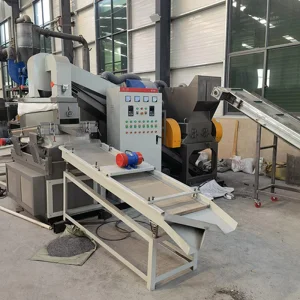
Discover our specialized auxiliary equipment, cutting systems, recycling machinery, and secondary finishing lines.