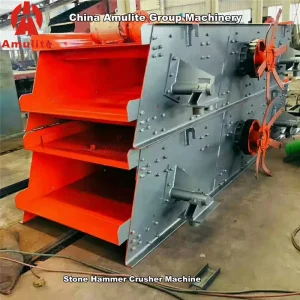
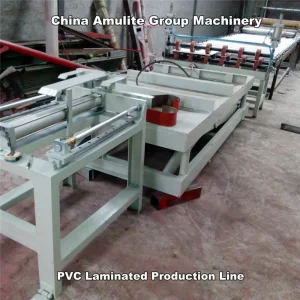
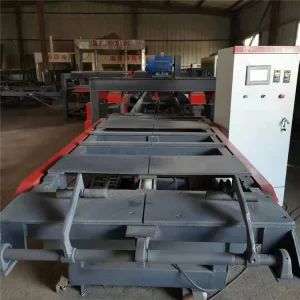
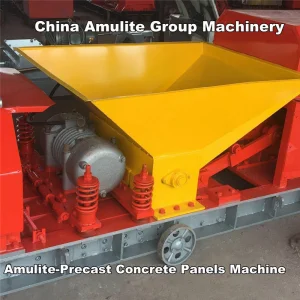
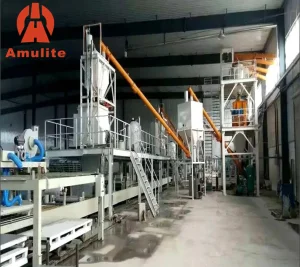
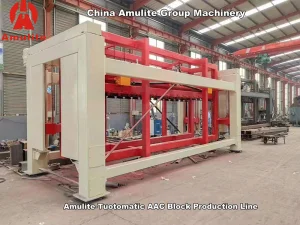
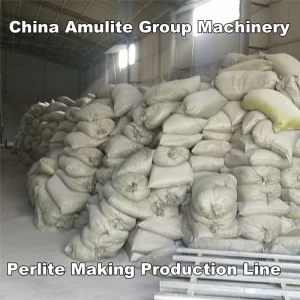
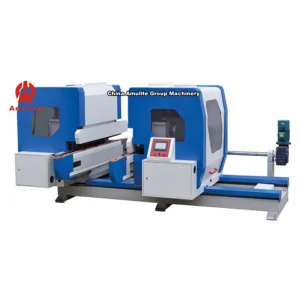
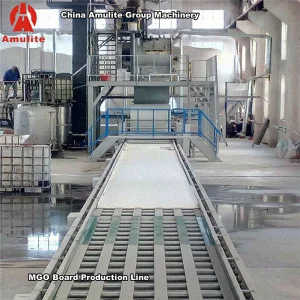
Explore our core engineered production machinery, offering high-volume yield, automated dosing, and heavy-duty structural durability.
Understanding the mechanical, chemical, and operational variables involved in selecting premier suppliers for modern lightweight cement panel manufacturing systems.
Modern EPS panel machinery incorporates automated fluidized-bed pre-expanders capable of precise bulk density control (12–25 kg/m³). Primary steam pressure regulators ensure uniform bead sphericity and micro-pore distribution, preventing structural collapse during slurry mixing.
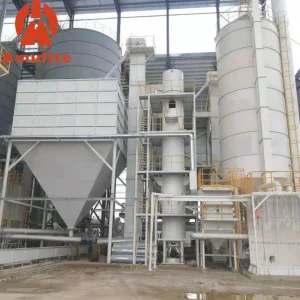
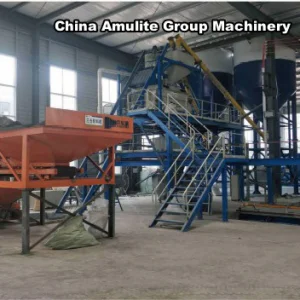
High-shear planetary mixers combine Portland cement, silica sand, fly ash, expanded EPS beads, and chemical additives. Weight-cell load sensors maintain ±0.5% dosing accuracy, establishing optimal rheology for core-to-skin adhesion.
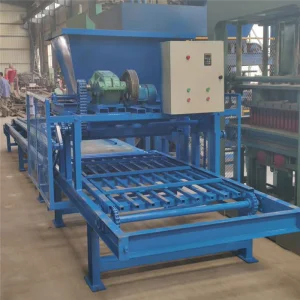
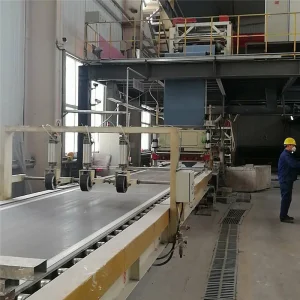
Precision-machined vertical mold cars feature high-rigidity structural steel plates and automated side-opening mechanisms. Multi-cavity configurations allow simultaneous casting of up to 40 panels with zero thickness variance.
Information Gain Insight: The true efficiency of an EPS sandwich wall panel line depends not only on raw linear speed, but on the chemical stabilization of the cementitious matrix. Superior suppliers integrate secondary ultrasonic dispersion systems to prevent EPS bead floating, achieving a perfectly homogenous density gradient across 100mm to 200mm panel cross-sections.
Evaluating total cost of ownership (TCO), automated labor reduction, and yield efficiency across standard machinery configurations.
| Evaluation Parameter | Semi-Automatic Vertical Line | Fully Automated Industrial Line | Amulite Smart Next-Gen Line |
|---|---|---|---|
| Annual Yield Capacity | 300,000 – 500,000 m² | 800,000 – 1,500,000 m² | 1,200,000 – 2,500,000 m² |
| Labor Requirement (per shift) | 12 – 16 Operators | 6 – 8 Operators | 3 – 5 Supervisory Technicians |
| Control System Architecture | Manual Valves / Basic PLC | Siemens S7-1500 PLC + HMI | Industry 4.0 IoT Cloud + AI Diagnostics |
| EPS Bead Density Uniformity | ± 5.0% Variation | ± 2.0% Variation | ✓ ± 0.8% Micro-Dosing |
| Demolding Automation | Manual Overhead Crane | Hydraulic Auto-Tilting | ✓ Vacuum Robotic Gripper |
| Estimated CapEx Payback Period | 14 – 18 Months | 10 – 12 Months | ✓ 7 – 9 Months |
Why leading global EPC contractors and building material manufacturers source machinery lines directly from China's premier heavy equipment clusters.
Chinese OEM machinery leaders operate comprehensive fabrication workshops covering over 100,000 square meters. By keeping structural steel laser cutting, CNC gantry milling, heat treatment, and hydraulic testing internal, production lines avoid third-party delays while ensuring strict dimensional tolerances across all vertical mold cars.
By leveraging localized component integration—such as state-controlled steel procurement, regional hydraulic cylinder suppliers, and high-efficiency motor production—Chinese vendors deliver machinery lines at 30% to 50% lower initial capital expenditure compared to European counterparts, without sacrificing structural longevity.
Different global markets present distinct raw material characteristics—ranging from high-calcium fly ash in Southeast Asia to volcanic pozzolans in South America. Chinese process engineers pre-test local sand and cement samples in dedicated testing labs to customize mixing blade geometries, foam generator pressure curves, and curing cycle parameters.
China's unified industrial supply network guarantees standard replacement components—such as pneumatic control valves, PLC expansion modules, and high-pressure slurry pumps—are permanently stocked and ready for immediate global dispatch within 48 hours of service requests.
Ensuring seamless installation, international safety certifications, and localized recipe engineering across global deployment sites.
Machinery control panels are custom-engineered to meet specific regional electrical standards, including 380V–480V 50Hz/60Hz configurations. All electrical cabinets feature CE, UL, or CSA compliant components, equipped with dual-circuit emergency stops, interlocked safety guards, and isolated low-voltage control circuits.
Prior to equipment shipment, senior engineering teams provide complete CAD factory floor layouts, 3D foundation pit drawings, utility loading requirements (electricity, compressed air, water, steam), and material flow diagrams to eliminate structural installation bottlenecks.
Resident installation technicians supervise mechanical alignment, hydraulic piping, electrical wiring, and dry runs. Process engineers remain on site until the production line achieves stable output matching contract flexural strength and surface tolerance targets.
How sensor telemetry, automated quality verification, and low-carbon curing technologies are reshaping modern wall panel factories.
Real-time inline viscometers and radiometric density sensors continuously monitor wet slurry consistency inside the mixer. Automated feedback loops dynamically adjust water-to-cement ratios to compensate for ambient humidity variations.
Modern curing tunnels utilize closed-loop heat exchangers that capture exothermic heat released during cement hydration, routing warm exhaust air to pre-heat EPS bead expansion tanks and reducing steam consumption by up to 35%.
Integrated 6-axis heavy gantry robots replace manual overhead cranes. Equipped with soft-vacuum suction cups, these systems lift cured panels from mold cars with zero corner-chipping, placing them directly onto automatic palletizing belts.
Examining structural, thermal, and acoustic performance parameters across distinct global construction environments.
Lightweight EPS panels reduce overall building dead-load by up to 40% compared to traditional masonry, allowing structural engineers to optimize concrete column sizes and foundation steel quantities in high-density urban developments.
Featuring low thermal conductivity (λ ≤ 0.045 W/m·K), tongue-and-groove joint configurations prevent thermal bridging, making EPS cement sandwich panels an ideal choice for temperature-controlled warehouse partition walls.
Interlocking steel-pin connectors combined with fiber-reinforced calcium silicate facing boards allow wall panel assemblies to absorb lateral shear stress during seismic events without catastrophic cracking or displacement.
Designed with hollow-core channels and composite EPS slurry cores, 120mm thick panels achieve sound transmission loss ratings of 42 dB to 50 dB, exceeding multi-family residential privacy requirements.
Authoritative technical answers addressing raw materials, energy requirements, line customization, and equipment maintenance.
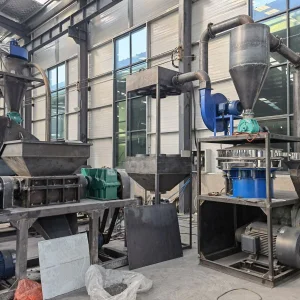
Review our specialized cutting, crushing, recycling, and block forming machinery integrated into complete building material plant projects.