Explore our core engineering portfolio of automated production lines, processing systems, and heavy-duty building material manufacturing equipment.
A Comprehensive Technical Analysis of Automated Prefabricated Wall Panel Manufacturing Equipment, Material Science Integration, and Global Procurement Strategies
The global construction landscape is undergoing a paradigm shift towards industrialized, sustainable, and rapid-assembly building systems. At the forefront of this evolution is the Expanded Polystyrene (EPS) Lightweight Concrete Sandwich Panel Machine. These composite wall panels—typically featuring calcium silicate or fiber cement boards as face sheets enclosing a lightweight core of Portland cement, EPS foam beads, sand, and specialized chemical additives—have rapidly replaced traditional masonry bricks and blockwork across modern high-rise, commercial, and residential construction.
Selecting the best EPS concrete sandwich panel equipment machine suppliers and companies requires a nuanced evaluation of process engineering, machine dynamic stability, automated dosing precision, and long-term total cost of ownership (TCO). As modern buildings demand stricter acoustic attenuation (STC ratings), enhanced thermal resistance (R-values), structural flexural strength, and fire endurance (A-class non-combustibility), the machinery producing these elements must meet stringent mechanical tolerances and automated control paradigms.
Unpacking the supply chain density, manufacturing innovations, and capital expenditure efficiencies offered by premier Chinese machinery enterprises.
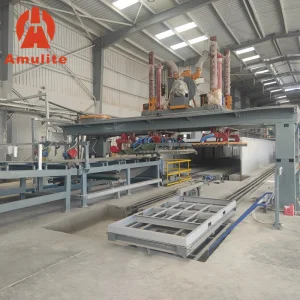
China's heavy industrial clusters in Hebei, Shandong, and Jiangsu house the world's most concentrated supply chain for building material machinery. From precision CNC laser cutting of heavy vertical mold cars to localized sourcing of high-torque mixers and hydraulic systems, Chinese manufacturers deliver unrivaled lead times and manufacturing scale.
Establishing an EPS sandwich wall panel manufacturing plant requires substantial initial investment. Sourcing complete turnkey lines from top Chinese manufacturers reduces baseline CAPEX by 40% to 60% compared to Western European alternatives, without sacrificing critical core components like Siemens PLCs, Schneider electronics, or Festo pneumatic controls.
Chinese OEM machinery pioneers do not sell generic hardware; they supply tailored chemical and mechanical process technologies. Systems are engineered to accommodate local raw materials—such as varying grades of Ordinary Portland Cement (OPC), pozzolanic fly ash, natural silica sand, or localized expanded polystyrene beads—ensuring optimal slurry flowability and panel strength.
How Next-Generation Automation, Smart Dosing, and Sustainable Materials are Reshaping Lightweight Concrete Wall Panel Production
The manufacturing machinery for EPS concrete sandwich wall panels has progressed far beyond basic batch mixers and manual mold cars. Today’s premier equipment suppliers incorporate smart manufacturing frameworks designed to optimize throughput, reduce human error, and achieve flawless dimensional tolerance (±1mm). Key technological vector shifts include:
Modern production lines feature closed-loop digital batching stations. EPS expandable polystyrene beads are pre-expanded under precise steam pressure and fluid-bed drying to maintain uniform particle density (typically 8–12 kg/m³). Digital mass flow meters and load cell weight sensors dynamically balance the ratio of cement, fly ash, water, foaming agent, and EPS beads to prevent slurry segregation.
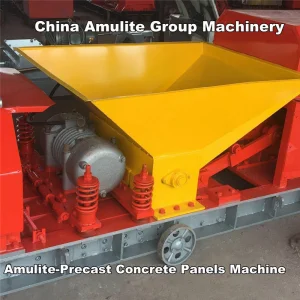
To maximize factory floor efficiency, industry leaders utilize vertical mold cars equipped with automated hydraulic opening, closing, and locking mechanisms. A single vertical battery car can cast 40 to 60 panels simultaneously. Integrated internal heating pipes (powered by steam or thermal oil) accelerate hydration curing, allowing matrix demolding cycles within 3 to 4 hours.
Leading suppliers automate the loading of calcium silicate or fiber cement facing boards into vertical mold slots. Robotic vacuum suction grippers positioning facing boards eliminate manual misalignments. High-pressure volumetric grout pumps inject the homogenous EPS-cement slurry from the bottom up, ensuring bubble-free matrix compaction and absolute mechanical bond strength with the facing sheets.
Environmental regulations demand sustainable production practices. Modern Chinese EPS panel machinery incorporates slurry recycling systems that recapture runoff, filter excess wash water, and re-introduce fine cement solids back into the mixing cycle. Furthermore, waste EPS off-cuts are crushed via online recycling units and re-blended into core formulations without structural performance degradation.
Comparative technical benchmarks of standardized fully automated vs. semi-automated EPS concrete sandwich panel manufacturing plants.
| Performance Parameter | Semi-Automated Line Standard | Fully Automated SCADA Line | High-Output Enterprise Line |
|---|---|---|---|
| Annual Production Capacity | 300,000 – 500,000 m² / year | 800,000 – 1,200,000 m² / year | 1,500,000 – 3,000,000 m² / year |
| Panel Length Range | 2270 mm / 2440 mm (Fixed) | 2270 mm – 3000 mm (Adjustable) | 2270 mm – 3600 mm (Custom) |
| Panel Thickness Spectrum | 60 / 75 / 90 / 100 / 120 mm | 50 / 75 / 90 / 100 / 120 / 150 / 200 mm | 50 mm to 250 mm (Modular) |
| Core Slurry Mixing Type | Dual-shaft Forced Planetary Mixer | Continuous High-Shear Turbo Mixer | Multi-Stage Automated Batching Plant |
| Demolding & Curing Time | 4 – 6 Hours (Ambient / Thermal) | 2.5 – 4 Hours (Steam Accelerated) | 2 – 3 Hours (Rapid Hydration Chamber) |
| Labor Requirement per Shift | 10 – 14 Workers | 5 – 8 Workers | 3 – 5 Operators (Robotic Handling) |
| Panel Core Density Range | 550 – 700 kg/m³ | 450 – 600 kg/m³ (Lightweight Core) | 400 – 550 kg/m³ (Ultra-Light) |
How EPS concrete sandwich panels solve structural, thermal, and speed-of-construction challenges across diverse worldwide climates and building codes.
In mega-cities across Southeast Asia, the Middle East, and Latin America, developers replace wet plaster and blockwork with lightweight EPS tongue-and-groove panels. Weight reduction decreases structural dead load on columns and foundations by up to 40%, enabling higher floor counts while quadrupling daily partition installation speeds.
In earthquake-prone regions (such as the Pacific Ring of Fire and Central Asia), EPS sandwich panels offer exceptional shear energy absorption. Bound by male-female interlocking joints and anchored with steel rebar clips, wall assemblies flex under seismic loads without brittle shear failure, safeguarding human life.
With an extremely low thermal conductivity ($\lambda \le 0.055 \text{ W/m}\cdot\text{K}$), thick EPS cement composite panels serve as structural exterior curtain walls and cold storage insulation envelopes in extreme climate zones, drastically reducing HVAC electrical power consumption over the building lifecycle.
A rigorous decision-making matrix for procurement officers, plant engineering directors, and project investors.
Procuring an EPS concrete sandwich panel machine requires looking beyond initial machinery price quotes. Leading engineering directors analyze suppliers based on four core E-E-A-T (Experience, Expertise, Authoritativeness, and Trustworthiness) pillars:
Inspect the steel frame gauge of vertical mold cars and mixing towers. High-quality machinery utilizes heavy-duty Q235B/Q345B structural steel, stress-relieved weld seams, and anti-corrosion epoxy coatings to withstand raw alkaline cement slurry and high humidity operational environments.
Ensure the supplier’s complete electrical and pressure systems meet international standards: CE Directive compliance (2006/42/EC Machine Directive), ISO 9001:2015 quality management systems, pressure vessel certifications for steam boilers/expansion tanks, and UL/CSA compliant cabinet wiring.
Turnkey plant success depends heavily on field commissioning. Reliable companies provide resident field service engineers for installation supervision, civil foundation alignment, electrical commissioning, raw material formulation trial runs, and local operator training.
Evaluate wear-and-tear components such as mixing blades, slurry seals, pneumatic valves, and vacuum suction cups. Tier-1 suppliers standardize on globally available components (e.g., SKF bearings, Siemens motors, Festo pneumatics) to guarantee minimal downtime during spare part replacement.
Direct responses from senior process engineers to essential technical questions regarding EPS sandwich panel machinery.
The primary raw materials include Ordinary Portland Cement (OPC Grade 42.5 or 52.5), pre-expanded Polystyrene (EPS) beads, Pozzolanic Fly Ash or clean silica sand, water, specialized chemical additives (accelerators, plasticizers, and foaming stabilizers), and pre-cut facing boards (Calcium Silicate Boards or Fiber Cement Boards, typically 4.5mm to 6mm thick).
A standardized line producing 500,000 m² per year requires a factory workshop area of approximately 2,500 to 4,000 square meters, with a minimum height clearance of 6 to 8 meters. Outside curing and raw material storage areas typically require an additional 3,000 to 5,000 square meters of hard-paved yard space.
EPS bead segregation is prevented through dual mechanisms: precise chemical formulation (using viscosity-modifying agents and water-reducing plasticizers) and controlled micro-foaming core mixers. The core matrix creates a thixotropic slurry state that holds expanded EPS beads in uniform multi-dimensional suspension throughout hydration.
Depending on local market sales prices for wall panels, raw material costs (cement, fly ash, EPS), and local labor rates, most commercial EPS sandwich wall panel production plants achieve full capital expenditure (CAPEX) payback within 12 to 18 months of achieving stable production capacity.
Yes. Modern vertical mold battery cars feature modular side-baffle spacers and adjustable end-blocking plates. Operators can quickly adjust wall panel thickness (e.g., switching from 90mm interior partition panels to 150mm exterior insulated panels) and modify length configurations with minimal downtime.
A complete operational plant typically requires an installed electrical transformer capacity of 150 kW to 350 kW (3-Phase 380V/440V, 50/60Hz), an industrial water supply connection capable of 10-20 m³/day, and a low-pressure steam boiler (1 to 2 Tons/hr capacity) if accelerated curing tunnels or EPS bead pre-expanders are utilized.
Browse additional specialized manufacturing equipment, secondary processing machinery, and auxiliary plant systems.