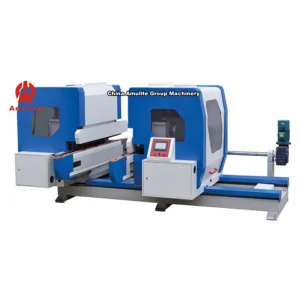
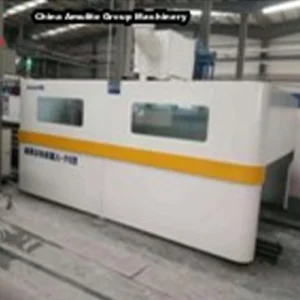
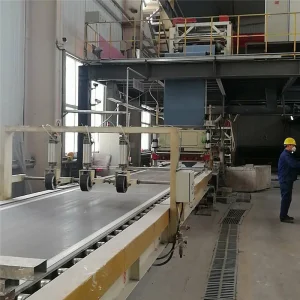
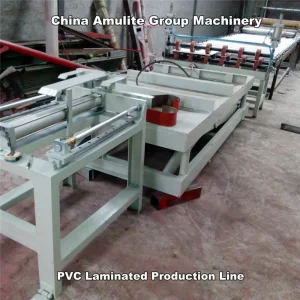
Explore our core machinery engineered for fiber cement, calcium silicate board, XPS foam, AAC blocks, and automated coating production.
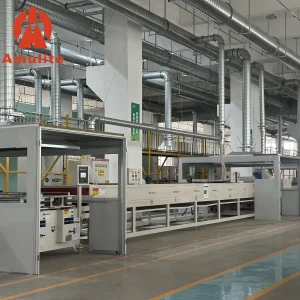
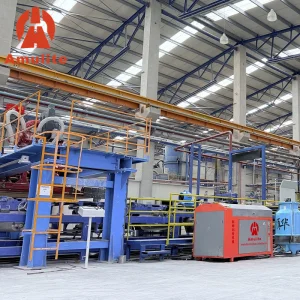
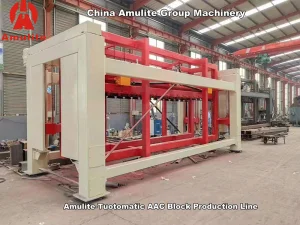
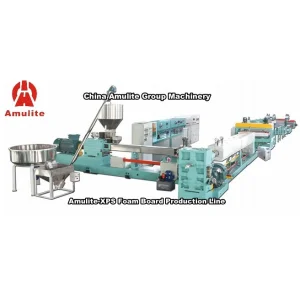
Analyzing global manufacturing shifts toward zero-VOC emission standards, high-throughput photopolymerization, and automated inline surface finishing.
The modern architectural and building materials manufacturing landscape is undergoing a systemic transition from legacy thermal-curing solvent lacquers toward high-solid, ultra-violet (UV) photopolymerizable coating lines. Driven by stringent global environmental directives—such as EU REACH regulations, US EPA National Emission Standards for Hazardous Air Pollutants (NESHAP), and China’s GB 38507 VOC thresholds—leading manufacturers are retrofitting and deploying automated UV coating and painting lines to achieve instant curing, zero solvent evaporation, and unmatched scratch and chemical resistance.
Industrial UV coating lines operate by utilizing targeted ultraviolet radiation (typically spanning UVA, UVB, and UVC wavelengths between 200 nm and 450 nm) to trigger photochemical chain reactions in liquid monomers and oligomers. Unlike traditional thermal convection ovens that require tens of minutes and substantial thermal energy to evaporate solvents, ultraviolet curing achieves complete molecular cross-linking within milliseconds. This process delivers instant hardness, exceptional film adhesion, and immediate post-process stacking capabilities for heavy architectural substrates including fiber cement boards, calcium silicate panels, SPC/LVT flooring, MGO boards, and architectural wood composites.
An end-to-end breakdown of line mechanics, multi-stage roller application, infra-red levelling, and microwave/electronic UV lamp configurations.
Utilizes dual anti-static ion bars combined with high-pressure rotary blowers and heavy-duty horsehair brush rolls to eliminate micro-dust particles down to 5 microns, preventing pinholes and cratering in subsequent coat layers.
Substrates enter a medium-wave infrared (MWIR) pre-heating tunnel to equalize surface moisture (3-5% target) and lower board tension. A high-penetration UV sealer roller applies 10–25 g/m² to cap porous cement/silicate capillaries.
Equipped with dual-laser engraved chrome doctor rollers and rubber applicators (35–45 Shore A hardness). Independent servo drives control roller speed ratios within 0.01 m/min precision for micrometer-accurate coat weight control.
Conveys freshly coated panels through an optimized short-wave IR tunnel at 40°C–60°C. Reduces coating viscosity temporarily to promote fluid self-levelling, removing roller marks and releasing entrapped micro-air bubbles.
Combines Gallium-doped lamps (380–420 nm wavelength for deep layer penetration) and Mercury vapor lamps (254–365 nm for surface hardness). Electronic stepless power supplies continuously modulate power from 10% to 100%.
Force-air chilling fans cool panel surface temperatures below 35°C before feeding into automatic vacuum-suction gantry stackers, enabling instantaneous packaging without substrate blocking or thermal deformation.
Quantitative analysis comparing industrial UV roll/spray lines against Polyurethane (PU), Nitrocellulose (NC), and Water-Based thermal spray systems.
| Performance Indicator | UV Roll/Curtain Coating Line | Polyurethane (PU) Line | Water-Based Thermal Line | Nitrocellulose (NC) Line |
|---|---|---|---|---|
| Curing Speed | 0.1 - 2 Seconds | 2 - 6 Hours | 20 - 45 Minutes | 15 - 30 Minutes |
| VOC Emissions | Near Zero (< 0.5%) | High (450 - 650 g/L) | Low (30 - 100 g/L) | Extremely High (> 700 g/L) |
| Energy Consumption (kWh/m²) | 0.08 - 0.15 kWh | 0.65 - 1.20 kWh | 0.80 - 1.50 kWh | 0.50 - 0.90 kWh |
| Film Pencil Hardness | 3H - 6H | 1H - 2H | H - 2H | HB - H |
| Coating Recyclability | 98% Reclaimable (Closed Loop) | 0% (Overspray Lost) | 10 - 20% Recovery | 0% (Overspray Lost) |
| Factory Footprint Required | Compact (30 - 60m Line) | Extensive (> 150m Tunnel) | Extensive (> 120m Tunnel) | Medium (80 - 100m Line) |
| Chemical / Stain Resistance | Superior (Class 1 ASTM D1308) | Moderate | Fair to Moderate | Poor |
Engineering customized line parameters for heavy structural boards, decorative acoustic panels, and resilient rigid-core composites.
Designed to process heavy architectural siding and interior ceiling tiles. Features dual reverse roller coaters that apply high-build acrylic UV primers to bridge porous silicate micro-voids, delivering Class A1 fire-rated fluorocarbon-look finishes for exterior facades.
Integrated high-speed UV lines configured with 3D excimer matte curing units. Enables dead-matte sheen levels (1–5 Gloss units) while generating superior micro-scratch resistance, wear-layer protection, and anti-bacterial surface seals for high-traffic resilient floor coverings.
Equipped with specialized alkaline-resistant polyurethane-acrylate UV formulations. Eliminates moisture absorption and salt efflorescence (sweating) common in magnesium chloride compositions while adding high-gloss marble or grain decorative patterns.
Incorporates precision curtain coaters and vacuum coating units for profile edges. Delivers natural wood grain clarity, non-yellowing UV topcoats, and ultra-smooth tactile finishes for luxury furniture, kitchen cabinetry, and wall cladding panels.
Pioneering advancements in cold UV-LED arrays, excimer matting technology, and AI-driven automated film thickness monitoring.
Replacing traditional mercury gas-discharge lamps with high-power monochromatic UV-LED arrays (365nm / 395nm). Reduces line power draw by up to 75%, eliminates thermal heat transfer onto heat-sensitive thin PVC/foam substrates, and eliminates mercury waste disposal compliance costs entirely.
Integrating 172 nm vacuum-ultraviolet (VUV) excimer lamps to cure the uppermost skin layer under nitrogen inerting. Creates microscopic polymer wrinkles that disperse light, achieving deep soft-touch ultra-matte finishes without silica matting agents that impair scratch resistance.
Deploying real-time laser ultrasonic thickness sensors coupled to automated closed-loop PLC Doctor-Blade actuators. Scans film weight across 100 points per second, automatically adjusting roller pressure to maintain coat weight variances within ±0.5 g/m² across 1280mm board widths.
Providing international turn-key plant deployment, safety certification, and full lifetime technical support.
Purchasing an industrial UV coating production line requires detailed technical alignment between machinery engineering standards, facility utility infrastructure, and local safety regulations. Leading global suppliers deliver full engineering, procurement, and construction (EPC) turnkey support, guaranteeing that line installations comply with localized industrial electrical codes, mechanical safety standards, and environmental regulations across North America, Europe, the Middle East, and Southeast Asia.
All control panels, motor drives, and UV light shielding assemblies are constructed to meet CE marking, UL 508A electrical safety guidelines, and ATEX explosion-proof compliance for UV lacquers containing localized flash-point diluents.
Resident field engineers conduct full physical installation supervision, laser alignment, PLC communication checks, and localized trial production runs using local cement, sand, or resin supplies to ensure target output quality.
Equipped with integrated VPN router gateways and Siemens/Schneider PLC modules. Enables remote factory diagnostics, real-time lamp power monitoring, predictive maintenance notifications, and immediate software updates worldwide.
Expert answers addressing line velocity, coat weight, UV lamp lifespans, substrate moisture limits, and operational maintenance.
Browse our extensive portfolio of wall panel machinery, concrete block systems, and specialty board equipment.