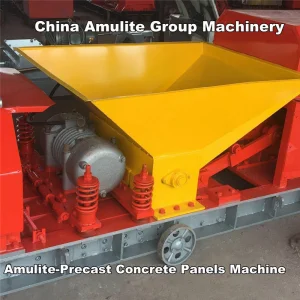
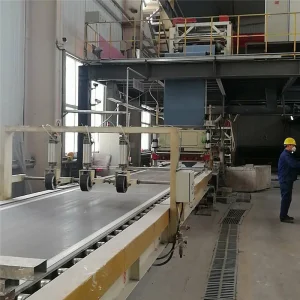
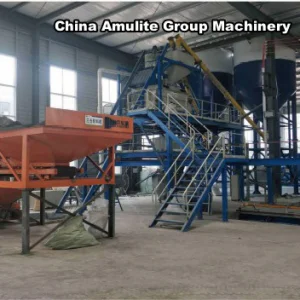
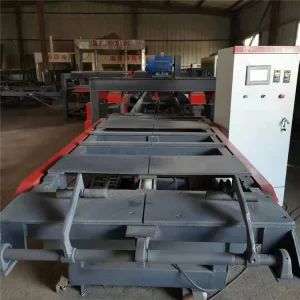
Explore our core engineering equipment portfolio designed for continuous industrial output, precision wall panel manufacturing, and zero-waste building material processing.
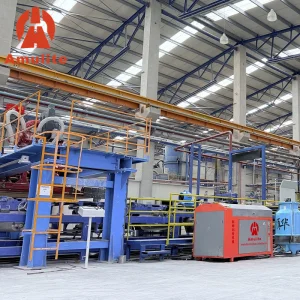
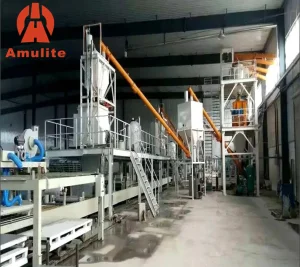
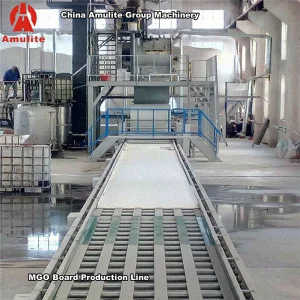
China Fiber Cement Board /Calcium Silicate Board Production Line Factory, Companies
View Machinery SpecsUnderstanding the tectonic shift from traditional cast-in-place concrete methods to industrialized off-site prefabrication technology.
Global labor shortages, rising jobsite safety compliance, and compressed project schedules have elevated precast concrete panel machinery from alternative tooling to essential infrastructure. Modern precast machinery enables factory-controlled quality, achieving structural tolerances within ±1.5 mm.
Next-generation precast panel machinery integrates composite insulation (EPS, XPS, mineral wool) directly during automated casting or slipforming, meeting modern net-zero building energy mandates across Western Europe, North America, and Eastern Asia.
Top-tier precast machinery manufacturers now equip lines with SCADA, IoT vibration monitoring, and automated hydraulic demolding. Real-time slurry density sensing guarantees consistent flexural strength across high-volume production cycles.
Evaluating the mechanical principles, casting methods, and automation mechanisms that differentiate high-output manufacturers.
Information Gain Engineering Insight: Precast panel machine manufacturers utilize distinct mechanical principles depending on the concrete mix design—ranging from low-slump extrusion for structural hollow-core planks to vertical battery molding for architectural facade panels. Choosing the correct mechanical dynamic dictates concrete compaction ratio, water-cement (w/c) stability, and final flexural strength (MPa).
| Machinery Type | Primary Material / Concrete Type | Production Throughput | Key Mechanical Mechanism | Optimal Application |
|---|---|---|---|---|
| Extruder Machine (Auger Type) | Zero-slump dry concrete (w/c < 0.32) | 1.5 – 2.5 m/min | High-torque auger screws with shear compression | Prestressed hollow-core floor slabs & boundary walls |
| Slipformer Machine | Semi-dry concrete with aggregate ≤ 16mm | 1.2 – 2.0 m/min | Sync-vibration punchers & hydraulic compaction | Ribbed slabs, lintels, double-T panels & solid slabs |
| Vertical Battery Mold System | Self-compacting concrete (SCC, Slump > 600mm) | 12 – 24 panels / batch | Hydraulic opening panels with internal steam heating | Load-bearing internal walls & partition panels |
| Horizontal Circulation Line (Carousels) | Standard slump or fiber-reinforced concrete | Flexible (Automated pallet flow) | Shaking tables, robotic shuttering & automated curing tunnels | Architectural insulated sandwich panels & facade walls |
| EPS Cement Panel Forming Line | Lightweight slurry (Cement + EPS beads + Fly ash) | 500,000 – 3,000,000 m²/year | Vertical mold cars with hydraulic core pipe insertion | Lightweight interior non-load bearing wall partitions |
The structural integrity of a precast concrete panel depends heavily on eliminating entrapped air voids during the micro-seconds of initial casting. Advanced precast concrete panel machine manufacturers engineer dual-frequency vibratory tables operating between 50 Hz and 100 Hz.
By tuning the vibratory acceleration to match the natural frequency of the specific aggregate particle sizing (0–4mm sand, 4–10mm gravel), the slurry transitions into a pseudo-liquid state. This allows maximum compaction density without causing aggregate segregation or surface bleeding.
How precast panel machinery is customized across different climate zones, regulatory frameworks, and regional building traditions.
In cold climates and strict energy performance zones (such as European EPBD directives and US ASHRAE standards), precast concrete panel machines are optimized for continuous insulated sandwich panel production. Equipment incorporates dual-concrete placing units with an intermediate insulation layer (XPS or mineral wool) and fiber-glass tie anchors to eliminate thermal bridging.
The Middle Eastern market demands massive volumetric output of hollow-core slabs and boundary wall panels able to withstand severe ambient temperature shifts and aggressive sulfate/chloride ground conditions. High-speed auger extruders designed for low-water cement ratios (incorporating silica fume and blast furnace slag) are widely deployed in Dubai, Riyadh, and Doha.
Rapid urban urbanization drives demand for fast-install, lightweight wall systems. In markets such as the Philippines, Indonesia, Vietnam, and Brazil, vertical mold car machines producing EPS cement sandwich panels are dominant. These machines allow fast turnarounds, lightweight structural dead-loads, and excellent acoustic dampening (STC > 45 dB).
How leading machinery manufacturers align precast panel production lines with global ESG mandates and Industry 4.0 standards.
Modern precast machinery plants incorporate integrated hydro-cyclone filter presses and primary settling agitators. Wash-water from mold cleaning and extruder hoppers is continuously processed. The recycled water and fine cementitious slurry solids are automatically re-dosed into non-structural mixes, achieving true 100% zero-wastewater discharge operations.
To reduce embodied carbon in precast concrete panels by up to 35%, top manufacturers design dosing units compatible with Calcined Clay (LC3 cements), GGBS, and direct gaseous CO2 injection during batch mixing. CO2 mineralization permanently traps carbon dioxide as solid calcium carbonate (CaCO3) micro-crystals, accelerating early-age 24-hour compressive strength.
Industry 4.0 Integration: Modern panel manufacturing lines feature automated RFID pallet tracking, vision-guided reinforcement placing robots, and predictive hydraulic pressure analytics. Real-time telemetry detects oil temperature spikes, cylinder seal wear, and screw pitch erosion before mechanical failure occurs, ensuring over 95% overall equipment effectiveness (OEE).
Anticipating the technological breakthroughs that will redefine precast wall panel manufacturing over the next decade.
Integration of gantry 3D concrete printing nozzles directly onto continuous carousel lines. Allows custom facade geometries, window openings, and conduit channels to be created without rigid steel side shuttering, drastically cutting job setup time.
In-line microwave moisture sensors paired with machine learning algorithms automatically adjust water superplasticizer dosing in real time, compensating for aggregate moisture variance and ambient humidity in summer/winter operations.
Complete integration of geopolymer binders (alkali-activated materials without Portland cement) with microwave-assisted rapid thermal curing, yielding fully cured structural wall panels within 2 hours of casting with zero fossil-fuel heat generation.
In-depth engineering and procurement answers for project developers, factory owners, and structural engineers.
Extruder machines utilize high-torque augers to force zero-slump dry concrete over continuous casting beds, creating long hollow-core planks that are later saw-cut to size. Battery molds utilize vertical hydraulic steel chambers into which high-slump or self-compacting concrete (SCC) is poured to form dual-smooth-faced solid or structural wall panels simultaneously.
A standard slipformer or extruder hollow-core slab line (with 4-6 casting beds of 100-150 meters each) requires a factory bay length of at least 150-180 meters and a width of 18-24 meters. A vertical battery mold plant requires less linear footprint (approx. 40x25 meters) but demands higher overhead clearance (8-10 meters crane hook height).
With precise vibration compaction, low water-cement ratios (w/c 0.28 to 0.35), and steam-accelerated curing, precast concrete panel machinery routinely produces panels reaching 30-40 MPa compressive strength within 18-24 hours, and final 28-day strengths exceeding 60-80 MPa (C50/C60 grades).
Yes. Specialized machinery systems—such as EPS sandwich cement panel machines or autoclaved lightweight concrete (AAC) panel lines—are engineered specifically to handle low-density aggregates including expanded polystyrene beads, expanded perlite, pumice, fly ash, and ground granulated blast-furnace slag (GGBS).
Auger screws, compaction dies, and side mold liners experience continuous abrasive wear. Standard maintenance guidelines recommend inspecting auger flighting every 500 operating hours, lubricating drive gearboxes daily, and performing high-pressure washdowns after every casting shift to prevent concrete buildup.
Thermal curing pipes are integrated inside battery mold walls or routed under carousel heating hoods. Steam or thermal oil is circulated at controlled temperature ramp rates (typically max 20°C per hour increase up to 60-65°C), preventing thermal cracking while accelerating early hydration kinetics.
Explore auxiliary production equipment, foam board lines, cutting systems, and recycling machinery for comprehensive industrial setups.
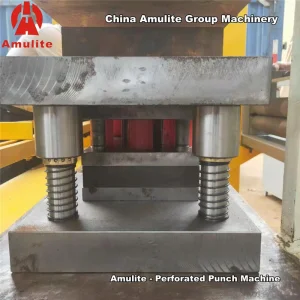
High-Quality Amulite Perforated Punch Machine System Technical Data Manufacturer, Suppliers
View Machinery Specs
Famous Amulite AAC Blocks Customized Automatic Machines- 4.2m Manufacturers, Company
View Machinery Specs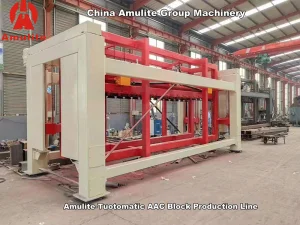
High-Quality Amulite Automatic AAC Block Production Line Manufacturers, Companies
View Machinery Specs