



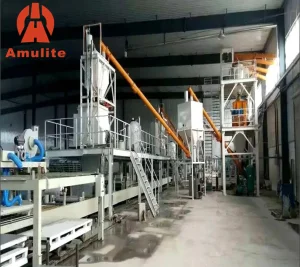
Engineered to exact European EN 13164 standards, these core machinery components form the backbone of modern automated tile backer board production factories across the Milan Metropolitan Area.
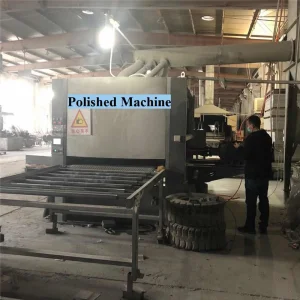
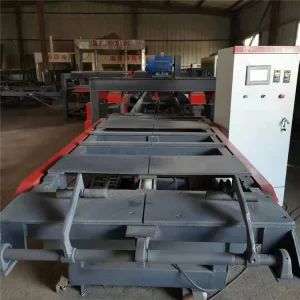
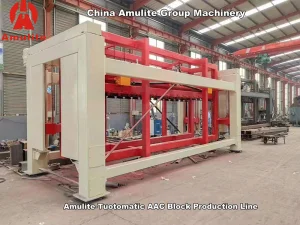
Milan, as the financial and architectural capital of Italy and the heart of the Lombardy region, is undergoing an unprecedented green building transformation. Driven by the European Union’s Energy Performance of Buildings Directive (EPBD 2024 revision) and Italy’s evolving Superbonus architectural retrofitting mandates, the demand for lightweight, high-performance thermal insulation substrates has surged exponentially. Extruded Polystyrene (XPS) Insulation Tile Backer Boards—comprising a rigid, closed-cell XPS foam core reinforced on both sides with alkali-resistant fiberglass mesh and polymer-modified cementitious mortar—have emerged as the definitive technical standard for wet-room construction, underfloor heating decoupling, and interior thermal envelope upgrades across Milan.
Building material manufacturers and equipment buyers in Northern Italy face strict structural, acoustic, and thermal compliance standards. Traditional cement backer boards or unreinforced gypsum panels fail to meet the rigorous moisture-barrier requirements (DIN 18534) and thermal efficiency ratings needed in luxury Milanese apartment rehabilitations and commercial developments in districts such as Porta Nuova and CityLife. Investing in an advanced, fully automated XPS Insulation Tile Backer Production Line empowers manufacturers to produce dimensionally stable, waterproof, and ultra-lightweight tile backer boards locally, reducing reliance on costly imported finished goods while maximizing profit margins.
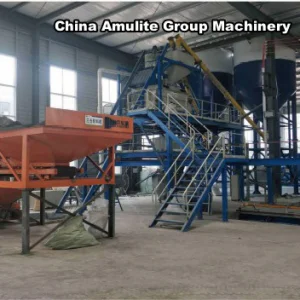
Our automated production lines integrate primary foam extrusion, continuous dual-sided mortar slurry coating, fiberglass mesh embedding, infrared curing, and automated edge milling into a unified Industry 4.0 ecosystem.
The system utilizes a high-torque tandem extruder (primary single-screw or co-rotating twin-screw melt extruder combined with a secondary cooling extruder) utilizing environmentally compliant supercritical CO2 and R152a eco-blowing agents.
Continuous co-extrusion technology applies modified polymer-cement mortar simultaneously to the top and bottom faces while laying heavy-duty alkali-resistant glass fiber mesh (160g/m² to 300g/m²).
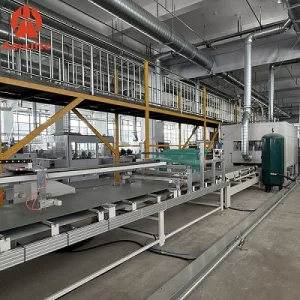
The laminated board continuous stream passes through an environmentally controlled multi-stage infrared and forced-air drying tunnel before automated high-speed cutting.
From raw virgin GPPS resin and recycled polystyrene pellets to packaged, CE-certified tile backer boards delivered to job sites in Milan.
Gravimetric loss-in-weight feeders meter Polystyrene, flame retardant additives, nucleating agents, and color masterbatches with 0.1% accuracy.
Direct liquid CO2 injection into the melted polymer stream under 25 MPa pressure, followed by controlled die expansion to yield 32-45 kg/m³ density board.
Multilayer cooling conveyors allow internal foam gas stabilization, relieving internal stress and eliminating post-extrusion warping.
High-shear wet mixers feed polymer-modified cementitious mortar into double-sided coating heads while pressing AR glass mesh under tension.
Infrared radiation combined with warm air re-circulation accelerates cement hydration and polymer cross-linking without shrinking the foam core.
Optical laser sensors trigger high-speed flying cross-cut saws to deliver board lengths (e.g., 1200mm, 2400mm, 2600mm) without stopping the line.
Why modern Italian building contractors and architects in Milan prefer XPS composite tile backer boards over standard cement board or gypsum plasterboard substrates.
| Performance Characteristic | Amulite XPS Tile Backer Board | Standard Fiber Cement Board | Moisture-Resistant Gypsum Board |
|---|---|---|---|
| Core Material Density | 35 - 45 kg/m³ (Ultra-Lightweight) | 1200 - 1400 kg/m³ (Heavy) | 800 - 950 kg/m³ (Medium) |
| Thermal Conductivity (λ) | 0.032 - 0.034 W/m·K (Superior) | 0.25 - 0.35 W/m·K (Poor) | 0.19 - 0.24 W/m·K (Moderate) |
| Water Absorption (28-day immersion) | ≤ 0.5% (Impermeable) | 10% - 18% (Hygroscopic) | > 5% (Degrades under moisture) |
| Compressive Strength | 300 - 500 kPa | > 10,000 kPa (Rigid but heavy) | 150 - 250 kPa |
| Underfloor Heating Efficiency | Direct thermal barrier; fast response | Absorbs heat downward; slow heat-up | Unsuitable for wet underfloor systems |
| On-Site Workability | Cut with utility knife; zero silica dust | Requires diamond saw; hazardous dust | Score and snap; paper tears in wet areas |
| Fungus & Mold Resistance | 100% Inert (Class 0 ASTM G21) | Resistant, but organic binders mold | Paper lining supports mold growth |
Tailored engineering configurations designed to address the specific architectural renovation and new-build challenges of Milanese construction.
In historic Milanese residential buildings (e.g., in the Navigli, Brera, and Isola districts), floor height budgets are extremely constrained and structural load capacities are limited. XPS Insulation Tile Backer boards act as both a thermal barrier and a stress-decoupling layer beneath electric hydronic radiant heating cables. By directing heat upwards into ceramic or porcelain tiles rather than dissipating it into heavy subfloor masonry, energy consumption is reduced by up to 35%, aligning perfectly with Italy's regional Piano Aria e Clima energy targets.
High-end hotels and commercial wellness centers around Piazza del Duomo and Corso Como demand zero-tolerance moisture control in steam rooms, walk-in showers, and hydrotherapy areas. XPS backer boards produced on our machinery feature absolute 100% water tightness and continuous vapor resistance. Tile setters can apply large-format Italian porcelain slabs directly onto the board face using standard C2-class cementitious adhesives without applying additional liquid membranes, cutting installation timelines by half.
Forward-thinking machinery architecture ensuring low operational carbon footprints, zero-waste recycling, and complete digital process telemetry.
Integrated Siemens S7-1500 PLC networks with centralized SCADA touchscreens monitor every parameter—from extruder barrel zone heating to mortar viscosity and knife timing—ensuring zero operator error and real-time energy tracking.
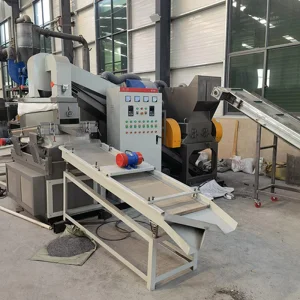
Edge trims and off-cut boards from the flying saw are automatically directed to an in-line granulator and dust collection system. XPS foam scrap is re-granulated and fed back into the extrusion hopper without degrading cell mechanical strength.
Our coating slurry mixing technology is optimized for low-carbon pozzolanic cement blends, recycled mineral fillers, and bio-based acrylic binders, enabling Italian board plants to achieve EPD (Environmental Product Declaration) certification easily.
Complete project execution from civil plant layout drawing to raw material sourcing in Northern Italy and full operator commissioning.
Setting up an XPS Insulation Tile Backer manufacturing facility in Lombardy requires a holistic engineering strategy. Amulite Group provides end-to-end turnkey packages tailored to regional industrial zoning laws, electrical grid capacities, and environmental regulations across Milan’s industrial hubs (e.g., Monza-Brianza, Rho, and Segrate).
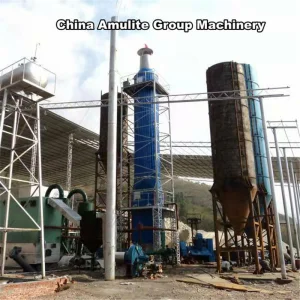
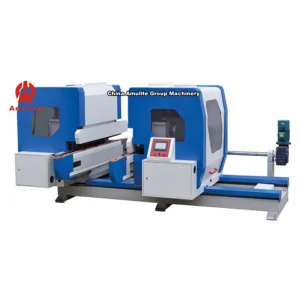
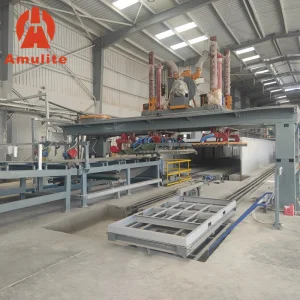
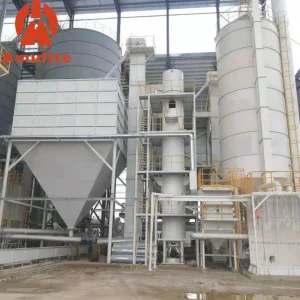
Explore our extended machinery portfolio engineered to complement XPS tile backer board plants, fiber cement systems, and composite insulation lines across Milan and global markets.
Comprehensive engineering insights for factory owners, investors, and technical directors planning an XPS tile backer line in Milan or international markets.
Our XPS insulation tile backer board lines are modularly engineered for annual capacities ranging from 500,000 m² to over 5,000,000 m² per year depending on board thickness (6 mm to 50 mm) and line speed (up to 35 m/min). Line output can be easily scaled by expanding the extruder die size and adding secondary lamination stations.
Every equipment parameter—from density homogeneity to compressive strength, shear resistance, and fire rating (Class E or B-s1,d0 with flame retardant dosing)—is calibrated to comply strictly with EN 13164 (XPS insulation products) and EN 12004 for tile adhesive bonding strength.
Yes. The flying saw cutter and edge profiler can be programmed instantly via touchscreen to produce popular European dimensions including 600 x 1200 mm, 900 x 1500 mm, and 1200 x 2400 mm boards, with thicknesses ranging from 4.5 mm up to 80 mm.
The coating system utilizes ordinary Portland cement (OPC 52.5R or 42.5R), fine silica sand (0.1–0.3 mm particle size), redispersible polymer powder (RDP) or liquid acrylic dispersion, water, and alkali-resistant (AR) glass fiber mesh with minimum 16% ZrO2 content.
Our extrusion technology uses zero-ODP, low-GWP blowing agent combinations such as supercritical CO2 (CO2 + Ethanol) or HFC-152a, ensuring complete compliance with strict EU F-gas regulations active in Italy.
Standard equipment manufacturing requires 90 to 120 days. On-site mechanical and electrical installation takes approximately 30 to 45 days, followed by 15 days of trial runs and commissioning supervised by our resident process engineers.