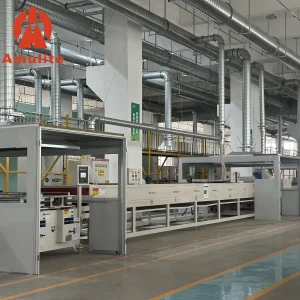
High-capacity industrial plants designed for raw gypsum rock calcination, panel fabrication, and automated surface processing.
The New Zealand building and construction sector is experiencing a monumental transition toward resilient, low-carbon, and locally sustainable building materials. Historic events—including the acute plasterboard supply bottlenecks of 2021–2022—exposed structural vulnerabilities in New Zealand's reliance on single-source domestic plasterboard suppliers and foreign imports. As a response, commercial project developers, building material manufacturers, and industrial investors across Auckland, Christchurch, Wellington, and Tauranga are aggressively diversifying their supply chain capabilities. Establishing localized, high-precision Gypsum Powder Production Lines has emerged as a high-priority industrial investment to guarantee sovereign manufacturing capability, stabilize drywall production, and service the agricultural and industrial plaster sectors.
“Sovereign manufacturing capacity in plaster calcination is no longer optional for New Zealand’s construction sector. High-efficiency ebullience calciners offer the exact phase purity needed to meet strict NZBC (New Zealand Building Code) standards while curbing freight-induced carbon footprints.”
Building in Aotearoa New Zealand mandates rigorous adherence to performance criteria governed by the Ministry of Business, Innovation and Employment (MBIE). Gypsum plasterboard and calcined gypsum products must conform strictly to NZS 3604 (Timber-framed buildings), AS/NZS 2588 (Gypsum plasterboard standards), and stringent seismic performance requirements (NZS 1170.5). To achieve structural integrity, acoustic insulation (NZBC Clause G6), and passive fire performance (NZBC Clause C), building product manufacturers require high-grade, phase-stable $\beta$-hemihydrate gypsum powder ($\text{CaSO}_4 \cdot 0.5\text{H}_2\text{O}$) with repeatable setting times, controlled particle size distribution, and predictable water-to-plaster ratios.
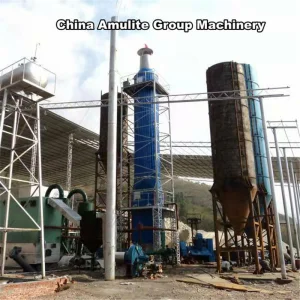
Engineered structural steel framing and vessel anchoring adhering to NZS 1170.5 seismic displacement criteria, ensuring operational continuity in high-earthquake zones.
Integrated thermal oil fluidized bed calciners operating at lower temperature ranges (150°C–180°C), slashing natural gas consumption by up to 28% compared to traditional kilns.
Full AS/NZS 4024 machine safety integration, dust containment meeting regional council air quality regulations, and AS/NZS 3000 electrical wiring panels.
On a global scale, the production of building-grade plaster involves the thermal dehydration of natural gypsum rock ($\text{CaSO}_4 \cdot 2\text{H}_2\text{O}$) or synthetic byproduct gypsums (such as Flue Gas Desulfurization FGD gypsum and Phosphogypsum). The calcination mechanism dictates the crystal morphology, physical strength, and end-use application of the resulting powder:
Our plants incorporate dual-mode continuous calcination technology capable of switching parameters dynamically to process both high-purity natural rock imported via Ports of Auckland/Tauranga and recycled wallboard waste, achieving zero-waste circular processing.
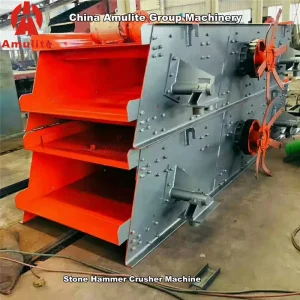
Primary jaw and hammer crushers reduce raw gypsum boulders (<500mm) down to uniform <25mm granules with dust control.
High-efficiency Raymond mills or vertical roller mills grind gypsum rock into fine powder (80–200 mesh) with dynamic classification.
Ebullience calciner uses thermal oil heat transfer to convert dihydrate to stable beta-hemihydrate stucco at 150°C–180°C.
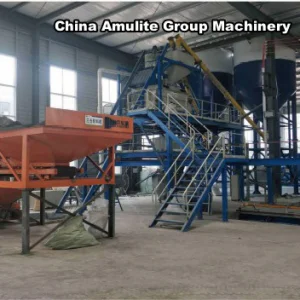
Pneumatic transport delivers calcined stucco to aging silos to eliminate residual anhydrite III and stabilize phase kinetics.
Our specialized Gypsum Powder Production Lines are modularly designed to fulfill distinct market segments within Aotearoa's economy:
Supplying continuous high-volume feed to board forming lines producing 9.5mm, 13mm, and 16mm fire-rated and acoustic wallboards. Precise control over initial and final set times (Vicat test parameters) guarantees high line speeds exceeding 40 meters per minute.
Formulating calcium sulfate-based self-leveling underlayments for multi-storey timber framing developments across Christchurch and Wellington. Gypsum-based screeds eliminate drying shrinkage, offering superior thermal conductivity for underfloor hydronic heating systems.
Bypassing the calcination loop allows the crushing and fine-grinding module to produce agricultural-grade gypsum ($\text{CaSO}_4 \cdot 2\text{H}_2\text{O}$). This provides soluble calcium and sulfur to remediate sodic clay soils and enhance pasture permeability without elevating soil pH.
Pioneering sustainable, low-emission processing to align with New Zealand's 2050 Net-Zero Carbon targets.
Transitioning calciner heat exchangers from natural gas to renewable electric induction and green hydrogen firing systems to completely eradicate direct plant emissions.
Real-time inline X-ray diffraction (XRD) crystal analysis coupled with automated Siemens PLC controls to adjust thermal input dynamically based on moisture swings.
Advanced paper-gypsum mechanical separation units engineered to re-introduce post-construction drywall scrap into the primary calcination loop without quality degradation.
Direct technical and commercial answers regarding plant installation, compliance, freight, and ROI.
Manufacturing of machinery takes approximately 90 to 120 days depending on line scale. Ocean transport to major NZ ports (Ports of Auckland, Tauranga, or Lyttelton) takes roughly 18–25 days. On-site installation, electrical integration to AS/NZS 3000 standards, and trial commissioning take 45–60 days supervised by our resident process engineers.
Our lines feature fully enclosed pneumatic conveying and multi-stage pulse-jet baghouse dust collectors. Particulate emissions are maintained below 10 mg/Nm³, comfortably meeting strict air discharge consent conditions governed by Auckland Council, Environment Canterbury, and regional authorities.
Yes. The crushing, drying, and calcination parameters are customizable via PLC recipe presets. Whether you source natural rock from Australia/Asia or process synthetic chemical gypsums, our fluidized calciners adjust thermal flow to ensure consistent crystalline composition.
Our industrial control systems come equipped with secure IoT gateway modules (Siemens MindSphere / eWON remote access). Our automation engineering team provides 24/7 real-time telemetry diagnostics, PLC updates, and process optimization synced directly with local NZ operating hours.
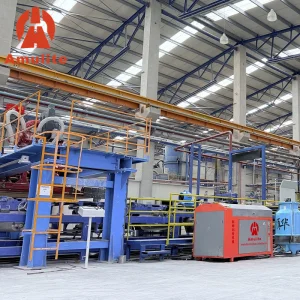
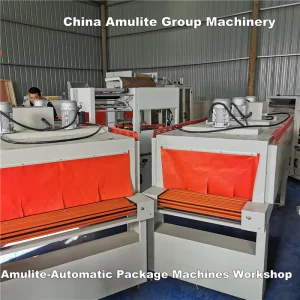
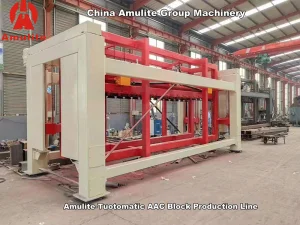
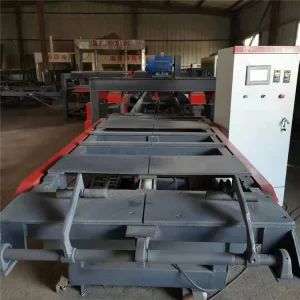
Explore our full range of turnkey manufacturing equipment engineered for high-volume building material production.
Contact our senior engineering team today to receive a complete technical proposal, equipment sizing calculation, plant layout drawing, and ROI analysis tailored for your project.
Send Inquiry Now