


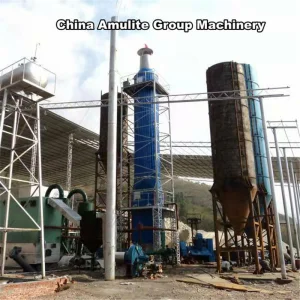
Automated Gypsum Powder Production Line System
High-efficiency fluid-bed calcination machinery engineered for natural rock and synthetic FGD gypsum powder processing with low thermal footprint.
Advanced equipment designed to meet California energy efficiency guidelines, rigorous seismic specifications, and sustainable zero-carbon build protocols.
High-efficiency fluid-bed calcination machinery engineered for natural rock and synthetic FGD gypsum powder processing with low thermal footprint.
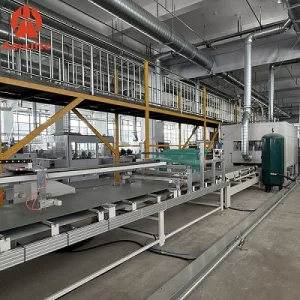
Low-carbon, energy-saving continuous pressing plant producing flexible exterior wall cladding tiles compliant with Bay Area green building standards.
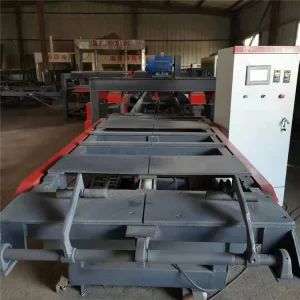
High-precision automated edging equipment designed for gypsum wallboards, fiber cement sheets, and decorative interior panels.
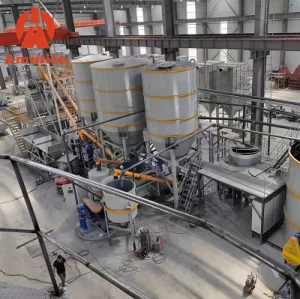
Seismic-resistant, lightweight partition wall panel manufacturing line configured for rapid modular construction across California urban zones.
The industrial landscape of the San Francisco Bay Area and the broader Northern California megaregion is undergoing an unprecedented structural transition. Characterized by strict carbon-neutrality mandates, rigorous Title 24 Building Energy Efficiency Standards, and stringent dust/particulate regulation under the Bay Area Air Quality Management District (BAAQMD), the regional market demands an advanced generation of non-metallic mineral processing machinery. Gypsum plaster (calcium sulfate hemihydrate) serves as the indispensable backbone of interior drywall systems, commercial acoustic ceilings, self-leveling floor screeds, and fire-resistant architectural components.
Information Gain Insight: Modern gypsum powder production lines servicing West Coast projects can no longer rely on legacy rotary kilns with high thermal losses and uncontrolled emissions. Operating in San Francisco requires high-precision fluidized bed calcination, closed-loop waste heat integration, automated continuous desulfurization gypsum (FGD) utilization, and zero-discharge dust abatement systems capable of operating within dense industrial-zoned pockets like South San Francisco, Richmond, and the East Bay industrial belt.
Globally, the gypsum powder processing market is splitting into two clear pathways: natural gypsum rock crushing/calcining in mineral-rich regions, and synthetic gypsum upcycling (primarily Flue Gas Desulfurization - FGD gypsum and Phosphogypsum) in industrialized economies committed to circular production models. In North America—and specifically California—the transition toward synthetic FGD gypsum and recycled wallboard plaster has surpassed 60% of total raw material input.
To serve San Francisco’s commercial construction boom—driven by structural retrofits, high-density residential developments, and tech campus expansions in Silicon Valley—our enterprise gypsum powder production lines incorporate multi-stage thermal optimization. This guarantees precise conversion of raw calcium sulfate dihydrate ($\text{CaSO}_4 \cdot 2\text{H}_2\text{O}$) into high-purity beta-hemihydrate ($\text{CaSO}_4 \cdot 0.5\text{H}_2\text{O}$) plaster with zero risk of over-burning into dead anhydrous phases or under-burning into residual dihydrate.
| Performance Indicator | Legacy Rotary Kiln Lines | Amulite Advanced Fluidized-Bed Line | SF Regional Compliance Benefit |
|---|---|---|---|
| Thermal Energy Consumption | ~350–400 kcal/kg plaster | < 260–280 kcal/kg plaster | Meets CA Title 24 industrial energy conservation benchmarks. |
| Particulate Emission Rate | 50 – 100 mg/Nm³ | < 10 mg/Nm³ (Pulse Baghouse) | Full BAAQMD Rule 6 compliance for Bay Area urban zoning. |
| Phase Composition Control | ± 8% phase variation | ± 1.5% Hemihydrate consistency | Uniform setting times for high-speed board production. |
| Raw Material Adaptability | Natural Gypsum Rock Only | 100% FGD Gypsum & Natural Blend | Enables local Bay Area circular-economy waste stream reuse. |
| Automation Level | Manual/Semi-Automated | Fully Integrated SCADA / Siemens PLC | Reduces high local California labor overhead through automation. |
A comprehensive breakdown of engineering sub-systems that ensure maximal uptime, low operational expenditure, and premium plaster output.
Heavy-duty Euro-series jaw crushers coupled with efficient hammer mills break raw natural rock down to < 25mm. For wet FGD gypsum, continuous rotary flash dryers reduce moisture from 15% down to < 1% prior to calcination.
Utilizing low-temperature thermal oil heating coils immersed in a fluidized powder bed. This achieves gentle, perfectly uniform heat transfer, preventing local overheating and ensuring maximum output of stable $\beta$-hemihydrate plaster.
Raymond roller mills and high-efficiency dynamic air classifiers control particle size distribution from 100 mesh to 325 mesh. Ensures optimum water-to-plaster ratio, high compressive strength, and smooth surface finishing.
Multi-compartment aging silos stabilize crystal structures and eliminate residual moisture. Homogenizing aeration systems prevent segregation, guaranteeing uniform setting times across continuous bulk dispatches.
Ultrasonic valve-bag packing machinery with auto-weighing accuracy within ±0.2%. Fully integrated with automatic robotic palletizers and stretch-hood wrappers for secure, moisture-protected truck logistics.
Centralized SCADA control rooms with real-time temperature, pressure, flow rate, and phase composition sensors. Includes remote diagnostic capability for 24/7 engineering monitoring from our technical support team.
The finished plaster derived from our gypsum powder production line powers key construction sectors across Northern California:
Operating industrial machinery within the San Francisco jurisdiction requires seamless compliance with local, state, and federal codes. Our turnkey engineering services guarantee localized installation alignment across several key compliance vectors:
Integrated multi-stage pulse baghouse filtration systems engineered to capture micro-fine gypsum dust particles down to 0.3 microns, securing local air quality operating permits without friction.
Complete machine guarding, emergency stop networks, automated noise-attenuation enclosures (< 78 dBA), and ambient dust extraction aligned with California industrial occupational safety standards.
Structural steel framing, calcination towers, and heavy storage silos designed according to California Building Code (CBC) Zone 4 seismic acceleration values for maximum earthquake resilience.
As the building materials sector pushes toward zero net carbon emissions, our R&D pipeline is implementing pioneering technologies that position our plant operators years ahead of environmental regulations:
Explore our full matrix of heavy industrial equipment engineered for wallboard, insulation, siding, and crushing applications.
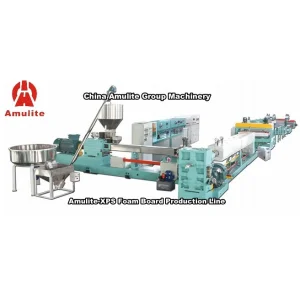
Zero-ODP extrusion line utilizing supercritical CO₂ blowing agent for premium insulation board manufacturing.
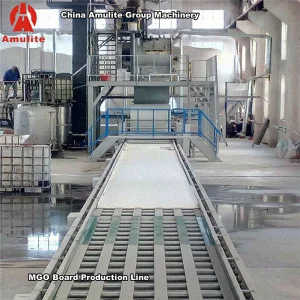
Fireproof magnesium oxide board production system providing non-combustible building panels for commercial interiors.
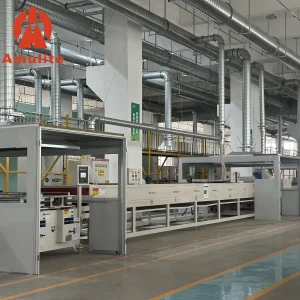
High-speed surface finishing and UV curing line for fiber cement panels, decorative boards, and exterior cladding.
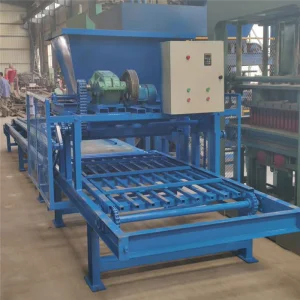
Heavy hydraulic block forming system for producing durable concrete masonry units and permeable paving blocks.
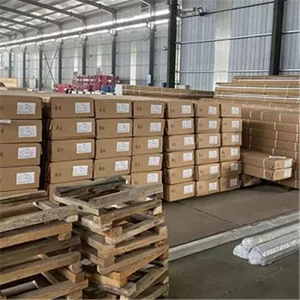
Continuous embossing and polyurethane insulation core laminating system for architectural curtain wall facades.
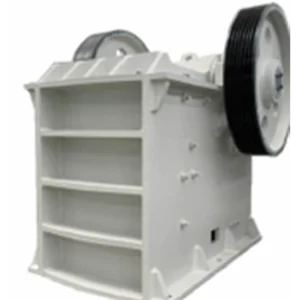
Primary rock reduction station with high reduction ratio, optimized crushing cavity, and heavy duty rotor design.
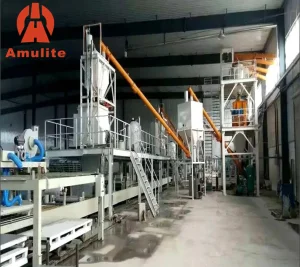
Specialized production machinery manufacturing waterproof, polymer-cement coated tile backer boards for wet environments.
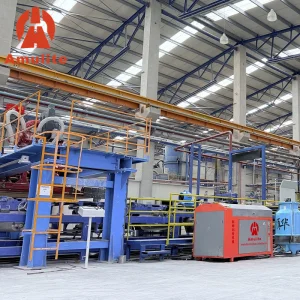
Heavy-duty Hatschek process line with autoclaved curing for A1 fire-rated, moisture-resistant architectural sheets.
In-depth technical answers concerning plant commissioning, raw material formulation, emission standards, and ROI optimization.