



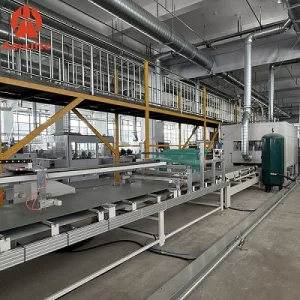
High-speed, automated, and energy-optimized production systems designed to meet Japanese Industrial Standards (JIS A 5430 / JIS A 5209).
The construction sector in Japan is experiencing a monumental transformation. Driven by stringent Ministry of Economy, Trade and Industry (METI) zero-emission building mandates (ZEB / ZEH), combined with Japan's unique geographic vulnerabilities to seismic activity, architects and contractors across major metropolitan areas such as Tokyo, Osaka, and Nagoya are rapidly phasing out heavy, high-embodied-carbon building materials. Traditional kiln-fired ceramic tiles—historically prized for durability—are increasingly challenged by their extreme energy-intensive manufacturing process, structural deadweight, and high risk of spalling during high-magnitude earthquakes.
Enter Flexible Clay Ceramic Tiles (also recognized globally as Modified Clay Materials or MCM). Engineered from natural inorganic soil, quartz sand, and high-molecular polymers through low-temperature activation, flexible clay tiles deliver authentic stone, ceramic, leather, and wood textures at less than 20% of the weight of conventional stoneware. For Japanese building owners, this translates directly to drastically reduced seismic mass, simplified structural bracing, and eliminated detachment hazards during severe tremors.
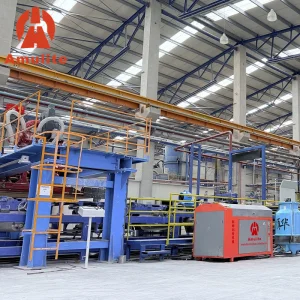
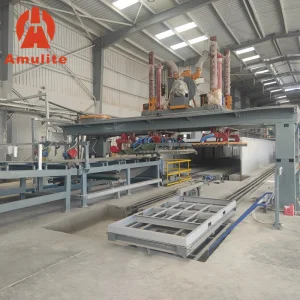
Japan faces severe demographic shifts leading to a declining labor force in the trade sectors. Consequently, building material factories must achieve high-yield throughput with minimal manual intervention. Modern Flexible Clay Ceramic Tile Production Lines configured for the Japanese market integrate Industry 4.0 automation: automated slurry micro-dosing, continuous infrared curing, robotic sheet trimming, and automated optical inspection (AOI) for defect detection. By shifting panel fabrication from manual craftsmanship to automated precision manufacturing, Japanese plant operators achieve consistent 0.05mm dimensional tolerances while reducing operational labor costs by up to 65%.
A detailed comparison between traditional high-temperature ceramic production and China Amulite Group’s advanced continuous low-temperature MCM production line.
| Performance Metrics | Traditional Ceramic Tile Line | Amulite Flexible Clay Tile Line (Japan Spec) | Impact on Japanese Operations |
|---|---|---|---|
| Thermal Energy Source | 1,200°C High-Temp Roller Kiln (LNG/LPG) | 120°C - 160°C Microwave & Low-Temp IR Curing | Reduces energy bill by ~78%; aligns with ZEB targets |
| Product Density & Mass | 20 - 25 kg/m² (Rigid, Brittle) | 3.0 - 4.5 kg/m² (Flexible, Elastic Modulus) | Exceeds Japanese structural earthquake compliance |
| Curing & Cycle Time | 24 to 48 Hours Kiln Firing Cycle | 45 to 60 Minutes Continuous Line Output | Drastically shrinks WIP inventory and factory footprint |
| Surface Texture Freedom | Glaze printing, limited deep-emboss relief | Dynamic 3D Flexible Molding (Granite, Wood, Split-Face) | Higher premium aesthetic value for architects |
| Waste & Scrap Recycling | Hard fired scrap (Landfill disposal) | 100% Uncured Material Recycled back into Slurry Batch | Zero raw material waste factory loop |
As a global leader in non-metallic building material machinery, China Amulite Group leverages an expansive 100,000 m² heavy-industrial manufacturing complex, housing integrated CNC machining centers, automated welding robotics, and heavy structural assembly bays. We do not operate as simple equipment assemblers; we are process engineers, metallurgists, and industrial automation experts.
When supplying the Japanese market, where precision, reliability, and long-term machinery uptime are non-negotiable, Amulite integrates world-class mechanical components into every manufacturing line:
Our senior process engineers provide full plant design, customized ROI projections, local raw material testing, and compliance documentation tailored to Japanese industrial codes.
Send Inquiry NowOperating a building materials factory within Japanese jurisdiction requires strict adherence to local building codes, electrical standards, and environmental health metrics. Amulite’s dedicated international engineering division provides end-to-end turnkey localization support:
All control panels, motors, transformers, and safety interlocks delivered to Japan are wired to comply with local industrial power grid specifications (200V/400V 50Hz/60Hz depending on regional grid locations such as Tokyo Electric Power or Kansai Electric Power). Components carry full safety compliance certification including emergency stop loops, light curtains, and zero-access safety fencing.
Flexible clay tiles produced on Amulite production lines are formulated to exceed key Japanese test protocols:
Amulite deploys bilingual engineering teams directly to factory sites across Japan. From civil foundation checks and mechanical erection to raw material formulation trials using local Japanese clay and sand deposits, our engineers remain on site until your plant achieves certified commercial mass production.
For corporate procurement directors, real estate developers, and building material manufacturers evaluating capital expenditure (CAPEX) for a new Flexible Clay Ceramic Tile Production Line in Japan, analyzing the total cost of ownership over a 10-year lifecycle reveals compelling financial advantages over European or domestic Japanese machinery suppliers.
| Financial Vector | European Line Procurement | Amulite China 4.0 Turnkey Solution | Financial Impact for Investor |
|---|---|---|---|
| Initial Capital Outlay (CAPEX) | High ($3.5M - $5.0M USD) | Optimized ($800K - $1.5M USD) | 65%-75% Capital Savings reserved for working capital |
| Delivery & Installation Time | 12 to 16 Months | 4 to 6 Months (Fast-Tracked Delivery) | Accelerated revenue stream & faster market entry |
| Spare Parts & Wear Costs | Proprietary high-cost components | Global standard off-the-shelf components | Reduces ongoing maintenance OPEX by ~50% |
| Payback Period (ROI) | 4.5 - 6 Years | 1.2 - 2 Years (based on Japanese tile market rates) | Rapid payback with high gross margin profile (~60%) |
Furthermore, because the raw material matrix of flexible clay consists primarily of abundant inorganic soils, mountain powder, and low-cost eco-binders, unit production costs remain exceptionally low—ranging between $2.50 to $4.00 USD per square meter, while commercial wholesale prices for MCM tiles in Japan routinely exceed $18.00 to $35.00 USD per square meter depending on design complexity.
Expert insights addressing raw materials, installation timelines, power requirements, and product certifications.
The main formulation comprises modified natural inorganic powder (such as clay, stone powder, tailing slag, or quartz sand), high-molecular water-based emulsion polymers, and inorganic pigments. Over 90% of raw materials can be sourced locally within Japan at low cost, drastically minimizing raw material import dependencies.
Flexible clay tiles cured via Amulite’s precision process undergo strict freeze-thaw cycles (-30°C to 50°C for 100 cycles under JIS A 1435 protocols) without cracking, peeling, or surface micro-fracturing. Additionally, their strong adhesion backing prevents panel detachment during severe typhoon winds.
A standard continuous production line producing 1,000,000 m²/year requires a footprint of approximately 120 meters in length by 8 meters in width (building area ~1,500 - 2,500 m²). Total installed power capacity is around 180kW to 250kW, with options for gas or electric microwave drying systems tailored to Japanese industrial utility tariffs.
Yes. By utilizing quick-change 3D silicone or steel embossing rollers, factory operators can switch surface textures in under 30 minutes. The line seamlessly processes flat tiles, flexible stone veneer, wood grain cladding, and dynamic architectural geometric patterns.
Manufacturing of the machine line takes 60-90 days. Shipping to Japanese ports (such as Yokohama, Kobe, or Nagoya) takes approximately 7-10 days. On-site installation, mechanical alignment, PLC commissioning, and trial production take 30-45 days with resident engineers present.
Versatile, high-efficiency manufacturing solutions serving industrial partners across Japan and worldwide.
Contact our senior engineering team to receive customized plant layouts, feasibility studies, machine specs, and quotation details for your market expansion in Japan.
Send Inquiry Now