



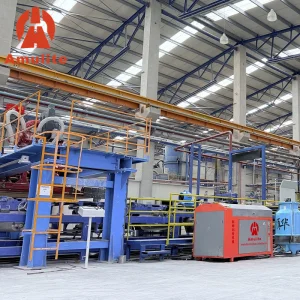
Turnkey System
Turnkey Automated Manufacturing Systems, Hydration Process Engineering, and Regional Supply Chain Solutions Tailored for Hungary's Green Industrial & Prefabricated Construction Boom.
Engineered for high-output, low-emission manufacturing conforming to EU CE, EN 12467, and Hungarian building code requirements.
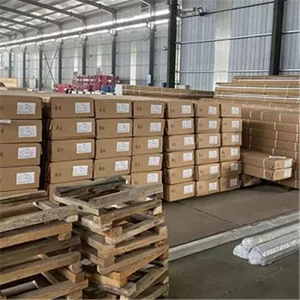
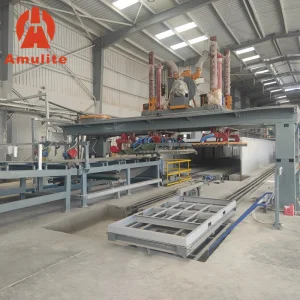
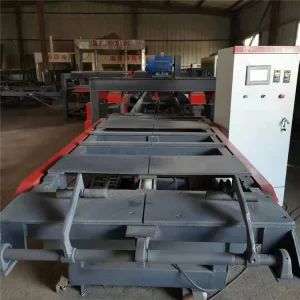
Hungary has positioned itself as a critical industrial manufacturing and logistics hub within Central and Eastern Europe (CEE). Driven by mega-investments in automotive gigafactories, battery manufacturing plants (such as Debrecen’s industrial corridor), and major commercial redevelopments around Budapest, the domestic demand for high-performance building materials has spiked dramatically.
Under the European Union's Energy Performance of Buildings Directive (EPBD) and Hungary's updated National Building Code (OTÉK), modern structures require rigid fire safety ratings (A1 non-combustible classification), high acoustic insulation, and moisture resistance. Traditional plasterboard and brick masonry are increasingly replaced by Fiber Cement Boards (FCB) and Calcium Silicate Boards (CSB).
Establishing localized, automated production lines within Hungary allows manufacturers to eliminate expensive cross-border freight costs from Western Europe, mitigate supply chain disruptions, and directly serve neighboring markets including Slovakia, Austria, Serbia, and Romania.
Our equipment architecture integrates advanced automation, slurry density optimization, and energy recovery systems.
Understanding the chemistry and physical transformation behind high-density, hydro-thermally cured silicate products.
Utilizing multi-vat cylinder vats to deposit micro-layers of cellulose fiber, cement, and quartz slurry onto a continuous felt. This multi-layer accumulation guarantees superior flexural strength (Class 4 and Class 5 according to EN 12467) compared to flat casting techniques.
Autoclave curing at 1.0–1.2 MPa and 180°C to 190°C triggers a hydrothermal reaction between silica fines ($SiO_2$) and calcium hydroxide ($Ca(OH)_2$), crystallizing into Tobermorite ($C_5S_6H_5$). This yields complete dimensional stability, zero moisture expansion, and fireproof resilience.
Integrates Siemens S7-1500 PLC networks with online ultrasonic thickness gauge measurement and automatic slurry consistency regulation. Ensures batch-to-batch weight tolerances within $\pm 1.5\%$, minimizing raw material waste during high-speed production continuous runs.
| Parameter / Metric | Fiber Cement Board (Air-Cured) | Autoclaved Calcium Silicate Board | High-Density Facade Board |
|---|---|---|---|
| Target Density Range | 1.2 – 1.4 g/cm³ | 0.9 – 1.2 g/cm³ | 1.4 – 1.75 g/cm³ |
| Flexural Strength (MOR) | ≥ 13 MPa (Class 3) | ≥ 10 MPa (Class 2) | ≥ 18 – 24 MPa (Class 5) |
| Reaction to Fire (EN 13501-1) | A1 Non-Combustible | A1 Non-Combustible | A2-s1, d0 / A1 Class |
| Moisture Movement | ≤ 0.15% | ≤ 0.08% (Ultra Stable) | ≤ 0.10% |
| Thermal Conductivity ($\lambda$) | 0.24 W/(m·K) | 0.12 - 0.18 W/(m·K) | 0.28 W/(m·K) |
| Standard Dimensions | 1220 x 2440 / 1200 x 2500 mm | 1220 x 2440 / 600 x 1200 mm | 1220 x 3050 mm (Custom CNC) |
From raw material dosing to final automated palletizing, our production lines deliver seamless manufacturing automation.
Imported kraft pulp or recycled cellulose fibers undergo high-consistency wet refining in a hydrapulper to reach the target Schopper-Riegler (°SR) freeness. Quartz sand is wet-milled in a continuous ball mill to a fineness exceeding 325 mesh ($<45\mu m$).
Slurry flows into 3-5 stainless steel agitation vats. Mesh cylinder vats transfer ultra-thin micro-films onto a high-tension needle felt. Multi-stage vacuum dewatering boxes extract moisture, elevating solid content prior to sheet wrapping on the forming drum.
A high-speed synchronization cutter trims wet green sheets to length. Robotic vacuum stackers interleave steel templates between sheets. The stack enters a 10,000-Ton hydraulic press to increase internal density, mechanical strength, and moisture resistance.
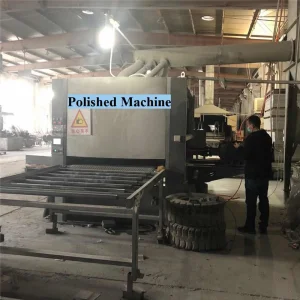
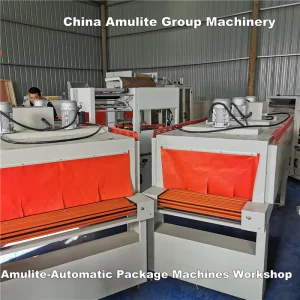
Palletized stacks are loaded into heavy-wall pressure vessels (autoclaves) operating at 1.2 MPa saturated steam for 10–12 hours. Post-curing, boards pass through automatic 4-side edge trimming, calibrating sanders, surface dust extractors, and automated packaging lines.
Get direct technical consultation, customized plant layout engineering, civil loading data, and complete CAPEX/OPEX cost analysis from our Senior Process Engineers.
Send Inquiry Now & Request Technical ProposalWhere high-performance fiber cement and calcium silicate boards excel in Hungarian construction projects.
Withstanding Hungary's continental climate—characterized by hot summers and freezing winters with severe freeze-thaw cycles. Through hydrophobic surface treatments and UV-resistant coatings, fiber cement boards serve as durable architectural ventilated facades for commercial complexes across Budapest and Debrecen.
High-density autoclaved calcium silicate boards (6mm - 12mm) offer 2 to 4-hour fire ratings (EI120 / EI240). Crucial for lining electrical cable ducts, industrial partition walls, boiler rooms, and battery manufacturing gigafactories requiring strict fire compartmentalization.
Zero organic nourishment prevents mold growth, fungus, and swelling. Ideal for thermal bath facilities, spa centers, pharmaceutical plants, and agricultural processing facilities along the Tisza region where relative humidity remains consistently elevated.
Addressing key technical, regulatory, and operational considerations when setting up a production facility in Hungary.
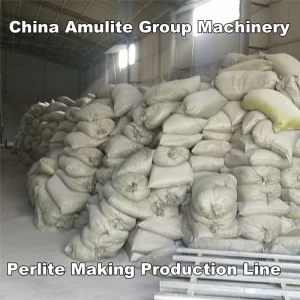
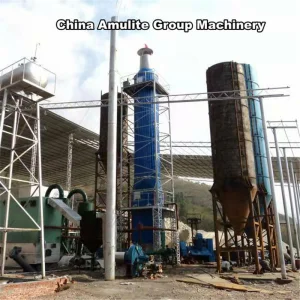
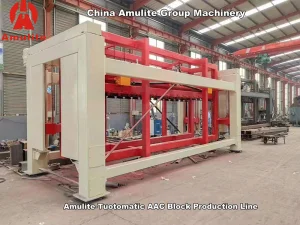
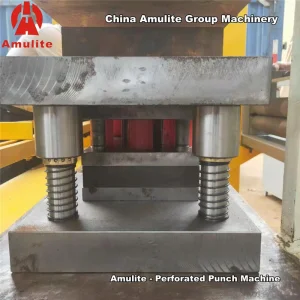
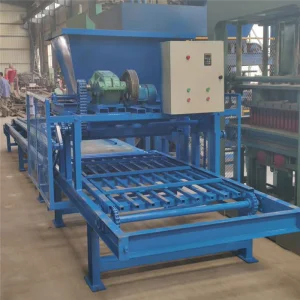
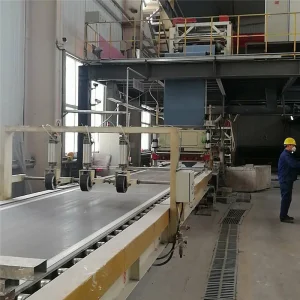
Complete your industrial plant ecosystem with our specialized processing and finishing equipment.
Partner with an established manufacturer trusted by over 200 board manufacturing plants worldwide. Request technical documentation, full plant footprint CAD layouts, and investment ROI reports tailored for Hungary.