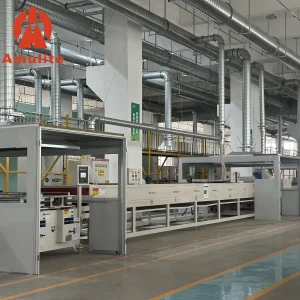
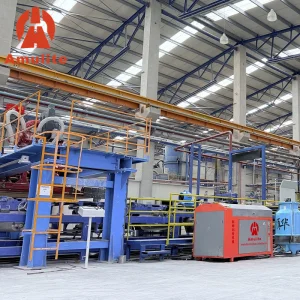
Engineered for structural endurance, extreme weather resistance, and high-throughput automated operation.
An authoritative evaluation of architectural cladding machinery, supply chain resilience, automated cold roll forming, and advanced Hatschek wet-process siding panel manufacturing.
The global building envelope market has undergone a structural transformation. Driven by stringent international fire safety mandates (such as EN 13501-1 Class A1 fire rating requirements), energy-efficiency certifications, and severe weather volatility, construction developers are rapidly phasing out traditional wood and unreinforced plastic cladding. In their place, autoclaved fiber cement siding, metal-plastic composite siding, and insulated roll-formed steel siding sheets have taken dominant market share.
For global industrial buyers, contracting with an experienced OEM Siding Sheet Making Machine Supplier & Company is no longer just a capital procurement exercise—it is a strategic decision regarding long-term operational margin, raw material utilization efficiency, and zero-downtime line integration. Modern industrial siding manufacturing demands machines capable of micro-precision embossing, automated multi-pattern alignment, continuous high-speed roll forming, and synchronized hydraulic shearing.
The integration of Industry 4.0 concepts into siding sheet making equipment has solved decades-old manufacturing bottlenecks. Modern automated lines utilize decentralized PLC system architecture (leveraging Siemens S7-1500 or Schneider Electric controllers), paired with high-frequency Ethernet/IP telemetry. This infrastructure guarantees real-time closed-loop control over every critical variable—from sheet thickness tolerance to hydraulic stamping pressure and thermal curing cycles.
Servo-driven roller stations with individual torque controls eliminate material stretch and paint flaking during profile shaping, ensuring zero visual defects on prepainted metallic or fiber-reinforced sheets.
High-tonnage hydraulic embossing rollers deliver wood-grain, stone-veneer, or custom architectural textures onto siding surfaces with zero pattern blur at speeds exceeding 35 meters per minute.
Embedded IoT vibration and thermal sensors monitor bearing wear, hydraulic fluid degradation, and motor overload condition, streaming diagnostic alerts directly to plant engineers via cloud SCADA dashboards.
How Chinese engineering clusters have redefined global benchmarking for OEM siding machinery through end-to-end component integration and scale economics.
The global machinery market was once dominated by legacy European and North American equipment vendors whose high capital expenditure requirements and extended lead times created severe operational barriers for expanding manufacturers. Today, leading Chinese OEM manufacturers have transformed the sector by combining world-class heavy machinery design with robust domestic supply chain ecosystems.
Key advantages that make China the premier destination for OEM siding sheet machine sourcing include:
From high-grade Cr12MoV alloy steel forging for roll forming dies to large-scale 5-axis CNC machining centers for structural chassis milling, China’s industrial clusters enable full control over component precision, reducing production lead times by over 40% compared to Western counterparts.
Chinese OEM suppliers do not enforce off-the-shelf limitations. Machinery configurations—including coil width capacity (from 600mm to 1500mm), sheet profiling geometry, inline punch press hole configurations, and multi-layer UV painting integrations—are fully customizable to local regional construction codes.
By streamlining engineering design, utilizing standardized international electrical brands (Schneider, Siemens, Omron), and optimizing structural steel fabrication costs, Chinese manufacturers provide production lines with superior ROI metrics and short capital pay-back cycles.
Detailed breakdown comparing traditional siding forming equipment with next-generation automated OEM production lines.
| Specification Parameter | Legacy Siding Machine Lines | Next-Gen OEM Smart Siding Production Line |
|---|---|---|
| Forming Line Speed | 10 – 15 m/min | 30 – 50 m/min (Continuous Servo Controlled) |
| Profiling Roller Material | 45# Carbon Steel (Surface Chrome) | Cr12MoV / SKD11 Vacuum Heat-Treated (HRC 60-62) |
| Thickness Tolerance Control | ±0.30 mm | ±0.05 mm via Laser Thickness Sensors |
| Control System Architecture | Manual / Basic Relay Switches | Siemens S7-1500 PLC + SCADA Remote Diagnostics |
| Cutting Mechanism | Stop-and-Cut Mechanical Shear | Flying Hydraulic Servo Shear (Zero Stoppage) |
| Embossing Pattern Depth | Fixed Single Pattern | Quick-Change Dual-Hydraulic Embossing Stations |
| Material Processing Capability | Prepainted Steel Only | Alu-Zinc, Aluminum, Fiber Cement, PVC Composite |
Tailored machine design engineered for diverse architectural styles, regulatory demands, and environmental extremes across global jurisdictions.
In North America, wood-grain fiber cement lap siding and insulated vinyl-backed metallic siding dominate suburban residential construction. OEM machines servicing this market are configured with high-precision wood-grain embossing rollers and specialized interlocking tongue-and-groove edge profilers that streamline field installation.
High-ambient-temperature regions demand insulated metallic sandwich siding panels with polyurethane (PU) or rockwool core filling. Equipment tailored for the Middle East features integrated inline liquid polyurethane injection modules and thermal break forming stations capable of handling heavy-gauge galvanized steel coils under extreme desert conditions.
European building codes demand non-combustible A1-fire-rated architectural panels with UV-resistant decorative painting. OEM lines feature integrated 3-coat 2-bake liquid UV painting lines and high-temperature curing ovens immediately downstream of the siding sheet forming section, delivering turn-key finished facade boards.
In-depth technical answers curated by senior process engineers for plant operators and procurement officers.
Depending on the specific machinery line architectural setup, our OEM siding equipment handles a wide array of raw material substrates:
1. Metallic Substrates: Prepainted Galvanized Steel (PPGI), Prepainted Galvalume/Alu-Zinc Steel (PPGL), Aluminum Coils (3000 & 5000 series), and Stainless Steel sheets ranging from 0.3mm to 1.2mm in gauge.
2. Fiber Cement Substrates: Wet slurry composed of Ordinary Portland Cement (OPC), silica sand, cellulose fiber pulp, and mineral additives processed via the Hatschek wet-forming process.
3. Composite Substrates: PVC/WPC extruded polymer bases integrated with outer metallic or laminate protective layers.
Our standard OEM project execution framework follows a structured 5-phase engineering protocol:
• Phase 1 (Parameter Definition): Analysis of buyer's target profile drawing, material thickness, desired yield speed (m/min), and factory footprint constraints.
• Phase 2 (3D Modeling & Simulation): CAD/CAM roller pass design software (COPRA) simulates stress distribution to prevent panel oil-canning and edge warping.
• Phase 3 (Precision Manufacturing): CNC machining of shafts, rollers, and base structures, followed by heat treatment (HRC 60-62).
• Phase 4 (Factory Acceptance Testing - FAT): Dry run and actual coil forming testing at our factory prior to shipping export clearance.
• Phase 5 (On-Site Commissioning): Dispatch of field engineers for installation supervision, PLC integration, and operator training.
Cold Roll Forming Siding Machines process pre-coiled metal or plastic sheets through a series of progressive roller dies to continuously bend the profile into overlapping siding boards at high speed (up to 50 m/min).
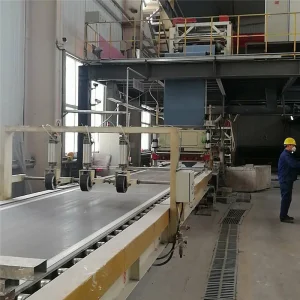
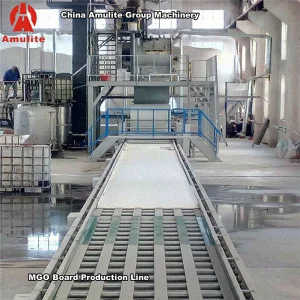
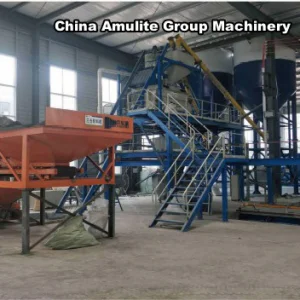
Conversely, Wet-Process Fiber Cement Siding Lines manufacture synthetic wood-grain cement boards starting from liquid mineral slurry. They require slurry mixing vats, cylinder vats (Hatschek process), vacuum dewatering belts, hydraulic press cutting units, and high-pressure steam autoclaves to cure the board into a fireproof mineral cladding panel.
Surface paint protection is achieved through three engineering measures:
1. Roller surface micro-polishing followed by hard chromium electroplating (0.05mm thickness) to achieve a mirror finish.
2. Precision roller clearance calculation tailored specifically to coil paint thickness (PVDF / SMP coatings).
3. Optional inline application of protective PE film laminators positioned prior to the first forming station.
Full-spectrum machinery engineered for modern non-metallic building material manufacturing plants.