Explore our heavy-duty turnkey solutions engineered for building material manufacturing, precision pressing, and automated production environments.
Analyzing the evolution from conventional hydraulic power packs to ultra-precise, servo-driven smart presses across modern heavy industries.
In the contemporary industrial manufacturing ecosystem, the demand for high-tonnage precision hydraulic press machines has surged dramatically. Modern manufacturing directives—ranging from automotive lightweighting via high-strength steel (HSS) hot stamping to dense refractory brick formation and fiber-cement cladding compaction—require mechanical press systems engineered with microscopic tolerance levels, dynamic pressure ramping, and energy-conscious hydraulic actuation. OEM (Original Equipment Manufacturer) hydraulic press suppliers have shifted from standard off-the-shelf machinery builders into complex system integrators capable of tailoring slide movement profiles, die-cushion kinematics, and closed-loop control algorithms.
| Performance Metrics | Conventional Hydraulic Press | OEM Next-Gen Servo-Hydraulic System | Information Gain Impact |
|---|---|---|---|
| Drive Mechanism | Fixed displacement induction motors with proportional valve throttling | Direct servo motor drive + variable-displacement axial piston pumps | Eliminates idle power draw; reduces heat generation by up to 60%. |
| Positional Repeatability | ± 0.10 mm to ± 0.25 mm stroke tolerance | ≤ ± 0.01 mm via closed-loop linear scale (LVDT) feedback | Crucial for precision deep drawing, coining, and micro-powder compaction. |
| Hydraulic Oil Volume & Thermal Load | Large oil reservoir requiring high cooling capacity | Optimized compact oil reservoir with reduced thermal degradation | Extends fluid lifespan 3x; minimizes total plant footprint and maintenance overhead. |
| Acoustic Emission | 78 dB(A) to 88 dB(A) under continuous load | ≤ 68 dB(A) due to low idle pump speeds | Dramatically improves shop-floor ergonomic safety and OSHA compliance. |
| IoT Telemetry & Diagnostics | Basic pressure gauges and localized relay logic | Integrated OPC-UA, MQTT sensors for predictive maintenance | Enables real-time valve degradation tracking and zero-unplanned-downtime operations. |
Deep-dive into structural frame designs tailored to specific material deformation profiles and mechanical stress distribution.
Designed with four precision-ground guide columns providing open 360-degree access to the working area. Highly versatile for deep drawing, stamping, trimming, and composite molding. Stress-relieved steel columns feature hard-chrome plating to minimize friction and prevent frame deflection under off-center loading conditions.
Rigid box-type welded steel frame engineered using Finite Element Analysis (FEA) to ensure structural deflection is maintained below 0.05 mm/m. Ideal for heavy progressive sheet metal blanking, high-density powder compaction, and high-tonnage structural metal forming requiring maximum eccentric load resistance.
Compact layout maximizing floor space efficiency while providing unhindered three-sided access for manual or robotic sheet feed operations. Equipped with anti-deflection side gussets, making them ideal for small-to-medium tonnage punching, riveting, bending, and assembly applications.
Leading OEM suppliers offer tailor-made structural and hydraulic modifications to integrate presses directly into automated production lines:
Detailed breakdown of how specialized hydraulic presses solve specific material forming challenges across major industrial sectors worldwide.
Used extensively in press shops for forming structural battery enclosures, motor core laminations, and deep-drawn body panels. High-tonnage hydroforming presses allow lightweight aluminium and ultra-high-strength steel alloys to be shaped into rigid, crash-tested geometry without micro-cracking.
High-precision SMC (Sheet Molding Compound) and carbon fiber composite thermo-forming hydraulic presses. Equipped with precise multi-zone temperature control platens and active parallelism control systems to guarantee uniform resin curing across large aerodynamic surface structures.
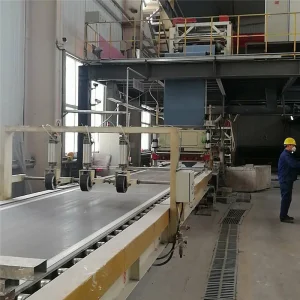
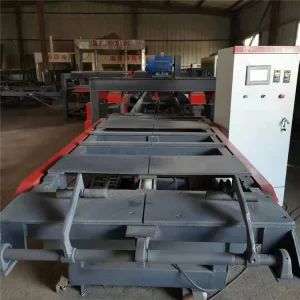
Integrated into continuous board and block lines (such as calcium silicate, fiber cement, and refractory bricks). Heavy hydraulic compaction removes trapped air pockets, densifying raw slurries to achieve exact fireproof ratings, water-impermeability, and compressive strength metrics.
Multi-action hydraulic powder compacting presses designed for precise density distribution in metal powders, ceramic oxides, and hard metal alloys. Features multi-level punch tooling controls to form complex gears, bushings, and cutting tool blanks without density gradient flaws.
How concentrated industrial clusters, raw steel sourcing, and advanced machining yield unmatched cost-to-performance advantages.
Chinese OEMs benefit from direct integration with domestic heavy steel foundries. Large-scale structural plates (Q235B, Q345B, Q690D) undergo localized stress-relieving thermal annealing, shot blasting, and ultrasonic flaw detection prior to precision CNC gantry milling, drastically shortening raw component lead times.
To ensure world-class reliability, Chinese OEM factories pair heavy structural frames with premium international hydraulic and electrical components: Rexroth / Parker proportional valves, Siemens PLC systems, Yuken pumps, and NOK sealing elements.
Modular manufacturing architectures enable standard press deliveries within 45 to 60 days, and fully customized multi-station press lines within 90 to 120 days—roughly 40% faster than traditional Western European machinery builders.
Exploring the next frontier of intelligent hydraulic press machinery: Artificial Intelligence, IoT connectivity, and green energy regeneration.
Embedded vibration sensors, oil particle counters, and thermal imaging cameras stream real-time operational diagnostics to cloud edge servers. AI algorithms analyze micro-variations in valve response times and pressure bleed rates to notify technicians of component wear before catastrophic failure occurs.
Next-generation presses utilize accumulator-assisted kinetic energy harvesting. During the decompression and rapid return stroke phases, kinetic fluid energy is captured and stored in high-pressure accumulators, reducing secondary power grid draw by up to 35% to 45%.
Prior to physical assembly, every custom OEM press line is validated using Digital Twin CAD physics engines. Virtual simulation guarantees optimized hydraulic manifold flow rates, die cushion contact dynamics, and zero collision risk in automated robotic loading cells.
Ensuring compliance with international safety standards, backed by worldwide turn-key commissioning services.
Exported hydraulic presses adhere strictly to CE Directives (2006/42/EC), EN ISO 16092-3 (Safety of Hydraulic Presses), and NFPA 79 / UL 508A standards for electrical panel construction across North American markets.
Integrated dual-channel light curtains, mechanical ram safety locks (plunger blocks), anti-tie-down dual palm button triggers, and automatic hydraulic circuit block monitor valves prevent accidental slide drops during die setup.
OEM field service teams deliver comprehensive site preparation guidance, foundation engineering drawings, physical installation supervision, hydraulic oil flush procedures, operator training, and 24/7 remote PLC patch updates.
Clear, direct answers from our senior hydraulic application engineering team.
Explore our full catalog of high-capacity board, panel, recycling, and specialized industrial processing machinery.