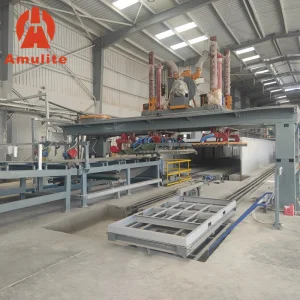
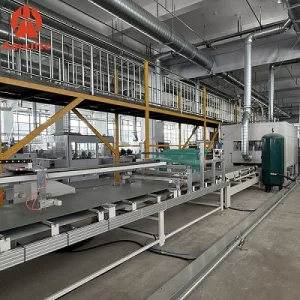
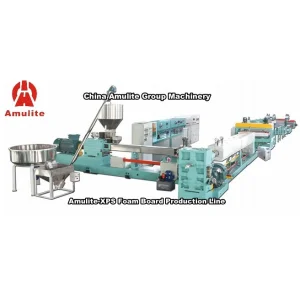
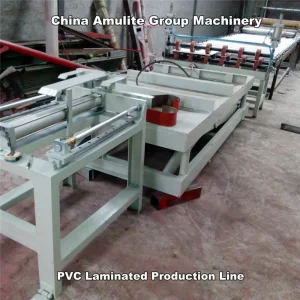
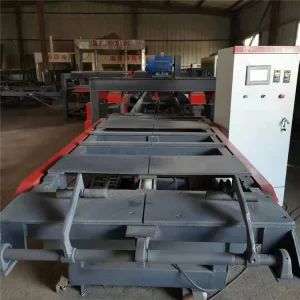
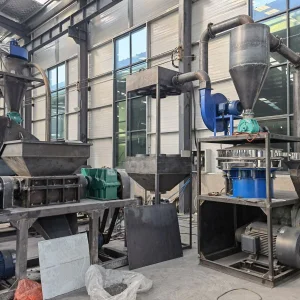
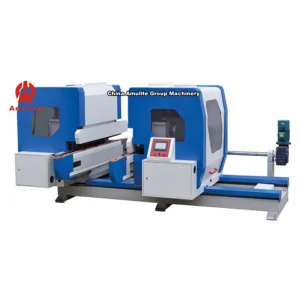
Explore our core engineering portfolio of automated production lines and heavy machinery designed for structural efficiency and material processing.
Analyzing global urban shifts, net-zero building directives, and the engineering necessity for automated EPS cement sandwich panel machinery.
The global construction sector is undergoing a structural transformation driven by two converging forces: rapid international urbanization and stringent carbon-neutral directives. Traditional masonry—heavy clay bricks, cast-in-place concrete blocks, and uninsulated partition systems—is rapidly being superseded by light-gauge modular alternatives. Among these innovations, Expanded Polystyrene (EPS) Sandwich Cement Wall Panels have emerged as the primary standard for interior partitions, exterior envelope systems, and fire-rated curtain walls across residential, commercial, and industrial facilities globally.
An OEM EPS Wall Panel Making Machine is not merely an isolated piece of equipment; it represents an integrated chemical and mechanical system. It synthesizes Portland cement, inorganic fly ash, expanded polystyrene beads, lightweight aggregates, and specialized chemical admixtures between double-layer high-density Fiber Cement or Calcium Silicate boards. The resulting composite structural element exhibits an exceptional strength-to-weight ratio, structural rigidity, thermal resistance, and acoustic dampening.
From an industrial manufacturing perspective, investing in advanced OEM EPS panel machinery enables production facilities to deliver high-margin products that address regional building codes (such as EN 15283, ASTM C1288, and ISO 9001 standards). By automating core processing steps—ranging from EPS bead expansion and digital micro-batching to automatic vertical mold car filling and hydraulic demolding—modern suppliers drastically reduce unit production costs while eliminating human error in slurry density control.
A granular breakdown of automated manufacturing units, batching dynamics, mechanical design, and thermal curing science.
Employs a fluid bed dryer and precise steam pressure valves to expand raw polystyrene resin beads to controllable target densities (8–20 kg/m³). Digital fluidization prevents agglomeration, ensuring uniform thermal envelope performance.
High-shear batch mixers utilize multi-point load cells for real-time measurement of OPC cement, sand slurry, fly ash, water, and specialized air-entraining additives, guaranteeing homogenization without crushing lightweight EPS beads.
Engineered with high-tensile steel structural frames, automatic opening-closing mechanisms, and surface anti-sticking treatments. Allows simultaneous vertical casting of 20–40 panels per cycle with precise tongue-and-groove profiling.
| Specification Parameter | Standard Capacity Line | High-Output Automated Line | Enterprise Turnkey Custom |
|---|---|---|---|
| Annual Production Output | 300,000 m² / Year | 600,000 m² / Year | 1,200,000+ m² / Year |
| Panel Length & Width Range | 2270 / 2440 / 3000 × 610 mm | 2270 / 2440 / 3000 × 610 mm | Customizable dimensions up to 3600mm |
| Thickness Capacity | 60 / 75 / 90 / 100 / 120 / 150 mm | 60 through 200 mm Adjustable | Dual-thickness simultaneous casting |
| Core Density Control | 550 – 800 kg/m³ | 450 – 750 kg/m³ (Ultra-Light) | Variable density gradient control |
| Total Installed Power | ~65 kW | ~120 kW | ~210 kW (Fully Automated SCADA) |
| Operator Labor Required | 8 - 10 Operators / Shift | 4 - 6 Operators / Shift | 2 - 3 Operators (Robotic Handling) |
Deploying tailored EPS wall panel production assets across diverse climatic zones, regulatory environments, and regional raw material profiles.
In tropical environments, structural wall panels must withstand extreme moisture vapor transmission and prevent mold formation. Machinery in these sectors is configured with localized dosing for hydrophobic silicone additives and core waterproofing agents. The resulting EPS cement panels exhibit water absorption rates below 6%, preventing internal steel framing corrosion in prefab high-rises.
Due to their lightweight nature (roughly 1/6th the weight of solid brick walls), EPS panels absorb seismic shock efficiently without structural cracking. Plant designs for earthquake-prone regions integrate continuous male-female interlocking joint mold dies, producing panels that lock together securely with steel anchor pins during site installation.
In sub-zero climates, thermal insulation (low thermal conductivity U-values) is paramount. Production lines utilize dual-density core slurry technology, concentrating expanded EPS beads toward the panel center while maintaining dense cementitious outer layers. Thermal conductivity drops to ≤0.065 W/(m·K), drastically cutting heating energy loads in residential structures.
Transforming standalone factories into smart, eco-efficient manufacturing hubs with zero landfill waste and total process visibility.
Modern factory owners require more than mechanical output; they require full digital management and compliance with global ESG (Environmental, Social, and Governance) mandates. Next-generation OEM EPS wall panel machinery incorporates SCADA (Supervisory Control and Data Acquisition) systems, offering real-time monitoring of raw material stock, batching accuracy, steam utilization, and cure cycle telemetry.
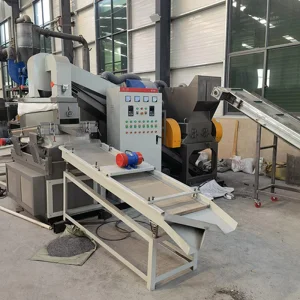
Waste EPS offcuts, broken panel pieces, and trim waste are fed through heavy-duty hammer crushers and air classifiers, re-introducing recycled aggregates back into the core slurry at proportions up to 25% without compromising compressive strength.
Exhaust steam from EPS pre-expansion units is captured via closed-circuit heat exchangers and diverted into curing tunnels. This process accelerates initial cement setting times by 35% while cutting plant boiler gas consumption dramatically.
Pioneering advancements in bio-polymer EPS substitutes, AI-driven slurry rheology tuning, and fully autonomous robotic assembly lines.
Integration of inline microwave moisture sensors and viscosity meters. AI algorithms dynamically auto-correct water-to-cement ratios and ad-mixture dosing in milliseconds to adjust for raw material moisture variations.
Adaptation of pre-expansion machinery to handle biodegradable PLA (Polylactic Acid) and bio-based expanded beads. Enables 100% compostable interior core matrices that comply with stringent European circular economy laws.
Full replacement of manual plant labor with six-axis gantry robots equipped with vacuum suction pads and vision sensors. Panels will be demolded, edge-trimmed, laser-inspected for micro-fissures, and palletized automatically.
Explore our specialized line equipment, processing systems, and heavy-duty recycling solutions.
In-depth responses from our engineering directors regarding production economics, machinery commissioning, and operational management.