Engineered for structural precision, energy efficiency, and scalable industrial capacity.
In the modern paradigm of global civil construction and prefabricated building systems, selecting an established OEM concrete equipment supplier is no longer merely a procurement task—it is a strategic capital expenditure decision that governs factory operational expenditure (OPEX), product margin, thermal efficiency, and long-term carbon compliance. As infrastructure projects across North America, Europe, the Middle East, and Southeast Asia transition toward decarbonized, lightweight, and fire-resistant materials, machinery engineering must adapt to complex slurry chemistry, high-pressure autoclaving, automated material handling, and rigorous mechanical tolerances.
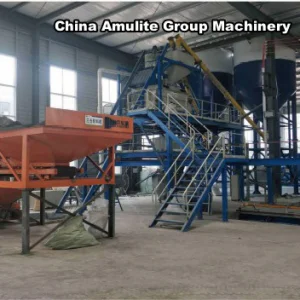
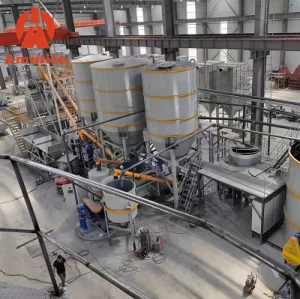
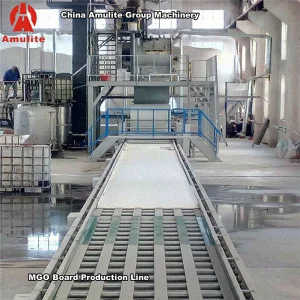
China Amulite Group stands at the forefront of non-metallic building material equipment manufacturing. Operating a 100,000 m² heavy-industrial manufacturing facility backed by 27 dedicated process engineering teams, Amulite has commissioned over 200 turnkey production lines across more than 60 countries. Our expertise encompasses the end-to-end design, mechanical fabrication, electrical SCADA integration, raw material formulation tuning, on-site installation, and lifecycle support for fiber cement board machines, autoclaved aerated concrete (AAC) block plants, EPS sandwich wall panel lines, calcium silicate board units, and MGO board systems.
Key technological transitions driving the global building material machinery sector over the next decade.
Global net-zero mandates are forcing concrete equipment to process low-carbon cementitious matrices, incorporating high percentages of fly ash, blast furnace slag, silica sand, and recycled mineral fillers without compromising structural MOR (Modulus of Rupture).
Modern concrete plants rely on closed-loop PLC-SCADA architectures. Automated slurry density compensation, real-time laser thickness sensors, and AI predictive maintenance minimize downtime while ensuring product consistency within ±0.2mm tolerances.
Shortages in field labor have dramatically accelerated demand for lightweight, high-performance prefabricated wall panels. Production lines for EPS sandwich wall panels and hollow-core concrete walls enable rapid assembly with superior sound and thermal insulation values.
Analyzing global search queries and B2B procurement patterns reveals distinct intent clusters among project developers, EPC contractors, and industrial manufacturing buyers seeking an OEM concrete equipment supplier:
Enterprise procurement directors prioritize thermal energy conservation in autoclave curing and slurry dewatering systems. Advanced Hatschek sheet machines and AAC autoclaves equipped with heat exchangers significantly reduce steam consumption per cubic meter or square meter of final product.
Industrial buyers require production machinery capable of handling locally sourced, low-cost raw materials. Custom OEM machinery must seamlessly adjust to variations in quartz sand purity, local Portland cement grades (OPC 42.5/52.5), wood pulp fiber refinement levels, and supplementary cementitious materials (SCMs).
Global buyers consistently avoid fragmented supplier ecosystems. Sourcing intent strongly favors suppliers who provide total turnkey delivery: civil work layout design, mechanical and electrical engineering, on-site commissioning, trial production runs, and formulation formulation tuning under contractually backed output guarantees.
Turnkey engineering frameworks engineered for maximum efficiency, structural integrity, and high-volume industrial throughput.
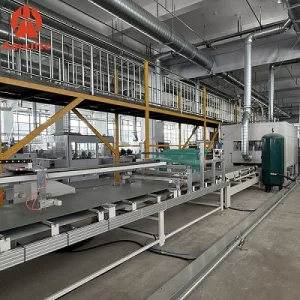
Utilizing high-speed 3 to 8 vat Hatschek sheet-forming processes integrated with vacuum dewatering, automatic stacking, hydraulic pre-pressing, and high-pressure steam autoclaving. Produces A1 fire-rated non-asbestos boards from 4mm to 30mm thickness.
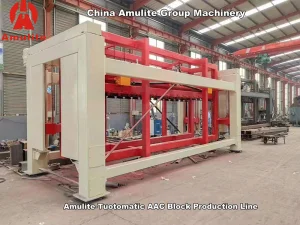
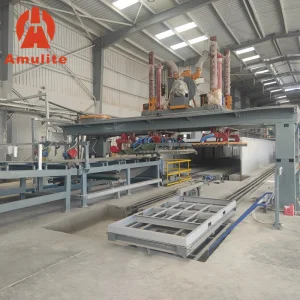
Fully automated plants engineered for capacities ranging from 50,000 m³ to 600,000 m³/year. Featuring high-precision tilting wire cutters, automatic mould oiling systems, ferry transport carts, and SCADA-controlled curing cycles.
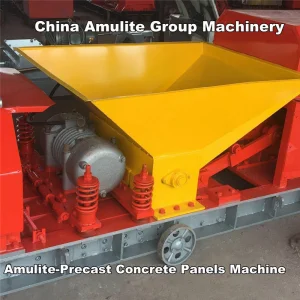
Designed for continuous or vertical battery mould production of lightweight load-bearing sandwich panels. Combines fiber cement surface facings with expanded polystyrene (EPS) or perlite lightweight aggregate cores for fast building installation.
Deploying heavy industrial machinery globally requires strict alignment with localized mechanical, electrical, and environmental compliance standards. China Amulite Group integrates comprehensive regulatory safeguards into every project phase:
Prior to machine manufacturing, Amulite's process laboratory tests client raw material samples (quartz sand, fly ash, lime, cement, pulp). We develop optimized slurry formulations tailored specifically to local material chemical composition, preventing strength degradation or micro-cracking in mass production.
Our resident field engineering teams supervise foundation civil work verification, mechanical installation, electrical wiring, PLC loading, and trial production runs. Training protocols ensure your local operators gain full competence in daily operations, routine maintenance, and quality control procedures.
The concrete equipment landscape is evolving rapidly. Amulite's technology development roadmap centers on three foundational pillars designed to maximize long-term client asset value:
Implementation of smart sensor arrays in mixing vats to measure viscosity, temperature, and solids concentration in real time. Dynamic PLC adjustments balance water-cement ratios automatically, mitigating human error during raw material shift changes.
Integrating multi-stage steam condensate return loops and process water filtration circuits, reducing net plant water consumption by over 80% and recapturing latent thermal energy for pre-curing tunnels.
Deploying heavy-payload industrial robotic arms for board handling, automated palletizing, and direct AGV (Automated Guided Vehicle) transfer to finished goods warehouses, cutting plant labor intensity by 40%.
In-depth answers to key technical, operational, and commercial sourcing questions.
Amulite fiber cement board and calcium silicate board lines are scalable from 1 million m² to over 30 million m² per year. Output is governed by forming cylinder width (typically 1,300mm to 1,600mm), vat count, autoclave volumetric capacity, and automated stacking efficiency. Lines are designed modularly to allow simple phase-two expansion.
Yes. Turnkey delivery includes factory layout engineering, civil loading requirements, full machinery manufacturing, electrical SCADA programming, field installation supervision, and comprehensive raw material formulation trials using locally sourced cement, quartz sand, fly ash, and pulp fibers.
Equipment fabrication and factory dry-run testing typically require 90 to 180 days depending on line complexity and autoclave specifications. On-site mechanical and electrical erection takes approximately 30 to 60 days, followed by 15 to 30 days of trial production, optimization, and staff training.
All autoclaves are engineered, welded, and inspected under ASME Section VIII and CE PED standards. Vessels undergo 100% X-ray weld inspection and hydrostatic pressure testing prior to factory dispatch, complete with full metallurgical certification documentation.
Amulite provides lifetime technical support. Control systems feature remote PLC diagnostic modules allowing our software engineers to troubleshoot operational issues globally via secure VPN connection. We also maintain local spare part warehouses and offer routine engineering maintenance visits.
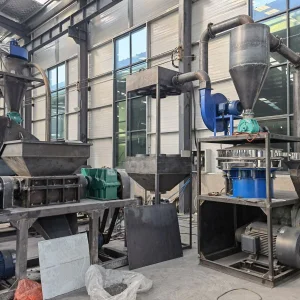
Explore our extended industrial machinery portfolio for raw material processing, panel sizing, and recycling.