



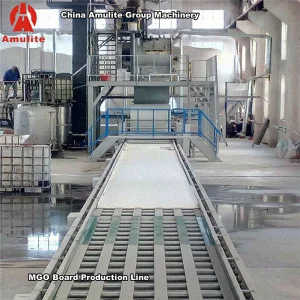
Discover our enterprise-grade pressing and sheet-forming machinery. Optimized for high flexural strength, continuous dewatering, precision thickness tolerance, and maximum annual throughput.
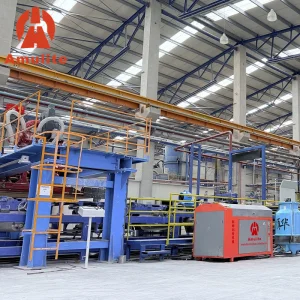
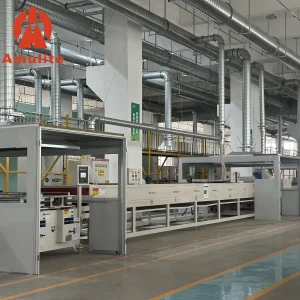
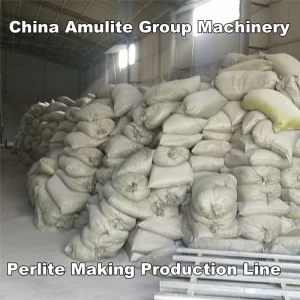
Understanding the fluid dynamics, structural rigidity, and electro-hydraulic control systems required to achieve high density, low water absorption, and superior flexural strength in modern fiber-cement and building panel production.
Industrial press machines operating under continuous 5,000 to 14,000-ton hydraulic loads demand zero frame flex. Our heavy multi-column and box-girder steel structures undergo full Finite Element Analysis (FEA) and high-temperature stress-relief annealing to guarantee frame deformation stays below 0.05 mm under peak operating tonnage.
Integrating Rexroth proportional hydraulic manifolds and linear displacement magnetostrictive transducers enables real-time pressure curve profiling. By controlling platen parallelism across multi-daylight openings to within ±0.03 mm, green-state boards achieve uniform density without edge delamination or internal micro-fractures.
For high-capacity Hatschek and slurry-press lines, vacuum dewatering efficiency directly dictates line speed and wet-sheet strength. Our vacuum system utilizes multi-stage water ring pumps combined with continuous mesh felt cleaning, extracting pore water to reduce green moisture down to 24-28% before entering the primary press cylinder.
| Board Type / Category | Target Density (g/cm³) | Hydraulic Press Tonnage | Flexural Strength (MPa) | Moisture Absorption | Primary Application |
|---|---|---|---|---|---|
| Fiber Cement Cladding (Autoclaved) | 1.40 - 1.70 g/cm³ | 7,000 - 14,000 Tons | ≥ 16 - 28 MPa | < 20% | Exterior Architectural Facades, Heavy Cladding |
| Calcium Silicate Board (Non-Asbestos) | 1.10 - 1.35 g/cm³ | 4,000 - 8,000 Tons | ≥ 12 - 18 MPa | < 28% | Fire-Rated Partitions, Ceiling Tiles, Moist Zones |
| MGO Sulphate Fireproof Board | 0.95 - 1.20 g/cm³ | Continuous Roller / Post-Press | ≥ 14 - 22 MPa | < 15% | Fire Doors, Structural Subfloor, Cleanrooms |
| EPS Sandwich Cement Wall Panel | 0.55 - 0.75 g/cm³ | Mould Press Injection | ≥ 8.5 - 12 MPa | < 12% | Prefab Lightweight Interlocking Wall Envelopes |
| AAC Autoclaved Aerated Block | 0.40 - 0.65 g/cm³ | Tilting Mould Machine | ≥ 3.5 - 7.5 MPa | N/A (Cellular) | Thermal Insulation Masonry, High-Rise Infill |
How modern digital twins, IoT telemetry, energy regeneration units, and low-carbon cement chemistry are reshaping the cost dynamics and sustainability of industrial press manufacturing.
High-speed optical laser displacement sensors mounted at the platen exit scan board profiles in real time. The SCADA system calculates thickness variance and automatically micro-adjusts hydraulic valve output per zone to neutralize density gradients before board curing.
Hydraulic decompression cycles normally dump kinetic pressure energy as heat. Our hybrid press machines utilize fluid energy recovery accumulators to capture decompressed oil inertia, routing it directly into auxiliary lift cylinders and cutting main electrical consumption by up to 35%.
As global building codes demand lower embodied carbon, our press machines are engineered to handle high-ratio supplementary cementitious materials (SCMs) including blast furnace slag, fly ash, geopolymer binders, and bio-based cellulose fibers without compromising green-state handling strength.
Tailored production line architecture engineered to satisfy severe structural, acoustic, and fire resistance criteria across civil, commercial, and modular building markets.
Equipped with high-tonnage multi-daylight hydraulic presses, our fiber cement board production lines yield high-density (≥1.50 g/cm³) boards featuring A1 fire ratings, extreme freeze-thaw durability, and resistance to hurricane wind loads. Integrated UV sanding and coating machines deliver factory-finished architectural wall panels ready for job site installation.
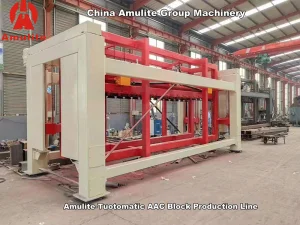
Addressing global skilled-labor shortages, our EPS cement sandwich wall panel and AAC block production lines manufacture precision tongue-and-groove interlocking panels. Designed for fast manual assembly, these lightweight load-bearing panels offer superior sound isolation (STC ≥ 45dB) and thermal performance for affordable housing programs.
Amulite calcium silicate and MGO board production plants engineer non-combustible interior boards designed for hospital corridors, cleanrooms, data centers, and elevator shafts. Zero organic solvents or toxic smoke emissions ensure compliance with strict international municipal fire safety standards.
Thick-gauge fiber cement subflooring panels produced on our high-capacity press systems provide exceptional shear resistance and concentrated point-load performance. Ideal for industrial mezzanines, transit hubs, containerized equipment shelters, and high-humidity wet process plants.
How China Amulite Group leverages a 100,000 m² state-of-the-art heavy equipment fabrication plant, standardized component sourcing, and rigorous quality control to deliver premium industrial value.
We do not outsource critical structural components. Our workshop houses 12-meter CNC heavy gantry planers, large-bore hydraulic cylinder honing machinery, and automated robotic welding bays. Complete in-house fabrication guarantees strict dimensional control and eliminates sub-tier supply delays.
To ensure global long-term reliability and effortless local maintenance, every Amulite press line integrates world-class componentry: Siemens PLC SCADA automation, Schneider electrical switchgear, Rexroth/Vickers hydraulic valves, and SKF/NSK heavy bearing housings.
Prior to sea transport, the complete press machine line, electrical cabinets, and hydraulic manifolds undergo full factory pre-assembly and dry-run Factory Acceptance Testing (FAT). Hydraulic pressure holding tests and ultrasonic weld inspections are documented and signed off before crating.
Deploying industrial capital equipment overseas requires rigorous compliance, localized grid adaptation, raw material trials, and localized engineering support to safeguard your capital investment.
Amulite machinery and pressure vessels comply with international standards including CE Machinery Directive 2006/42/EC, ISO 9001:2015 quality management, and ASME code certification for steam-curing autoclaves. Electrical systems comply fully with UL, CSA, and IEC specifications.
Machinery power trains are custom-wound to match local factory power supplies (380V, 415V, 440V, 480V at 50Hz/60Hz). Hydraulic power units are optimized with heavy-duty oil chillers for tropical ambient zones or immersion heaters for sub-zero operating environments.
Our experienced field team of 27 international service engineers conducts on-site civil alignment, mechanical installation, electrical wiring, and raw-material slurry formulation. We remain on site until your local operators produce market-ready boards at contract-rated speed.
A structured methodology for industrial buyers evaluating capital machinery investments, lifetime maintenance expenditures, raw material savings, and line deployment timelines.
Analysis of locally sourced Portland cement, silica sand mesh size, fly ash reactivity, and cellulose pulp fiber. In-house lab recipe formulation to establish target water-binder ratios and required press tonnage.
Generating complete 3D BIM foundation drawings, utility interface schematics (compressed air, saturated steam, industrial water, high-voltage power), and slurry pipework layouts matched to factory site constraints.
Manufacturing press frames, forming cylinders, autoclaves, and control panels over a 90 to 150-day cycle. Comprehensive Factory Acceptance Testing (FAT) with wet dry-run testing before export packaging.
Direct technical answers addressing hydraulic press performance, slurry recycling, autoclave synchronization, and plant ROI calculations.
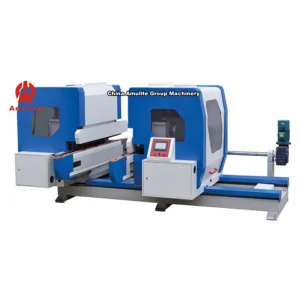
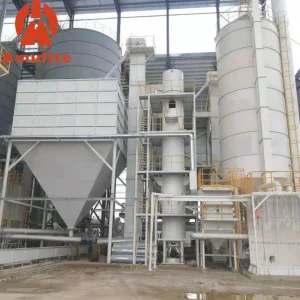
Complete your automated board plant ecosystem with high-precision punching, polishing, sanding, packaging, and raw material calcination processing lines.
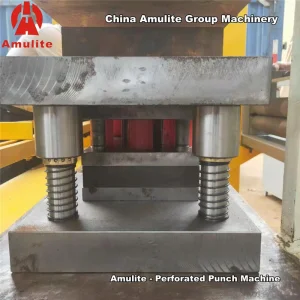
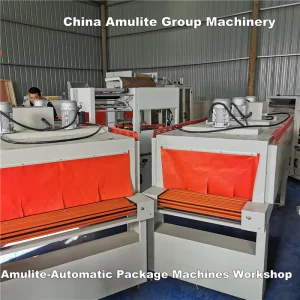
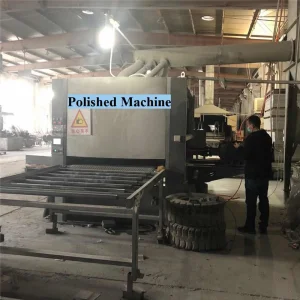
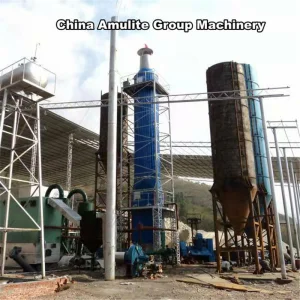
Partner with China Amulite Group’s process engineering experts. Submit your target board dimensions, required annual capacity, and local raw material specifications for a customized technical engineering quote and layout blueprint.