Explore our core turnkey production machinery engineered for modern lightweight wall panels, recycling lines, and advanced architectural substrate manufacturing.
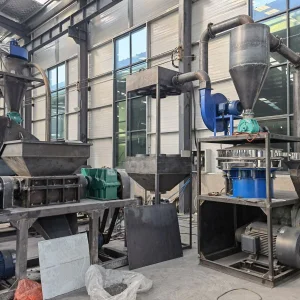
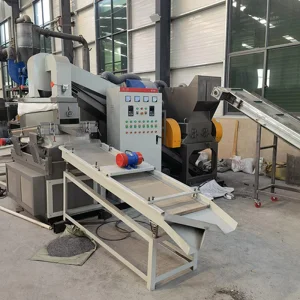
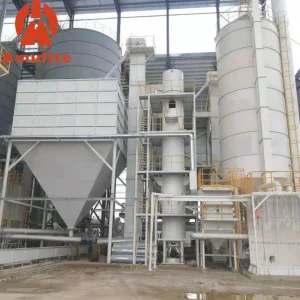
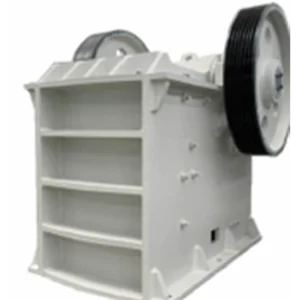
Analyzing the strategic transition from labor-intensive masonry to high-precision, automated lightweight wall panel production systems worldwide.
The global construction industry is undergoing a structural paradigm shift driven by stringent decarbonization targets, accelerating urbanization, and severe regional skilled-labor shortages. Traditional heavy concrete blocks and wet-plastered brickwork are rapidly being replaced by prefabricated lightweight wall panels. These high-performance substrates—ranging from EPS (Expanded Polystyrene) cement sandwich panels, fiber cement board composites, autoclaved aerated concrete (AAC) panels, to hollow-core lightweight partitions—offer unmatched thermal efficiency, structural resilience, and rapid installation speeds.
To meet modern structural engineering codes (such as ASTM C1185, BS EN 12467, and ISO 9001 quality frameworks), manufacturing plants must deploy advanced lightweight wall panel making machines. Modern machinery suppliers can no longer sell isolated mechanical units; they must provide integrated, automated turnkey plants featuring closed-loop PLC SCADA telemetry, automated batching, continuous hydraulic vertical/horizontal moulding systems, and carbon-optimized curing tunnels. This whitepaper provides a comprehensive engineering analysis of lightweight panel machinery, material science formulas, and global deployment strategy.
By replacing traditional 200mm solid concrete blocks with 100mm EPS cement sandwich wall panels, building structural weight is reduced by up to 60%. This drastically diminishes foundational dead-load stress, allows engineers to optimize structural steel quantities by 15-22%, and increases usable internal floor space by 4.5% to 6% across multi-story commercial developments.
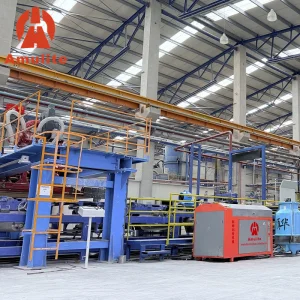
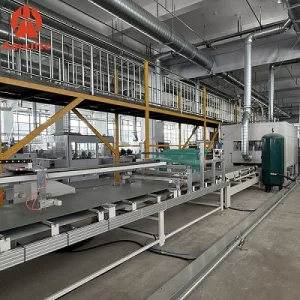
A deep dive into the electro-mechanical modules that constitute a high-output, reliable lightweight wall panel production plant.
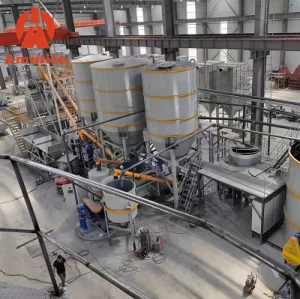
The core of board consistency lies in high-precision micro-dosing. Automated pneumatic load-cell scale systems weigh Portland cement, fly ash, silica sand, expanded perlite, EPS beads, and chemical foaming agents with ±0.2% accuracy. Twin-shaft intensive mixers utilize variable-frequency planetary agitators to ensure complete dispersion of synthetic fiber reinforcement (polypropylene or basalt fibers) without agglomeration.
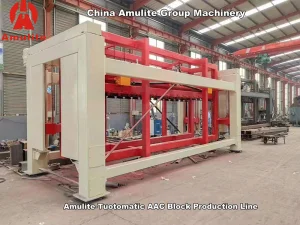
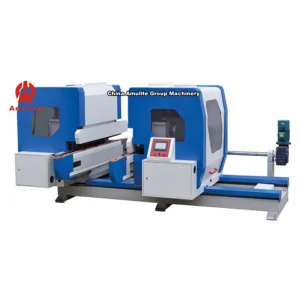
Depending on target panel specifications, machinery configurations employ either Vertical Battery Mould Systems or Continuous Horizontal Extrusion Lines. Vertical battery moulds feature hydraulic side-opening plates, automatic core-tube insertion for hollow panels, and integrated ultrasonic compaction tables to eliminate micro-voids, guaranteeing smooth tongue-and-groove joint profiles on all four edges.
Panel hydration and early green strength development require precise temperature and humidity control. Modern lines incorporate multi-stage steam-curing tunnels or heat-exchanger radiant chambers operating at 60°C to 80°C. Controlled curing cycles shorten demoulding times from 24 hours down to 3–4 hours, allowing a single plant footprint to double its daily volumetric production yield.
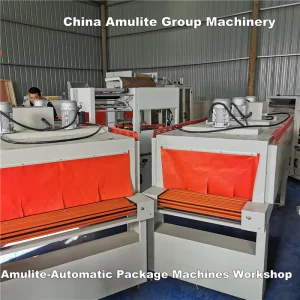
To eliminate manual labor injuries and panel breakage, high-output lines feature 90-degree hydraulic tilting tables and vacuum-gripper robotic stackers. Panels are gently extracted from mould cavities, rotated onto horizontal transit conveyers, and bundled onto automated wooden pallet packing lines equipped with stretch-hood wrapping systems.
Integrated control cabinets built with Siemens S7-1500 PLCs and industrial touch-panel HMIs provide full operational visibility. Every batch recipe, mixing temperature, water-to-cement ratio, and curing cycle duration is logged continuously to industrial cloud networks, enabling predictive maintenance diagnostics and remote operational troubleshooting.
A rigorous engineering comparison of different lightweight wall panel technologies produced by modern industrial production lines.
| Panel Technology Type | Core Raw Material Matrix | Density (kg/m³) | Compressive Strength | Sound Insulation (dB) | Fire Rating Standard |
|---|---|---|---|---|---|
| EPS Cement Sandwich Panel | OPC Cement, EPS Beads, Fly Ash, Calcium Silicate Board Skins, PP Fiber | 550 – 700 kg/m³ | ≥ 3.5 – 5.0 MPa | 38 – 48 dB (100mm) | Class A (Up to 4 Hours) |
| Autoclaved Aerated Concrete (AAC) | Silica Sand/Fly Ash, Quicklime, Cement, Gypsum, Aluminum Powder Paste | 425 – 625 kg/m³ | ≥ 3.5 – 7.5 MPa | 40 – 52 dB (150mm) | Class A1 Non-combustible |
| Hollow-Core Concrete Panel | Lightweight Expanded Clay (LECA), Cement, Sand, Foaming Agent | 650 – 850 kg/m³ | ≥ 5.0 – 9.0 MPa | 36 – 44 dB (90mm) | Class A (2 to 3 Hours) |
| Fiber Cement / Calcium Silicate | Quartz Sand, High-Grade OPC, Kraft Pulp / Cellulose Fibers, Micro-Silica | 900 – 1300 kg/m³ | ≥ 12.0 – 18.0 MPa | 45 – 55 dB (Composite) | Class A1 Fireproof Substrate |
| Magnesium Oxide (MGO) Board | Active MgO, MgCl₂ / MgSO₄, Glass Fiber Mesh, Perlite, Sawdust Filler | 800 – 1100 kg/m³ | ≥ 10.0 – 15.0 MPa | 42 – 50 dB (12mm) | Class A1 Zero-Smoke Propagation |
Lightweight panels engineered via closed-cell EPS or micro-cellular aeration trap static air pockets within their core structure. This lowers thermal conductivity ($\lambda$) to values as low as 0.08 - 0.15 W/m·K, vastly superior to traditional brickwork (0.81 W/m·K). From an acoustic perspective, the multi-layered mass-air-mass dampening curve of fiber-cement-faced EPS sandwich panels provides exceptional Sound Transmission Class (STC) ratings, effectively neutralizing low-frequency urban noise and high-frequency acoustic flutter.
During seismic shear events, rigid masonry walls experience catastrophic brittle cracking and out-of-plane collapse. In contrast, lightweight wall panel systems connected via flexible steel clips, male-female interlocking joints, and polymer-modified anti-crack mortar absorb inter-story drift angles up to 1/50. This flexibility prevents progressive structural failure, preserving building integrity in active fault zones across South America, Japan, and the Middle East.
Customizing machinery parameters and raw material recipes to suit diverse climatic zones, regional building codes, and local supply chain constraints.
Focus: Extreme Thermal Insulation & Fast-Track Commercial Construction.
Machinery operates under ambient heat exceeding 50°C. Water-chilling dosing modules ensure slurry temperature remains below 28°C during mixing. Panels are widely specified for high-rise interior partitions in Dubai, Riyadh, and Doha to comply with GCC green building energy conservation mandates.
Focus: High Moisture Resistance & Anti-Fungal Performance.
Deploying fiber-cement-skinned EPS sandwich panel lines in humid climates like Indonesia, Philippines, and Vietnam. Hydrophobic silane additives are injected into the core slurry to maintain water absorption rates below 6%, preventing mold growth, panel swelling, and paint delamination.
Focus: Prefab Modular Housing & Net-Zero Carbon Directives.
High-automation AAC panel and fiber cement lines integrated with BIM (Building Information Modeling) CAD/CAM software. Panels are pre-cut in factory environments with integrated electrical conduit channels, allowing rapid off-site modular assembly for residential developments.
Ensuring manufactured wall panels meet international architectural standards and pass strict third-party laboratory audits.
To secure government procurement tenders and global buyer confidence, finished panels must undergo rigorous destructive and non-destructive testing:
When evaluating lightweight wall panel machinery manufacturers, engineering buyers must verify four critical capabilities:
Previewing upcoming technological advances in carbon capture curing, bio-based aggregate incorporation, and AI-driven predictive manufacturing.
Next-gen curing chambers inject industrial flue gas ($CO_2$) during early cement hydration. $CO_2$ reacts with calcium hydroxide to form crystalline calcium carbonate ($CaCO_3$), locking up carbon permanently while accelerating 24-hour compressive strength gains by up to 35%.
Upgraded batching systems can incorporate up to 30% recycled construction demolition waste (CDW), industrial slag, and crushed aerated concrete waste into the panel core without compromising flexural strength, significantly reducing raw material procurement costs.
Inline laser scanning sensor suites automatically audit panel length, diagonal squareness, surface planarity, and tongue-and-groove dimensional tolerance on the conveyor line at full speed, instantly diverting out-of-spec panels before packaging.
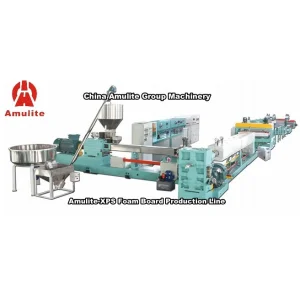
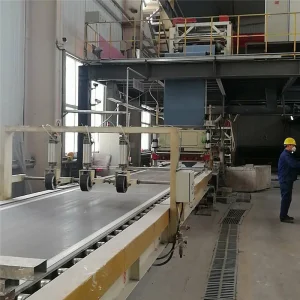
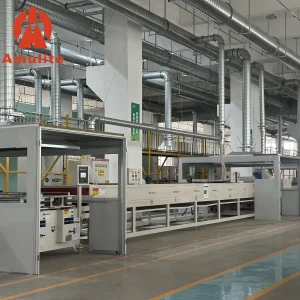
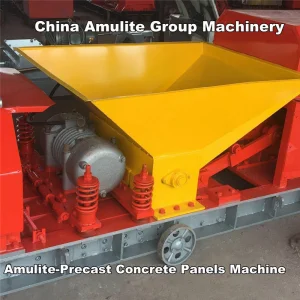
Browse our specialized product matrix featuring advanced foam board lines, mineral wool processing equipment, precast concrete plant systems, and surface coating technology.
In-depth responses to high-intent engineering, financial, and operational queries from global project buyers and plant investors.
Depending on local cement/fly-ash prices and local market square-meter panel selling rates, a mid-sized plant producing 500,000 m² to 1,000,000 m² per year achieves full capital investment payback within 14 to 22 months. Operating profit margins are significantly enhanced by substituting raw sand with local industrial fly-ash or slag waste.
Lightweight panels reduce building dead-weight by up to 60% compared to traditional brick masonry. During seismic acceleration, the reduced inertial mass generates smaller shear forces on columns and beams. Furthermore, flexible tongue-and-groove joint connections engineered into panel edges dissipate seismic kinetic energy, passing 8.0+ magnitude earthquake simulation tests under ISO and ASTM standards.
A standard 500,000 m²/year continuous vertical battery panel production line requires a covered factory shop floor area of approximately 3,500 to 5,000 square meters, with a minimum ceiling height clearance of 6.5 meters. Required utility hookups include a 250 kW electrical transformer, 1.5 to 2.0 ton/hour steam boiler (or solar heat exchangers), and a closed-loop water treatment system with a flow rate of 15 m³/hour.
Yes. When specified with 5mm to 6mm heavy-duty non-asbestos fiber cement or calcium silicate face sheets and treated with acrylic silicone waterproofing sealants, EPS sandwich panels exhibit exceptional weatherability, wind-load resistance (up to 3.0 kPa positive/negative pressure), and zero water ingress, making them ideal for low-rise and mid-rise exterior facades.
Segregation is prevented via two specialized engineering controls: First, thixotropic rheology modifiers (cellulose ethers and superplasticizers) are injected to increase slurry yield stress. Second, variable-frequency high-shear planetary mixers ensure EPS beads are uniformly encapsulated by cementitious matrix before vertical hydraulic mould filling, preventing buoyancy floating.
AAC block/panel production relies heavily on high-pressure steam autoclaving (12 bar steam pressure at 190°C for 12 hours) to synthesize tobermorite crystalline structures, requiring large pressure vessels and high capital expenditure. In contrast, EPS cement panel lines utilize atmospheric steam curing or thermal chamber drying at lower temperatures (60-80°C), resulting in significantly lower initial machinery capital outlay.
Turnkey supply contracts include 30-45 days of on-site installation supervision, electrical debugging, local raw material trial batching, and comprehensive operator training by senior process engineers. Standard PLC control cabinets use internationally standardized components (Siemens PLCs, Schneider contactors), ensuring spare parts can be acquired locally in over 120 countries.
Lightweight cement panels can be easily chased using standard electric wall cutters to embed electrical conduit channels and junction boxes. The core matrix exhibits high pull-out strength, supporting direct expansion-bolt anchor loads of over 500 N to 1,000 N per anchor point for wall-hung cabinets, TVs, and heavy sanitaryware.