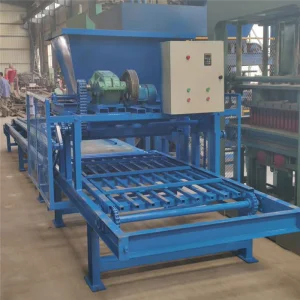
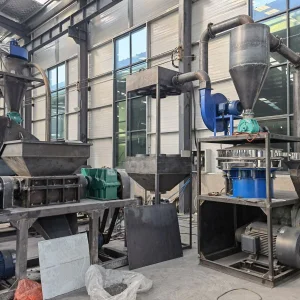
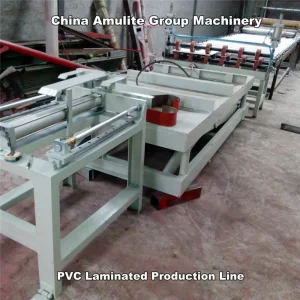
Explore our engineered turn-key manufacturing machinery, crushers, and automated wall panel equipment exported globally.
Understanding the C-S-H crystal matrix, autoclaved hydrothermal reaction, and fiber-reinforcement mechanical properties driving modern high-performance interior wall systems.
In contemporary architectural engineering, Fiber Cement Board Interior Wall Panels represent a major technological leap beyond traditional gypsum drywalls, magnesium oxide (MgO) boards, and timber-based substrates. Modern commercial interiors demand materials capable of maintaining dimensional integrity under high mechanical stress, continuous moisture exposure, and strict fire rating protocols.
At the atomic scale, high-grade fiber cement boards owe their structural density and flexural strength to the formation of Tobermorite (crystalline calcium silicate hydrate phase: $C_5S_6H_5$). During high-pressure steam autoclaving (typically conducted at 170°C to 190°C under 0.8–1.2 MPa of saturated steam pressure for 10 to 14 hours), finely ground quartz silica ($SiO_2$) chemically reacts with hydrated lime ($Ca(OH)_2$) and Ordinary Portland Cement (OPC). This hydrothermal reaction yields an interconnected micro-crystalline gel structure that locks in high flexural modulus while virtually eliminating free calcium hydroxide—thereby preventing efflorescence and dimensional shrinkage over decades of service.
Autoclaved steam curing converts amorphous C-S-H gel into crystalline Tobermorite, providing absolute dimensional stability, zero warping in high-humidity zones, and zero moisture-induced degradation.
Unbleached kraft cellulose pulp engineered with synthetic PVA/PE micro-fibers absorbs tensile energy, preventing brittle catastrophic fractures and raising Flexural Modulus of Rupture (MOR) above 16 MPa.
Composed of 100% inorganic mineral matrix and zero volatile organic compounds (VOCs), achieving EN 13501-1 Class A1 and ASTM E84 Class A zero-flame/zero-smoke performance.
To assist architectural specifiers and structural consultants in material selection, the matrix below highlights key mechanical, thermal, and environmental indices based on standard testing benchmarks (ASTM C1186 / EN 12467).
| Performance Metric | Autoclaved Fiber Cement Board | Standard Gypsum Drywall | Magnesium Oxide (MgO) Board | Calcium Silicate Board |
|---|---|---|---|---|
| Dry Density Class (g/cm³) | 1.30 – 1.70 | 0.65 – 0.85 | 0.95 – 1.15 | 1.10 – 1.40 |
| Flexural Strength (MOR) | > 16 MPa (Category A/Class 4) | 3.5 – 5.0 MPa | 9.0 – 12.0 MPa | 10.0 – 13.0 MPa |
| Water Absorption Rate (%) | < 25% (Controlled capillarity) | > 60% (Swells/Softens) | < 35% (Chloride leaching risk) | < 30% |
| Reaction to Fire (EN 13501-1) | A1 Non-Combustible | A2-s1, d0 (Paper surface burns) | A1 Non-Combustible | A1 Non-Combustible |
| Moisture Movement (24h immersion) | < 0.12% | > 0.45% | < 0.20% | < 0.15% |
| Impact Resistance (ISO 7892) | High Structural Resilience | Low (Dents easily) | Medium - High | Medium |
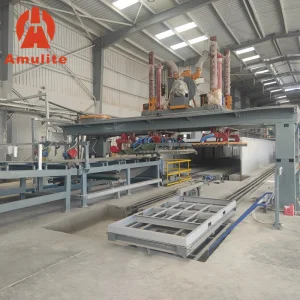
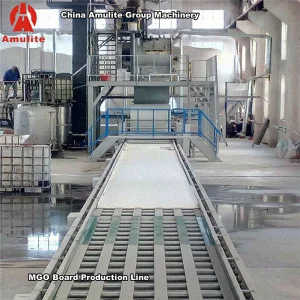
A step-by-step technical decomposition of slurry formulation, Hatschek web-forming, high-tonnage hydraulic pressing, and steam curing.
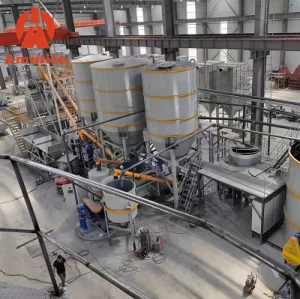
Quartz sand is wet-milled in ball mills to a Blaine fineness of > 350 m²/kg. Cellulose pulp is unbleached and refined through disc refiners until a Schopper-Riegler (SR) freeness of 30–45° is attained, ensuring optimum fiber-cement mechanical interlocking.
Dilute slurry (solid concentration 8–12%) enters multiple rotating sieve vats. Stainless steel mesh cylinders filter out thin microscopic mineral films (~0.2mm per revolution) transferred onto a continuous synthetic felt belt under vacuum dewatering.
The thin wet film wraps around a master forming drum until reaching the target pre-cure board thickness (4mm to 30mm). Dynamic thickness sensors trigger automatic flying shear cutters with sub-millimeter precision.
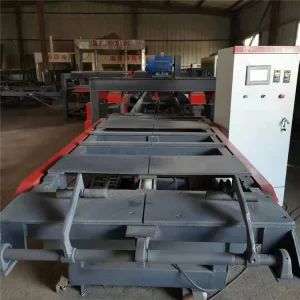
Individual wet green sheets are stacked between steel template plates and subjected to up to 73,000 kN of hydraulic pressure. Compression squeezes out inter-particle capillary water, increasing density from 1.2 g/cm³ to over 1.65 g/cm³.
Pioneering next-generation green building materials through low-carbon binders, nano-silica modification, and digital twin manufacturing systems.
The global fiber cement manufacturing sector is undergoing a profound paradigm shift driven by strict net-zero carbon targets, resource efficiency, and smart building integration. Leading manufacturers are investing heavily in Alternative Supplementary Cementitious Materials (SCMs) and bio-mimetic matrix engineering to eliminate environmental footprints while elevating structural performance.
Replacing up to 60% of traditional OPC with calcined clay, granulated blast-furnace slag (GGBS), and silica fume reduces embodied carbon ($CO_2$/ton) by up to 45% while offering superior acid resistance in industrial environments.
Incorporating colloidal nano-silica accelerates the hydration kinetics of calcium silicates, filling micro-voids at the interfacial transition zone (ITZ) between cellulose fibers and cement paste for enhanced fracture toughness.
Fluoro-silane nanoscale surface treatments chemically bond to matrix silanols, creating a super-hydrophobic barrier (water contact angle > 120°) that sheds surface dirt and guarantees zero water ingress.
Integrating micro-piezoelectric humidity and strain sensors directly inside internal wall panels allows real-time structural health monitoring (SHM) for high-rise commercial developments.
Engineered performance profiles tailored for high-demand commercial, medical, industrial, and modular prefabricated infrastructure.
Acoustic Isolation & Impact Protection: Combined with mineral wool insulated light-gauge steel (LGS) studs, 12mm interior fiber cement panels provide Sound Transmission Class (STC) ratings up to 58 dB. High surface hardness prevents impact denting in high-traffic corridors.
Sterile Surface Engineering: Impervious to continuous chemical disinfection, alcohol sprays, and steam sterilization. Non-porous UV-cured anti-bacterial coatings prevent mold, bacterial colony growth (ISO 22196 tested), and micro-cracking.
Lightweight Structural Integrity: Prefabricated wall modules demand high flexural shear resistance to withstand transport acceleration forces. Fiber cement interior panels offer high fastener pull-out strength without crumbling.
Moisture Impermeability: Unlike gypsum that delaminates upon moisture contact, fiber cement interior panels maintain 100% of their structural stiffness even under prolonged water immersion (ASTM C1186 wet flexural strength retained > 80%).
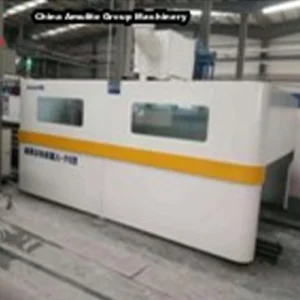
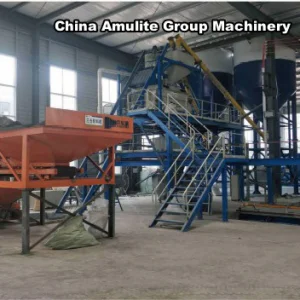
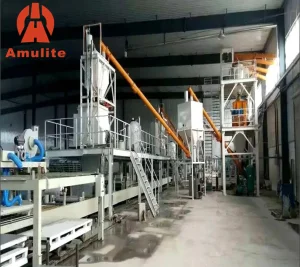
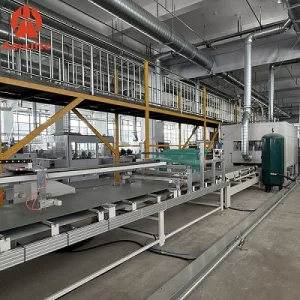
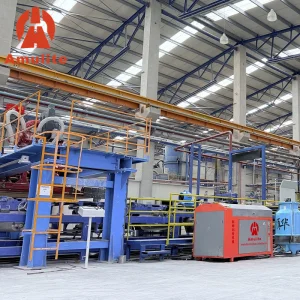
Inside China Amulite Group’s 100,000 m² automated production plant: Engineering precision, automated quality control, and global scale economy.
China’s leadership in advanced building material machinery stems from fully integrated industrial ecosystems. Operating from a massive 100,000 m² state-of-the-art manufacturing campus equipped with CNC machining centers, automated laser cutting lines, and heavy structural assembly bays, China Amulite Group controls every link of the equipment manufacturing value chain.
A strategic framework for EPC contractors, real estate developers, and plant investors evaluating Total Cost of Ownership (TCO) and OEM/ODM specifications.
Direct factory procurement eliminates intermediary markups. Fully automatedPLC systems from Siemens/Schneider reduce on-site labor overhead by up to 65% per square meter of board produced.
High-density fiber cement boards require specialized moisture-proof wrapping, steel-strapped wooden pallet packaging, and precision 20ft container weight distribution (up to 27–28 metric tons payload capacity).
Specify panel surface topography directly: sanded ultra-smooth for direct interior painting, wood-grain embossed for accent feature walls, or perforated for specialized acoustic ceiling applications.
Ensuring seamlessly integrated civil design, regional raw material testing, and strict compliance with global building codes.
All fiber cement interior board production configurations meet or exceed ASTM C1186 Type N/NT (Grade I, II, III) and European Standard EN 12467 (Category A & B) for flexural strength, freeze-thaw durability, and water soak resistance.
Amulite Group process engineers conduct comprehensive laboratory analysis of your locally sourced raw materials (cement grade, quartz sand purity, fly ash silica content) to optimize exact chemical recipes on site.
Resident installation engineers oversee structural civil foundations, mechanical installation, electrical PLC wiring commissioning, and hands-on staff training until commercial output targets are met.
In-depth technical answers addressing common structural engineering, installation, and equipment purchasing inquiries.
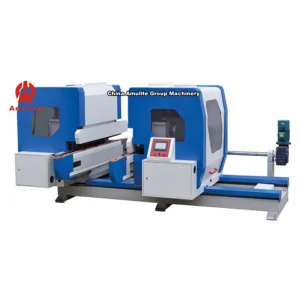
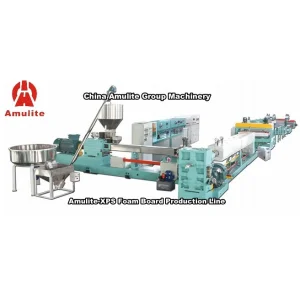
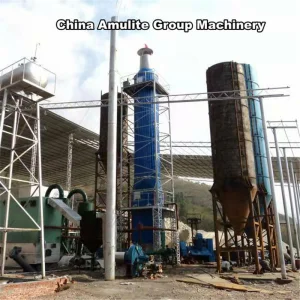
Explore our complete inventory of industrial board machinery, cutting systems, foam equipment, and processing lines.