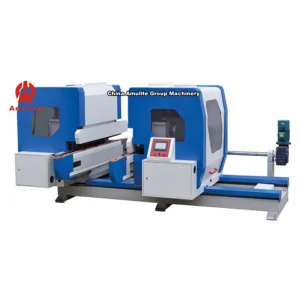
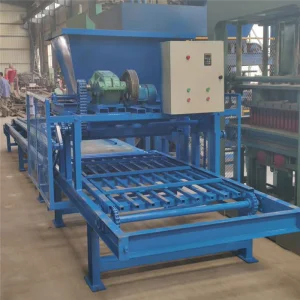
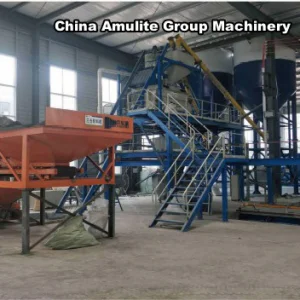
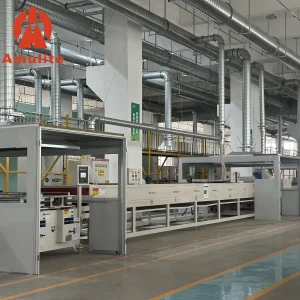
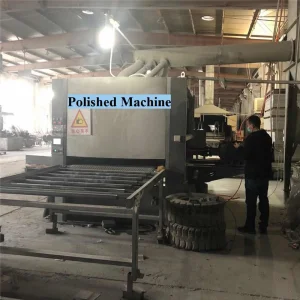
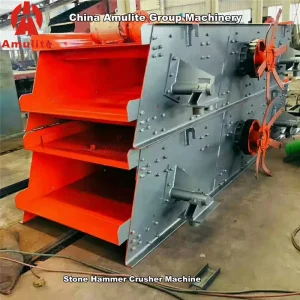
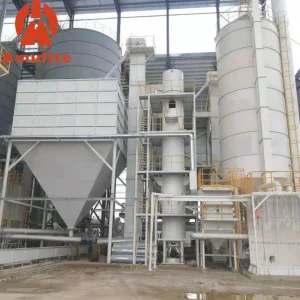
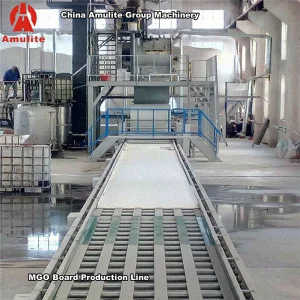
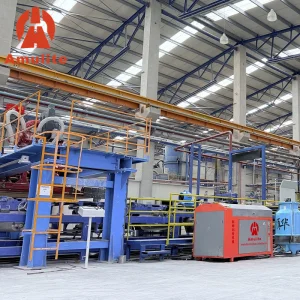
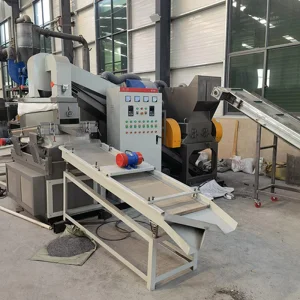
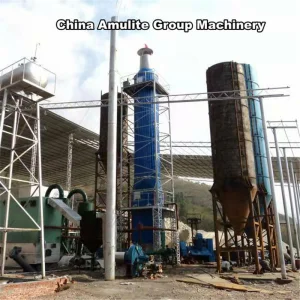
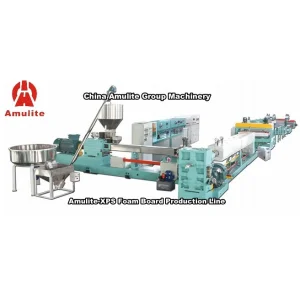
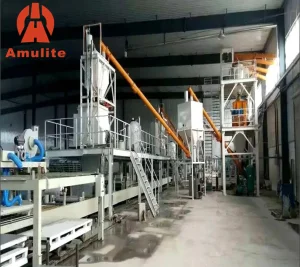
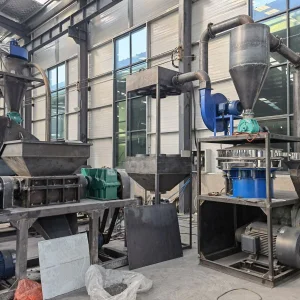
Explore our core industrial plant equipment portfolio, designed for high-yield manufacturing of fiber cement boards, lightweight structural wall panels, and high-density silicate boards.
The global Fiber Cement (FC) Board market is experiencing a structural paradigm shift. Driven by rigorous fire-safety legislation, urbanization in emerging economies, and the global acceleration of modular offsite construction, FC boards have transitioned from specialized architectural components to baseline structural building elements. Valued at over USD 10.2 Billion in recent global industrial surveys, the sector is projected to maintain a compound annual growth rate (CAGR) exceeding 5.8% over the next decade.
Modern Fiber Cement (FC) boards—comprising Portland cement, refined quartz sand, cellulose fibers, and performance-enhancing additives—offer an unyielding defense against moisture degradation, biological rot, thermal shock, and combustion. Unlike traditional drywall or plywood substrates, FC boards deliver structural rigidity alongside an A1 non-combustible fire classification under international standards such as EN 13501-1 and ASTM E136.
APAC accounts for more than 45% of total global FC board output. Leveraging abundant raw mineral deposits, scalable engineering infrastructure, and low supply chain friction, regional manufacturers like China Amulite Group set global benchmarks for high-throughput production lines and competitive unit economics.
With massive investments focused on residential exterior recladding and commercial rainscreen facades, North America remains the highest-margin consumer market. Demand centers on wood-grain lap siding and heavy-duty tile backer boards resilient to freeze-thaw cycles.
Strict EU Green Deal guidelines advocate for sustainable building envelopes. European engineering specifies ultra-low thermal bridging cladding systems, promoting autoclaved calcium silicate and fiber cement variants with low embodied carbon footprints.
Achieving structural reliability in Fiber Cement board production requires precision control over raw material chemistry, slurry rheology, sheet formation, hydraulic pressing, and hydrothermal curing. The modern production process splits into two primary technology routes: Autoclaved Curing (Tobermorite Crystalline Matrix) and Air-Cured (Hydrated Portland Matrix).
The foundation of premium FC board manufacturing relies on precise dosing of inorganic matrix components and organic reinforcers:
In high-capacity plants engineered by China Amulite Group, the Hatschek process remains the pinnacle of sheet-forming efficiency. A continuous felt belt passes over 3 to 5 rotating wire mesh cylinders immersed in low-consistency slurry (solid content ~8-12%). As the cylinders rotate, thin films of fiber-cement matrix (~0.2-0.3 mm) are deposited onto the felt via differential vacuum pressure.
The continuous film is dewatered through high-efficiency vacuum boxes and wound onto a solid accumulation roll (Format Roller) until the exact target board thickness (e.g., 6mm, 9mm, 12mm) is accumulated. The green sheet is then sliced along an automated axial knife and transferred to cutting tables.
| Technical Parameter | Autoclaved Fiber Cement Board | Air-Cured Fiber Cement Board | Calcium Silicate Board |
|---|---|---|---|
| Curing Method | Hydrothermal Autoclaving (170-190°C, 1.0-1.2 MPa) | Ambient Ambient/Moisture Curing (28 Days) | High-Pressure Autoclaving (10-12 Hours) |
| Crystalline Phase | 1.1 nm Tobermorite ($C_5S_6H_5$) Matrix | Amorphous C-S-H Gel Matrix | Pure Tobermorite Matrix |
| Density Range | 1.20 – 1.65 g/cm³ | 1.30 – 1.70 g/cm³ | 0.95 – 1.30 g/cm³ |
| Moisture Movement | ≤ 0.12% (Ultra-Low Shrinkage) | ≤ 0.25% (Moderate Movement) | ≤ 0.08% (Extreme Stability) |
| Flexural Strength (MOR) | ≥ 14.0 MPa (Crosswise) | ≥ 16.0 MPa (Crosswise) | ≥ 10.0 MPa (Lightweight Class) |
| Thermal Conductivity | 0.18 – 0.24 W/(m·K) | 0.22 – 0.28 W/(m·K) | 0.12 – 0.16 W/(m·K) |
Different climate zones, regional building codes, and construction practices demand customized FC board formulations and surface treatments. Understanding these localized engineering demands is critical for project success.
In high-wind and coastal regions (e.g., Florida, Southeast Asia), high-density autoclaved FC boards ($>1.5 g/cm^3$) are specified as exterior cladding backing panels. Coated with hydrophobic fluorocarbon (PVDF) or UV-cured paint layers, they withstand wind-driven rain, salt spray, and extreme solar radiation without delamination or chalking.
For high-rise commercial structures and municipal transit hubs across Western Europe and the Middle East, FC boards serve as core fire barriers. Rated for up to 4 hours of structural integrity (BS 476 Part 22 / UL 263), these boards do not release toxic fumes or smoke when exposed to direct flame temperatures exceeding 1000°C.
In modern residential modular developments across the UK and Scandinavia, FC boards are the industry standard substrate for wet rooms, bathrooms, and commercial kitchens. Their zero-rot composition prevents mold growth and structural weakening caused by moisture migration behind ceramic tiles.
Fast-track prefab housing projects in Latin America and Africa deploy composite EPS sandwich panels encased between 4.5mm-6mm thin fiber cement face sheets. This provides lightweight structural integrity with high thermal insulation values, reducing onsite erection times by up to 60%.
As net-zero carbon targets reshape global manufacturing standards, the Fiber Cement equipment sector is undergoing continuous innovation. Leading engineering firms like China Amulite Group are paving the way for low-carbon, smart manufacturing facilities.
Future production lines integrate up to 35% industrial waste minerals—such as granulated blast furnace slag (GGBS), fly ash, and recycled crushed FC board scrap—significantly reducing reliance on virgin Portland cement and reducing carbon intensity per square meter of finished board.
Next-generation Hatschek lines feature real-time ultrasonic and laser sensors measuring sheet thickness variations to 0.01mm. Coupled with AI algorithms, the system auto-adjusts slurry vats, vacuum suction pressures, and press roll nip gaps dynamically to minimize material waste.
Integration of inline digital printing, deep embossing, and UV-curable nano-ceramic coatings allows manufacturers to replicate high-end granite, timber, and metallic textures directly on the production line, expanding board margins in architectural markets.
As a global pioneer in manufacturing non-metallic building material equipment, China Amulite Group delivers end-to-end engineered plant solutions tailored to client capacity targets ranging from 1 Million to 30 Million square meters per year.
We do not merely supply machinery; we engineer success. Amulite's chemical laboratory analyzes locally sourced cement, sand, and pulp to formulate custom mix designs that optimize mechanical flexural strength while reducing raw material costs.
Spanning over 100,000 m² of modern heavy machining workshops, Amulite precision-manufactures core high-pressure autoclaves, hydraulic stack presses (up to 10,000 Tons capacity), precision forming cylinders, and automated high-speed trimming lines in-house.
With more than 200 production plants commissioned across 60+ countries, our field engineers manage civil layout design, mechanical installation, electrical PLC programming (Siemens/Schneider), and on-site operator training until targeted commercial yield is achieved.
While both boards utilize similar Hatschek manufacturing equipment, their chemistry and microstructures differ significantly. Fiber Cement Board relies primarily on hydraulic Portland cement hydration forming an amorphous C-S-H gel structure. Calcium Silicate Board utilizes a precise 1:1 molar reaction of quartz sand ($SiO_2$) and quicklime ($CaO$) subjected to high-pressure autoclaving ($1.0-1.2 MPa$) to form a pure 1.1 nm Tobermorite crystalline structure ($C_5S_6H_5$). This renders calcium silicate boards significantly lighter in weight, more thermally insulating, and dimensionally stable under severe heat.
Post-forming hydraulic pressing (typically 2,000 to 10,000 Tons total force) squeezes out excess interstitial water, collapses micro-voids within the layered felt structure, and increases board density from ~1.2 g/cm³ up to 1.6-1.7 g/cm³. This process boosts Flexural Strength (MOR) by 30% to 50%, reduces water absorption rates below 20%, and drastically elevates freeze-thaw durability for harsh exterior environments.
Yes. Amulite engineers optimize raw material pulping systems to accept local unbleached kraft wood pulps, waste paper, or hybrid cellulose inputs. During plant commissioning, our process engineers tune disk refiners to adjust freeness (Schopper-Riegler degrees °SR) to match local fiber length and tensile strength characteristics.
A standard 5 Million m²/year autoclaved fiber cement board line requires:
• Saturated Steam: 8 to 12 Tons/hour at 1.25 MPa pressure (supplied by coal, gas, or biomass boilers).
• Installed Electrical Power: Approximately 1200 kW to 1800 kW (380V/415V, 50Hz/60Hz).
• Water Supply: Closed-loop water recycling systems reduce fresh makeup water consumption to ~1.5-2.0 m³ per ton of finished product.
Asbestos fibers are classified as Class 1 carcinogens and are banned in over 70 countries worldwide. Modern FC boards manufactured by China Amulite Group utilize 100% asbestos-free formulations, employing non-hazardous cellulose fibers, synthetic PVA micro-fibers, and natural mineral reinforcements, fully complying with ISO 8336, ASTM C1186, and REACH regulatory standards.
Explore our complete spectrum of machinery systems for non-metallic mineral processing, lightweight block production, and industrial resource recycling.