Explore our leading precast concrete, fiber cement, and lightweight wall panel production systems deployed across global industrial hubs.
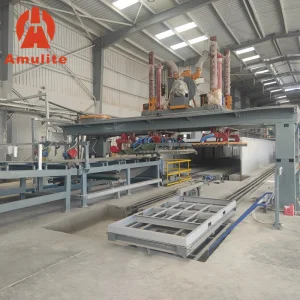
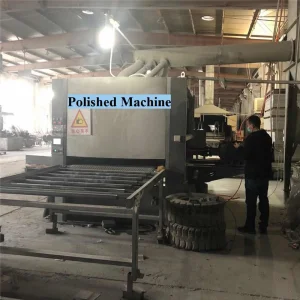
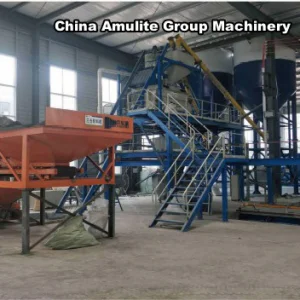
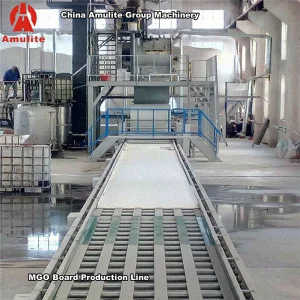
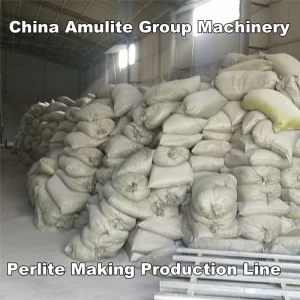
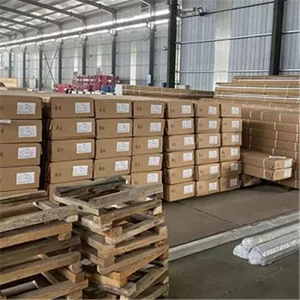
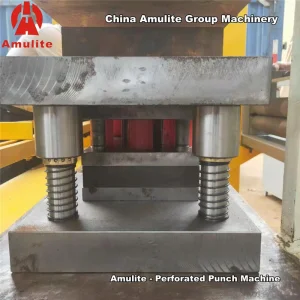
The global construction sector is undergoing a structural paradigm shift driven by stringent decarbonization targets, accelerating labor shortages, and an urgent demand for thermal efficiency. At the core of this industrial evolution is the high-efficiency Concrete Sandwich Panel Machine. By combining high-density Portland cement, lightweight aggregate slurries, and expanded polystyrene (EPS) core technology wrapped within fiber reinforced cement board facings, modern sandwich panel machinery produces composite structural elements that deliver exceptional thermal insulation, seismic damping, and structural velocity.
As a leading equipment innovator, China Amulite Group integrates heavy mechanical engineering with Industry 4.0 automation. This comprehensive analysis evaluates the architectural shifts, supply chain advantages, operational mechanics, and ROI metrics defining high-performance concrete sandwich panel plants worldwide.
Composite EPS concrete sandwich panels achieve thermal conductivity coefficients as low as 0.038 W/m·K, exceeding strict global building energy codes (ASHRAE 90.1 & EU EPBD).
Delivering compressive strengths between 3.5 MPa and 7.5 MPa while maintaining a low volumetric density (550–700 kg/m³), reducing dead-weight loads on foundational structures.
Inorganic calcium silicate and fiber cement facing sheets provide Class A1 non-combustible performance, resisting structural flame penetration for over 4 hours at 1000°C.
Enterprise buyers across North America, the Middle East, Southeast Asia, and Latin America are increasingly shifting from site-cast masonry to modular precast manufacturing plants. Sourcing high-capacity concrete sandwich panel equipment requires evaluating long-term operational costs, material yield, and mechanical versatility.
| Performance Parameter | Standard EPS Concrete Panel | High-Density Structural Sandwich Wall | Amulite Automated Line Benchmark |
|---|---|---|---|
| Density Range (kg/m³) | 650 - 800 kg/m³ | 800 - 1100 kg/m³ | 500 - 750 kg/m³ (Configurable) |
| Compressive Strength | 3.5 MPa | 5.0 MPa | ≥ 5.5 - 9.0 MPa |
| Acoustic Insulation Rating | 38 dB | 42 dB | 45 dB - 52 dB (STC Rated) |
| Daily Output Capacity | 500 m² / day | 1,200 m² / day | 2,000 - 5,000 m² / day (Automated) |
China’s advanced manufacturing eco-system has transformed the production of heavy architectural machinery. The synergy between upstream high-grade structural steel casting, state-of-the-art CNC machining hubs, and deep electrical integration allows companies like China Amulite Group to engineer production machinery that rivals European technical standards at a significantly lower Total Cost of Ownership (TCO).
By leveraging robust supply chains in Hebei and Shandong, Amulite integrates premium Siemens PLC automation controllers, Schneider electric arrays, and heavy-duty hydraulic power units directly into our concrete sandwich panel lines. This supply chain resilience guarantees rapid component delivery, customizable plant design blueprints, and rapid deployment for global engineering contractors.
Quantitative metrics demonstrating the engineering capacity, operational longevity, and production capacity of Amulite precast panel lines.
Engineered versatility allows lightweight EPS concrete sandwich panels to excel in diverse geographical climates and architectural environments.
The tongue-and-groove joint design of sandwich panels, connected via steel rebar anchors and polymer structural mortar, absorbs lateral seismic energy. Deployed extensively across earthquake-prone regions in Japan, Chile, and the Philippines.
Replacing traditional hollow concrete blocks with 90mm or 120mm EPS sandwich wall panels reduces internal wall weight by up to 65%, allowing structural engineers to optimize foundational column sizing and increase usable floor area by 5%.
In Eastern European and North American industrial cold-storage facilities, thick-core precast sandwich walls function as thermal containment envelopes, eliminating thermal bridging and lowering ongoing HVAC operational expenditures.
Complementary machinery engineered for integrated building material production facilities.
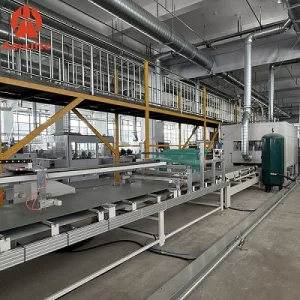
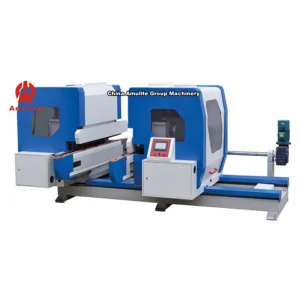
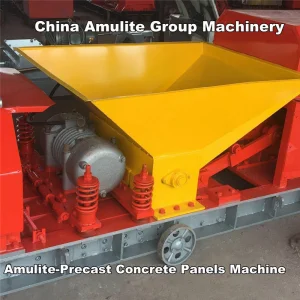
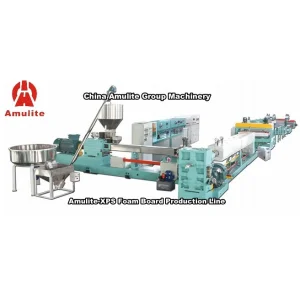
Direct technical responses engineered by Amulite Senior Process Operations Engineers.
Based on global site deployments in Southeast Asia and the Middle East, an automated plant producing 1,500 m² per day typically achieves complete capital payback within 8 to 14 months. Profit margins are driven by low raw material costs (utilizing local OPC cement, sand, and recycled EPS beads) coupled with high regional market demand for rapid modular construction elements.
Yes. Amulite vertical battery mold systems feature adjustable baffle separators. A single mold car can be reconfigured within 20 minutes to produce panel thicknesses ranging from 60mm, 90mm, 120mm, 150mm up to 200mm without changing the primary drive mechanics.
Every turnkey machinery contract includes raw material chemical analysis. Our engineers analyze your locally sourced cement grade, silica sand mesh size, and EPS expansion ratio in our laboratory, creating a customized mix formulation that guarantees required MPa compressive strength and zero surface cracking.
A standard 1 million m²/year capacity line requires an indoor workshop area of approximately 2,500 to 4,000 square meters with a minimum clear height of 6 meters. Key utilities include a 150 kW electrical connection, 1.0 to 1.5 t/h steam boiler supply for curing, and an industrial water supply.