High-precision continuous roll forming, block moulding, and automatic lamination systems designed for international building material manufacturers.
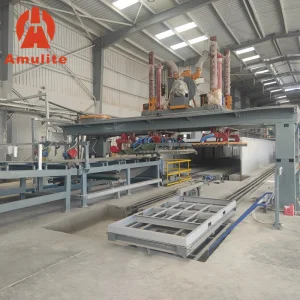
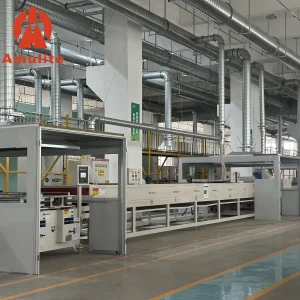
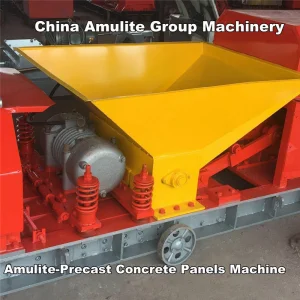
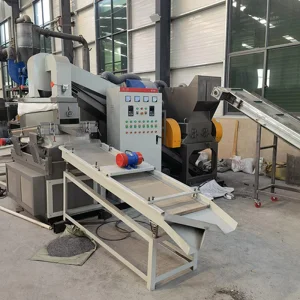
The global demand for energy-efficient commercial envelope systems has positioned continuous sandwich roof panel production lines at the absolute center of modern industrial architecture.
Driven by strict Net-Zero targets, building envelope specifications now mandate high thermal resistance (R-values > 30 hr·ft²·°F/Btu) and near-zero air infiltration, making PIR/PUR sandwich panels the global gold standard.
Polyisocyanurate (PIR) chemistry has overtaken traditional PUR, achieving B-s1, d0 ratings under EN 13501-1 and FM 4880 approval, essential for insurance-approved logistics hubs.
Rapid expansion of pharmaceutical and fresh-food logistics requires high-density insulated roof panels with specialized tongue-and-groove joint geometry to prevent thermal bridging.
Modern steel structure buildings (PEBs) utilize pre-cut, long-span sandwich roof sheets (up to 18 meters) featuring integrated solar standing seams for rapid installation.
A industrial-grade continuous sandwich roof panel manufacturing plant operates through synchronized electro-mechanical sub-systems. Below is the technical process workflow executed by leading global suppliers.
Uncoiling dual steel coils (0.4mm–0.8mm PPGI/SS) with automatic tension control. 22 to 28 roll forming stations craft the external trapezoidal rib profile and internal micro-ribbed or flat surface.
Substrate sheets undergo high-frequency corona discharge and infrared pre-heating (40°C–50°C) to maximize surface tension, ensuring chemical adhesion between foam and steel metal facing.
High-pressure 4-component or 6-component chemical mixing heads (200 bar) dynamically injection-lay Polyol, Isocyanate, Catalyst, and Pentane onto the lower steel sheet via high-speed oscillating gantries.
A 24m to 36m long double-belt slat conveyor calibrated with oil-heated or electric thermal blankets (60°C) provides uniform hydraulic pressure during polyurethane cream phase expansion and curing.
Continuous tracking servo-driven flying saws cut panel sections at speeds up to 15 m/min without stopping the main conveyor line, achieving cut tolerances within ±1.0mm.
A multi-stage cooling cooling rack (up to 40 cooling positions) dissipates exothermic reaction heat to eliminate post-expansion panel bowing before automated vacuum stacking and film wrapping.
Compare core core-insulation line configurations across PIR/PUR, Mineral Wool/Rock Wool, and EPS/XPS continuous manufacturing machinery.
| Technical Parameters | PIR / PUR Continuous Line | Mineral Wool / Rock Wool Line | EPS / XPS Sandwich Line |
|---|---|---|---|
| Core Material Type | Polyisocyanurate / Polyurethane | High-Density Mineral Fibers (100–140 kg/m³) | Expanded / Extruded Polystyrene |
| Fire Safety Rating | EN 13501-1 Class B-s1, d0 / FM 4880 | Class A1 Non-Combustible (EN 13501-1) | Class B2 / B1 (Flame Retardant) |
| Thermal Conductivity (λ) | 0.019 – 0.022 W/m·K (Best Insulation) | 0.038 – 0.044 W/m·K | 0.030 – 0.036 W/m·K |
| Line Speed Range | 4.0 – 15.0 m/min | 3.0 – 8.0 m/min | 4.0 – 10.0 m/min |
| Core Dosing System | High-Pressure 4–6 Component Metering | Auto Mineral Wool Slab Slitting & Turning | Adhesive Spraying & Rib Insertion |
| Typical Applications | Cold Storage, Logistics, High-End PEBs | Fire-Rated Warehouses, Processing Plants | Temporary Housing, Agricultural Sheds |
| Machine Investment Scale | High Capital Investment (Tier-1 Tech) | Medium to High Capital Investment | Low to Medium Investment Scale |
Modern sandwich roof panel machines produce specialized panel profiles configured for severe structural, environmental, and thermal requirements across major commercial markets.
Designed with deep trapezoidal crests and hidden fastener overlap systems. The integration of capillary break grooves prevents water back-siphonage even under tropical heavy rainfall conditions and 2-degree low roof pitches.
Specialized roof panel making lines incorporate standing seam crowns directly onto the upper steel profile. This allows direct clamp-mounting of solar PV brackets without penetrating the outer metal skin, avoiding roof leaks.
For livestock facilities and chemical production plants, machinery lines bond FRP/GRP (Fiberglass Reinforced Plastic) sheets or aluminum foil to the interior surface, offering immunity against ammonia gas and acid vapors.
When enterprise buyers evaluate leading Sandwich Roof Panel Making Machine Manufacturers & Suppliers, technical due diligence centers on four major operational vectors.
Chemical reaction systems involving Pentane (C5H10) demand explosion-proof ATEX/IECEx certified zones. Polyol and Isocyanate blending tanks must comply with ASME Section VIII or EU PED (Pressure Equipment Directive) specifications.
The core caterpillar belt defines surface flatness and core density distribution. Top-tier manufacturers utilize heavy structural steel frames with CNC-milled track plates, maintaining less than 0.1mm deflection across 30 meters under thermal loads.
Proprietary PLC control systems increase long-term downtime risks. Leading suppliers standardize on Siemens S7-1500 PLC platforms, Profinet communication protocol, and open SCADA architecture for seamless ERP/MES plant integration.
Installation requires specialized chemical process engineering. Turnkey suppliers deploy commissioning teams for line calibration, raw material formulation optimization (Polyol/MDI ratio balancing), and operator safety training.
The next generation of sandwich roof panel production equipment integrates artificial intelligence and sustainable raw material processing.
Inline microwave sensors measure real-time core foam density and cell structure immediately after double-belt exit. Machine learning algorithms automatically adjust chemical pump dosing speeds to eliminate resin waste.
Next-gen foaming technology transitions to Hydrofluoroolefins (HFOs) and CO2-blown systems, reducing Global Warming Potential (GWP) to < 1 while achieving superior thermal insulation properties.
Robotic vacuum grippers stack roof panels in alternating orientation (tongue-to-groove interlock) to shrink package volume by 30%, followed by automatic stretch-wrapping and strap banding.
Expert answers to critical engineering, investment, and operational questions asked by factory owners and EPC contractors.
Continuous lines perform roll forming, chemical dosing, double-belt curing, and flying cutting in one uninterrupted high-speed flow (speeds up to 15m/min), ideal for high-volume standard panels. Discontinuous lines mold pre-cut metal sheets using individual stationary presses, suitable for complex custom panel shapes or low-volume specialized cold-room doors.
PIR features a higher Isocyanate-to-Polyol index ratio (>200), forming strong isocyanurate ring structures under thermal polymerization. This grants PIR panels superior fire resistance (charring without melting), enabling them to meet European EN 13501-1 B-s1, d0 standards and FM Approval standards required by modern industrial insurers.
A standard 30m continuous PIR/Mineral Wool line requires a bay length of approximately 100 to 120 meters, a width of 18 to 24 meters, and a minimum crane hook height of 6 meters. This allows adequate space for raw material coil storage, chemical storage tanks (Pentane/MDI/Polyol), cooling conveyors, and automated packing equipment.
Yes. Modern flexible continuous sandwich panel lines utilize quick-change cassette roll forming stations or adjustable width roll formers. By switching the upper roll former cassettes, the line converts between trapezoidal roof profiles (3-rib or 5-rib) and architectural flat, micro-ribbed, or secret-fix wall panels.
Pentane is a hydrocarbon blowing agent with zero ODP and low GWP, but it is highly flammable. Machinery suppliers must implement gas detection sensors, positive-pressure ventilation ducts, anti-static grounding systems, explosion-proof ATEX motors, and nitrogen purging systems around the chemical mixing head and chemical premix station.
Complete specialized machinery ranges for board extrusion, recycling, stone crushing, and automated packaging systems.
Request a customized feasibility study, line layout design, and chemical metering proposal tailored to your target regional panel output.