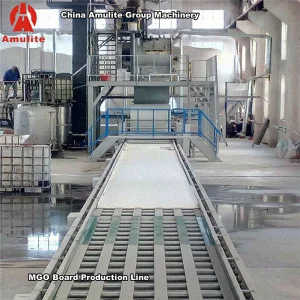
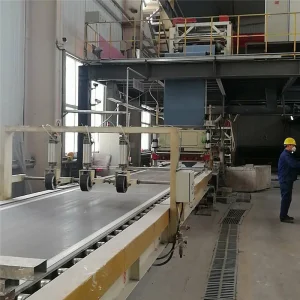
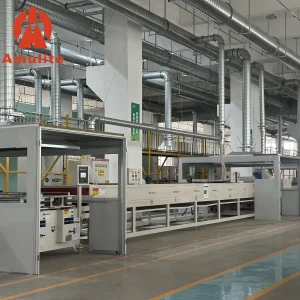
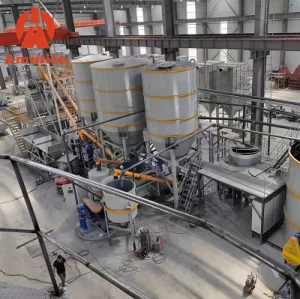
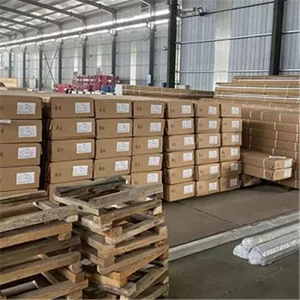
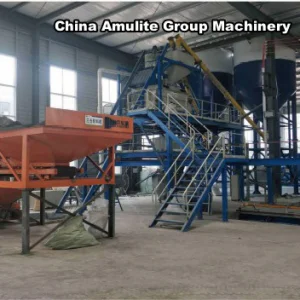
Explore our global portfolio of continuous automated production lines, ranging from high-capacity roofing sheet forming to autoclaved aerated concrete and composite wall panel systems.
The global building envelope and industrial roof cladding sector is undergoing a profound technological transformation. Driven by rapid urbanisation, expanding logistics hubs, and stringent environmental policies demanding thermal efficiency and structural longevity, modern construction enterprises are phasing out manual or semi-automated metal profiling systems. Today, selecting a famous roofing sheet making machine supplier and company is a critical strategic decision that impacts factory throughput, raw material yield, and final architectural performance.
Roofing sheet making machinery—encompassing cold roll forming systems, corrugated steel tile machines, trapezoidal profile lines, double-layer panel formers, and integrated insulated sandwich panel lines—serves as the backbone of modern pre-engineered building (PEB) infrastructure. As high-tensile steel alloys, galvalume (Alu-Zinc), prepainted galvanized steel (PPGI), and fiber-reinforced composite sheets dominate contemporary architectural engineering, the machinery required to process these materials must meet unprecedented mechanical precision standards.
From an engineering perspective, modern roofing sheet manufacturing is no longer limited to simple geometry shaping. Advanced systems now integrate automated hydraulic decoiling, high-precision progressive forming passes, dynamic length encoder tracking, post-shearing anti-burr hydraulic blades, and automated robotic stackers. Leading equipment manufacturers, such as China Amulite Group, have established global benchmarks by merging heavy-duty mechanical engineering with intelligent digital control systems, ensuring operational stability across multi-shift, high-volume production environments.
Analyzing search patterns and international trade data reveals distinct regional procurement priorities among commercial developers, roofing contractors, and building material machinery importers:
Industrial buyers in North America and Western Europe prioritize continuous high-speed roll forming lines (capable of 35-50 meters per minute) equipped with quick-change cassette systems to switch profile tooling within minutes, drastically reducing downtime.
In emerging markets across Southeast Asia, Africa, and Latin America, procurement leads seek versatile double-layer roofing machines (combining corrugated wave profiles and trapezoidal rib profiles on a single machine footprint) to maximize factory floor space efficiency.
Coastal and tropical construction projects demand rollers plated with hard chrome (0.05mm thickness) and high-grade Cr12MoV die steel, engineered to withstand abrasive galvalume and thick color-coated coils without scratching protective paint layers.
| Performance Specification | Standard Market Entry Machines | Amulite Heavy-Duty Enterprise Grade |
|---|---|---|
| Roller Shaft Metallurgy | 45# Carbon Steel (Solid/Hollow) | Forged 45# Steel / 40Cr with High-Frequency Thermal Quenching |
| Forming Station Count | 10 - 14 Stations | 18 - 24 Progressive Stations (Zero Internal Stress Profile) |
| Hydraulic Shear Blade | Cr12 Standard Steel Cutters | Cr12MoV Heat-Treated Vacuum Quenched Die Steel (HRC 60-62) |
| Drive Mechanism | Single Chain Drive System | Heavy-Duty Gearbox / Dual-Side Independent Chain Drive |
| Automation & Control | Basic Button PLC Unit | Siemens PLC + Touch Screen HMI + Frequency Inverter Sync |
To achieve superior structural stability and flawless aesthetic profiles, an industrial roofing sheet making machine operates as a unified multi-stage electromechanical assembly. Each module must execute its designated operation with sub-millimeter precision:
Equipped with a hydraulic expansion core, heavy-duty mandrel, and electric brake assembly. Handles coil weights from 5 to 15 tons with an automatic sensor arm tracking coil feed speed to prevent metal slack or structural stretching.
Includes adjustable lateral guiding rollers to align the steel strip perfectly along the center axis of the forming system. Integrated manual/hydraulic pre-shear cuts the tail end of coils without re-threading the entire machine line.
The heart of the system. Utilizing finite element analysis (FEA) simulated forming passes, steel coil is gradually bent into its target profile. Progressive deformation minimizes internal stress, preventing sheet twisting, oil-canning, or edge warping.
A rigid hydraulic post-shearing frame equipped with profile-matched upper and lower blades. Modern high-speed lines utilize flying shear technology, cutting panels to exact lengths while the line remains in continuous motion.
As large-scale industrial projects transition toward integrated pre-fabricated building components, modern factories require modular machine integration. A leading roofing sheet machine supplier must provide broader plant ecosystem engineering capabilities, connecting metal forming equipment with insulated structural panel lines.
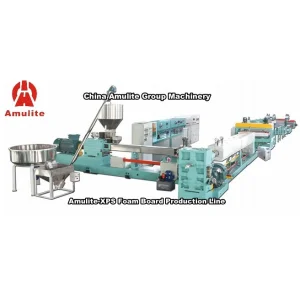
Roofing sheet profile formers serve as the top and bottom skin feeds for continuous polyurethane (PU/PIR) and expanded polystyrene (EPS) sandwich panel lines. Double-layer metal cladding integrated with fireproof core materials provides high thermal resistance for cold-storage facilities and cleanrooms.
In hybrid commercial architecture, corrugated metal roofing works in tandem with heavy-duty fiber cement underlayments and calcium silicate ceiling systems. Turnkey equipment integration guarantees structural load compatibility between metal roofs and rigid wall panel structures.
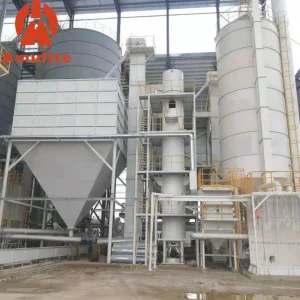
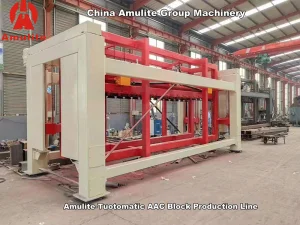
Automated building projects combine autoclaved aerated concrete (AAC) wall blocks with lightweight long-span metal roofing sheets, drastically reducing total dead load structural requirements while meeting seismic engineering codes globally.
Investing in capital machinery for international deployment requires stringent compliance with regional industrial standards, safety regulations, and electrical grid protocols. High-tier suppliers adhere to robust quality assurance frameworks:
Custom multi-voltage transformers and PLC programming accommodate global power supplies ranging from 220V/60Hz 3-Phase (Americas) to 380V/50Hz (Asia/Europe) and 415V/50Hz (Australia/UK), ensuring plug-and-play installation.
Machinery is equipped with full-length protective safety meshes, emergency cut-off sensors, optical light curtains, and CE-marked electrical enclosures, shielding operators from rotating pinch points and high-pressure hydraulic shear hazards.
Deploying senior field engineers to supervise civil foundation prep, mechanical assembly, electrical wiring, calibration of sheet parameters, and comprehensive hands-on operational training for localized factory personnel.
The next decade of roofing sheet manufacturing will be defined by smart automation, real-time telemetry, and sustainable material processing:
Integration of high-speed laser scanners along the roll forming bed to continuously measure profile cross-sections in real-time. Automated servo motors adjust individual roller station gaps dynamically to correct micro-variations in coil sheet thickness.
Building-Integrated Photovoltaics (BIPV) are driving demand for specialized standing seam roof profiles that incorporate integrated solar panel mounting ridges without puncturing the weather-resistant metallic skin.
Transitioning to eco-friendly biodegradable hydraulic fluids and energy-regenerative servo drives that capture kinetic braking energy, reducing overall factory electricity consumption by up to 25% per manufactured ton.
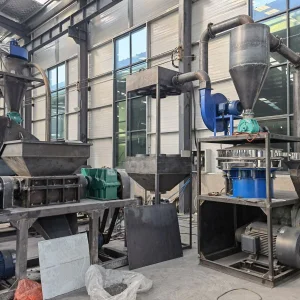
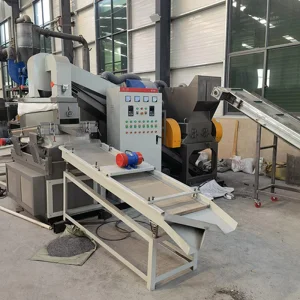
Explore additional structural wall panel lines, board production machinery, and green recycling equipment manufactured by China Amulite Group.