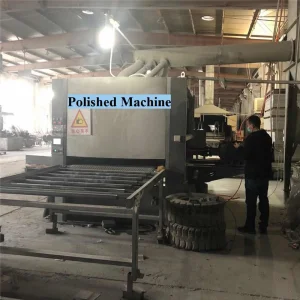
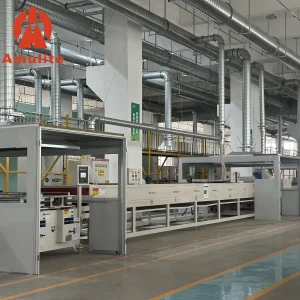
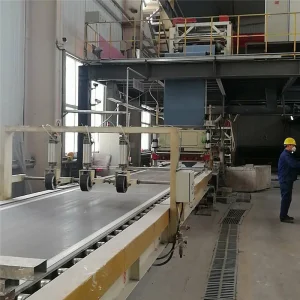
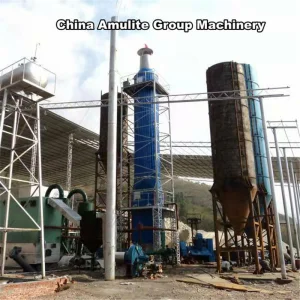
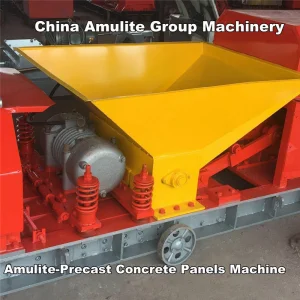
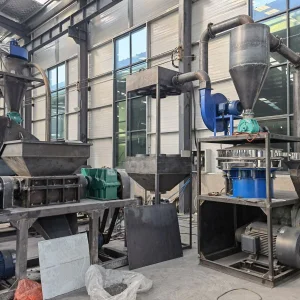
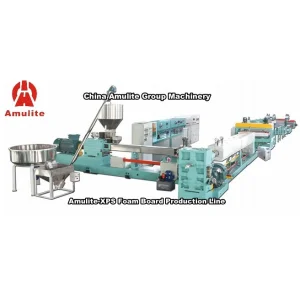
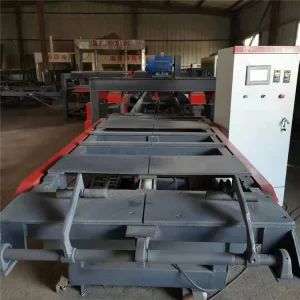
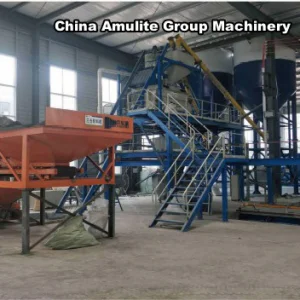
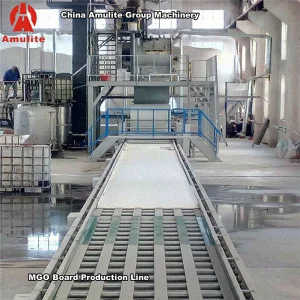
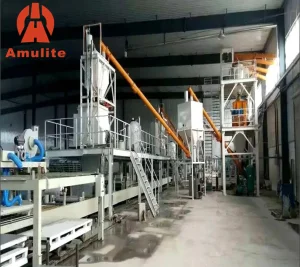
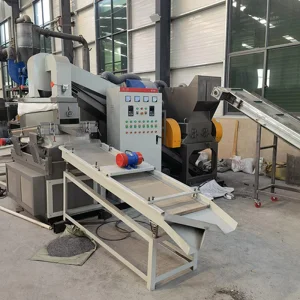
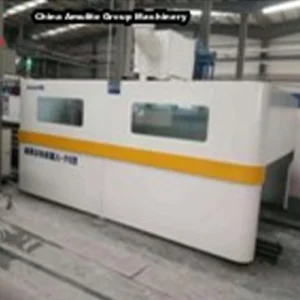
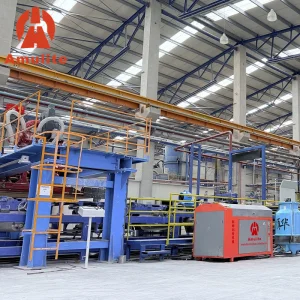
Engineered for high volumetric efficiency, thermal performance, and continuous commercial output. Explore our primary manufacturing lines and finishing systems.
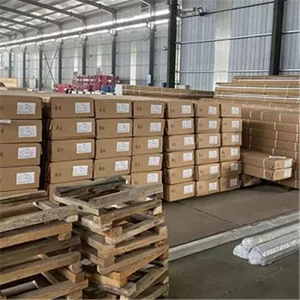
The global construction sector is undergoing a paradigm shift from traditional cast-in-place masonry to off-site industrialized construction (MMC). Industrialized precast concrete machinery represents the core of this transition.
The acceleration of global urbanization, coupled with systemic shortages of skilled site labor and rising regulatory pressure for carbon footprint reduction, has established precast concrete wall panel making machines as indispensable structural capital assets. Modern precast panel factories operate not merely as equipment plants, but as integrated manufacturing ecosystems where concrete mix designs, automated reinforcing grids, hydration curing control, and precision demolding operate synchronously.
Leading global manufacturers are shifting from standalone extrusion units to automated vertical battery mold plants and continuous lightweight EPS sandwich cement wall panel production lines. These automated factories allow building material enterprises to achieve dimensional tolerances within ±1.0 mm while elevating output rates to over 1,500,000 square meters annually per plant line.
Quantifiable performance parameters delivered by state-of-the-art wall panel production plants operating globally.
Choosing the correct equipment typology depends on wall structural requirements, core densities, thermal performance, and local building code standards.
Utilized primarily for prestressed hollow core concrete wall panels. High-frequency shear compaction technology forces low-slump concrete through specialized mandrel formers. Ideal for non-loadbearing partition walls and perimeter boundary walls requiring high bending tensile resistance.
Stationary vertical batteries designed for solid concrete panels and insulated architectural sandwich walls. Vertical molding saves over 70% floor space compared to flat circulation lines while ensuring smooth finish quality on both sides of the concrete element without manual troweling.
Combines fiber cement or calcium silicate board facing skins with a lightweight core matrix consisting of expanded polystyrene (EPS) beads, Portland cement, fly ash, and specialized foaming agents. Delivers rapid assembly for high-rise acoustic interior division walls.
The matrix below outlines key engineering metrics evaluated by plant investors and EPC contractors during factory sizing and equipment procurement.
| Machine Typology | Target Wall Panel Type | Standard Thickness | Core Density Range | Daily Output / Line | Primary Application |
|---|---|---|---|---|---|
| High-Speed Extruder | Prestressed Hollow Core Panels | 75 mm – 200 mm | 1,800 – 2,400 kg/m³ | 800 – 1,400 m² | Industrial partition, boundary walls |
| Vertical Battery Mold | Solid Heavy Concrete / Sandwich | 100 mm – 300 mm | 2,200 – 2,500 kg/m³ | 400 – 800 m² | Load-bearing exterior facades, shear walls |
| Automatic EPS Line | Lightweight Composite Sandwich | 60 mm – 200 mm | 450 – 750 kg/m³ | 1,200 – 3,000 m² | High-rise residential interior partitions |
| Tilting Pallet Circulation | Architectural Cladding Panels | 120 mm – 350 mm | 2,000 – 2,400 kg/m³ | 600 – 1,200 m² | Commercial facades with integrated insulation |
Precast concrete wall panel making machines must be configured dynamically to account for localized climatic constraints, seismic requirements, raw material availability, and regional construction codes.
In hot desert environments like Saudi Arabia, the UAE, and Qatar, building regulations mandate stringent U-values for exterior wall envelopes. Precast wall panel factories in this region focus on 3-ply insulated sandwich panels featuring an inner load-bearing concrete layer, an integrated XPS/rigid polyurethane insulation core, and an outer architectural concrete skin.
Machinery installed here incorporates specialized chilled water batching systems and automatic steam curing units to prevent early water evaporation and thermal cracking during initial cement hydration.
To address severe urban housing deficits, markets in Indonesia, the Philippines, Vietnam, and Mexico demand high-capacity EPS lightweight hollow core panel machinery. Panels must be lightweight enough to allow manual handling or light crane installation inside confined urban sites.
Machinery setups in these regions utilize locally sourced pozzolanic materials, fly ash from thermal power plants, and rice husk ash additives to lower raw material cost while increasing panel flexural toughness and fire endurance.
Emerging advancements driving the next decade of precast wall panel automation, material science, and Industry 4.0 smart factory integration.
Integrating wireless embedded IoT sensors inside panel molds to continuously monitor internal concrete temperature, electrical resistivity, and compressive strength development in real time. AI algorithms automatically trigger mold opening hardware the precise minute required strength (15-20 MPa) is reached, reducing energy consumption and maximizing mold turnaround cycles.
Transitioning from manual steel mesh positioning to fully autonomous 6-axis robotic arms. Industrial robots read CAD/BIM data directly, precision-cut reinforcement bars, weld structural wire grids, and position lifting anchors into vertical mold cavities with sub-millimeter positioning accuracy.
Next-generation precast wall panel making machines are re-engineered to pump, extrude, and compact 100% Portland-cement-free alkali-activated materials (geopolymers) and LC3 calcined clays. This transition cuts embodied carbon per panel by up to 70% while improving chemical acid resistance and fire performance.
Building a profitable precast concrete wall panel factory requires complete integration of raw material handling, batching, forming, curing, and automated logistics systems.
Turnkey precast machinery lines manufactured by leading Chinese and global OEM facilities adhere strictly to international quality and structural engineering codes:
Expert answers to critical operational, economic, and technical questions asked by factory investors, plant engineers, and project developers.
Explore our complete catalog of specialized wall panel machinery, precision four-side cutting units, AAC block machinery, and recycling processing equipment.