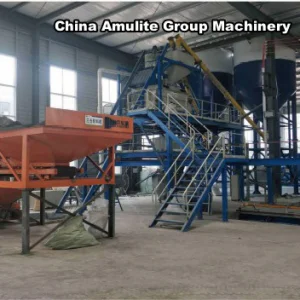
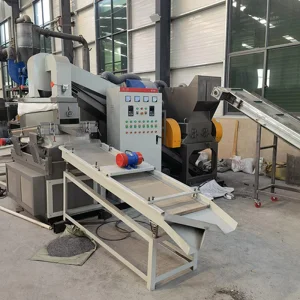
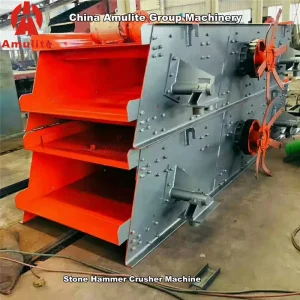
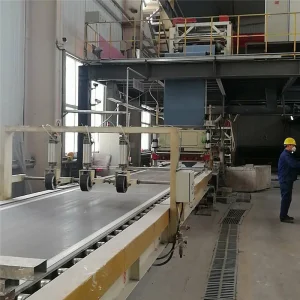
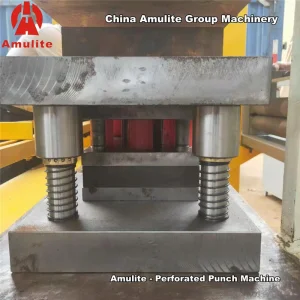
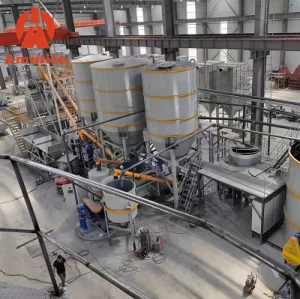
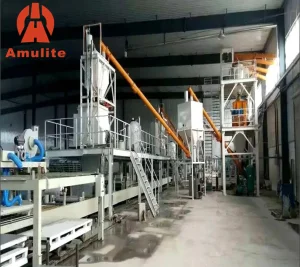
Explore our foundational machinery line-up engineered for fiber cement, calcium silicate, AAC blocks, gypsum boards, and automated industrial processing.
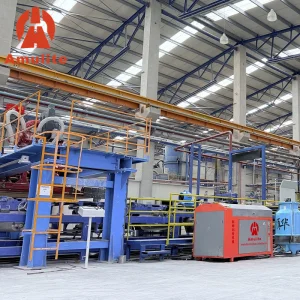
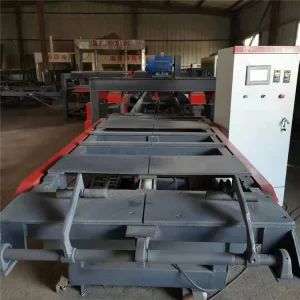
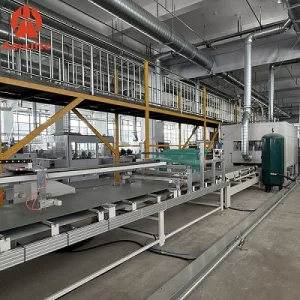
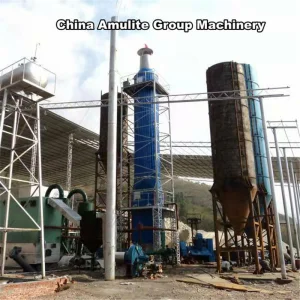
A authoritative overview of non-metallic panel production technologies, processing parameters, and structural dynamics.
The global demand for pre-fabricated, non-combustible, and lightweight structural elements has fundamentally transformed building material machinery engineering. Modern panel making machines are no longer standalone mechanical units; they function as integrated cyber-physical production systems capable of continuously processing slurry, mineral fibers, polymer matrices, and synthetic additives under precise environmental conditions.
Leading manufacturing entities rely on specialized slurry preparation, high-vacuum dewatering, precision continuous forming cylinders (Hatschek wet process), and hydro-thermal synthesis autoclaving. Fiber cement boards and calcium silicate panels require complex chemical reactions where silica ($SiO_2$) and lime ($CaO$) react under saturated steam conditions ($180^\circ\text{C}$ to $195^\circ\text{C}$ at $1.0 - 1.3\text{ MPa}$) to synthesize Tobermorite crystalline structures ($5CaO \cdot 6SiO_2 \cdot 5H_2O$). This mineral transformation confers high flexural strength, dimensional stability, and Class A1 fire immunity to the finished boards.
| Panel Category | Primary Machinery Type | Raw Material Matrix | Curing / Hardening Process | Standard Thickness Range |
|---|---|---|---|---|
| Fiber Cement Board | Hatschek 3 to 5 Vat System | Cement, Silica Sand, Cellulose Pulp, Micro-Silica | Autoclave Curing ($12-14\text{ hrs}$) / Air Curing | 4 mm – 30 mm |
| Calcium Silicate Board | Flow-on / Hatschek Layering | Lime, Quartz Powder, Cellulose Fiber, Wollastonite | Hydrothermal Autoclave Synthesis | 5 mm – 25 mm |
| EPS Cement Sandwich Panel | Vertical / Horizontal Mould Car Line | OPC Cement, EPS Beads, Fly Ash, Faceline Sheet | Thermal Chamber / Hydration Curing | 60 mm – 200 mm |
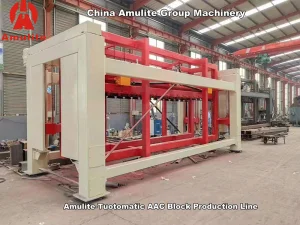
| AAC Block / Wall Panel | Tilting Cutter & Spreader Rig | Silica Sand/Fly Ash, Cement, Lime, Aluminum Powder | High-Pressure Autoclave ($1.2\text{ MPa}$) | 75 mm – 300 mm |
How concentrated industrial clusters, advanced CNC manufacturing, and integrated component ecosystems deliver uncompromised quality and cost efficiencies for global buyers.
Concentrated regional industrial bases across China enable rapid sourcing of certified pressure-vessel grade steel plate (Q345R/Q245R), heavy-gauge seamless pipe, and precision-ground forging components without international supply chain bottlenecks.
From 12-meter gantry milling machines for frame bed machining to dynamic balancing rigs for 1.6m diameter sheet-forming cylinders, key components undergo in-house machining to guarantee mechanical concentricity below $\le 0.03\text{ mm}$.
Standardized integration of Siemens S7-1500 PLC control architectures, Schneider low-voltage switchgear, SEW Eurodrive reducers, and ABB variable-frequency drives ensures effortless global spare parts sourcing and regional maintenance compatibility.
Emerging developments in intelligent automation, low-carbon raw material formulations, and predictive maintenance frameworks.
The traditional trial-and-error approach to pulp refining and cement slurry formulation is rapidly giving way to closed-loop digital monitoring. Next-generation panel machinery incorporates laser-thickness sensors, online ultrasonic density scanners, and radiometric moisture sensors directly onto the green-sheet conveyor line. If slurry viscosity fluctuates due to ambient temperature shifts or raw material particle size distribution (PSD) variance, the SCADA system automatically adjusts chemical flocculant dosing pumps and vacuum dewatering pressure levels in real-time.
With stringent global carbon taxation policies, plant investors demand machinery capable of processing high-volume industrial solid waste. Current machine roadmaps prioritize:
Tailored production line engineering for structural cladding, fire protection, modular construction, and high-end surface finishing.
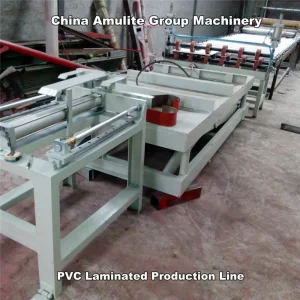
Integrated production lines for EPS Sandwich Cement Wall Panels and Hollow Core Board units. These machinery suites deliver lightweight, tongue-and-groove interlocking panels that reduce field construction labor by up to 60% while providing superior thermal resistance ($R\text{-value} \ge 2.5\text{ m}^2\cdot\text{K/W}$).
Autoclaved Calcium Silicate and MGO board production lines engineered specifically to manufacture thin, ultra-dense ($1.3 - 1.5\text{ g/cm}^3$) interior partition boards that provide 2 to 4 hours of certified passive fire protection according to EN 1364-1 and ASTM E119 testing criteria.
Heavy-duty Fiber Cement Board systems combined with downstream OEM 1300 II Edge Trimming, Sanding, and Automated UV/Fluorocarbon Coating lines. Delivers weather-resistant, UV-stable textured siding and wood-grain pre-finished panels for commercial facades.
Essential criteria for plant investors, EPC contractors, and factory general managers evaluating equipment suppliers.
Acquiring a complete industrial board line represents a significant capital expenditure ($1.5M to $15M+ USD). Technical procurement officers should mandate clear operational standards in their Request for Proposal (RFP) documentation:
End-to-end site installation, raw material slurry adaptation, local labor training, and lifecycle support.
Local mineral deposits vary worldwide. Senior process engineers conduct lab testing on local OPC cement, fly ash, silica sand, and recycled pulp to engineer a customized batching formula that guarantees target flexural strength and density.
Resident mechanical, civil, and automation engineers handle foundation checking, equipment installation supervision, line alignment, pipeline integration, and electrical testing, remaining on site through full commercial output verification.
Comprehensive training protocols for plant personnel covering daily preventative maintenance routines, emergency stop protocols, PLC operational troubleshooting, and quality control (QC) sampling practices.
In-depth technical answers addressing capacity selection, raw material compatibility, energy footprints, and project payback periods.
The payback period generally ranges between 18 to 36 months, depending heavily on localized cement/silica prices, regional market demand, and plant automation levels. High-capacity lines (e.g., 5 to 10 million m²/year) achieve rapid amortisation through high output efficiency and reduced unit labor costs.
Yes. The wet-end slurry sheet-forming line (Hatschek section, stacking unit, and pre-curing chamber) is identical. To produce autoclaved calcium silicate or fiber cement boards, high-pressure steam autoclaves are integrated into the curing phase, utilizing quartz sand ($SiO_2$). For non-autoclaved boards, the plant relies on hydraulic air-curing rooms and increased cement content.
A standard 5 million m²/year fiber cement board production line typically requires a plant building footprint of 180m (length) × 24m (width) × 8m (clear height). Total connected electrical capacity ranges from 650 kW to 1200 kW, along with a saturated steam supply of 4 to 8 tons/hour at 1.3 MPa pressure.
Automated edge cutting units like the OEM 1300 II utilize dual-axis high-speed carbide or diamond saw blades governed by optical sensors. This guarantees squareness tolerances within ±0.5 mm per sheet and prevents edge spalling, reducing scrap rate to below 1.5% compared to manual or semi-automatic trimming setups.
Equipment destined for European markets must carry CE certification conforming to Machinery Directive 2006/42/EC and Low Voltage Directive 2014/35/EU. Pressure vessels must carry PED 2014/68/EU or ASME certifications, while electrical components should hold UL/CSA marks for North American site approvals.
Complete your factory infrastructure with advanced panel forming setups, secondary processing machinery, and auxiliary recycling systems.