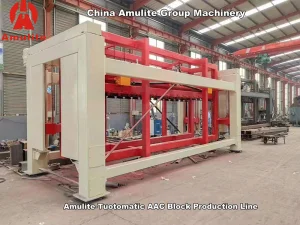
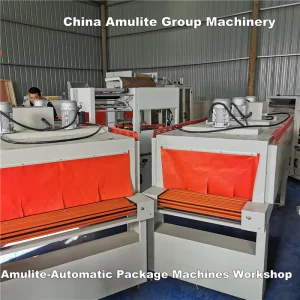
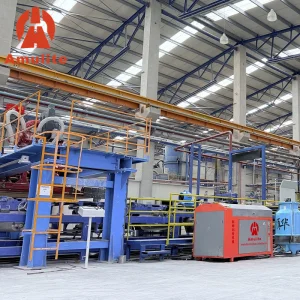
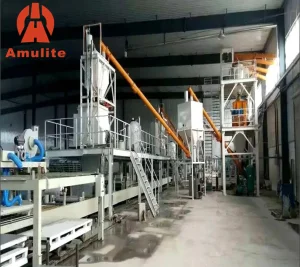
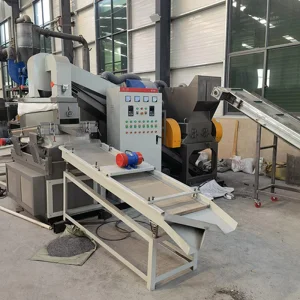
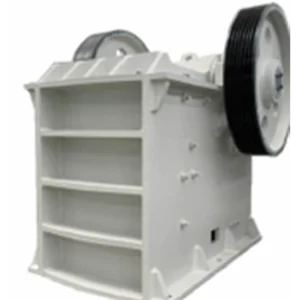
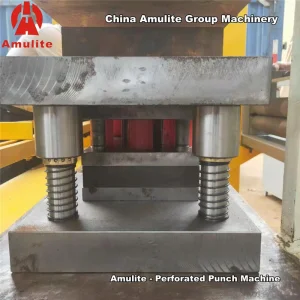
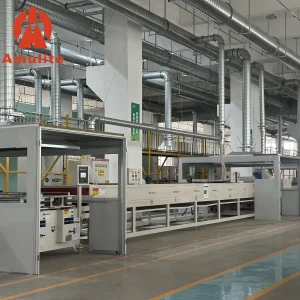
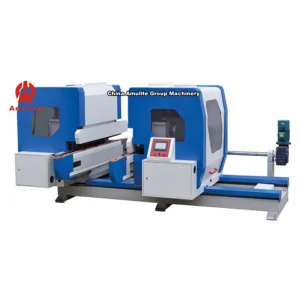
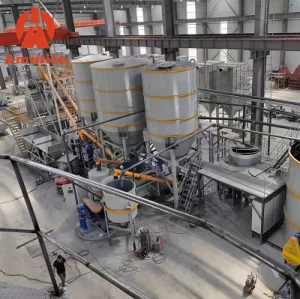
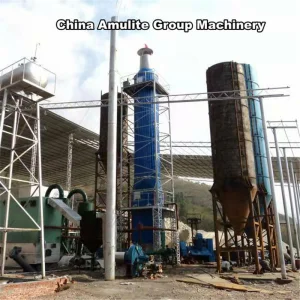
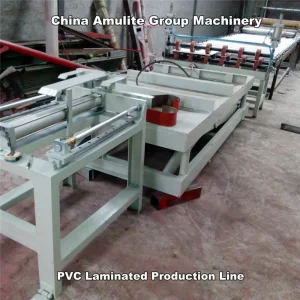
Explore our flagship machinery configurations designed for high-throughput wallboard, insulation panel, and structural cement board manufacturing plants worldwide.
Analyzing the industrial transition toward high-speed, automated, and energy-efficient building material production lines.
The global building sector is undergoing a structural paradigm shift toward off-site prefabrication and dry construction methods. High-density fiber cement boards, calcium silicate panels, EPS sandwich elements, and autoclaved aerated concrete (AAC) blocks are rapidly replacing traditional wet masonry. Consequently, industrial buyers require panel forming machinery capable of tight thickness tolerances (±0.2mm), superior flexural strength, and seamless inline processing.
Leading panel machine enterprises no longer differentiate themselves merely through steel fabrication. Superior value—or Information Gain—lies in slurry dynamics engineering, closed-loop dewatering efficiency, automated raw material dosing precision, and high-pressure steam autoclaving protocols. Selecting a famous panel forming machine manufacturer requires auditing their process chemistry knowledge alongside their mechanical engineering prowess.
Modern ESG mandates require panel machinery to minimize thermal energy consumption during steam curing and lower carbon emissions during slurry preparation. Advanced recycling loops for industrial waste—such as fly ash, slag, and reclaimed mineral wool—are now directly integrated into state-of-the-art continuous roll-forming and wet-process sheet-forming systems.
Deconstructing the mechanical engineering, vacuum dewatering, and automation sub-systems that drive high-performance panel factories.
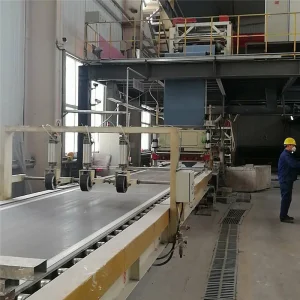
For fiber cement board and calcium silicate board production, the Hatschek process remains the global gold standard. Dilute aqueous slurry (cement, silica sand, cellulose fiber) is deposited across multiple rotating mesh cylinders (3 to 8 vats). Vacuum dewatering boxes strip moisture continuous-layer by continuous-layer until a film builds up on the accumulator roll to the specified sheet thickness (4mm to 30mm).
Conversely, continuous extrusion and roll-forming systems dominate metal-composite, XPS tile backer, and lightweight EPS sandwich cement wall panel lines. Precision mechanical synchronization prevents interlayer delamination during high-speed production cycles.
Why leading global construction conglomerates source complete panel production lines from specialized Chinese manufacturing hubs.
China's non-metallic building material machinery industry—centered in key industrial hubs like Hebei (Shijiazhuang)—benefits from unmatched cluster advantages. Raw steel procurement, precision CNC gantry machining, high-capacity pressure vessel forging, and specialized PLC control cabinet assembly occur within tight geographical radiuses. This drastically shortens manufacturing lead times to 90–120 days for turnkey plants.
Sourcing panel machinery from top-tier Chinese manufacturers yields 40% to 60% CAPEX savings compared to Western European equipment suppliers, without compromising core component reliability. Essential motion components, pneumatic valves, and automation backbones incorporate globally recognized brands such as Siemens, Schneider, ABB, SEW-Eurodrive, and Omron.
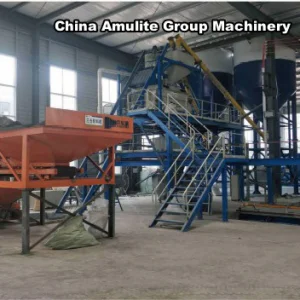
A primary bottleneck for global plant buyers is raw material variability. Chinese factory engineers excel at customizing slurry mixing sequences, agitator blade geometries, and extrusion dies based on locally sourced cement grades, quartz sand mesh sizes, volcanic ash, or agricultural byproduct fibers, ensuring high yields regardless of regional material constraints.
A structured methodology for EPC contractors and building material enterprises to audit panel machine manufacturers.
Distinguish between true original equipment manufacturers (OEMs) and trading intermediaries. Audit physical facilities for 100,000+ m² workshop space, multi-axis CNC gantry milling machines, heavy plate rolling equipment, dynamic balancing equipment for forming rolls, and dedicated electrical testing bays.
Require dry-run operation of all mechanical drives, vacuum pumps, continuous conveyors, and PLC control cabinets at the factory prior to packing. Verify hydraulic system seals under 1.5x operating pressure and ensure zero runout on sheet-forming cylinders.
Evaluate Total Cost of Ownership (TCO). High-quality factories provide standardized spare-parts mapping, modular wear plates on agitators, long-life synthetic felt belts, and off-the-shelf industrial components available through local distribution channels worldwide.
Overcoming cross-border deployment challenges through field engineering, international safety certifications, and IoT remote diagnostics.
Famous panel machine suppliers manufacture in compliance with mandatory global standards. Electrical systems comply with CE Directives, UL 508A, and CSA standards. Steam curing autoclaves are engineered and stamped according to ASME Section VIII Div 1 or PED 2014/68/EU pressure vessel codes, ensuring smooth regional permitting.
To bridge geographical distances, modern lines incorporate secure VPN / Industrial IoT gateway modules. Senior process engineers can remotely monitor line speeds, hydraulic pressures, thermal curing curves, and troubleshoot PLC ladder logic code in real time, preventing costly production downtime.
Deploying experienced field service teams is critical for commissioning complex multi-vat forming lines. Resident engineers guide civil foundation preparation, mechanical leveling, piping hookups, trial slurry mixing, and provide comprehensive hands-on operational and maintenance training for local factory staff.
Tailoring panel machine specifications to regional climatic conditions, architectural standards, and building codes.
Tropical climates demand high-density (1.3–1.6 g/cm³), non-asbestos fiber cement boards resistant to moisture absorption and termite infestation. Panel machinery configured for these regions features high-tonnage hydraulic presses and UV-curing surface coating lines to produce weather-resistant decorative facade panels.
In regions with extreme ambient heat or freezing winters, demand spikes for lightweight EPS sandwich cement wall panels and AAC blocks. Machinery lines incorporate automated bead expanding units, core-filling injectors, and tongue-and-groove edge profilers to deliver rapid-assembly thermal barrier walling.
Commercial real estate developments require Class A1 non-combustible interior materials. High-speed gypsum board production lines, MGO (magnesium oxide) sulphate panel systems, and calcium silicate ceiling tile lines fulfill these strict passive fire protection standards.
Emerging innovations redefining board forming productivity, resource circularity, and plant automation over the next decade.
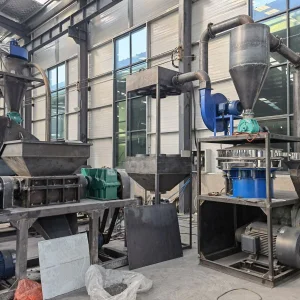
Modern plant architectures integrate specialized grinding and re-homogenization units to process post-industrial scrap, recycled lithium battery byproducts, expanded perlite fines, and reclaimed mineral waste back into slurry formulations without strength degradation.
Machine vision systems combined with ultrasonic sensors are replacing manual quality sampling. Laser-guided thickness gauges dynamically adjust hydraulic press gaps, while thermal imaging cameras instantly spot micro-cracks before boards enter the curing kilns.
Steam condensate and flash steam from pressure autoclaves are captured in closed-loop heat exchangers, pre-heating boiler feed water and raw slurry tanks. This engineering innovation cuts overall factory natural gas/coal consumption by up to 35%.
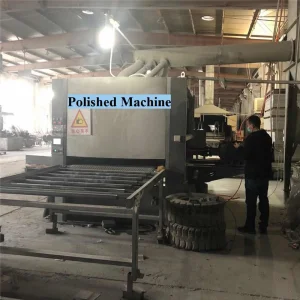
Explore our full machinery catalog, including recycling equipment, surface finishing lines, and heavy-duty stone processing plants.
Expert answers regarding machinery sizing, installation timelines, raw material trial runs, and factory guarantees.