Direct from our manufacturing hubs: High-precision production machinery built for non-asbestos building boards, cement wall panels, and sustainable construction materials.
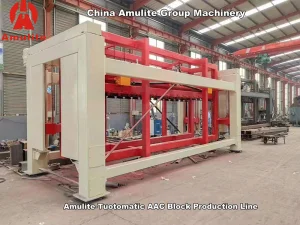
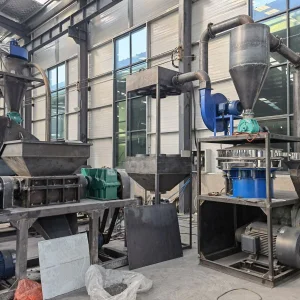
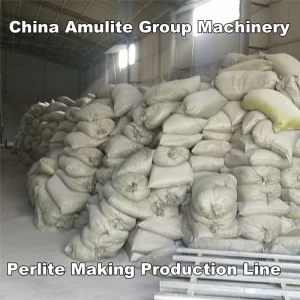
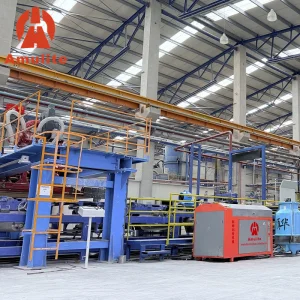
Transitioning from conventional asbestos-bearing formulations to high-tensile synthetic and organic reinforcement matrices: Technical insights, chemical mechanics, and machine design.
The modern architectural and building materials landscape has experienced a seismic shift. Global environmental regulations and strict occupational safety guidelines (such as OSHA, REACH, and ISO 14001) have mandated the phase-out of chrysotile and amphibole asbestos fibers. In response, premier engineering factories specializing in Non-Asbestos Fiber Cement Board Production Lines have pioneered next-generation wet-process (Hatschek) and flow-on slurry deposition technologies.
A non-asbestos fiber cement board is an engineered composite consisting of inorganic hydraulic binders (typically Ordinary Portland Cement or modified calcium silicate slurry), siliceous materials (finely ground quartz sand or silica fume), mineral fillers (calcium carbonate, mica), and a multi-tiered fiber reinforcement system. By substituting asbestos with engineered synthetic fibers—primarily Polyvinyl Alcohol (PVA), refined soft-wood cellulose pulp, and polypropylene (PP) micro-fibers—manufacturers produce high-density, fireproof (Class A1), weather-resistant, and structural-grade boards for exterior cladding, soffits, internal wall linings, and flooring substrates.
Polyvinyl Alcohol (PVA) fibers provide high tensile strength (up to 1600 MPa) and superior bonding characteristics within the alkaline cement matrix, preventing brittle fracture and micro-cracking under heavy flexural loads.
Subjecting green sheets to 175°C - 190°C high-pressure steam (10-12 bar) induces a hydrothermal chemical reaction between silica powder and lime, synthesizing stable crystalline Tobermorite ($11\text{\AA}$ C-S-H phase) for ultra-low hydric movement.
The multi-vat Hatschek cylinder system deposits micro-thin slurry layers (0.2–0.3mm) onto a running felt. High-vacuum suction boxes extract moisture, yielding dense, multi-layer laminated green sheets prior to press consolidation.
Understanding procurement trends, sustainable building certifications, and geographical production shifts toward eco-friendly fiber cement products.
The global fiber cement market size is projected to exceed USD 22 Billion by 2030, driven by rapid urbanization, modular off-site prefabrication, and strict green building mandates such as LEED (US) and BREEAM (UK). Procurement managers and factory investors must navigate critical industry dynamics:
Architects are increasingly specifying autoclaved fiber cement boards for exterior rain-screen cladding. These systems require boards with exceptional dimensional stability, UV resistance, and freeze-thaw durability, placing higher demands on factory pressing systems (7,000–10,000 ton hydraulic presses).
Modern factory owners require equipment capable of utilizing industrial by-products. Leading production lines can integrate up to 30-40% fly ash, granulated blast furnace slag (GGBS), or recycled silica waste without compromising board flexural strength (MOR > 16 MPa).
Lightweight wall solutions—such as EPS sandwich cement panels and fiber-cement-faced hollow core panels—are replacing heavy traditional masonry. Factory lines now require multi-functional versatility to produce both thin ceiling tiles (4-6mm) and thick floor boards (18-25mm).
| Performance Metrics | Autoclaved Fiber Cement Board | Air-Cured (Natural) Fiber Cement Board | Non-Autoclaved Calcium Silicate |
|---|---|---|---|
| Curing Method | Autoclave (175-190°C, 10-12 Bar Steam) | Humidity Chamber + 28-Day Air Cure | Low-pressure steam tunnel (<100°C) |
| Crystalline Structure | 100% Hydrothermal Tobermorite Phase | Amorphous C-S-H Gel Matrix | Hydrated Calcium Silicate Gel |
| Moisture Movement / Swelling | Very Low (< 0.12%) | Moderate (0.20% - 0.35%) | Low to Moderate (< 0.18%) |
| Density Range | 1.20 - 1.65 g/cm³ | 1.10 - 1.40 g/cm³ | 0.80 - 1.25 g/cm³ |
| Typical Applications | Exterior Cladding, High-Impact Flooring, Prefab Walls | Interior Ceilings, Drywall Partition, Soffits | Passive Fire Protection, Thermal Insulation |
From raw material dosing to final board packaging: How an automated factory operates at peak efficiency.
Cellulose pulp sheets are hydrapulped, refined in disc refiners to optimal Shopper-Riegler (°SR) freeness, and metered into slurry dosing tanks alongside OPC cement, silica flour, PVA fibers, and recycled board scrap slurry.
Rotating wire mesh cylinders (3 to 5 vats) pick up dilute slurry layers, transferring them to an endless felt mesh. Multi-stage vacuum dewatering boxes extract excess water before the slurry film wraps around the accumulation cylinder to achieve precise thickness.
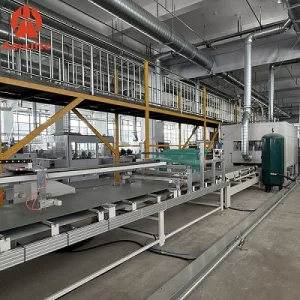
A high-speed water-jet cutter trims the continuous green sheet to target dimensions. Robotic vacuum stackers layer green boards with steel templates. Optional 10,000-ton hydraulic presses compress stacks to elevate board density and flexural strength.
Stacks undergo initial setting in a heated pre-curing tunnel (50°C, 4 hours). Vacuum demoulding separates steel plates from boards. Boards are loaded into autoclaves for 10-12 hours of high-pressure hydrothermal curing.
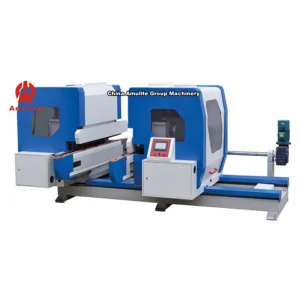
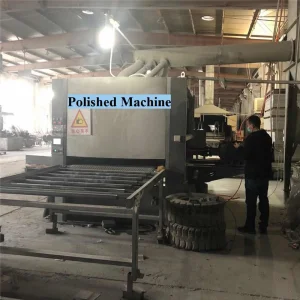
Cured boards pass through heavy-duty wide-belt sanding machines to calibrate thickness, four-side edge profiling saws (such as the OEM 1300 II Type), automated hydrophobic coating lines, and shrink-wrap packaging units.
Key evaluation metrics for project developers, machinery buyers, and factory investors when selecting a production line manufacturer.
Evaluating initial machinery investment against lifetime energy consumption. Modern lines utilize steam heat recovery systems from autoclaves and vacuum pump water closed-loop recycling, reducing operational costs by up to 22% annually.
Top-tier factories design slurry mixing systems capable of handling localized raw material variations—such as coarse river sand, low-grade fly ash, or varying cement grades—without causing batch delamination or sheet cracking.
Selecting between semi-automated configurations (suitable for lower labor cost regions) and fully automated Industry 4.0 plants equipped with SCADA control, automatic oiling systems, and AI-driven slurry viscosity regulation.
Ensuring seamless international deployment, strict environmental compliance, and long-term technological adaptability.
Engineering teams deliver full turn-key execution: Civil design review, foundation engineering, transformer/voltage adjustments (380V - 480V, 50/60Hz), localized operator training, and multi-lingual PLC interface deployment.
Equipped with closed-circuit process water recirculation (zero water discharge), high-efficiency baghouse dust collection on sanding lines, pressure vessel certification (ASME / CE-PED) for autoclaves, and low-noise vacuum system mufflers.
The future of fiber cement manufacturing focuses on ultra-lightweight high-strength boards (utilizing aerogel and expanded perlite additives), inline digital surface printing (wood-grain & stone textures), and IoT remote predictive maintenance.
Detailed technical and commercial answers from experienced machinery engineers.
Standard plant capacities range from 2 million to 10 million square meters per year for a single production line. Double-line configurations can scale up to 20-30 million square meters annually. Production capacity depends directly on sheet forming machine width (1300mm vs 1600mm), cylinder vat count, hydraulic press cycle speeds, and total autoclave steam chamber volume.
A typical autoclaved non-asbestos formulation consists of: Ordinary Portland Cement (35-45%), Silica Flour/Quartz Dust (40-50%), Wood Cellulose Fiber Pulp (7-10%), and Synthetic PVA Fibers (0.5-1.5%), along with minor additives like aluminum sulfate or flocculants. Exact ratios are tailored based on local raw material chemical analysis during turn-key commissioning.
Autoclaved curing uses high-temperature, high-pressure steam (approx. 180°C at 10 Bar) to force quartz sand to react chemically with cement, forming crystalline Tobermorite. This results in boards with superior dimensional stability, low moisture expansion (<0.12%), and immediate usability after 24 hours. Air-cured boards require 28 days of wet storage, have higher water absorption, and exhibit higher moisture movement.
A standard 5-million square meter autoclaved line typically requires a plant building footprint of approximately 180 meters by 24 meters (approx. 4,500 - 6,000 m² covered workshop), plus raw material storage yards. Installed electrical power ranges between 800 kW to 1400 kW, with a steam boiler capacity of 6 to 10 tons per hour.
All core equipment, control cabinets, and pressure vessels are designed and built under ISO 9001 quality standards, carrying CE certification for European compliance, ASME certification for pressure autoclaves, and UL/Schneider/Siemens compliant electrical control components.
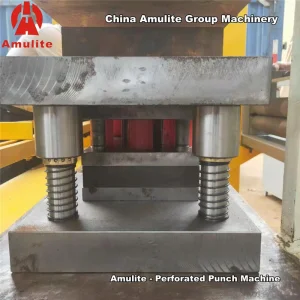
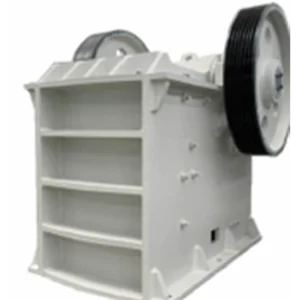
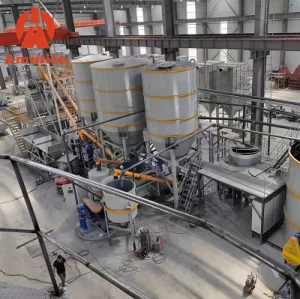
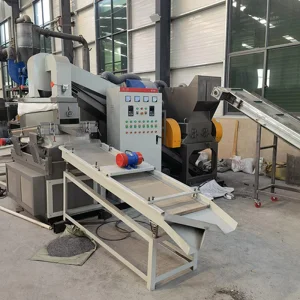
Complete your building materials production facility with high-performance edge cutters, recycling units, stone crushers, and sandwich panel lines.

Consult with our senior process engineers today to receive customized plant layout drawings, raw material formula analysis, and a comprehensive capital expenditure quotation.
Request Engineering Proposal