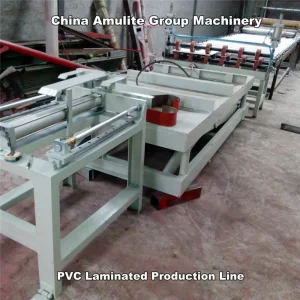
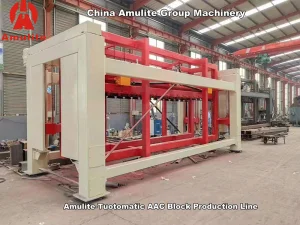
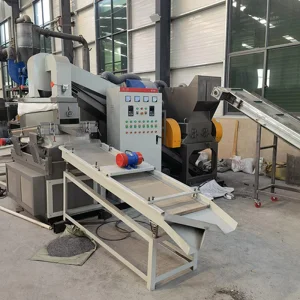
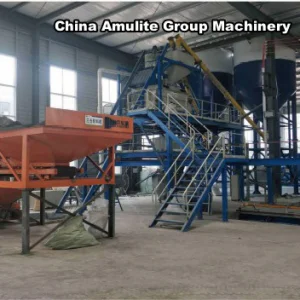
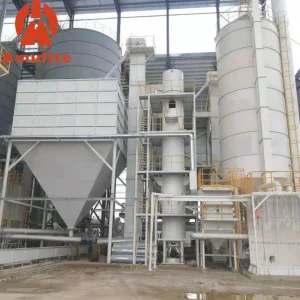
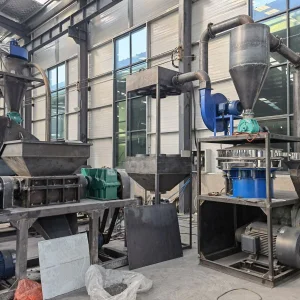
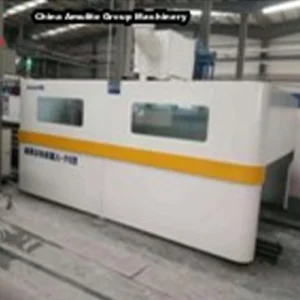
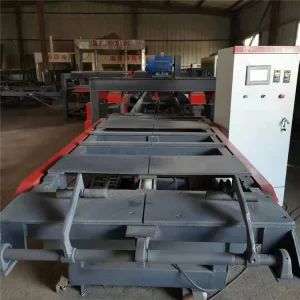
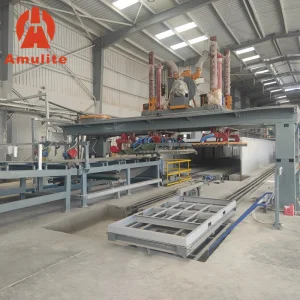
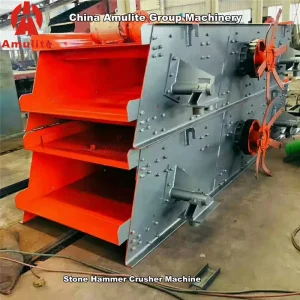
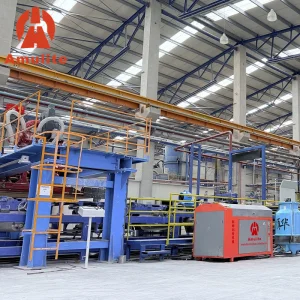
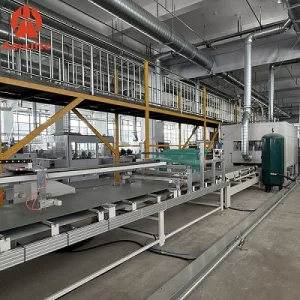
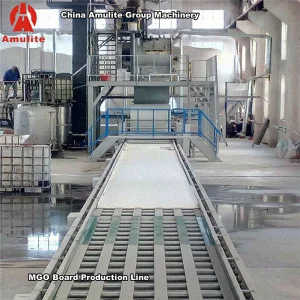
Explore our core manufacturing units and automated production lines engineered for global building material producers. Every system is custom-designed for maximum thermal efficiency, low energy consumption, and high throughput capability.
The global gypsum board (plasterboard) market represents one of the most resilient and fast-evolving segments within the modern drywall construction ecosystem. Valued at over USD 28.5 Billion in 2024, the market is projected to expand at a compound annual growth rate (CAGR) of 5.8% through 2032. This sustained momentum is driven by accelerating urban migration, aggressive adoption of pre-fabricated interior framing, stringent building thermal efficiency requirements, and the global structural shift toward lightweight drywall solutions replacing traditional wet-masonry plastering.
As the world's commercial real estate developers and residential EPC contractors push for accelerated project delivery timelines, the structural role of Famous Gypsum Board Supplier & Companies has shifted from simple material vending to full-scale process engineering partnership. Modern architectural specs demand multi-functional wallboards capable of delivering fire resistance (Type X and Type C), acoustic dampening (STC ratings > 60 dB), micro-particle air purification, and extreme moisture resistance—all within standardized board thicknesses ranging from 6.5 mm to 15 mm.
Market consumption patterns demonstrate stark structural variations across major geographic zones:
Characterized by ultra-high per capita consumption (>8 m²/person/year). Driven by mature timber-frame and light-gauge steel framing standards (ASTM C1396, EN 520). Demand focuses heavily on specialized glass-mat sheathing, synthetic FGD gypsum sourcing, and low-embodied-carbon production compliance under LEED v4.1 criteria.
The fastest-growing production and consumption powerhouse. Driven by mega-scale urbanization in China, India, and Southeast Asia. Focus is rapidly transitioning from basic wallboards to high-speed automated production lines capable of 30+ million m²/year, alongside rigid acoustic and fire-rated composite ceiling assemblies.
Fueled by giga-projects, hospitality infrastructure, and modular housing schemes. Demand prioritizes extreme heat resistance, sag-resistant ceiling boards, and hydrophobic core formulations tailored for coastal humidity conditions.
To capture strategic information gain, building material plant investors must analyze five macro engineering vectors currently revolutionizing the gypsum wallboard manufacturing landscape:
Leading global suppliers are replacing mined natural rock gypsum ($CaSO_4 \cdot 2H_2O$) with Flue Gas Desulfurization (FGD) synthetic gypsum sourced from thermal power plant scrubbers. FGD gypsum offers purity levels exceeding 95%, eliminating crushing costs and dramatically lowering raw material transportation expense.
Engineered micro-foaming agents and liquid starch-modified crystal bonding allow manufacturers to reduce board weight by up to 25% (down to 5.2 kg/m² for 12.5mm boards) without sacrificing flexural strength or edge hardness, yielding massive freight cost reductions.
State-of-the-art continuous mixer-extruder forming stations now operate at linear speeds exceeding 80 meters per minute. High-precision dynamic boundary plates ensure edge squareness and uniform thickness across 1200mm to 1220mm board widths.
Drying kilns account for up to 60% of total plant thermal energy consumption. Next-generation multi-deck dryers feature zonal heat recirculation and heat-pipe exchanger systems, cutting natural gas/steam consumption below 1.4 Nm³ per square meter of board produced.
Transitioning from standard cellulose paper facers to non-woven glass fiber mats saturated with hydrophobic acrylic coatings. This delivers complete weather mold protection for exterior curtain-wall backing and high-moisture commercial environments.
Full SCADA/PLC integration controls raw material dosing, stucco water-to-plaster ratios, foam density, cutting blade synchronization, and kiln temperature curves with zero manual intervention, achieving 99.2% operational uptime.
Gypsum wallboards are no longer viewed as monolithic building panels. The modern construction market categorizes boards into precise architectural performance classes. A top-tier manufacturer must offer tailored chemical formulations for distinct spatial demands:
| Board Classification | Core Additives & Materials | Primary Physical Properties | Target Application Environments |
|---|---|---|---|
| Standard Interior Drywall | Stucco, recycled cellulose paper, foaming agent, modified starch. | Lightweight, easy score-and-snap, smooth paintable finish. | Residential bedroom walls, interior ceiling framing, commercial office partitions. |
| Type X & Type C Fire-Resistant | Unexpanded vermiculite, glass fiber filaments (3-6mm), micro-silica. | 1 to 4 hour fire rating under UL/ASTM E119 tests; core integrity under flame. | Firewall shafts, elevator enclosures, boiler rooms, emergency stairwells. |
| Moisture & Mold Resistant | Silicone oil emulsion, wax emulsion, anti-fungal biocides. | Water absorption < 5% after 2-hour immersion; zero mold growth (ASTM D3273). | Kitchen backsplashes, bathroom tile backing, humid tropical building zones. |
| Acoustic / Perforated Ceiling | High-density stucco matrix, sound-absorbing backing fleece. | Noise Reduction Coefficient (NRC) up to 0.85; customizable perforation patterns. | Auditoriums, conference halls, educational facilities, broadcasting studios. |
| Impact & Abuse Resistant | Heavy-duty multi-ply paper, continuous mesh reinforcement, dense core additives. | High indentation resistance; severe structural impact protection. | Hospital corridors, school hallways, correctional facilities, high-traffic retail. |
As environmental regulations tighten globally, plant operators must look beyond traditional manufacturing configurations. Amulite Group's process engineering research team highlights four pivotal technological shifts governing the next decade of plant design:
Integration of dynamic inline viscosity sensors and microwave moisture meters directly before the slurry headbox. AI algorithms continuously trim water-reducer dosing to maintain exact slurry fluidity regardless of minor raw stucco purity fluctuations.
Implementing high-shear wet recycling units that instantly crush green board trimmings and wastewater sludge back into slurry form, achieving a 99.8% material utilization efficiency without affecting final board setting curves.
Transitioning drying kilns from direct natural gas combustion to hybrid electric-heat-pump systems powered by on-site industrial solar microgrids, bringing plant Scope 1 CO2 emissions near zero.
Industrial building material investors rarely limit production to a single wallboard variety. Leading global companies achieve commercial dominance by building integrated building panel hubs. China Amulite Group specializes in delivering turnkey EPC (Engineering, Procurement, Construction) solutions that interconnect Gypsum Board lines with complementary non-metallic board production machinery.
By co-locating a gypsum wallboard facility alongside AAC Block lines, Fiber Cement Board machines, or EPS Sandwich Panel equipment, factory owners share primary raw material storage (silica, cement, lime), consolidate heavy electrical substation infrastructure, and unify automated packaging and logistics lines. This multi-board synergy reduces capital expenditure (CAPEX) per annual capacity metric by up to 22% while providing developers with a complete catalog of partition, ceiling, cladding, and masonry materials from a single manufacturing base.
Comprehensive technical clarity for plant owners, procurement executives, and process engineers evaluating gypsum board machinery investments.
The core raw material is gypsum plaster (stucco, $\beta-CaSO_4 \cdot \frac{1}{2}H_2O$), derived from calcining natural gypsum rock or synthetic FGD gypsum. The raw gypsum must possess a $CaSO_4 \cdot 2H_2O$ purity of at least 85% (preferably >90%). Key impurities such as soluble salts ($Na^+$, $K^+$, $Cl^-$) must remain under 0.06% to prevent efflorescence and paper bond failure. Paper facers should be high-burst-strength recycled kraft paper ranging from 160 to 220 g/m².
Proper bonding relies on controlled crystal growth during the initial hydration setting stage. Our high-speed mixers introduce cooked modified starch (cationic or oxidized starch) into the slurry. During drying, the starch migrates to the board interfaces, anchoring the growing gypsum dihydrate crystals directly into the cellulose fiber pores of the top and bottom paper liners under exact temperature-controlled drying zones.
For a standard 9.5mm or 12.5mm board specification, modern Amulite-engineered plants achieve electrical consumption figures of 0.25 to 0.35 kWh/m² and thermal energy consumption of 26 to 30 MJ/m² (approx. 1.3 - 1.5 Nm³ natural gas per square meter). Heat recovery systems installed on the multi-deck kiln return exhaust heat back to preheat burner combustion air, reducing fuel overhead significantly.
The primary international standards governing physical dimensions, flexural breaking load, core cohesion, and water absorption include ASTM C1396 / C1396M (Standard Specification for Gypsum Board in the Americas) and EN 520 (European Standard for Gypsum Plasterboards). Chinese manufacturing standards comply with GB/T 9775. Amulite production lines are calibrated to meet or exceed all three standards.
Yes. Amulite design lines utilize automated multi-component dry chemical dosing and liquid additive skid units. By pressing a single recipe selection on the main SCADA PLC human-machine interface, the system automatically alters the feeder ratios to inject fiberglass filaments and vermiculite for Type X boards, or silicone oil emulsions for moisture-resistant boards, without stopping continuous extrusion.
A standard 10 to 30 million m²/year project requires 4 to 6 months for custom machinery fabrication, 45 days for international ocean logistics, and 60 to 90 days on-site for civil foundation verification, mechanical assembly, electrical wiring, and hot trial commissioning conducted by Amulite's senior field engineering team.
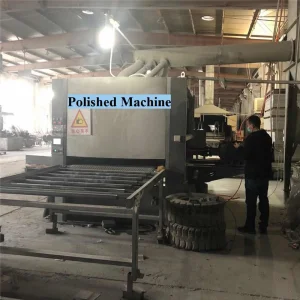
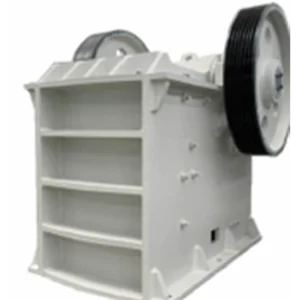
Browse our additional heavy manufacturing solutions, crushing equipment, edge finishing machines, and specialized recycling lines built to full international safety and quality criteria.