Engineered for continuous heavy-duty operation, high raw material tolerance, and automated precision forming across global manufacturing facilities.
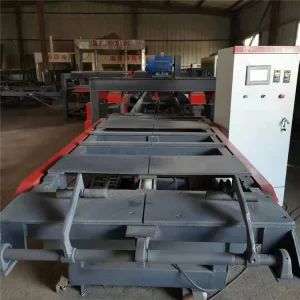
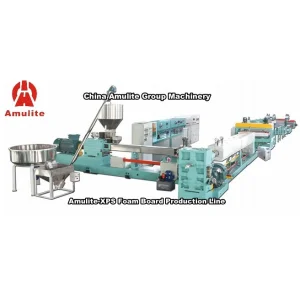
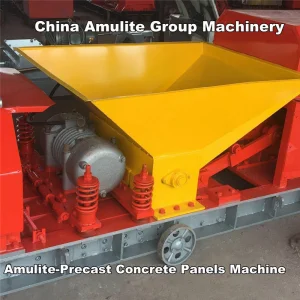
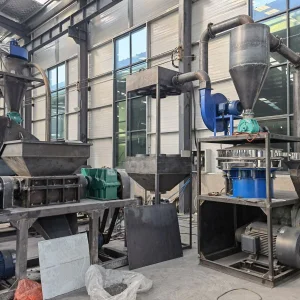
In the modern era of industrial automation, searching for famous forming machine suppliers and factories requires navigating beyond surface-level equipment catalogs. Modern non-metallic building material plants—producing fiber cement boards, calcium silicate substrates, autoclaved aerated concrete (AAC) blocks, magnesium oxide (MGO) panels, and lightweight EPS sandwich wall systems—are undergoing a massive technological transition. Driven by strict global carbon neutrality targets, escalating raw material costs, and severe labor shortages in field construction, enterprise buyers must evaluate machinery original equipment manufacturers (OEMs) through a multi-dimensional framework: total lifecycle cost (TCO), micro-porosity control, energy efficiency per square meter, and turnkey engineering resilience.
Historically, European equipment suppliers dominated high-end forming lines. However, the last decade has witnessed a pivotal shift toward China's advanced manufacturing clusters—exemplified by China Amulite Group in Hebei. By combining heavy industrial fabrication, high-precision CNC machining, in-house process formulation laboratories, and full-line cyber-physical simulation under a 100,000 m² physical footprint, leading Chinese OEMs have bridged the quality gap while providing unmatched cost efficiency and agility.
The non-metallic mineral processing and sheet forming sector is experiencing four primary engineering disruptions that directly dictate plant profitability and compliance.
Modern fiber cement and calcium silicate forming lines rely on multi-stage Hatschek slurry deposition. Advanced forming vats now integrate dynamic pulp-to-sand ratio sensors and multi-chamber vacuum de-watering boxes. This ensures sheet density uniformity across widths up to 1,600 mm, preventing delamination during high-pressure autoclave curing.
Leading factories embed industrial IoT telemetry directly into forming cylinders, hydraulic presses, and automatic trimming units. Real-time data streams feed into Siemens or Schneider PLC system architectures, allowing centralized SCADA oversight, predictive bearing vibration analysis, and remote formula adaptation.
Eco-conscious regulations require zero slurry discharge. Modern plants feature closed-circuit water filtration, automated edge-trim slurry re-pulping, and flue-gas thermal recovery systems. For XPS foam boards, green CO2 physical foaming technologies replace ozone-depleting HCFC blowing agents.
Plant owners demand equipment versatility. Current machine designs allow rapid mold changeovers, enabling a single factory line to seamlessly pivot between producing thin 4mm acoustic ceiling tiles, 12mm exterior cladding panels, and heavy-duty 30mm structural floor backers.
Enterprise procurement directors and plant operators must evaluate prospective machine suppliers against Google Search Quality Rater E-E-A-T criteria—Experience, Expertise, Authoritativeness, and Trustworthiness—translated into industrial engineering metrics. Sourcing capital machinery is not merely a purchase order; it is a 20-year operational partnership.
| Evaluation Vector | Legacy Tier-3 Suppliers | Tier-1 European Vendors | Amulite Group (China Industry 4.0) |
|---|---|---|---|
| Fabrication & Machining | Outsourced sub-assemblies, basic welding | In-house CNC machining, high capital cost | 100,000 m² in-house CNC, laser cutting & dry-testing |
| Raw Material Formulation | Standard fixed formula provided | Proprietary formula, high chemical cost | Custom lab testing based on buyer's local sand/pulp |
| Automation & Control | Relay-based or low-tier local PLCs | Custom proprietary PLCs (High locked-in cost) | Siemens / Schneider open SCADA platform |
| CAPEX / Line ROI | Low initial CAPEX, high breakdown cost | Extremely high CAPEX (5–7 year payback) | Optimized CAPEX (1.5–2.5 year investment payback) |
| Global Service Field Force | Third-party regional agents | Expensive European technician dispatch | 27 Dedicated engineering teams for on-site install & training |
The concentration of heavy machinery manufacturing in China’s Hebei province has created an unprecedented industrial cluster effect. China Amulite Group harnesses this ecosystem to deliver structural advantages that isolated international machinery builders cannot replicate:
A major point of failure for global buyers is ordering machines designed strictly for expensive imported wood pulp or ultra-pure quartz sand. Amulite’s process laboratory tests locally sourced regional minerals:
Forming equipment engineered by famous China suppliers serves targeted high-growth construction and industrial sectors worldwide.
In dense metropolitan hubs across Saudi Arabia, UAE, and Indonesia, autoclaved fiber cement board lines manufacture 8mm–16mm non-combustible (A1 fire-rated) partition panels and wood-grain exterior siding. High-pressure autoclave curing eliminates shrinkage and moisture expansion under harsh desert or tropical climates.
Across Latin America and Africa, rapid urban expansion demands lightweight pre-assembled building elements. Amulite’s EPS sandwich cement wall panel lines produce composite wall units with integrated tongue-and-groove joints, enabling up to 5x faster site installation compared to traditional masonry.
European and CIS region retrofitting projects utilize XPS foam board insulation production lines and expanded perlite processing systems. These plants output high-compressive-strength, low-thermal-conductivity boards that drastically reduce heating and cooling HVAC loads in residential and industrial buildings.
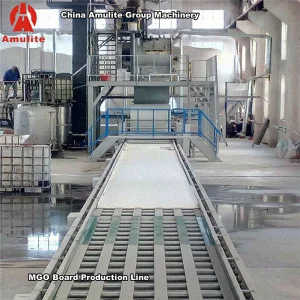
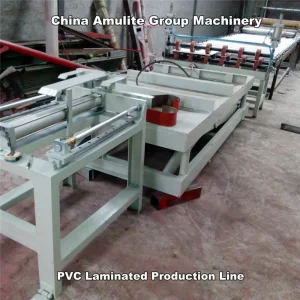
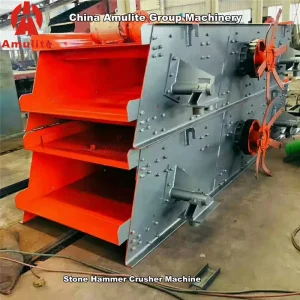
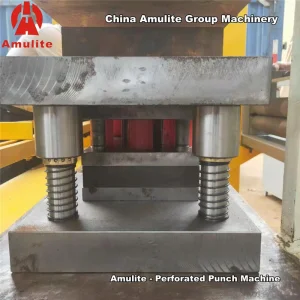
Explore complete production solutions including MGO fireproof lines, stone crushing equipment, high-speed edge profiling, and battery recycling machinery.
Direct technical answers from Amulite Group’s senior process engineers regarding plant feasibility, capacity sizing, and factory deployment.
Contact China Amulite Group’s process engineering team today. Provide your target board specifications and annual output goals to receive a customized technical proposal, plant footprint layout, and utility ROI analysis.