



Empowering Global Infrastructure with High-Density Autoclaved Fiber Cement Engineering, Advanced Hatschek Processing, and China’s Leading OEM Supply Chain Efficiency.
Explore our premium suite of precast concrete machinery, board extrusion lines, and heavy-duty manufacturing plant configurations designed for maximum yield and structural integrity.
An Executive Analysis of Market Growth, Structural Adoption, and Material Standardization in Off-Site Construction.
The global construction industry is undergoing a systemic transition toward lightweight, sustainable, non-combustible, and high-durability building envelopes. Within this paradigm shift, fiber cement board (FCB) has established itself as an essential substitute for traditional plasterboard, plywood, and poured concrete. Manufactured primarily from high-grade Portland cement, ground quartz silica sand, natural cellulose fibers, and specialized mineral additives, modern fiber cement board offers an unparalleled combination of flexural strength, dimensional stability, and extreme weatherability.
From modern architectural rainscreen facades across Western Europe to industrial pre-engineered modular structures throughout North America and Asia-Pacific, top-tier EPC (Engineering, Procurement, and Construction) firms prioritize suppliers capable of producing high-density autoclaved boards. The global fiber cement market size, valued at multi-billion dollars, continues to expand at a compound annual growth rate (CAGR) exceeding 5.8%, fueled by escalating infrastructure expenditures, residential renovation projects, and stringent ESG compliance standards.
Comparing Autoclaved Fiber Cement Board (AFCB) with Non-Autoclaved Formulations and Alternative Sheathing Materials.
Understanding the microstructural performance of fiber cement requires examining the chemical transformation during production. Modern industrial production predominantly utilizes the advanced Hatschek Wet-Process, where raw slurry is deposited continuously in micro-layers onto forming cylinders, dewatered under high vacuum pressure, and compressed into ultra-dense green sheets before curing.
The critical differentiator in high-performance board supplier selection lies in the curing methodology: Autoclaved High-Pressure Steam Curing versus Air-Cured Natural Hydration.
| Technical Characteristic | Autoclaved Fiber Cement Board (AFCB) | Air-Cured Fiber Cement Board | Standard Calcium Silicate Board |
|---|---|---|---|
| Curing Chemistry | Hydrothermal reaction forming crystalline Tobermorite ($C_{5}S_{6}H_{5}$) | Hydration of cement matrix forming amorphous $C-S-H$ gel | Autoclaved lime-silica hydro-thermal reaction matrix |
| Density Range (g/cm³) | 1.30 – 1.70 g/cm³ (High Density Class) | 1.00 – 1.25 g/cm³ (Medium Density) | 0.95 – 1.20 g/cm³ (Low/Medium Density) |
| Flexural Strength (Bending) | ≥ 16.0 MPa (Wet condition certified) | ≥ 10.0 MPa | ≥ 9.0 MPa |
| Moisture Movement (Linear) | ≤ 0.12% (Exceptional dimensional stability) | ≤ 0.25% (Risk of micro-warping) | ≤ 0.18% |
| Freeze-Thaw Resistance | Passed 100+ Cycles (EN 12467 Category A) | Passed 25-50 Cycles | Moderate (Requires hydrophobic sealers) |
During high-pressure steam autoclaving at temperatures reaching 175°C to 190°C under 1.2 MPa steam pressure, finely ground quartz silica reacts with calcium hydroxide released by cement hydration. This hydrothermal synthesis yields a highly stable, crystalline Tobermorite structure. The resulting board exhibits zero organic volatile emissions, complete immunity to termite attack, zero rot propagation, and extremely low water absorption characteristics.
How Modern Chinese Production Ecosystems Deliver Cost Superiority, Precision Tolerances, and Unmatched OEM Capacity.
Chinese manufacturing bases are situated directly inside high-purity silica sand, high-grade limestone, and unbleached kraft pulp logistics hubs, drastically reducing raw material freight overheads.
Equipped with online X-ray thickness measurement, automatic density feedback loops, and multi-stage edge-cutting machinery ensuring dimensional tolerances within ±0.5mm.
Operating high-speed 7,000 to 10,000-ton hydraulic multi-daylight presses capable of producing over 20 million square meters of high-density board annually per factory group.
Comprehensive private-label manufacturing: from engineered thickness profiling (3mm to 30mm) to custom surface sanding, beveling, UV priming, and localized branding.
Matching Board Density, Thickness, and Surface Processing to Specific Structural Demands.
Utilized as ventilated façade backing or decorative pre-painted exterior panels. Requires Class A1 fire protection and high flexural strength against wind pressure.
Deploys in commercial kitchens, bathrooms, and spa facilities. Offers absolute moisture resistance without delamination, rot, or swelling.
Heavy-duty high-density load-bearing boards for steel-structure loft floors, modular shipping containers, and industrial warehouses.
Serves as outer skins for lightweight cement EPS sandwich wall panels used in rapid prefab construction and cleanrooms.
Key Strategic Considerations for Distributors, OEM Sourcing Managers, and EPC Project Buyers.
As the international building sector advances toward Net-Zero carbon targets, fiber cement manufacturing technology is experiencing significant innovation. Premier suppliers are currently investing in three core technological vectors:
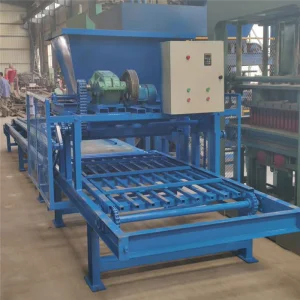
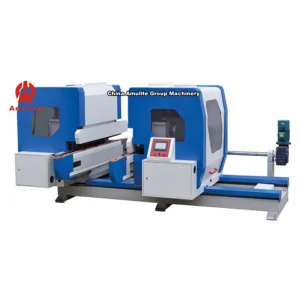
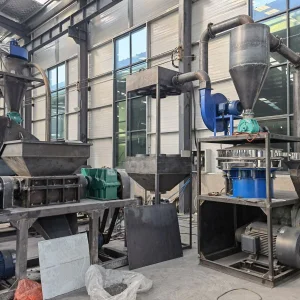
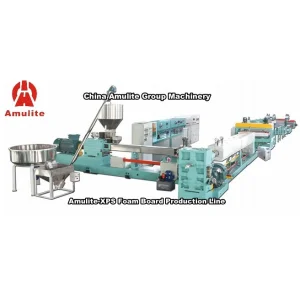
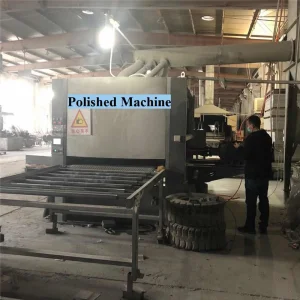
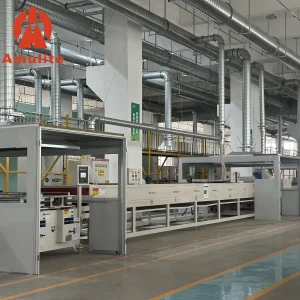
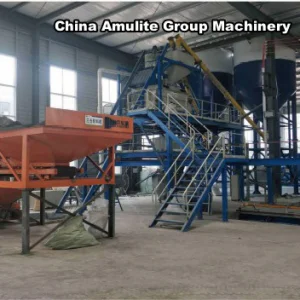
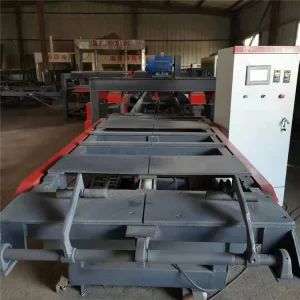
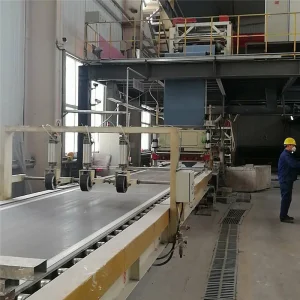
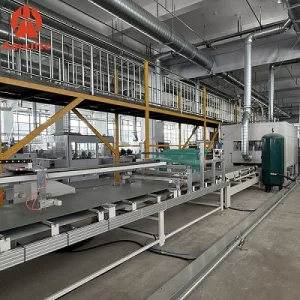
Complementary industrial machinery, board coating systems, and specialized cutting units engineered by China Amulite Group for worldwide export.
Direct Answers from Engineering and Global Supply Chain Specialists.