Explore our primary non-metallic board and lightweight panel manufacturing lines deployed across global infrastructure projects.
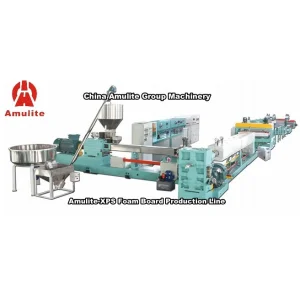
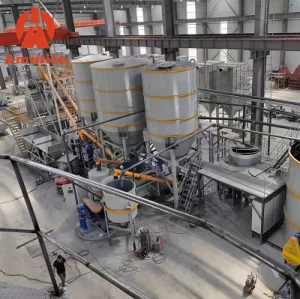
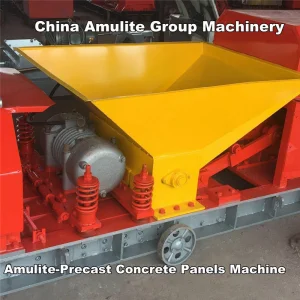
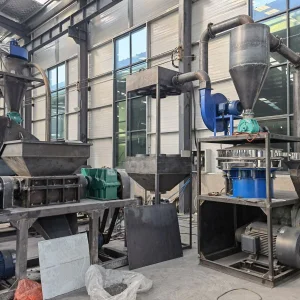
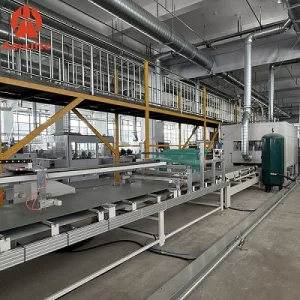
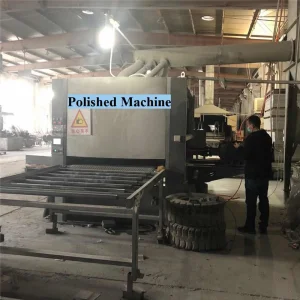
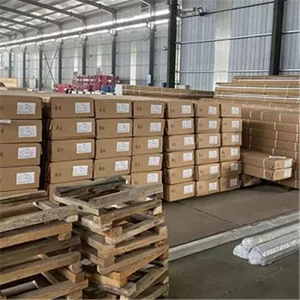
The global construction material paradigm is experiencing a structural pivot toward prefabricated structural insulated panels (SIPs), lightweight partition walls, and high-thermal-efficiency envelope systems. At the core of this transition is the modern EPS sandwich panel making machine. Designed to process expanded polystyrene (EPS) beads, Ordinary Portland Cement (OPC), sand, fly ash, and specialized chemical additives, these automated lines deliver composite structural wall boards featuring calcium silicate or fiber cement face sheets.
Historically, building panel production relied on decentralized manual casting, open-mould batching, and empirical curing techniques. Modern industrial demands—specifically tight tolerance control, high flexural strength-to-weight ratios, and rapid installation cycles—have necessitated the introduction of automated, continuous hydraulic mould cars, high-shear slurry mixers, and computerized PLC dosing systems.
When global commercial entities, engineering procurement contractors (EPCs), and modular housing developers search for Famous EPS Sandwich Panel Making Machine Suppliers & Factory options, their purchase intent extends beyond basic hardware procurement. Decision-makers require comprehensive lifecycle evaluations covering capital expenditure (CapEx), operational efficiency (OpEx), raw material local sourcing adaptability, and mechanical reliability.
Inconsistent EPS bead distribution leads to internal void formation, delamination of face boards, and mechanical failure. Superior machinery suppliers integrate gravimetric dosing feeders and micro-computer controlled liquid additive injection systems.
During core slurry expansion and initial hydration, internal hydrostatic pressures act against mold side walls. Structural deflection in sub-standard mold cars causes thickness variations along the length of 2.44m–3.0m panels.
Rapid strength gain requires precise ambient humidity and thermal management. Premium OEM factories engineer automated steam curing tunnels or controlled demolding battery systems to accelerate 24-hour compressive strength matrix development.
| System Architecture | Manual / Semi-Auto Entry Line | Fully Automated Industrial Line (Amulite Standard) |
|---|---|---|
| Annual Production Capacity | 30,000 m² – 60,000 m² | 100,000 m² – 500,000 m² |
| EPS Pre-expansion Tech | Single-stage batch expander (Density variation ±8%) | Continuous Fluidized Bed Expander with Secondary Aging (±1.5%) |
| Mold Car Opening Mechanism | Manual latching & screw jacks | Hydraulic automatic opening, side-clamping & ejection system |
| Face Board Handling | Manual placement of Calcium Silicate Board | Vacuum suction robotic arm automatic loading & positioning |
| Labor Allocation | 12 – 16 Operators / shift | 4 – 6 Operators / shift (PLC SCADA Monitoring) |
| Product Density Range | 550 – 800 kg/m³ | 450 – 950 kg/m³ (Customizable per zone) |
A professional EPS sandwich panel manufacturing plant engineered by China Amulite Group comprises five interconnected mechanical subsystems. Each stage is controlled through a centralized Siemens PLC unit connected via Industrial Ethernet to ensure synchronous operation.
Raw expandable polystyrene beads undergo precise thermal expansion using low-pressure dry saturated steam. The expanded beads are conveyed via negative pressure pneumatic lines into multi-chamber fluid beds for fluidization, followed by stabilization inside aging silos for 8–12 hours to normalize internal pressure.
Cement, sand, water, foaming agents, and chemical setting accelerators are weighed in automatic hopper scales. High-shear planetary mixers homogenize the heavy phase before low-rpm injection of expanded EPS beads, preserving bead cell structure and preventing density segregation.
The heart of the plant features precision-machined vertical mold cars. High-strength calcium silicate boards (4.5mm–6mm) are auto-indexed onto mold inner walls. The core slurry is injected under low pressure via bottom-up or top manifold pumps, ensuring zero trapped air pockets.
Initial set occurs within 2.5 to 4 hours depending on thermal acceleration. The hydraulic system disengages the mold walls, allowing integrated tilters and transfer carts to extract cured panels, route them to secondary curing racks, and return mold plates to the cleaning station.
Modern urban development initiatives demand rapid construction, carbon reduction, and superior thermal efficiency. EPS cement sandwich wall panels manufactured via Amulite machinery provide structural, environmental, and financial advantages across diverse global climate zones.
Replacing traditional hollow concrete blocks with 90mm EPS sandwich panels reduces dead load structural mass by over 50%, enabling structural engineers to optimize steel rebar and foundation concrete volumes.
Pre-cut wall elements integrate easily into steel-frame modular structures. Lightweight handling allows manual positioning without heavy tower cranes, speeding up installation to over 35 m² per worker/day.
When combined with water-repellent calcium silicate facings and thick EPS cores, sandwich panels deliver zero-thermal-bridge performance, suited for refrigerated warehouses and extreme thermal envelopes.
As a leading factory brand in building material machinery, China Amulite Group maintains strict compliance standards to ensure seamless international deployment. Machine engineering meets European CE standards, ISO 9001:2015 quality management benchmarks, and international pressure vessel certifications for steam boilers and curing autoclaves.
Before machinery fabrication begins, Amulite's process laboratory analyzes locally sourced materials sent by international clients—including OPC grades, pozzolanic fly ash fine aggregates, and regional EPS bead expandability. Precise chemical and physical formulations are provided to ensure guaranteed panel strength and set times upon plant startup.
Our global service commitment includes sending resident mechanical engineers, electrical technicians, and master operators to supervise foundation layout, mechanical assembly, PLC commissioning, and localized worker training until mass production milestones are reached.
Looking toward the 2026-2035 industrial horizon, EPS sandwich panel production technology is advancing along three distinct innovation pathways:
Integration of inline viscosity sensors and AI-assisted PLC loops dynamically adjust water-to-cement ratios and accelerator dosing based on real-time moisture readings in raw sand and fly ash stocks.
Advanced inline granulators process off-cuts, perimeter trims, and site scrap back into calibrated regrind particles, allowing up to 25% post-industrial EPS incorporation without sacrificing compressive yield.
Transitioning toward ultra-low carbon binder matrices—including geopolymer cements, alkali-activated slag systems, and CO2-cured mineral phases—further reduces the carbon footprint of factory-made panels.
Direct answers from our Senior Machinery Engineers regarding plant installation, raw material formulation, and operational yields.
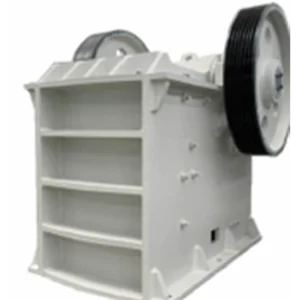
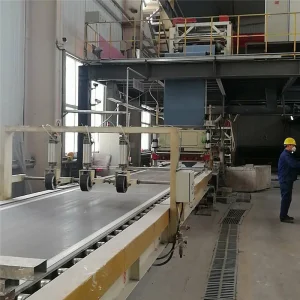
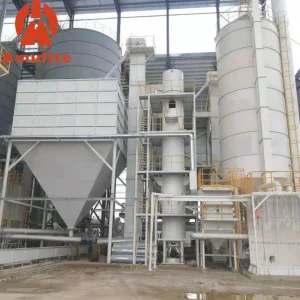
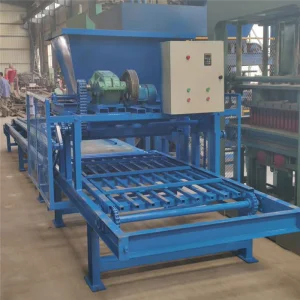
Explore additional plant machinery, crushing units, and automated board finishing lines engineered by China Amulite Group.
Partner with China Amulite Group for end-to-end plant design, custom machine fabrication, local raw material formulation testing, and global installation support. Contact our engineering team today to receive detailed layout drawings and capital investment estimates.