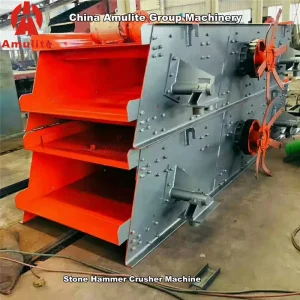
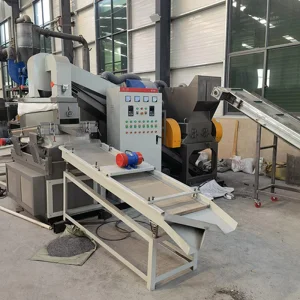
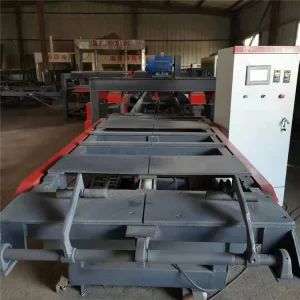
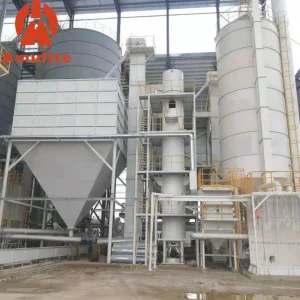
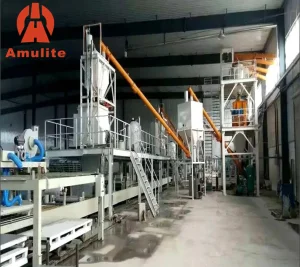
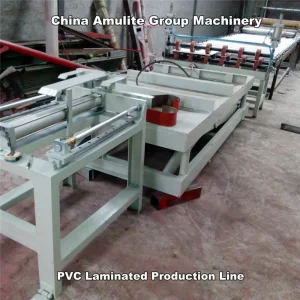
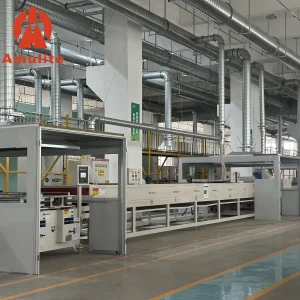
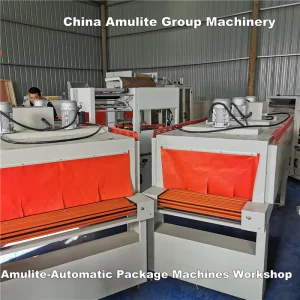
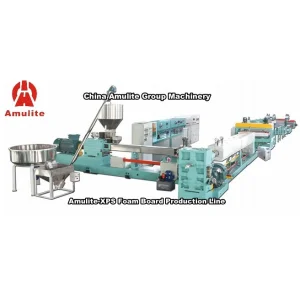
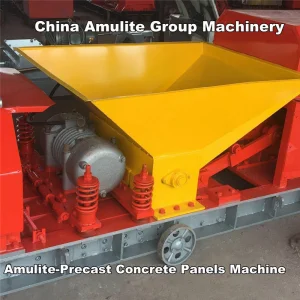
Explore our precision-engineered core industrial production machinery and auxiliary equipment configured for scalable precast wall panel and board manufacturing.
In the modern era of global industrialized construction, the transition toward prefabricated, energy-efficient, and lightweight wall materials has accelerated exponentially. Among modern precast building technologies, the Famous EPS Cement Sandwich Board Machine represents a pivotal milestone in non-metallic mineral product engineering. Designed to produce composite lightweight wall panels featuring high-density fiber cement or calcium silicate facing boards encapsulating a core matrix of expanded polystyrene (EPS) beads, Ordinary Portland Cement (OPC), fly ash, and specialized chemical additives, this machinery architecture bridges structural integrity with thermal efficiency.
From an engineering perspective, manufacturing high-performance composite wall panels requires controlling micro-structural homogenization, slurry fluid dynamics, EPS bead dispersion, and curing shrinkage mitigation. Amulite Group’s proprietary machinery design integrates multi-stage metering, automated hydraulic vertical mould cars, high-shear slurry mixing technology, and closed-loop thermal curing tunnels to deliver consistent physical, mechanical, and fire-resistant metrics compliant with international building codes.
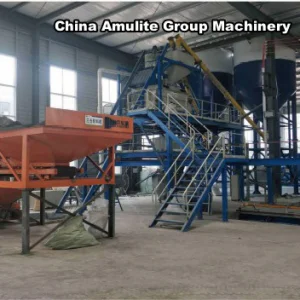
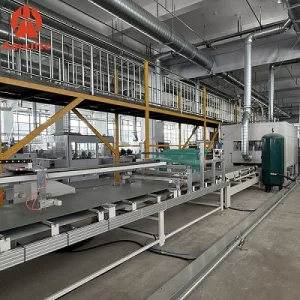
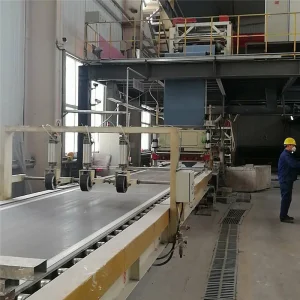
An enterprise-grade EPS Cement Sandwich Board Machine production line is composed of five interconnected sub-systems. Each module is engineered to operate seamlessly under continuous heavy-duty industrial conditions, minimizing labor reliance while maximizing throughput capacity.
Utilizes fluid-bed drying and precise steam pressure valve regulation to expand raw expandable polystyrene beads from a density of 600 g/L down to a uniform 8-12 g/L. Includes automated fluidized aging silos with pneumatic transport controls to stabilize bead internal pressure prior to slurry mixing.
Integrates multi-component load cells (precision +/- 0.5%) for dry powder (cement, fly ash, sand), liquid chemical dosing (superplasticizers, foaming agents), and water. High-shear planetary mixing blades prevent EPS bead floating and guarantee homogenous core slurry dispersion.
Heavy-duty structural steel mould batteries capable of holding up to 40 panel cavities per cycle. Designed with precision tongue-and-groove side profiles, hydraulic clamping systems, and high-frequency vibrators to eliminate internal air voids without crushing lightweight EPS beads.
| Performance Parameter | Standard Specification Range | Amulite Advanced System Metric | Engineering Benefit |
|---|---|---|---|
| Panel Thickness Capacity | 60 mm – 200 mm | 60, 75, 90, 100, 120, 150, 200 mm (Customizable) | Versatility across non-load bearing interior partitions & structural exterior walls. |
| Core Slurry Density | 500 – 800 kg/m³ | 550 ± 20 kg/m³ (Controlled via micro-foaming) | Optimized strength-to-weight ratio; substantial shipping cost reduction. |
| Flexural Breaking Load | > 1.5x Panel Self-Weight | > 2.2x (Exceeds GB/T 23451 & ASTM C1289) | Superior wind pressure resistance and high impact resistance in seismic zones. |
| Daily Output Capacity (per battery line) | 500 – 1,200 m²/day | Up to 3,000 m²/day (Fully Automatic Continuous Line) | High Return on Investment (ROI) and shorter project payback periods. |
| Curing Cycle Duration | 8 – 12 Hours | 4.5 – 6 Hours (With Steam Accelerator Phase) | Doubles daily mold turn-over frequency without structural micro-cracking. |
The global precast machinery landscape is undergoing a paradigm shift driven by digital twin software, artificial intelligence, and low-carbon cement chemistry. Amulite Group’s research and development engineering teams have established a comprehensive technology roadmap for EPS sandwich panel manufacturing lines extending to 2030.
Integrating optical and ultrasonic sensors within the main mixing unit to monitor real-time slurry rheology. Machine learning models dynamically auto-adjust liquid water-to-cement ratios and superplasticizer dosages based on ambient temperature and raw material moisture variations.
Upgrading machinery wear-components to support high-substitution cement mixes incorporating up to 70% industrial waste byproducts (ground granulated blast-furnace slag, fly ash, and calcined clays), cutting embodied carbon by over 50%.
Replacing manual labor with 6-axis heavy industrial robotic arms equipped with vacuum suction grippers for automated wall panel extraction, edge trimming, stacking, and automated stretch-wrapping packaging.
EPS cement sandwich panels produced by modern automated machinery are engineered to address critical structural, thermal, and economic challenges across distinct architectural typologies:
Due to the interlocking tongue-and-groove joint design and flexible core matrix, EPS sandwich walls absorb lateral shear forces during earthquake events. Rated to withstand seismic intensities up to Grade 9 without structural collapse.
Featuring thermal conductivity low as 0.045 W/(m·K), these panels act as continuous insulation barriers in tropical heat (Middle East/Southeast Asia) or sub-zero climates (Central Asia/Northern Europe), dramatically reducing HVAC operational energy costs.
Lightweight panels (only 1/6th the weight of solid 120mm masonry walls) allow structural frames (steel or precast concrete) to be sized more economically. Wall installation rates reach up to 40-50 square meters per worker per day.
As a primary global manufacturing hub for building material machinery, China Amulite Group leverages a vertically integrated 100,000 square meter facility equipped with heavy CNC machining centers, automated submerged-arc welding bays, and dynamic balancing test beds. Our self-reliant supply chain model yields distinct advantages for international procurement teams:
Unlike machine assemblers who outsource heavy structural fabrication, Amulite manufactures all mould battery cars, hydraulic rams, and mixer drums in-house using Q355B structural steel and anti-wear chromium alloys, preventing long-term frame distortion.
Direct access to China’s vast industrial supply chain for Siemens motors, Schneider electrics, and AirTAC pneumatic components guarantees premium international component selection at direct factory pricing—delivering 30-45% CAPEX savings vs European machinery.
Every line undergoes a full dry-run mechanical and electrical trial at our factory prior to container packing. Hydraulics, PLC signals, and pneumatic distribution networks are pre-tested to mitigate field setup risks and guarantee rapid site commissioning.
Investing in an EPS cement sandwich board production line requires long-term operational guarantees. Amulite Group ensures that equipment engineering adheres to international regulatory frameworks while adjusting chemical formulas for regional raw material variances.
Lines are certified under CE Directives (2006/42/EC Safety of Machinery, 2014/30/EU EMC) and electrical cabinets conform to IEC 60204-1. Panels produced comply with ASTM C1289, BS EN 12467, and ISO 9001 quality frameworks.
Our materials laboratory analyzes customer-provided local sand, cement grades, and fly ash samples to establish custom chemical mixing recipes, ensuring optimal hydration rates and preventing board surface efflorescence.
By integrating energy-recovery steam systems, automated recycling of cured board trimmings back into core aggregate, and remote IoT diagnostic support, plant owners achieve payback within 12 to 18 months of full-capacity operation.
Explore additional high-performance building material equipment, recycling solutions, and comprehensive wall panel processing lines available from Amulite Group.
Detailed engineering answers addressing common questions asked by plant managers, investment groups, and procurement directors evaluating EPS sandwich wall panel lines.